
Cliffe probably wouldn’t have made it onto the random generator if it hadn’t been for a conversation with my younger son recently, in which we both talked about wanting to visit Cooling (for reasons which will become apparent). It is quite difficult to reach by public transport (as is Cooling!) but he has a car, and as Cooling is only 5 minutes away from Cliffe, we decided that both could be added to the wheel and we could get him on board if either of them came up. After the disappointment of getting two local places for A and B, I was quite excited by all of our C options and there were none that I would have been disappointed with, but it was Cliffe that was the winner.

Cliffe is a small village on the Hoo Peninsular; a fairly isolated part of North Kent, sandwiched between the Thames Estuary to the north and the River Medway to the south. It was a good 45 minute drive away, and passing first through the more modern residential village of Cliffe Woods, we soon found ourselves in Cliffe itself, where there was a free car park by the church.
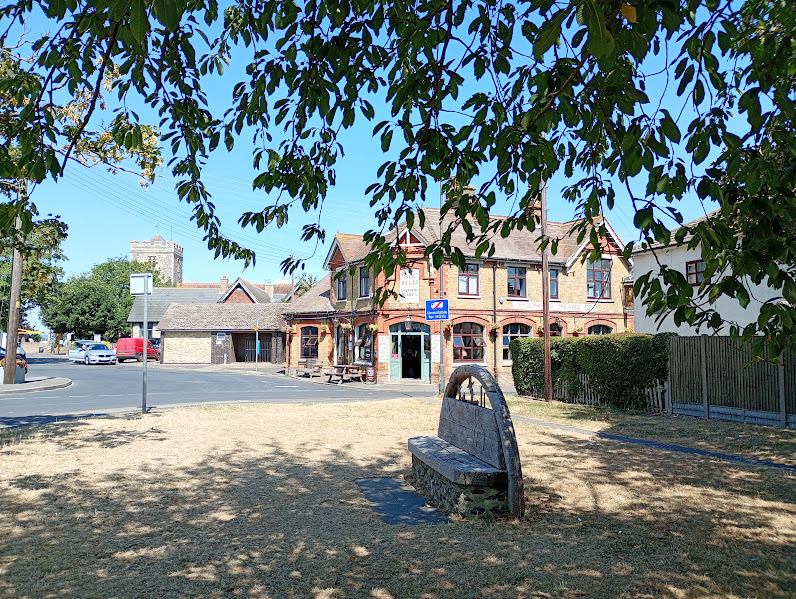
Some historians believe that Cliffe could be the mysterious location of the Anglo-Saxon ‘clovesho’ – a series of important synods attended by Anglo-Saxon Kings, bishops, abbots and nobles in the 8th and 9th centuries – although nowadays there is nothing to suggest that anything so important might have taken place. I would imagine that it’s quite a nice place to live (as long as you have a car!), but there wasn’t that much going on to occupy the casual visitor. There was a village green (looking very brown and sun baked) with a pub across the way,
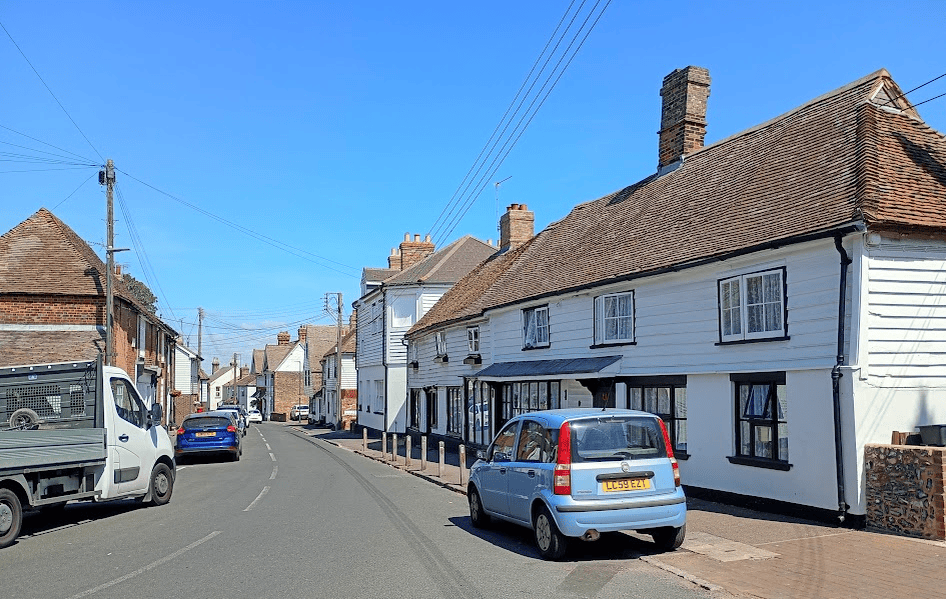
and a pretty street of weather boarded houses in the most historic part of the village.
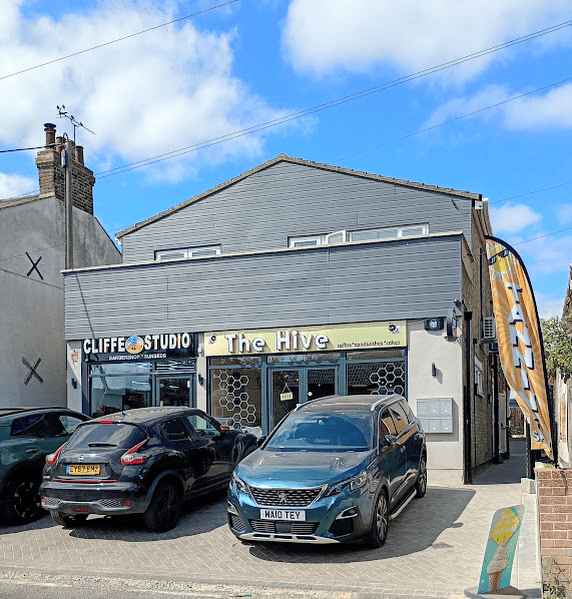
Our first priority was a drink stop. There was coffee being served in the hall next to the church, but as three out of the four of us (my daughter-in-law, having come with us for B and not been put off, was happy to join us for C) are socially awkward, we didn’t want to run the risk of having to have a conversation with friendly locals and preferred the anonymity of the village’s one cafe – The Hive (where it seemed, if you were so inclined, you could get a tan along with your coffee!). It was a fairly unprepossessing building from outside, but it was very nice inside. The staff were friendly and they had quite a large courtyard garden out the back where we could make the most of the sunshine.
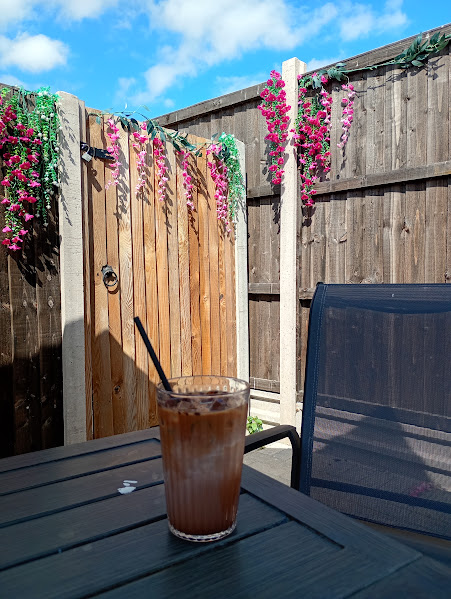
Although I wasn’t the biggest fan of the fake wisteria around the back fence, I can see that they had tried to pretty it up – and the iced mocha hit the spot which is the most important thing.
Suitably refreshed we returned to St Helen’s Church which was very striking with its black flint and lighter Kentish ragstone stripes – I’m not sure that I’ve come across one like that before.
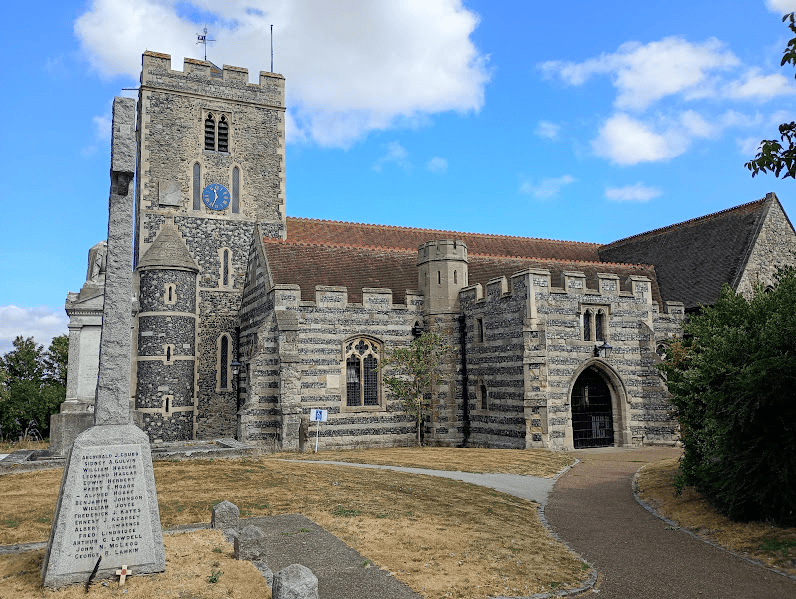
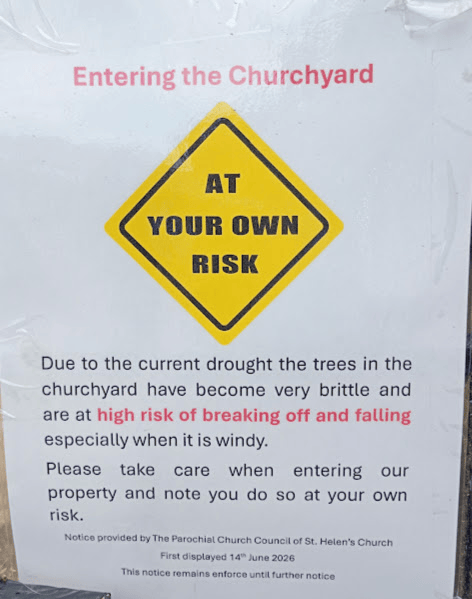
Unfortunately it was locked so we couldn’t see inside. Not in an “Am I turning the handle and lifting the latch properly on this very ancient wooden door or is it actually locked?” sort of way that we frequently find ourselves in when trying to get into a church, but in a locked metal gate blocking the porch kind of way. That was disappointing. I think you will have gathered by now that I love a mooch around a village church and, having done my research, I wanted to see the 14th century wall paintings depicting the martyrdom of St Edmund, and the unusual medieval painted pillars. Since visiting the angel roof in March, I have also become aware of Simon Jenkins ‘England’s Thousand Best Churches’ bool and apparently he gives Cliffe two stars!! (Given that March only gets three stars, then I feel that two is a good recommendation, but it certainly makes me want to see what a five star church would look like!) Perhaps if I hadn’t been so socially awkward and had gone into the St Helen’s community hub next door, somebody would have opened it up for me but I wasn’t brave enough, and had to forego the delights of the interior. Instead, we embraced the danger of going into the churchyard (and I am pleased to report that there were no instances of falling branches and we all emerged uninjured).
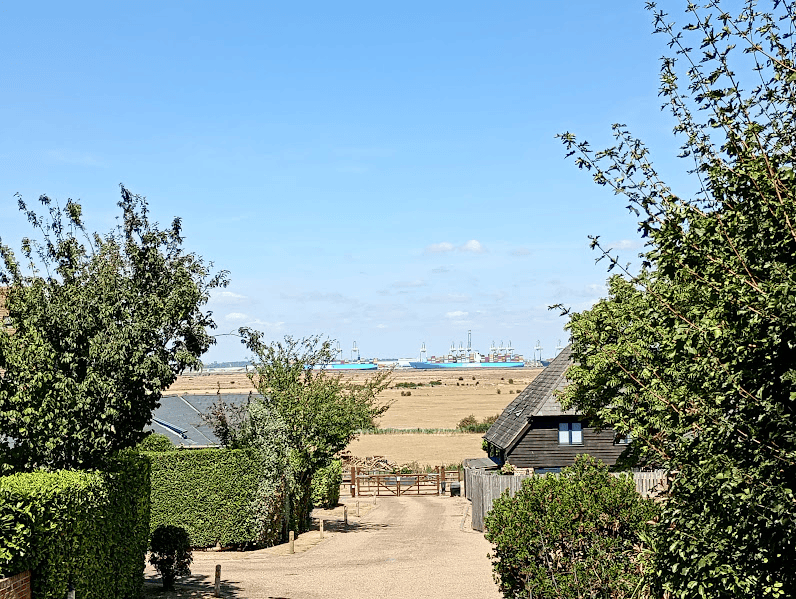
It was worth the risk as there were some impressive views over the marshes and out to the Thames estuary.
After this, we took a short drive down the road to the RSPB Cliffe Pools Nature Reserve where, according to the website, there are a mixture of salt water lagoons, fresh pools and grassland and which, at the right time of year (which doesn’t appear to be the height of summer!), is an important stop off for migratory birds. There was a large car park, and a map at the entrance showing the nature trails, as well as the Saxon Shore Way and the England Coast Path, which run through the reserve.
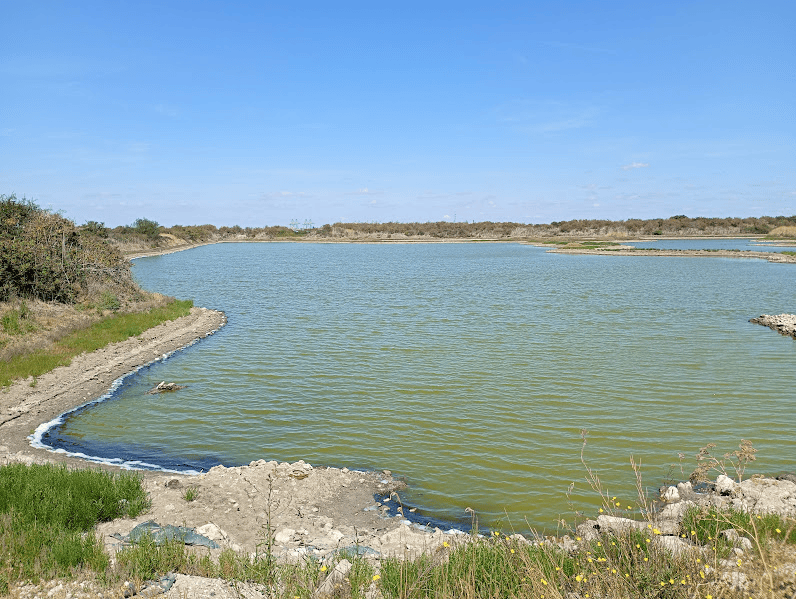
There were very few people about, and the ones that we did see were all adorned with cameras with impressively large telescopic lenses so they must have all known something that we didn’t, but we soon left them behind on our bleak walk out past the pools and along Cliffe Creek. We were aiming for a view point looking out over the River Thames, but I couldn’t really remember the paths that we’d seen marked on the map, forgot that I’d taken a photo in the car park to refer to later, got confused, and had us all headed up the wrong side of the Creek.
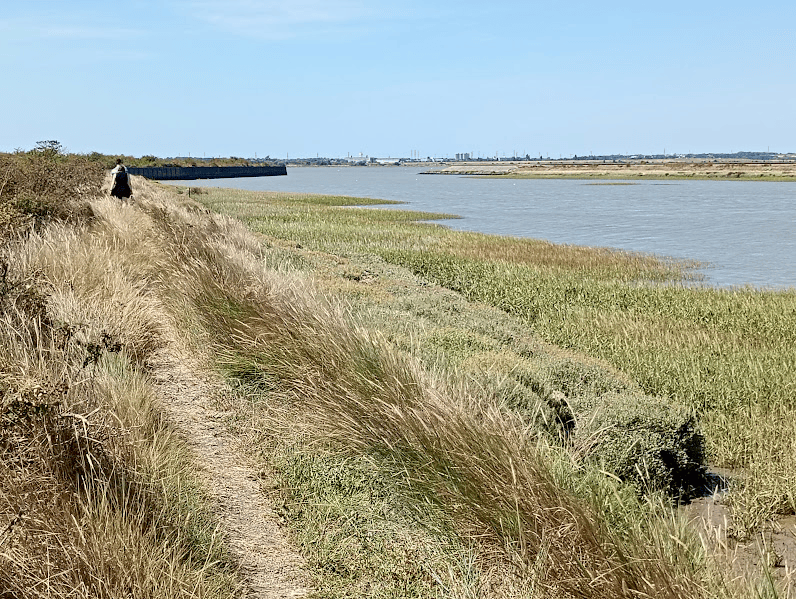
We’d got almost to the end before we realised our mistake and so had to back track to a crossing point and then walk all the way up the other side of the water. There was at least a bench when we got there, and we sat and enjoyed a picnic lunch. This was the view.
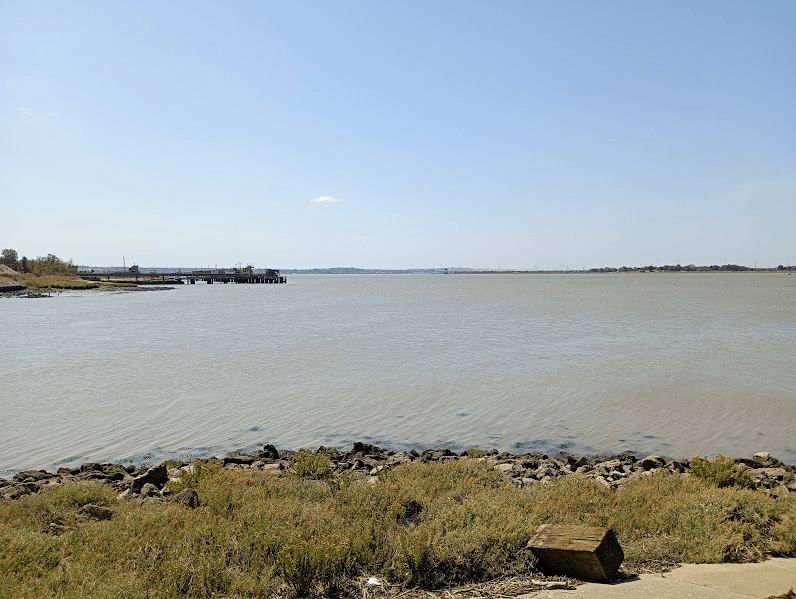
There were no birds but I enjoyed looking through my binoculars at Essex! (I am not a bird expert although I would like to know more than I do, but I actually enjoy looking through my binoculars at a view far more!)
I wasn’t allowed to be in charge of navigation after that, and my son, whose sense of direction is considerably better than mine, managed to lead us on a circular walk back to the car park. The pools here were most definitely suffering from the effects of the very hot and dry spring and summer
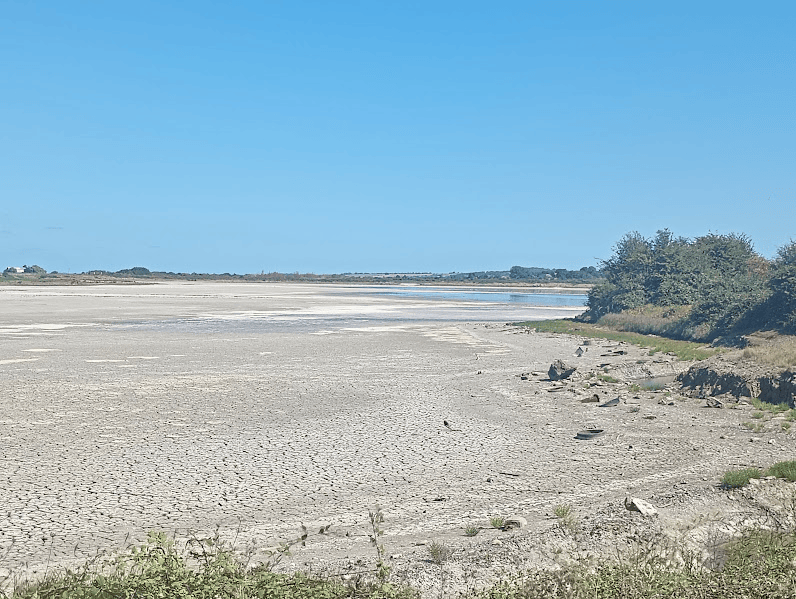
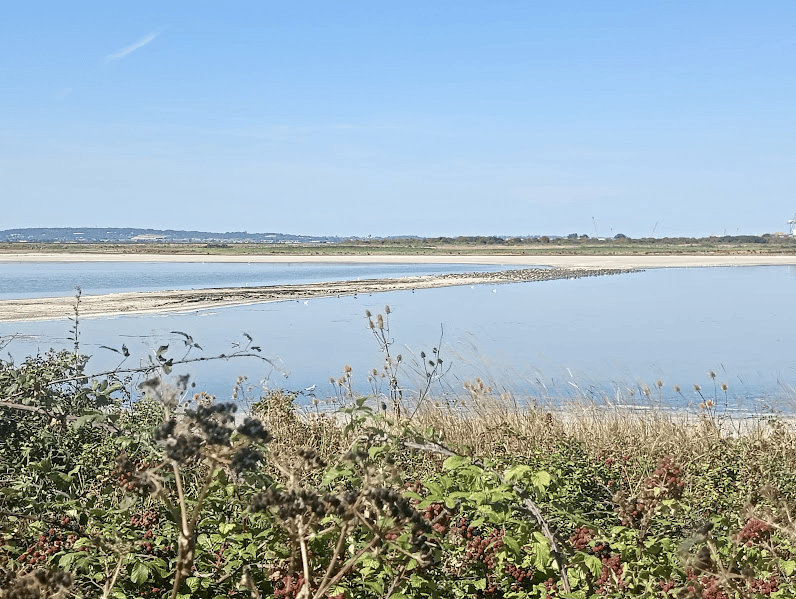
but as we continued, we spotted our first birds of the day. Lots and lots of them sitting on a sandbank across one of the pools. In fact, the binoculars revealed that even the darker areas that we initially thought were rocks or weeds were more birds. Unfortunately, I was the only one who found it even mildly interesting – despite the discovery that son and daughter-in-law had both, coincidentally, been Junior RSPB members as children – and I was left behind as I stopped to search the internet to identify them. I think that they may have been blacktailed godwits (apparently they do visit the reserve and they seemed to be the closest looking species), but I wouldn’t put any money on it!
We ended our day out with a visit to Cooling, which basically seemed to consist of a church, a castle and a couple of houses. The church (St James’) is now managed by the Churches Conservation Trust and was supposed to be open until 4 o’clock. It wasn’t! We weren’t having much luck with our churches that day. (Apparently the vestry is completely lined from top to bottom with thousands of cockle shells – the emblem of St James – which I would have loved to have seen, but the website informed me that that part of the church was closed until further notice, so I didn’t mind quite so much that I couldn’t get inside.)
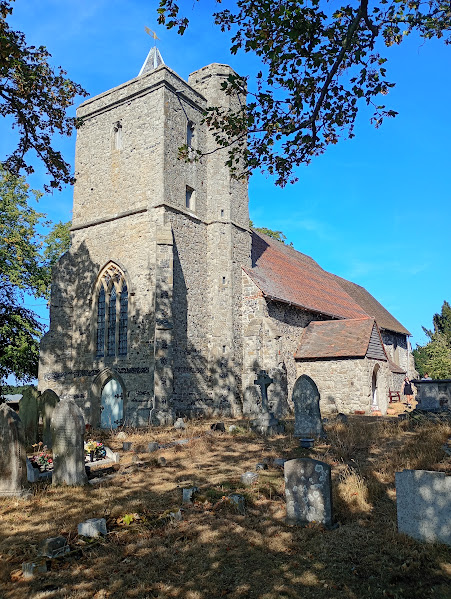
The main reason for our visit was in the church yard however, and we soon located what we were looking for.
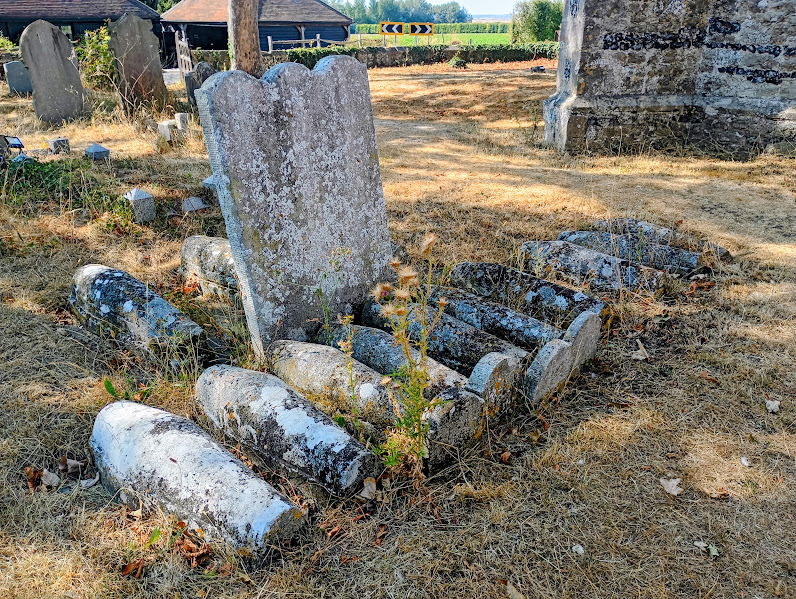
Cooling churchyard was the inspiration for Charles Dickens in the opening chapter of Great Expectations where Pip meets the convict, Magwitch. (Dickens lived in nearby Higham and apparently liked to walk across the marshes and picnic in the churchyard.) These tombs, now known as Pip’s Graves, were described by Dickens in the book as “little stone lozenges each about a foot and a half long, which were arranged in a neat row beside their (parents’) grave”. Pip refers to five lozenges “sacred to the memory of the five little brothers of mine – who gave up trying to get a living exceedingly early in that universal struggle”. Here in Cooling there are actually thirteen tiny children’s graves, all from the Comport and Baker families. Tragically, they all died between 1771 and 1790 and all before the age of 17 months. A very poignant reminder of the infant mortality rate at this time.
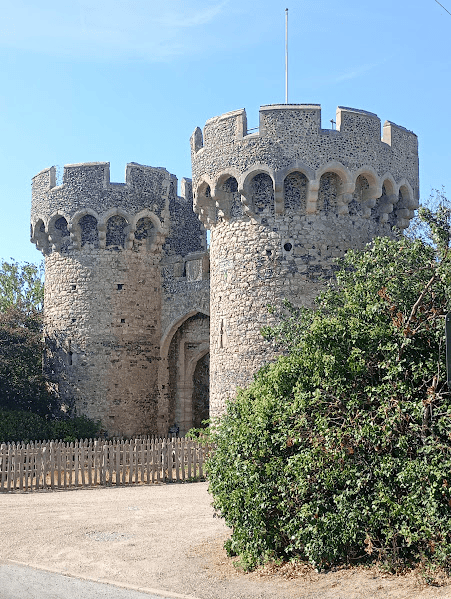
I walked back along the lane to have a look at Cooling Castle, which is now owned by Jools Holland. The 14th century castle itself fell into disrepair following an attack by Sir Thomas Wyatt (a Kentish landowner) during his unsuccessful rebellion to overthrow Queen Mary and replace her with the protestant Princess Elizabeth in 1554. (Wyatt’s rebellion was unsuccessful and he was subsequently arrested and executed for treason!)
You can only see part of one of the corner towers of the castle from the road,
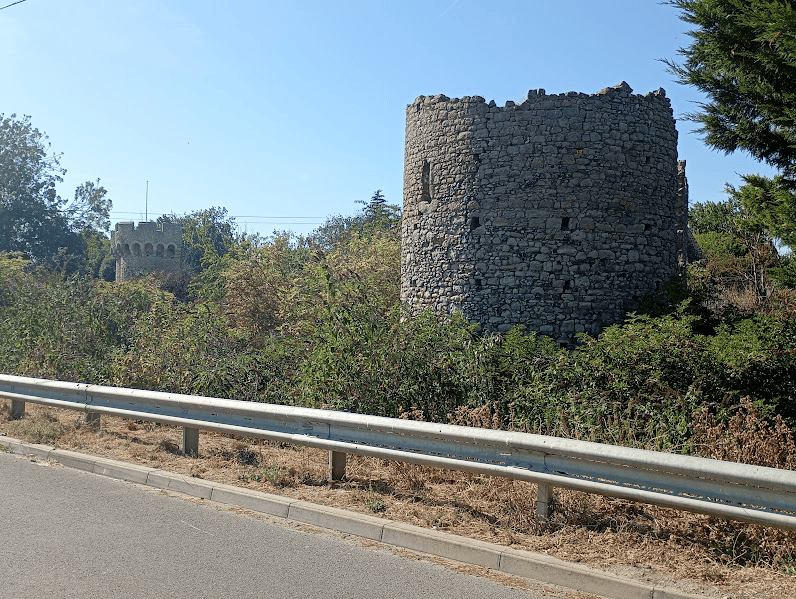
but the original gatehouse somehow survived the attack and is very impressive – well worth stopping to look at, although there was a wedding going on and I had to wait until the photographer had finished taking her last few pictures before I could take some myself.
So that was C. A really interesting day which introduced us to a part of the county that I had never visited before. (I also learned that the Isle of Grain is part of the Hoo Peninsula and not the other way round as I’d always wrongly presumed, despite this being my home county!). I was disappointed that I couldn’t see inside either of the churches but there was so much else to discover – not so much that I will be rushing back, but enough to make me look forward to being in the area again when I reach that part of my Kent Coast Walk.
You can read B is for Bekesbourne here
You can read D is for Dymchurch here


Leave a Reply