
There were a LOT of towns and villages beginning with the letter B, many of which we had never heard of. We eliminated the majority however because they were either too small, too difficult to reach by public transport, were residential conurbations of bigger towns, or, in the case of Bromley and Bexleyheath, decreed by my daughter to be in Greater London and not in Kent. We ended up being left with just nine, though it should have been ten – I didn’t realise until we were actually on our trip and talking about the other options, that I had somehow left Broadstairs off the list! Sorry Broadstairs.
Anyway, of these nine, six were very local to us and I was really hoping that one of the other three (Bearsted, Benenden and Borough Green) would be the one to come up. Even with the random generator, the law of averages suggested that this would not be the case, and indeed it was not. Disappointment followed once again.

Bekesbourne is only one stop on the Canterbury to Dover train line, although admittedly I haven’t been there for about fifteen years. I started to question the use of the random generator. Maybe we should just pick the place that we most wanted to go to and not leave it to chance. I should have learnt my lesson from the visit to Aylesham however, and trusted the process and not been so negative – although I did perk up once we started planning the visit, and I realised that one of the things that has been on our summer bucket list for the last few years and which we haven’t got round to doing, could finally be accomplished.
It was one stop on the train, but my daughter-in-law joined us for this one, and she drove – particularly useful for the getting home bit as, is so often the case around here, the trains are only one an hour and we didn’t need to worry about getting the timings right or having a very long wait.
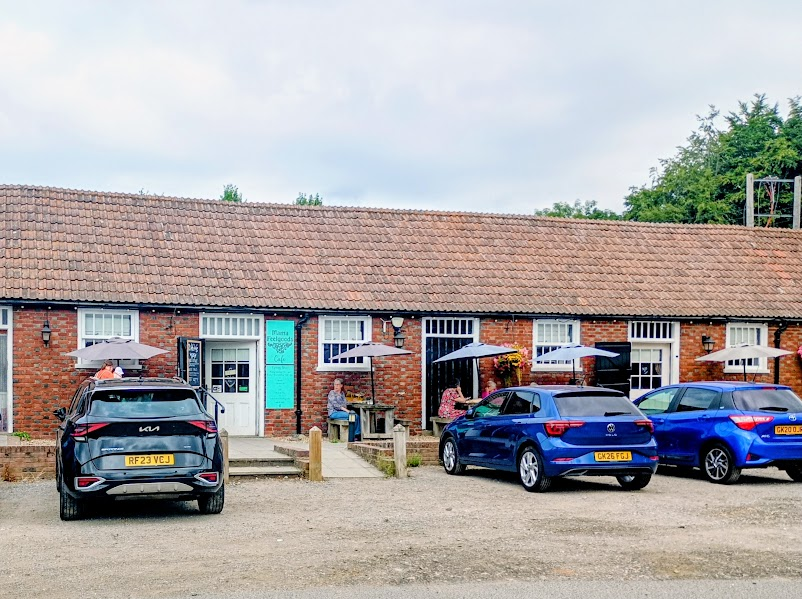
We always support small businesses wherever we can, and this seems particularly important in the places that we’re visiting in this series, so we began the day with a stop at Mama Feelgoods, which can be found at Chalkpit Farm – a working farm and small retail area where you can take your pet to the vets, have a picture framed and get a clock repaired, as well as have a drink and a cake. This had been recommended to me as a good place to come for an afternoon tea so has been on my radar for a while, and I was pleased to get the opportunity to try it out.
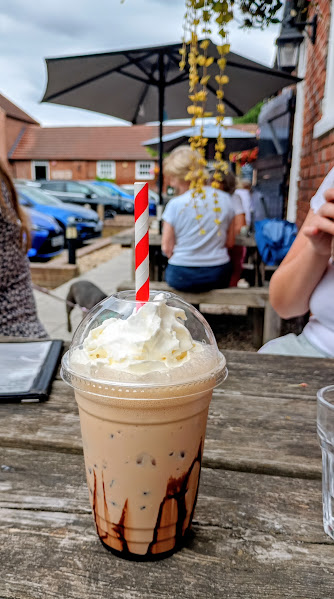
It was morning so we didn’t have afternoon tea, but we did have a very nice coffee frappe, sitting outside on the veranda that ran along the side of the building. Judging by the very delicious looking cakes however, I can see that their afternoon tea would be a good one. Sitting outside was very pleasant, although I think it would have been nicer if the car parking wasn’t right alongside.
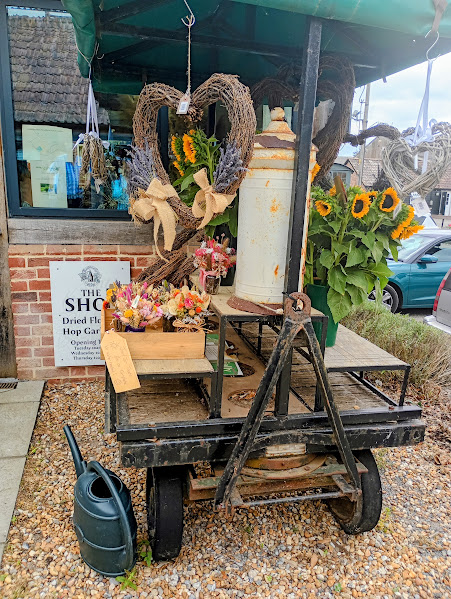
There was a lovely dried flower shop next door, selling beautiful bouquets, and door wreaths. There were notices up about their wreath making workshops, which is something that I always think I would like to do if it wasn’t for the fear I have of being the worst one there and everyone secretly laughing at my terrible attempts.
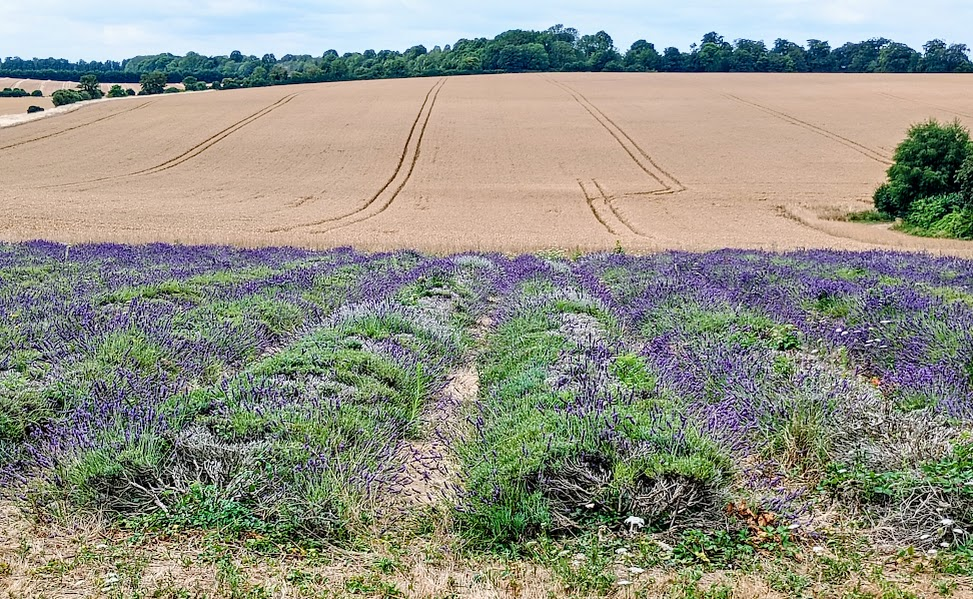
As we left Chalkpit Farm, we came across a small lavender field which I presume supplies them with some of their flowers. Not quite as impressive as Castle Farm, although that was partly because it was no longer at peak flowering, but an unexpected bonus sight nevertheless.
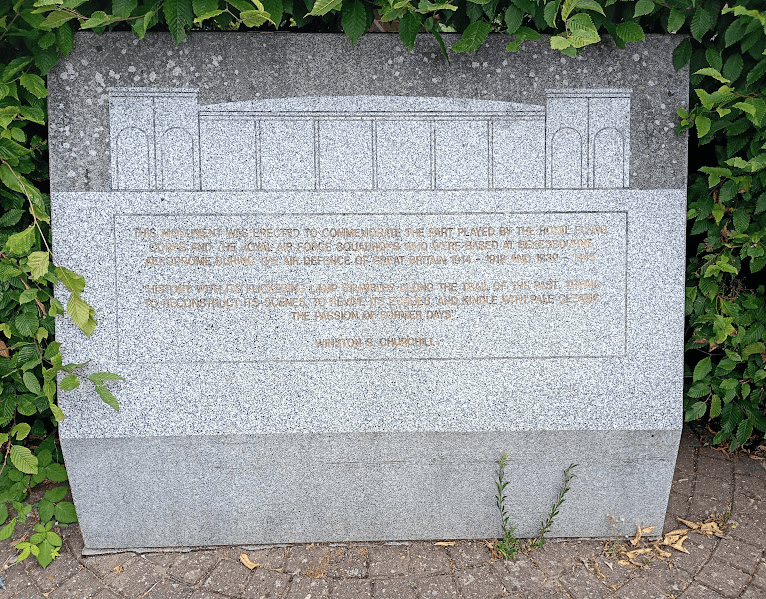
We headed up Aerodrome Road, which is the site of an old aerodrome established during World War I, and which later became the home of the Kent Flying Club until its closure in World War II. It was briefly brought back into active service for a few months in 1940 but has not been used since then, and the site has since become housing.
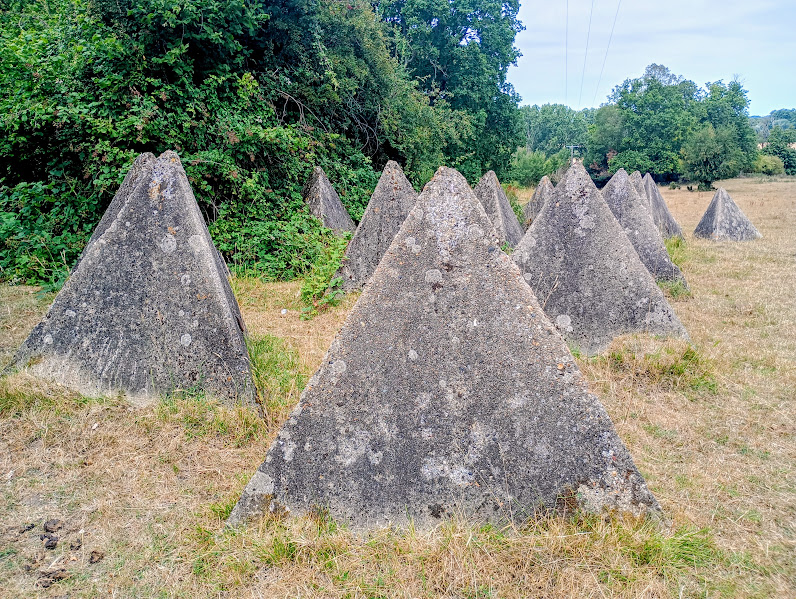
Close by is Tetrahedra Field, where you suddenly stumble across a number of anti tank obstacles, known as dragons teeth. It’s a very unexpected sight if you are just casually following the footpath, although we were actively looking for them, having first discovered them about fifteen years ago during our geocaching phase – the last time we came to Bekesbourne!
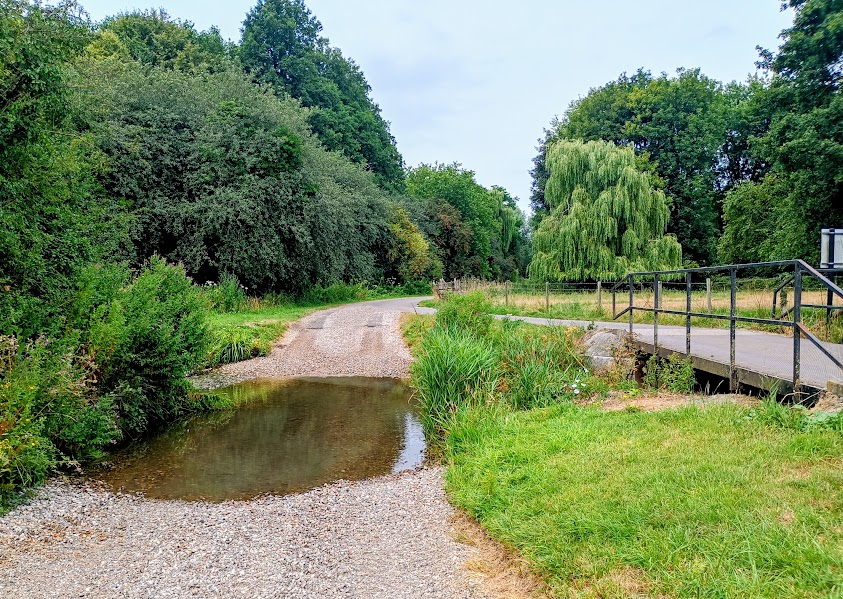
Our walk continued past a ford (for cars) and a bridge (for walkers) over the Nailbourne. This is a special kind of chalk stream known as a winterbourne, because it is mostly seasonal and only flows during particularly wet winters. It starts in the village of Lyminge, near Folkestone, and runs past Bekesbourne, where it joins the Little Stour, but flow varies from one part to another. Some sections can dry up completely, whilst in others the water is still flowing. Local legend says that the river only appears along its full length every seven years, and when it does, bad luck will follow!
Despite the very long dry spell we have had in Kent this spring and summer, the Nailbourne was still in evidence here.
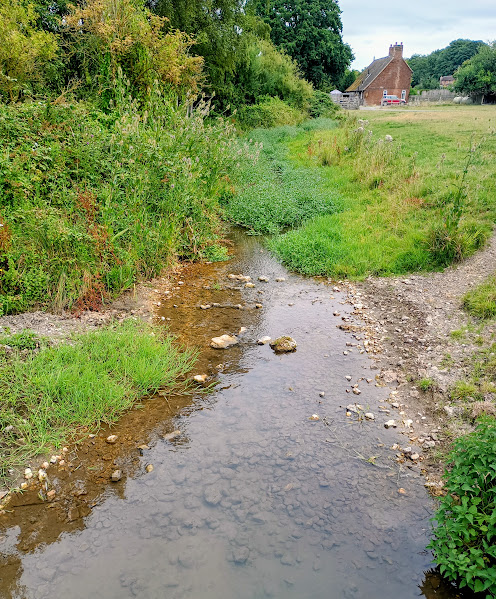
Bekesbourne gets its name from this stream. Burna/burn is the Old English word for a stream that emerges from a spring, and because of this the village was originally called Burnes/Borne. It later became Livingsbourne, after Levine, the Anglo-Saxon Lord of the Manor, and it was only in the 13th century, when the manor came into the hands of the Beke family, that it became known Bekesbourne. (The Beke family were from Hastings, and as a result, Bekesbourne became a limb of the Cinque Port of Hastings, meaning it had to provide a ship and men for the Hastings fleet! They did also receive certain Cinque Port privileges however, including freedom from most taxes, and the right for a leading citizen to go to Hastings each year, be sworn in as Deputy Mayor, and exercise Hastings jurisdiction in the village!)
The ruins of the medieval old Well Chapel were marked on the map near here, and although we kept our eyes peeled we didn’t spot any signs of old walls. The trees were very thick on that side of the track and the area beyond was too overgrown to venture across, but I’m sure they were there somewhere!
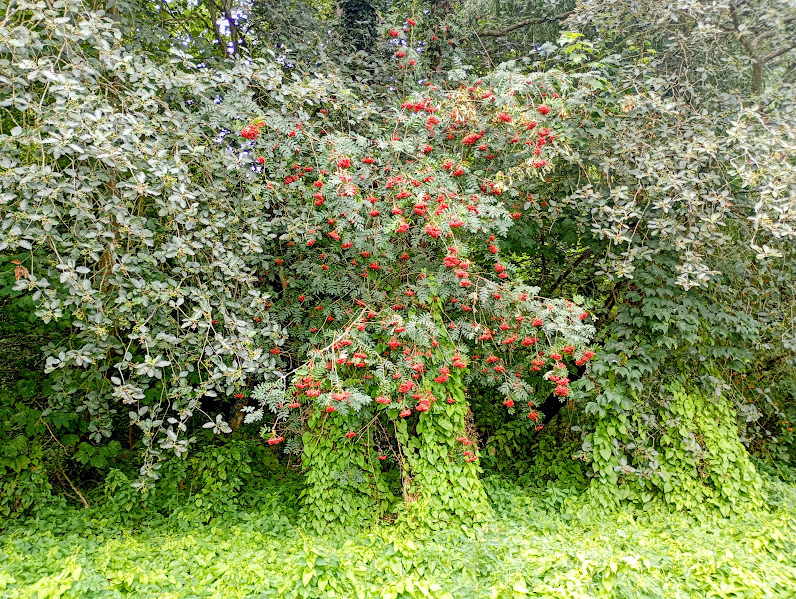
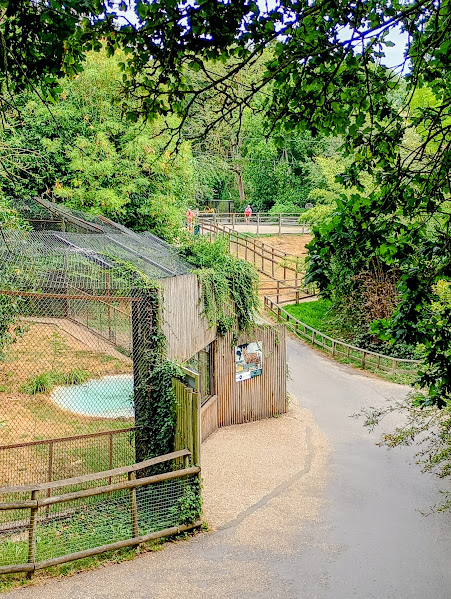
The highlight of the walk however, was the opportunity to follow the footpath through a section of Howletts Wild Animal Park. As we crossed a footbridge taking us over one of the paths through the park, we could hear children below asking their parents how they could get up there because they wanted to walk over the bridge too, little knowing that what was seemingly such a privileged view point came free of charge! At this point we could see the tails of a couple of red river hogs to our left, and some sleeping lynx to our right, but the best was still to come.
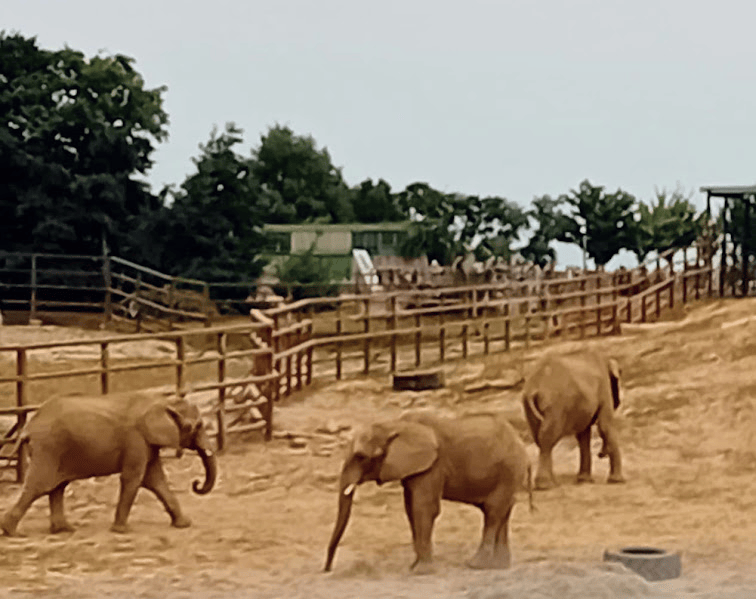
The footpath runs straight through the elephant paddocks, and it was still as exciting as I remembered from fifteen years ago. This one was having some lunch right next to us, although the fencing in the photo doesn’t really do justice to how close he was.
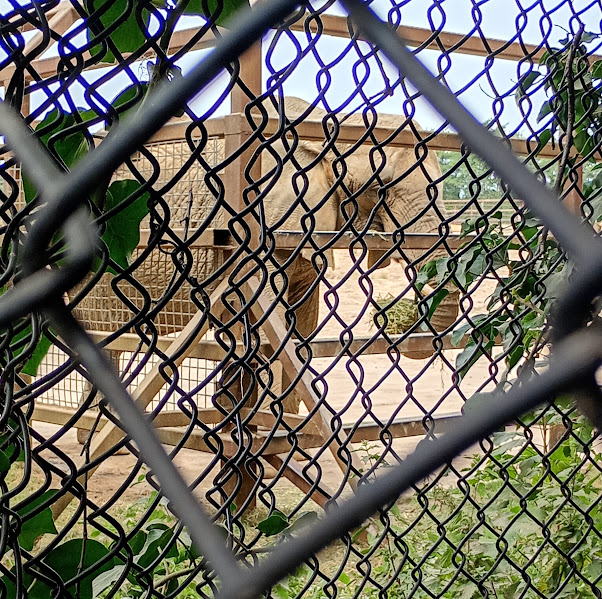
Better views came as we crossed a second bridge however, and although Howletts have put up quite a bit of panelling to block the elephants from those of us who want a free glimpse (although I concede that this is probably mostly for the safety of the elephants, to prevent anything being dropped down into their paddocks from the bridge), there is still ample opportunity to see them. In fact we thought that, despite the fencing, we were closer to them than the paying public and we spent a long time watching as they ambled around.
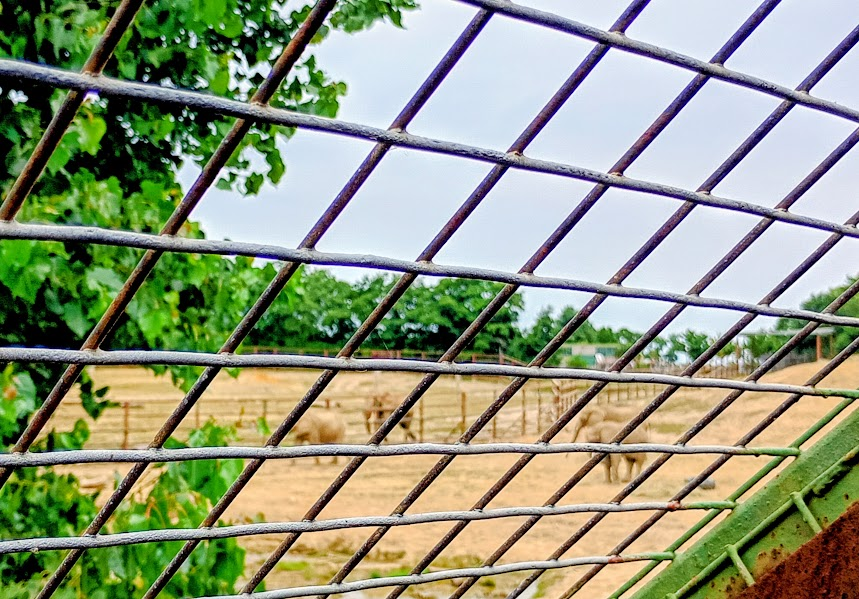
The best shot of the day was my daughter’s though, and I’m not sure how she managed to capture it.
From the animal park, we wandered through apple and cherry orchards to Woolton Farm, home of Kentish Pip Cider and Woolton Wines. This is the place that has been on our to do list for the last few years, and we were very excited that coming to Bekesbourne meant we finally got to visit, instead of waiting for the right day and then never getting round to it!
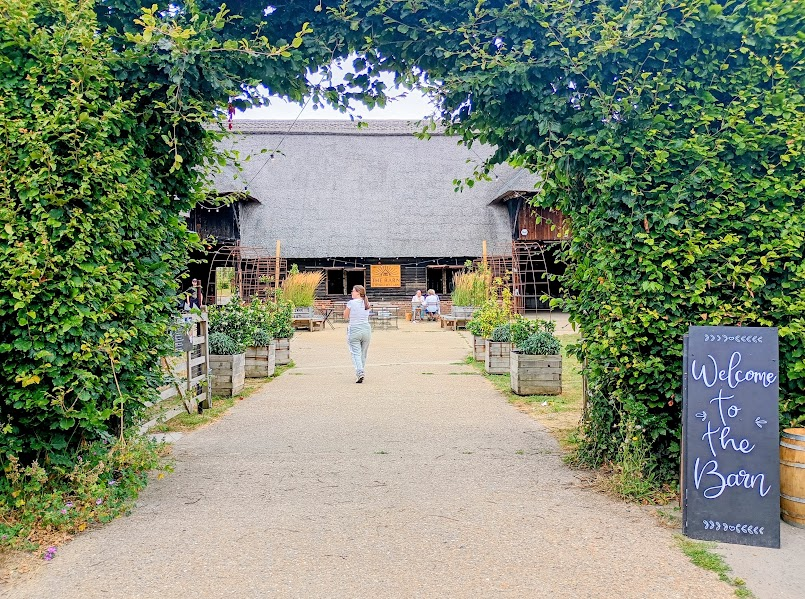
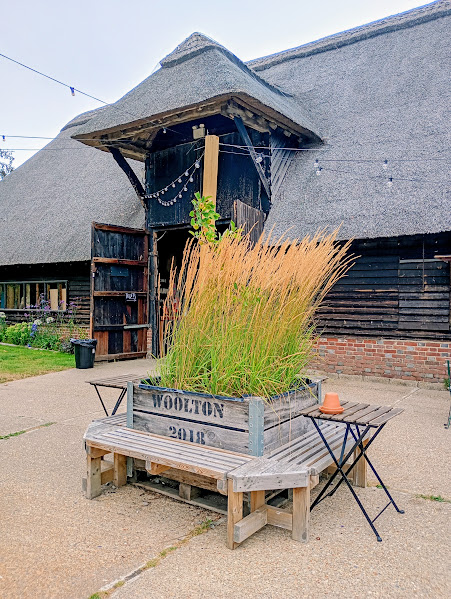
Woolton Farm offer camping and glamping (the bell tents in the orchard looked tempting enough for even me to want to stay under canvas) but we were there for the cider, available from the beautiful 14th century thatched barn.
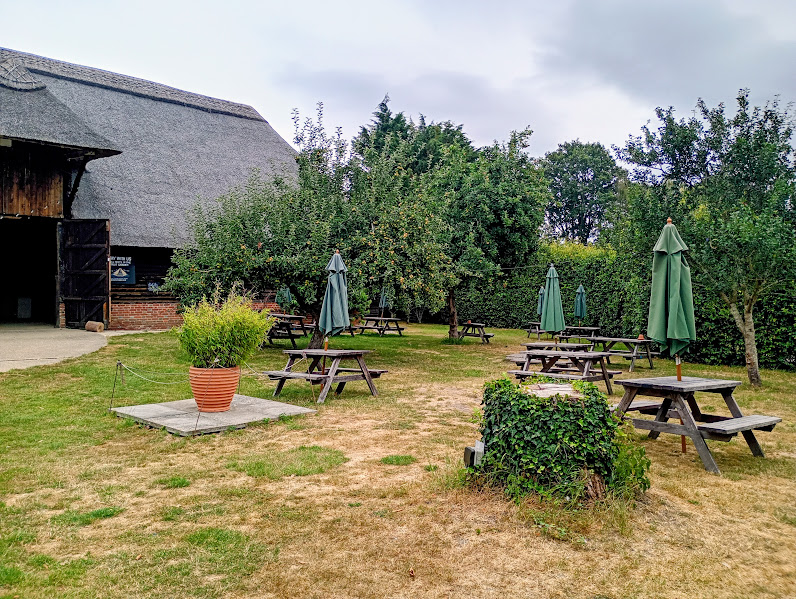
There’s another orchard here, where you can sit outside under the apple trees when the weather is good – and obviously that’s where we headed.
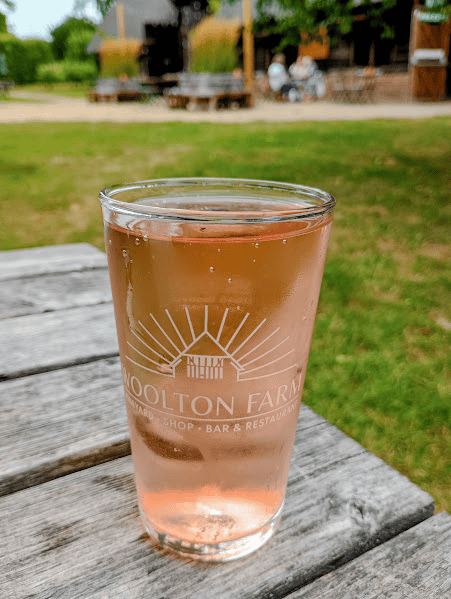
There was a choice of four or five ciders on tap (they also sell their own apple juice, both still and sparkling), and the barman recommended the Roselle, which had hibiscus and raspberries. It was crisp, fruity and delicious, but I am no connoisseur and so can’t do much more in the way of description than that!
Onwards through more of the farm’s apple orchards,
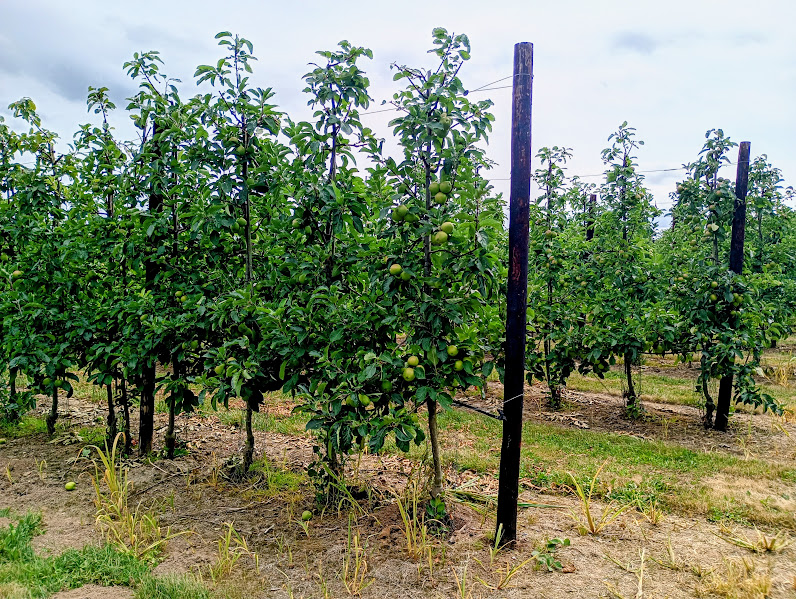
before finding ourselves walking along a fairly busy country lane with no pavement and a 40mph speed limit. Luckily there was a man walking a little way in front of us, so at least those cars heading towards us had already slowed down for him before reaching us. It was a little nerve wracking though. But here was a sight to cheer us!
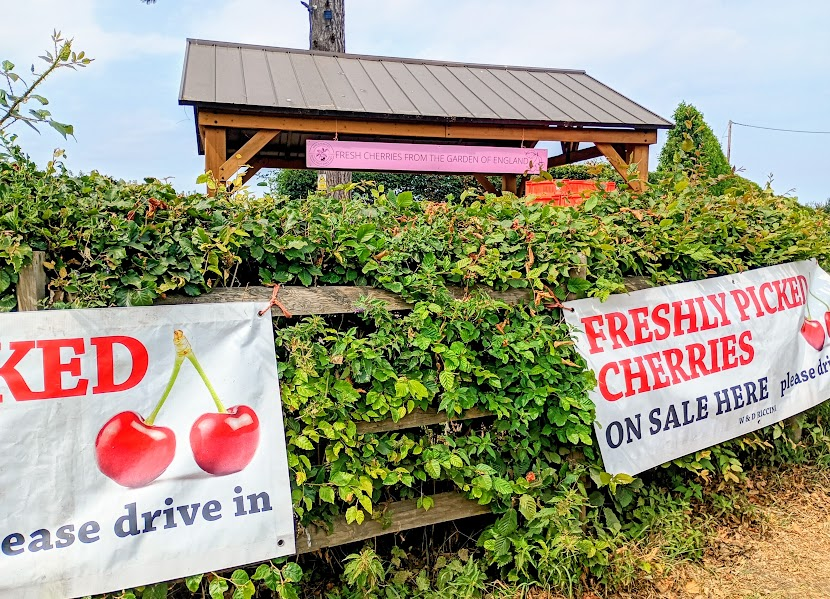
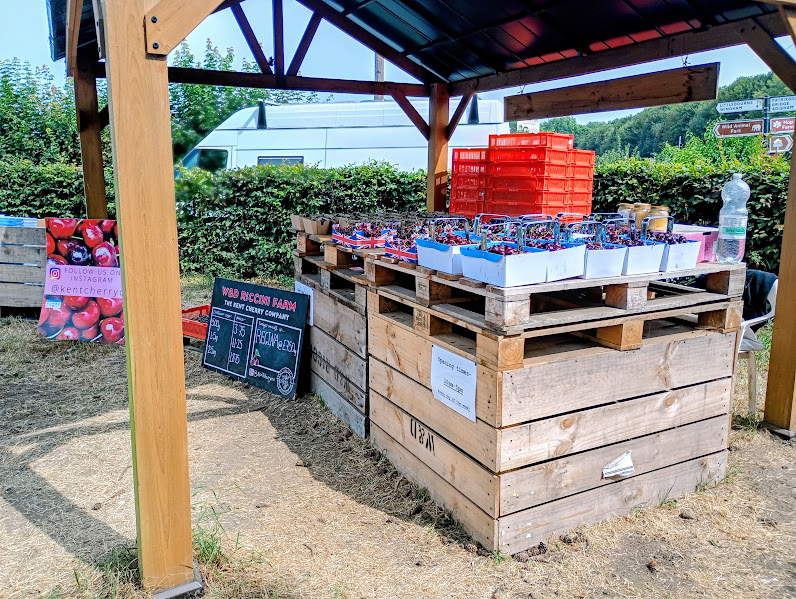
Back in Bekesbourne we came across a cherry stall. I love cherries so much and can’t get enough of them in the summer, so buying a punnet was an absolute necessity.
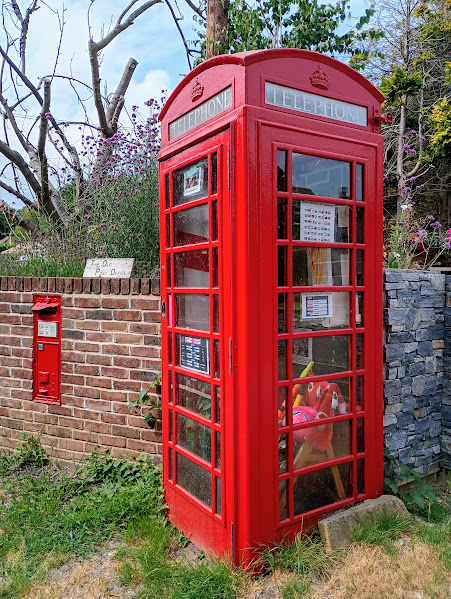
We discovered that Bekesbourne was a bit of a spread out village, with no obvious centre. There were the houses the other side of Chalkpit Farm that were built on the old aerodrome site, and then there was a road of houses, slightly less busy with cars, that ran from the train station along which we now had to walk. It was nice enough, with nothing much to stop us in our tracks, except the Victorian post box and red phone box outside the Old Post Office, the latter of which had been decorated inside on a World Cup theme.
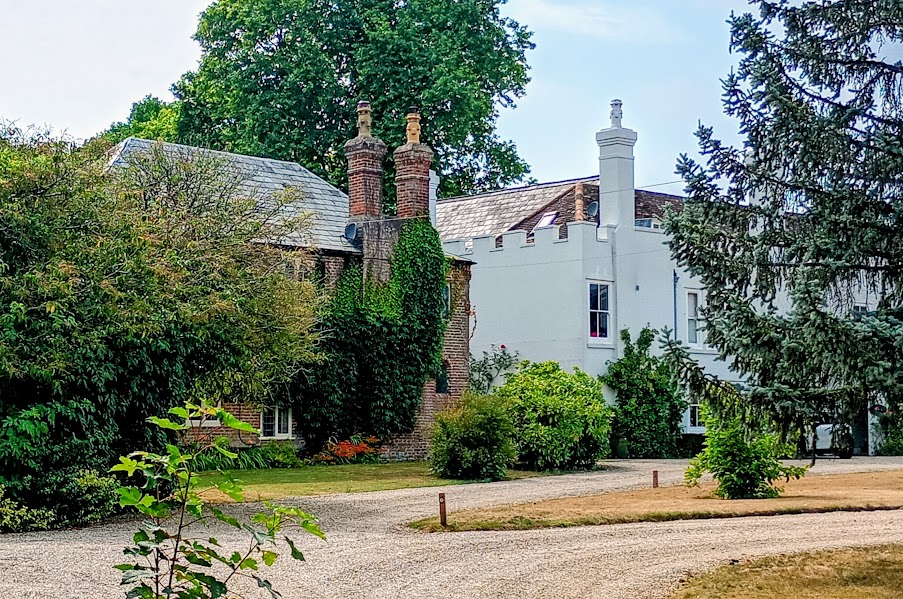
We took a footpath across a field to reach the church as you can’t have an A-Z of Kent without visiting the church in each place. It was a livery field for horses and the horse nearest the path was behaving in a very unpredictable fashion; rolling on the grass and then leaping about and kicking its heels, and we were more than a little concerned that it might jump over its fence line and come for us. Luckily it didn’t! Across the field was the Old Palace, originally built for Thomas Cranmer, Archbishop of Canterbury (and the man who helped build the case for the annulment of the marriage of Henry VIII to Catherine of Aragon). Only the gateway of the original palace still remains (the brick bit I think!), and the present house dates from the 18th century. fun fact, Ian Fleming lived here in the late 1950s/early1960s!
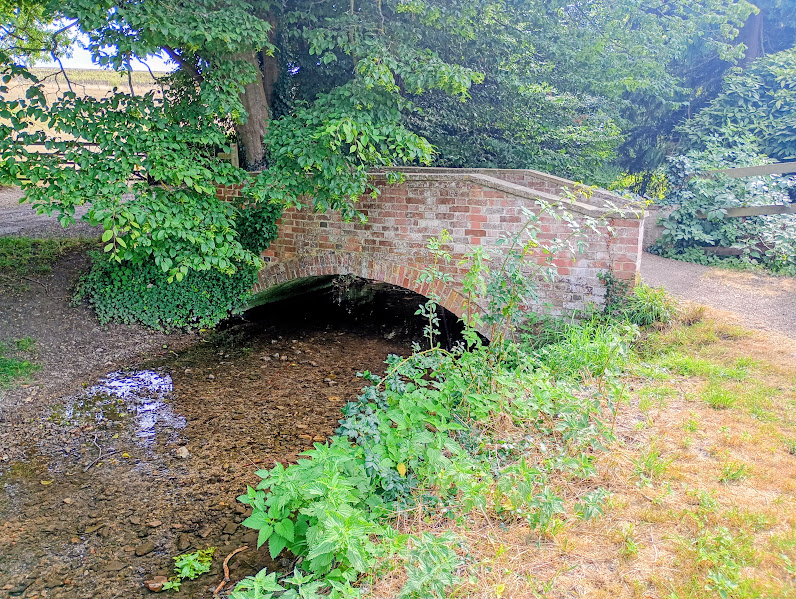
St Peter’s Church is known as the Church in the Garden because of its isolated position outside the village. You reach it by crossing a bridge over the Nailbourne
and then walking across the lawns towards the lych gate.
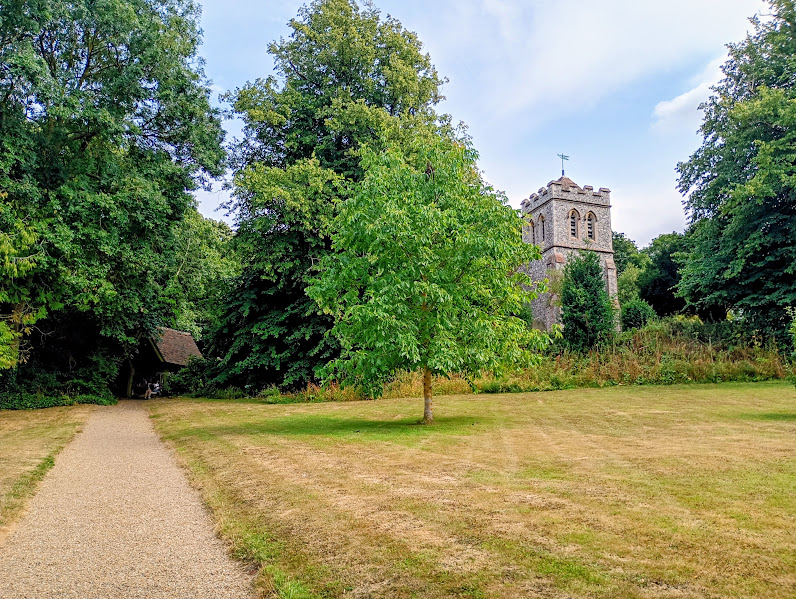
Unfortunately, the church was locked so we couldn’t go inside, and although there was a churchyard trail pinned up on the noticeboard which we could have done – and I do love a trail – I was over-ruled by my companions and so only got to view the carved Norman doorway which was made of Caen stone (the best stone for carving – see Barfrestone Church here).
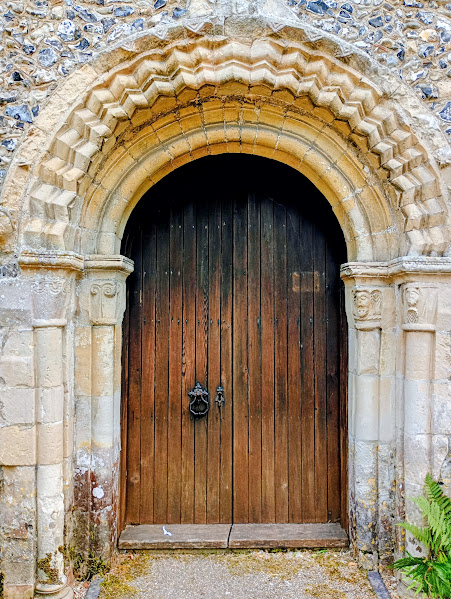
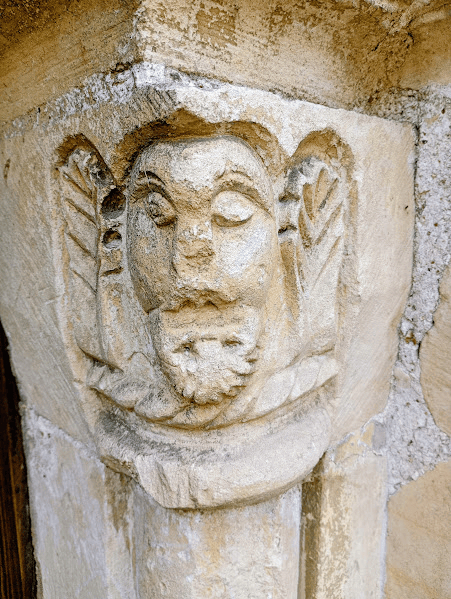
It wasn’t in Barfrestone’s league, but it did have some splendid carved heads on the pillars.
Apparently the church is significant for the first recorded use of brick mathematical tiles – a building practice common in the south of England – where brick tiles are pinned to timber frame to look just like brickwork. This makes it cheaper and easier to lay. However, I am not a brick expert and wouldn’t be able to spot the difference between brick mathematical tiles and ordinary bricks, so am unable to pass comment.
(I should add that Patrixbourne Church is a mere hop, skip and jump away from here, and after discovering that it, like Barfrestone, has an unusual wheel window, I was keen to make a detour. However I was over-ruled on this one as well, and reminded that today’s destination was B and not P!)
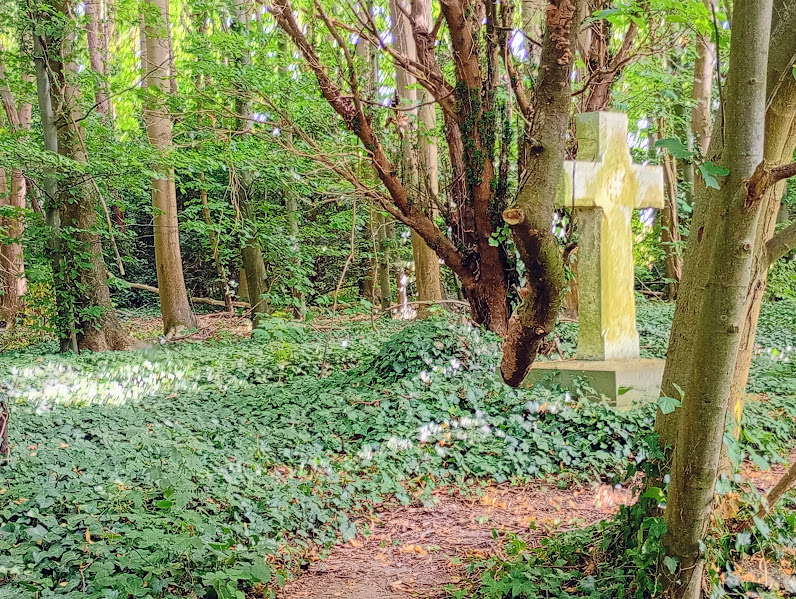
We left the churchyard via a wooded area at the back (Cobham Woods). There’s no fence between the two and it seemed strange to see one of the graves here (that of the Hon. Rev. William Eden, the vicar of Bekesbourne from 1820-1846, and his wife and two of their children) rather than the well maintained church yard. Maybe the trees have encroached over time?
The path followed the road for a while, which meant that when we did finally have to step onto the tarmac to brave the cars for the final stretch back to Mama Feelgood’s, it was only for a short while. There were others having to do the same thing as well – including a family with a pushchair – and we felt better for knowing that, even without a pavement, it’s a common walking route regularly used by locals and we we weren’t just being reckless.
So, another successful foray into the wonderful county of Kent. Dragons teeth, elephants, an unusual chalk stream, some interesting history and the opportunity to enjoy some local cider, all in one small village. I would definitely recommend it as a destination.
You can read A is for Aylesham here
You can read C is for Cliffe (and Cooling) here


Leave a Reply