
From the pastoral nature of The Haywain, you could be forgiven for thinking that the inspiration for John Constable’s most famous work, would be in the heart of the English countryside and difficult to access by public transport. In fact it can be done as an easy day trip by train, as I discovered when my daughter planned it as a surprise for me. A perfect time to visit as this year is the 250th anniversary of his birth.
We caught the High Speed to Stratford International, walked through Westfield Shopping Centre to reach Stratford Mainline, and forty minutes later, were alighting at Manningtree station in Essex.
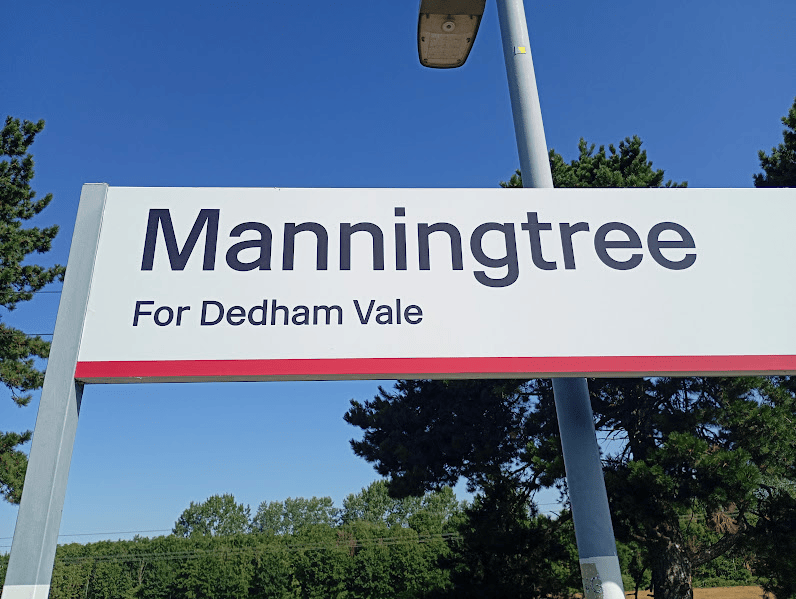
The town is about 3/4 mile away but the Constable walk began immediately outside the station, with a map of the area and excellent signage. Always a bonus!
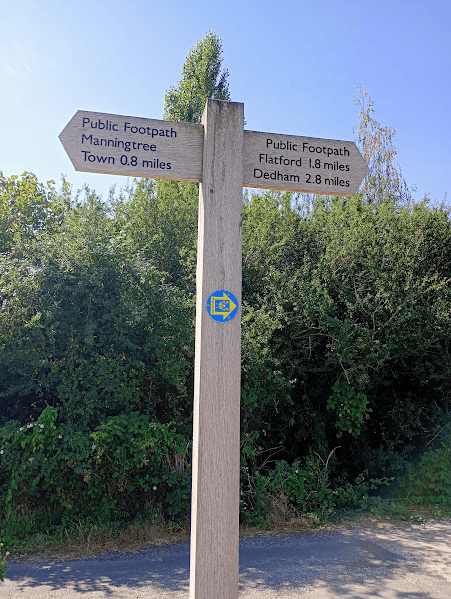
The route initially followed a quiet lane,
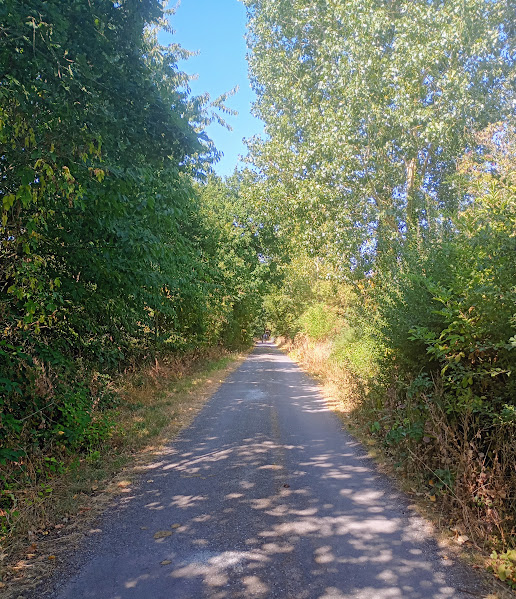
which became a gravel track, which became a slightly overgrown footpath (lined with oak trees that were laden with acorns – surely it can’t be nearly autumn already!)
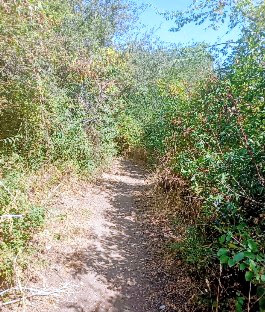
and we were soon walking between tall bullrushes along the banks of the River Stour. (A bit of a home from home as we also have a River Stour in Kent.)
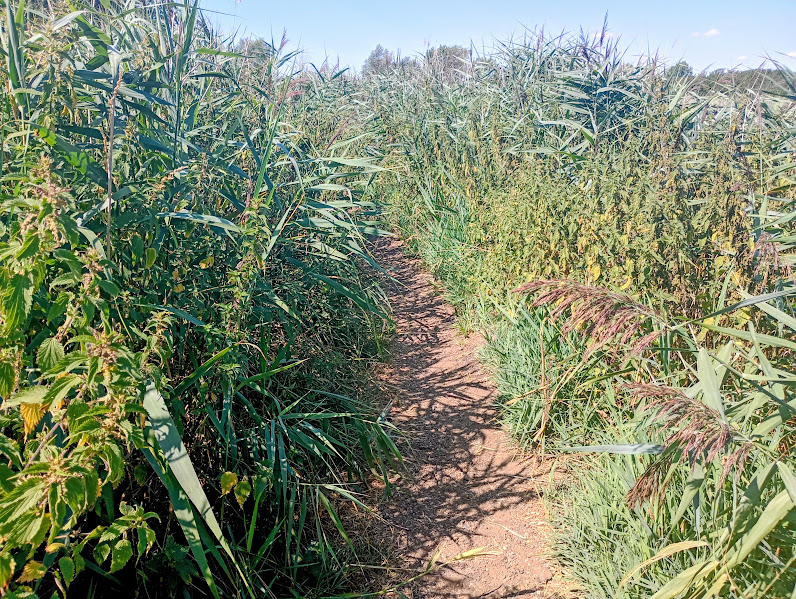
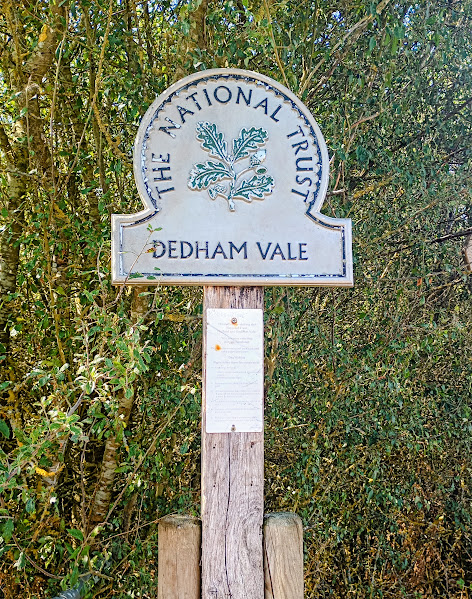
Before long we arrived in Dedham Vale, an Area of Outstanding Natural Beauty on the Essex/Suffolk border.
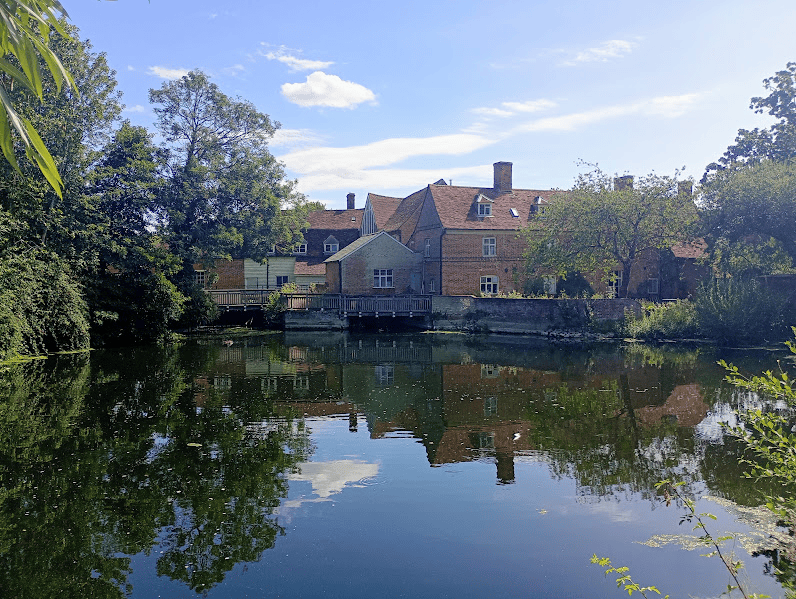
Some more pleasant river walking brought us to Flatford Mill in Suffolk which was owned by John Constable’s father. As the second son (his older brother, Golding, was disabled), John was expected to take over the family business. His great love was painting however, and luckily for him, his younger brother Abram, agreed to work in the mill, freeing John to study art at the Royal Academy instead.
At this point we went from not having seen a soul since alighting from the train, to a lot more visitors milling about and enjoying the sunshine by the river, and up ahead, by a little wooden bridge, there was an electric boat waiting to take passengers on pleasure trips.
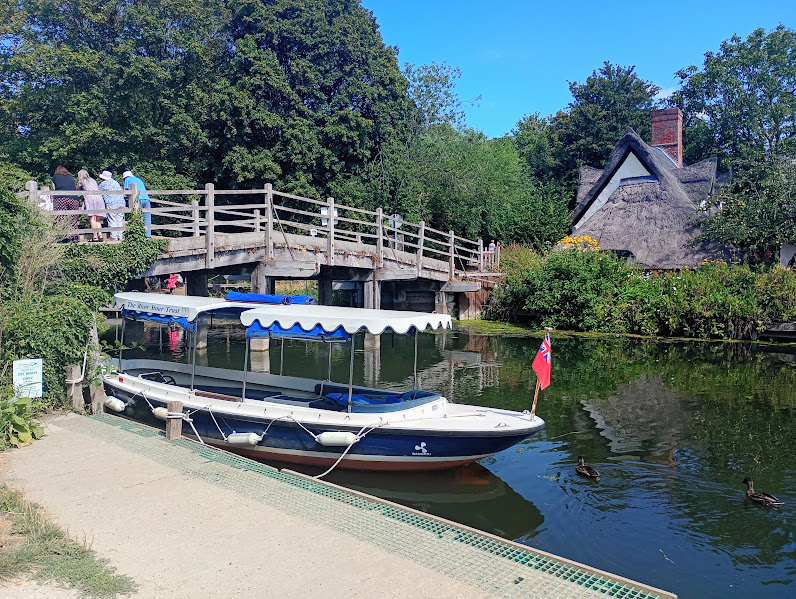
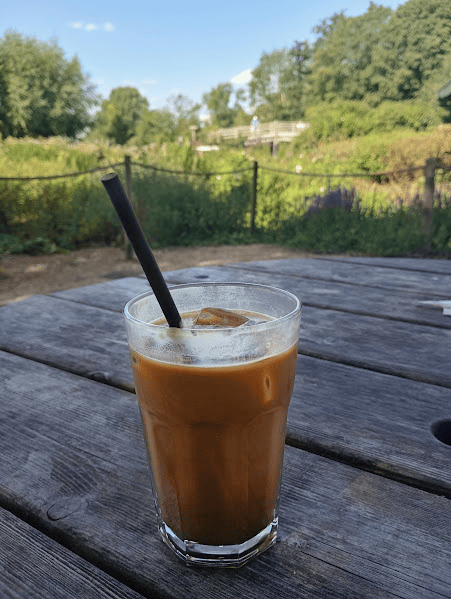
Across the bridge and past a quintessentially English thatched cottage and there was a National Trust Tea Rooms waiting for us – with a large garden area too! It would be rude not to stop, so we bought drinks and found ourselves a table by the side of the river, watching both paddle boarders and the tour boat, going up and down.
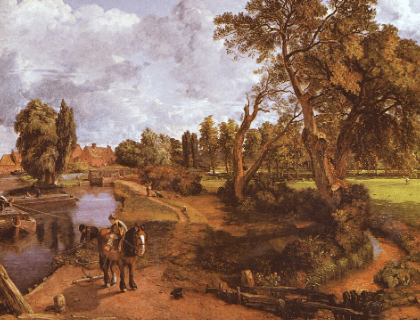
The main reason for our visit however, was to be found just a short stroll along the lane. With Flaxton Mill behind us, here is the mill pond looking down to Willy Lott’s cottage, the setting for one of the most famous English paintings, The Hay Wain.
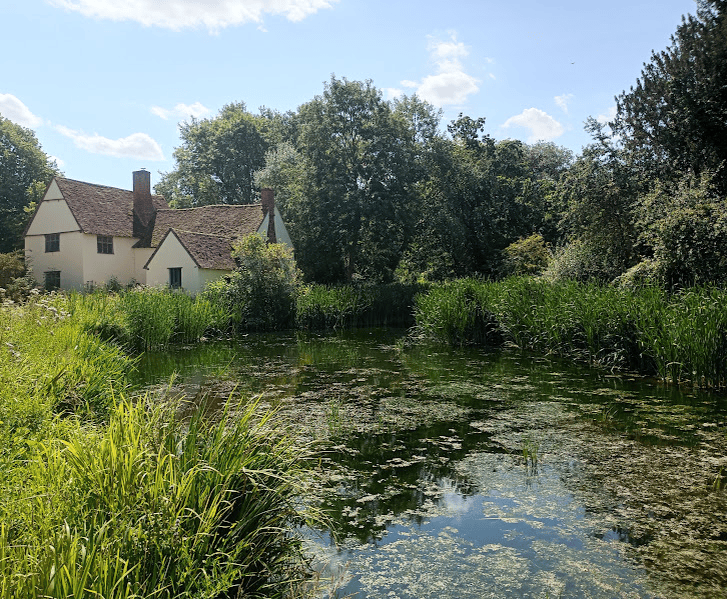
No wagon, and a little more greenery, but otherwise easily recognisable from the scene that Constable painted in 1821. I’ve stood in front of the painting in the National Gallery many times – and it is a reproduced iconic image that everyone is familiar with – but I never thought that I would find myself at the actual scene. It was a real wow moment!
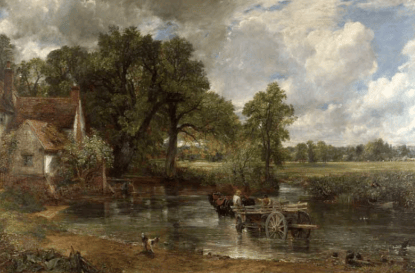
I was so impressed by the way the National Trust had preserved and maintained the area in such a way that it felt completely unspoiled and not in the least over crowded or over touristy – just a cafe, NT shop, and a small exhibition about Constable’s life and works, all in converted buildings that were already there. Other than that the only indications that this was somewhere important were the unobtrusive, but some very useful, information boards on the bridge with reproductions of some of the paintings that he had produced here, so that you could compare the view now with the one back then.
This is View on the Stour near Dedham 1822, which is basically the view, looking west, from the garden of the cafe. In the painting you can see Dedham church in the background, although Constable apparently liked to play fast and loose with his landscapes, moving the position of trees and buildings to make for a better composition, so even without today’s tree cover, I’m not sure that you could actually see the church tower in the distance.
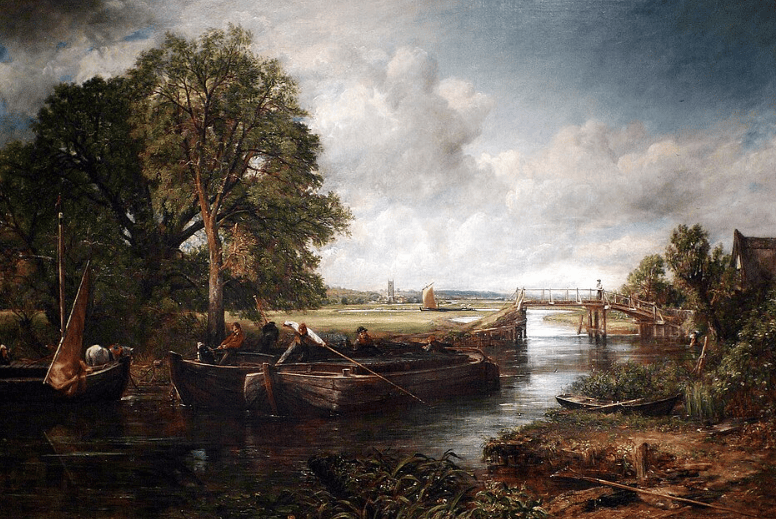
It was the same view that we were able to enjoy with our drinks in the Tea Rooms garden, albeit now slightly more over-grown.
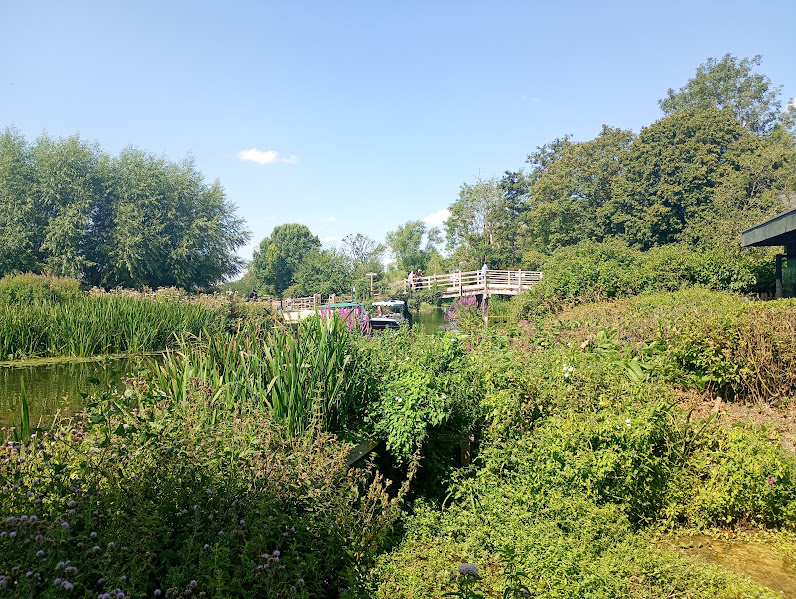
In fact it seemed that the increase in trees and bushes were the only ways in which the countryside had changed in 200 years. Right next to us in the garden was the dry dock, used for boat repairs – a scene also captured by Constable in ‘Boat Building near Flatford Mill’ (1814-15).
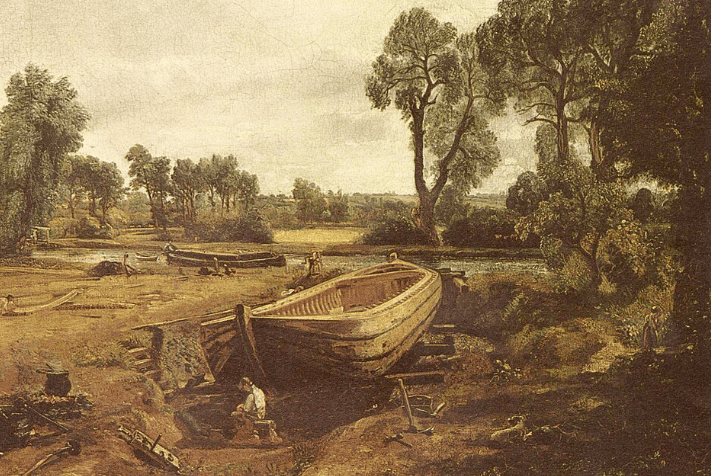
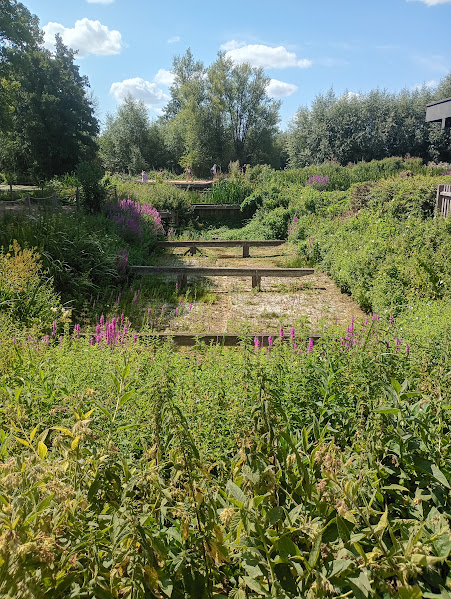
Here it is in 2026.
Boys Fishing was painted in 1813, just past the mill and looking west towards the wooden bridge.
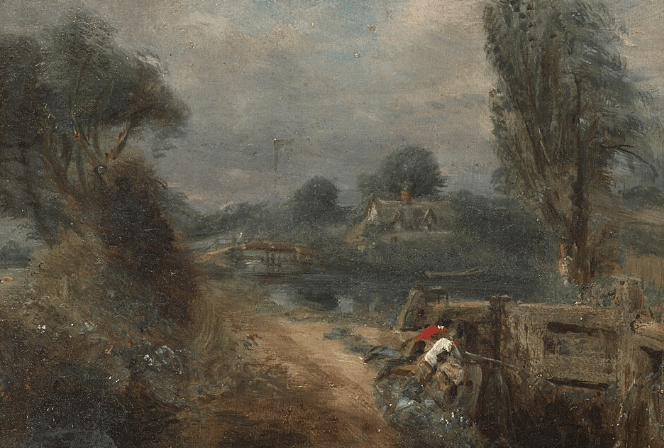
and here is the same lock with the bridge in the background now.
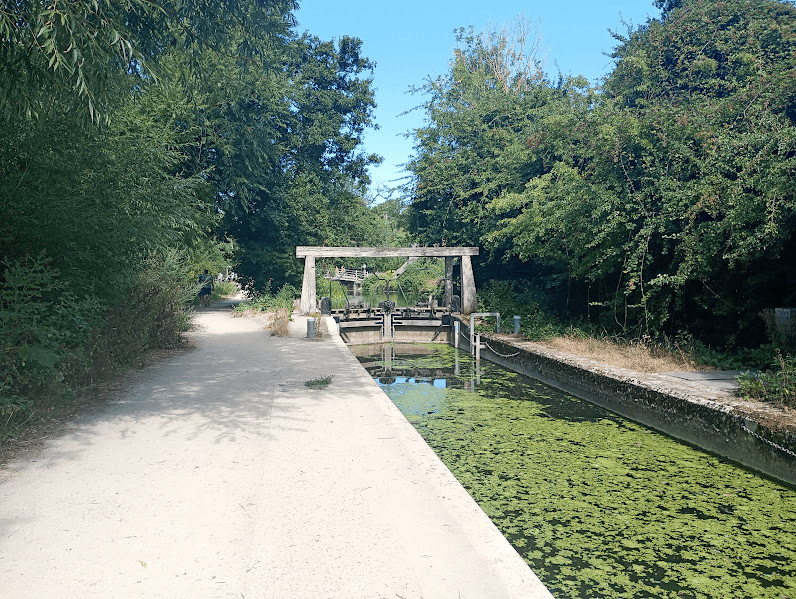
Flatford Mill 1817, looking from the south end of the bridge towards the mill. This was the path we had just walked along, and you can see the lock in the background.
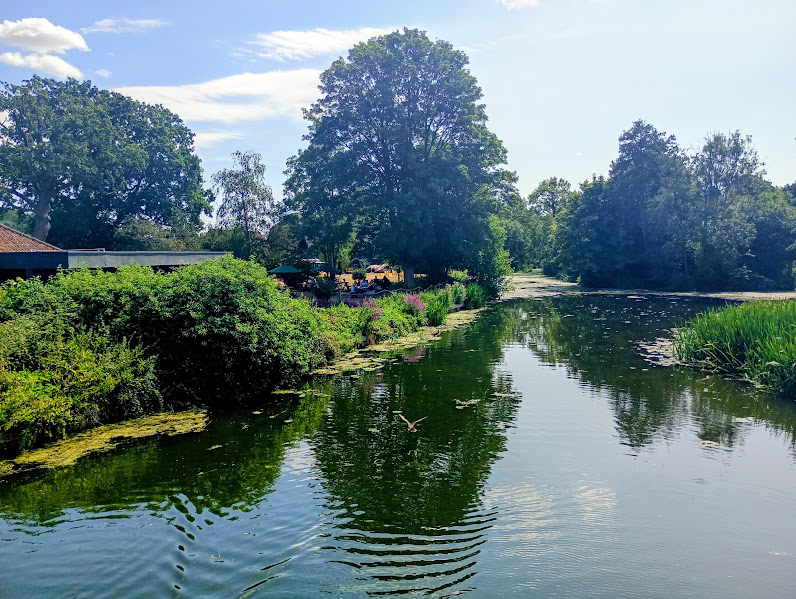
And a very similar view now, with the addition of the Tea Rooms and the mill hidden behind a tree.
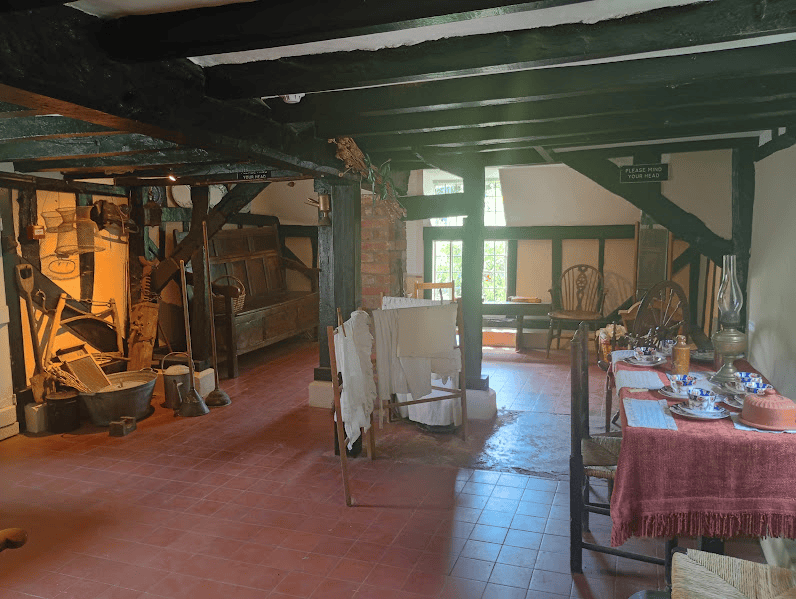
The little thatched cottage by the bridge was open to visitors, with information about the family who lived there, so we stopped to have a look before continuing with our walk. It is easy to romanticise what life there must have been like, but I know that the reality would have been very different. I found it particularly interesting as one branch of my maternal family were agricultural labourers in rural Suffolk, although on the border with Norfolk rather than Essex., but I feel that there living conditions may have been more basic than this!
We were continuing on to the village of Dedham, and as we left Flatford, we came across a landscape lens which I found intriguing.
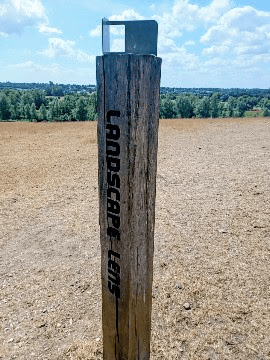
Maybe this is a thing in other places but I’ve never seen one before, and was quite taken with the idea that you could take a photo by putting your camera in the holder and then post it online, thereby creating a scrapbook of the same view across the seasons and over time.
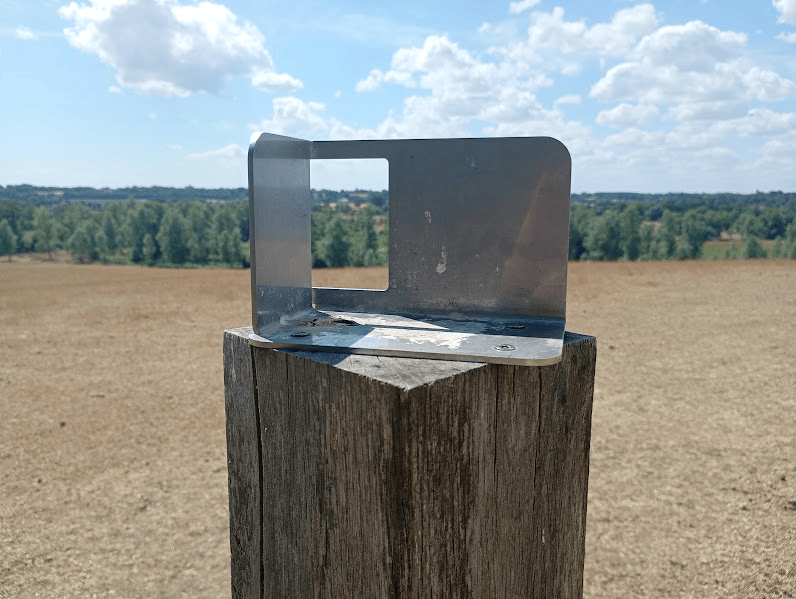
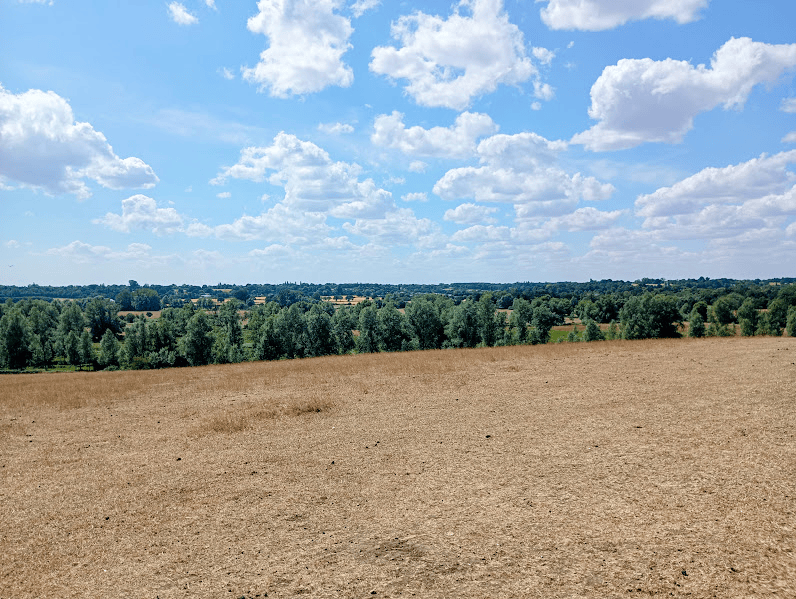
I did take a photo but it’s only made it here! We rested on a bench nearby and took in the sweeping views across Dedham Vale and the River Stour to the village of Dedham. It seemed that this was on Constable’s route to school. Whilst here, we spotted what we think might have been a red kite – apparently they can be found in Dedham Vale – which was very exciting. We have lots of buzzards near us (and I still get excited by them, even though it’s a fairly regular occurrence) but, as with the landscape lens, I have never seen a red kite before!
The countryside seemed so remote and far from anywhere so it was a surprise, when we re-joined the river, to suddenly see rowing boats going up and down.
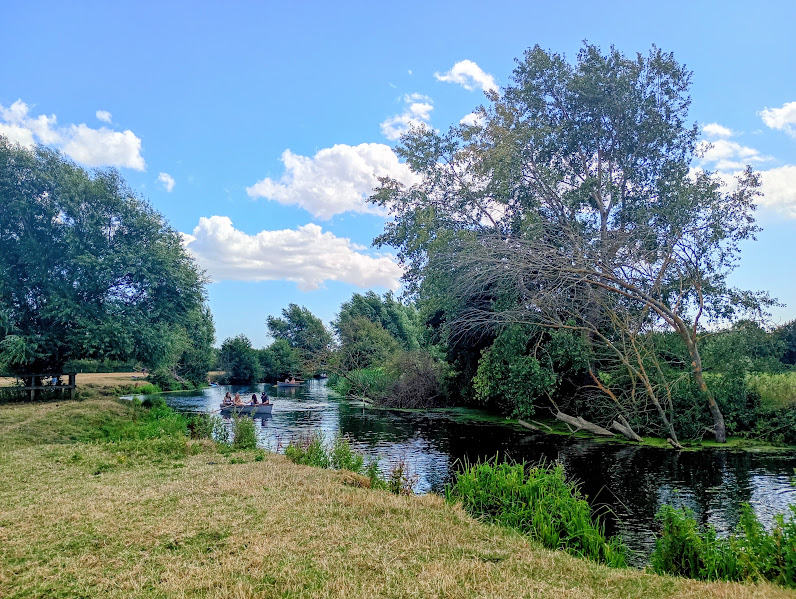
In fact it got busier and busier, and by the time we approached the village of Dedham, the banks were full of families picnicking in the sunshine, and there was barely space in the river! There was a real holiday atmosphere, with an ice cream van, coffee van, and a van offering paddle board hire. There were also a couple of horses tied up under the bridge, enjoying the shade and the coolness of the water, as well as the attention of the children who were wading in to stroke them.
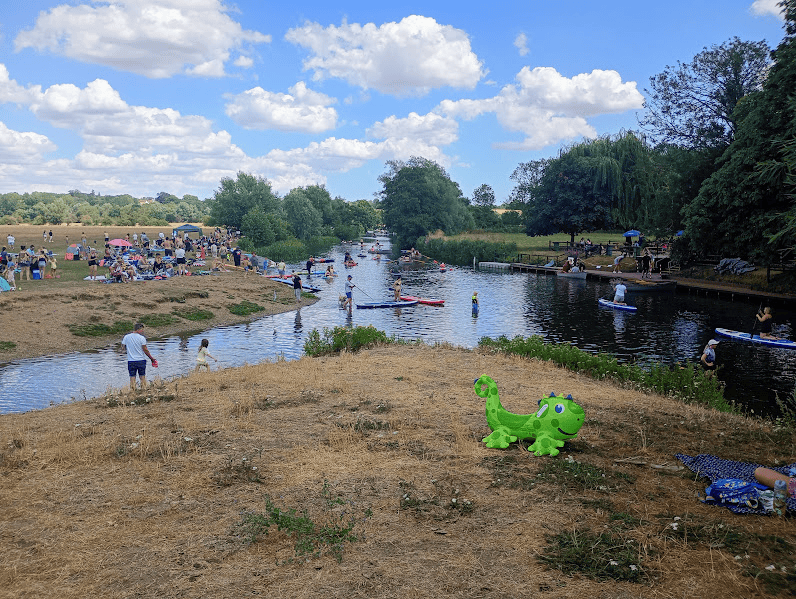
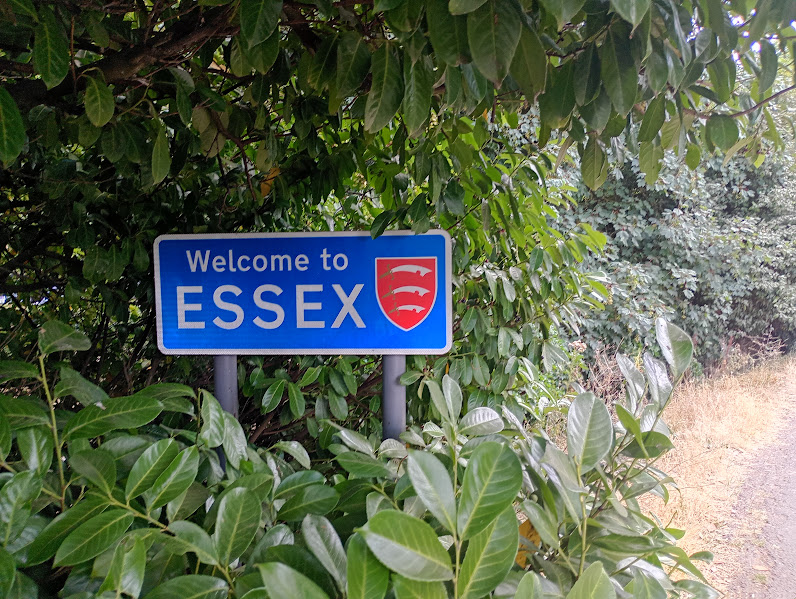
We crossed over this bridge to find ourselves back in Essex.
My daughter had been hoping that we would have lunch at The Boatyard restaurant, but we hadn’t been able to book ahead because we had no idea of our arrival time. It turned out that there was plenty of room inside, but no available tables outside (which were non-bookable anyway), and as we are both compelled to make the most of every opportunity for al fresco eating and drinking, we went to their takeaway cafe next door instead and settled ourselves at a picnic bench with a great view of the comings and goings on the water. And there was lots to see. The rowing boats were being rented out from a jetty just below us and we enjoyed watching them navigating around the paddle boards and kayaks. (There were a surprising number of dogs on paddle boards)
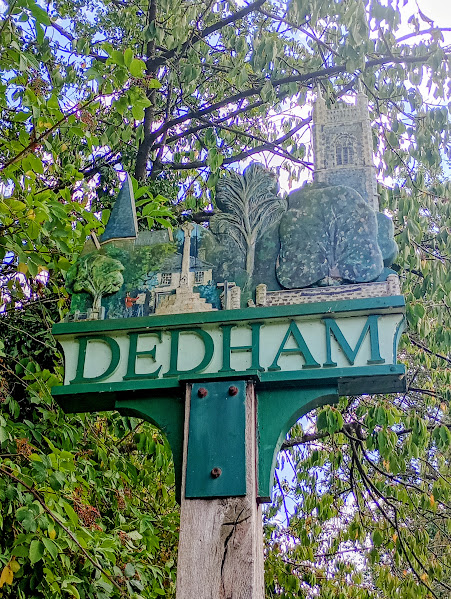
We continued on into the village of Dedham, passing the ubiquitous decorative village sign. I’m a big fan of these and love how they encapsulate the key features of the area. This one didn’t disappoint as it even included a painter standing at his easel.
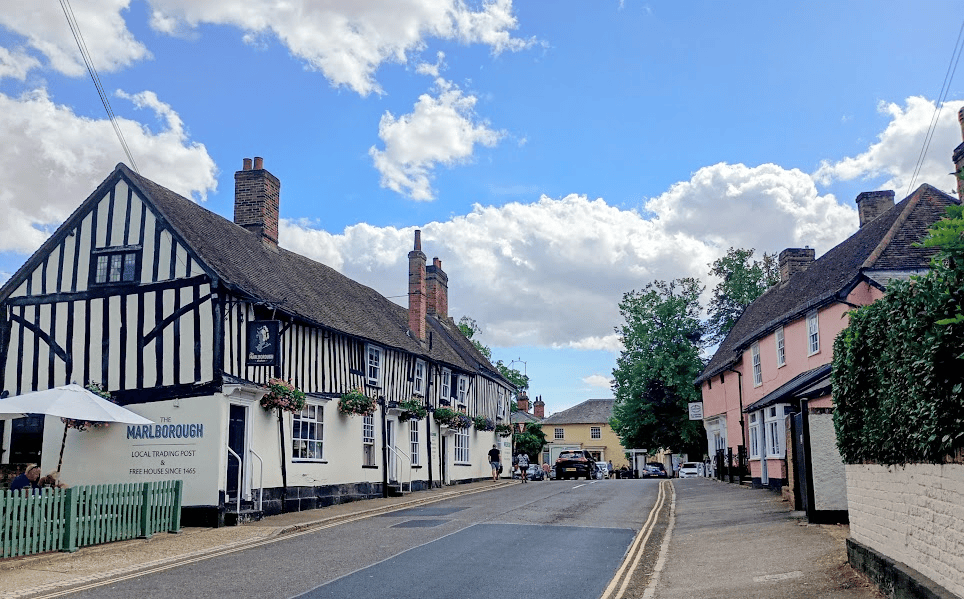
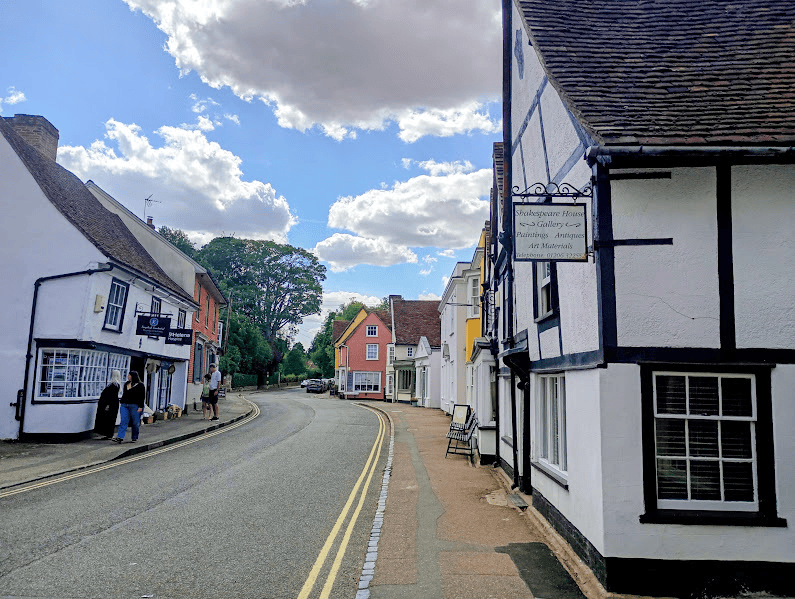
The village was very pretty with lots of timber framed houses. It also had a tea room owned by Wilkin and Sons, makers of Tiptree jam; a jam (which along with Rodda’s clotted cream) is synonymous with an English cream tea! It was such a shame that we hadn’t come across this later in the day because we had no room for a scone so soon after our lunch – although maybe if we had come across it earlier, we could have gone crazy and had a cream tea for lunch!
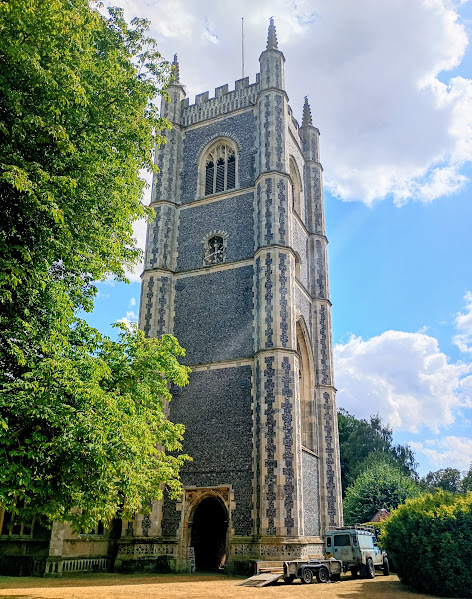
We went to look inside the church (St Mary’s) instead, which apparently has one of the tallest towers in the area. I don’t know how many churches there are in the area and so am unable to comment on the remarkableness of its height. (Although remember that Constable did include it in one of his paintings above, and so if wasn’t using dramatic licence, it must be pretty tall to be seen from Flatford!)
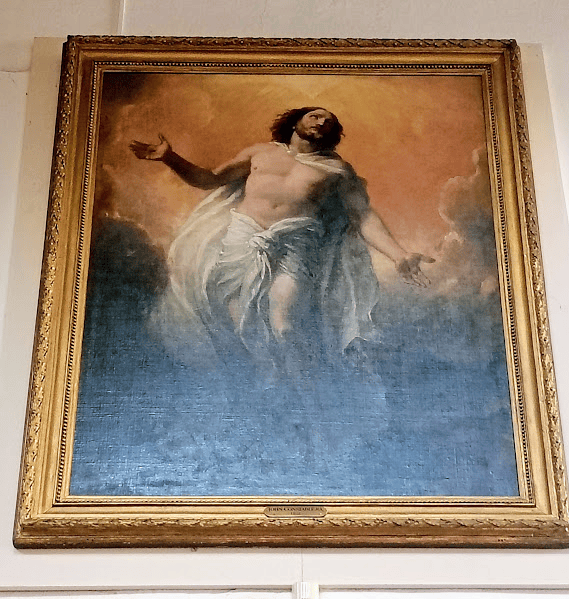
Although Constable is best known for his landscapes, he also painted portraits as this was a more certain way to earn money from his art, as well as three religious works for churches in the Stour Valley. The best of these is The Ascension which is now on display at St Mary’s, although it was originally commissioned by Edward Alston, a brewer from Manningtree (and Constable’s cousin by marriage), for the church in Manningtree in 1821 – the same year than Constable painted The Hay Wain. Alston intended it to be a way to gain favour with the Archdeacon of Colchester who was responsible for granting licences for public houses, but when the Archdeacon refused licences for Alston’s inns, he reneged on the contract in a fit of pique and left Constable with a financial loss. Constable went on to complete the work, although it is claimed that his reluctance to do so is the reason why the bottom of the painting is less well executed than the rest! The painting was put up in Manningtree church as planned and stayed there until the church was demolished, before finally making its way to Dedham.
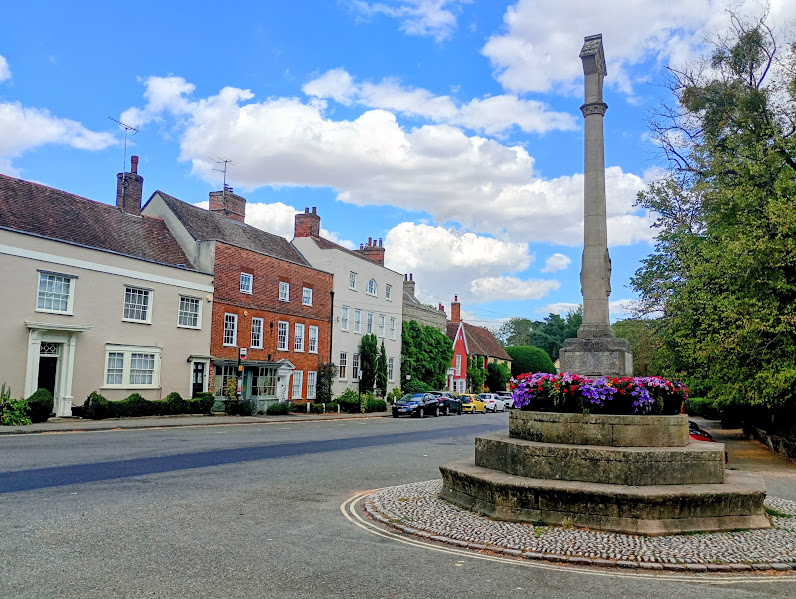
We continued through the village
taking a circular route back to Flatford, following the opposite bank of the river,
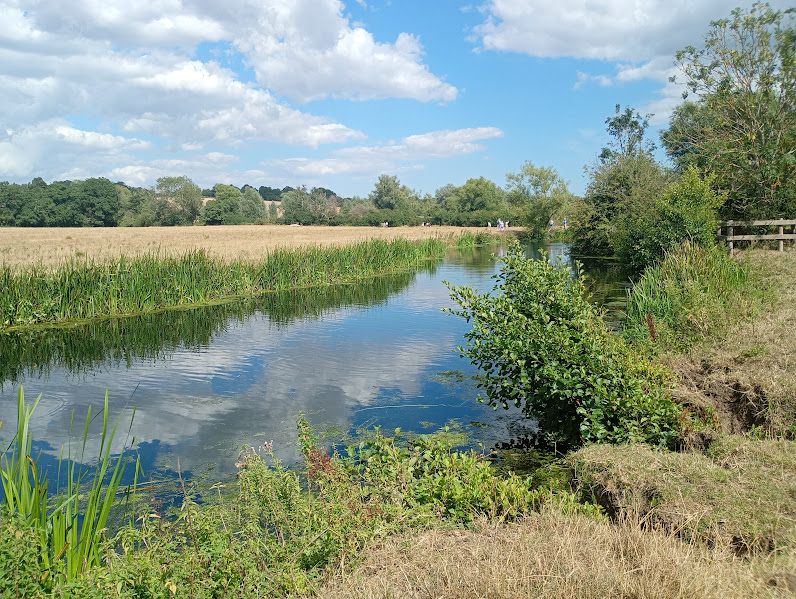
where we found some very interesting trees.
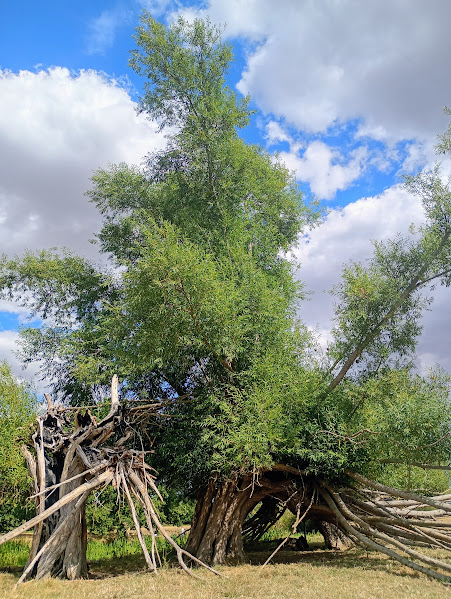
There were also lots more people enjoying the water. Living near the coast, I’m always quite surprised to see so many people using rivers as if they were the sea – especially as I have a rather obsessive phobia of Weils disease, instilled during a pond dipping activity when my children were small – but I suppose I shouldn’t be, because it’s perfectly sensible on a hot day when you don’t have the sea in easy reach. (And I suppose I should also acknowledge that so much of our coastline is now sadly very polluted and carries the risk of other diseases before I am so judgemental!)
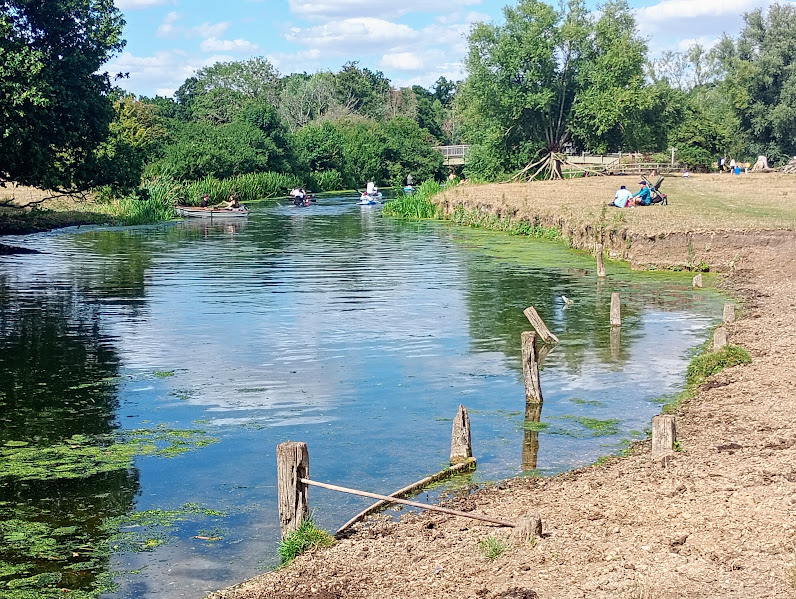
I love a fun fact and here’s a fun fact about Fen Bridge which we passed on our way. The original bridge was used by Constable on his aforementioned walk to school, but this 2022 replacement is so big that it had to be airlifted into place by an RAF chinook helicopter, because of the lack of road access across the water meadows! That would have been quite some sight.
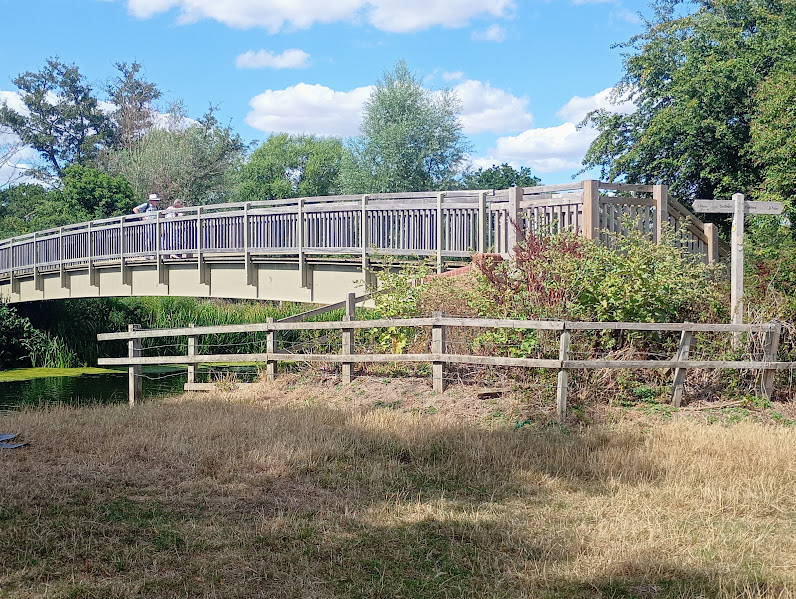
And here we are, back at our start point, but now approaching the bridge from the opposite direction.
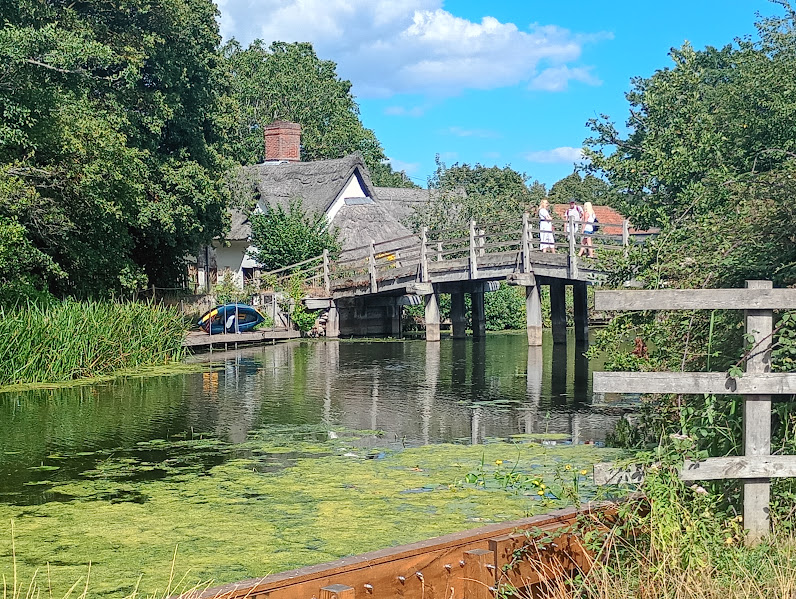
We stopped at the Tea Rooms again, this time for an ice cream, before re-tracing our steps to the train station. In an ideal world I would have liked to have walked into Manningtree, as not only does it look like a very pretty town in terms of its Georgian buildings, but it is also picturesquely situated on the river/estuary of the Stour, but energy levels were not going to permit it. Still, it’s good to leave wanting more, and to have a reason to go back! It was such a wonderful day out in a beautiful landscape, and whether you are a Constable fan, looking for a good walk, or just want to appreciate the countryside, I would thoroughly recommend coming to explore this lovely area.
 A Little Kentish Magic
Leave a comment