
We have a lot of books of walks, and are constantly discovering new ones online, but it is very easy to fall into a routine of the same familiar favourites – especially when we are reliant on public transport, so travelling a bit further afield can sometimes seem a bit of an effort. Whenever we do walk a new route in a new area though, we are seldom disappointed and the Darent Valley Path was an unexpected delight that we will be returning to finish.
As some background, I have been wanting to see the lavender fields at Castle Farm near Eynsford for a while now, and we had been researching walks that might encompass this. Last year, we missed the short window of opportunity, and this year we only had one weekend during the lavender season when both of us were free, so it was now or wait until 2027! My energy levels were not up to the 7 mile circular that we had been originally looking at last year, but we realised that with some surprisingly well positioned village train stations, we could do a shorter linear walk along the Darent Valley Path instead. Prior to this, I’m not sure that I could have told you where the Darent Valley was, but the full path runs from Sevenoaks to Dartford and then on to the River Thames, following – surprise, surprise – the River Darent. We had planned to walk the section from Otford to Eynsford but, concerned that my energy levels weren’t up to that either, we made a last minute decision to shave off a couple of miles by starting in Shoreham instead.
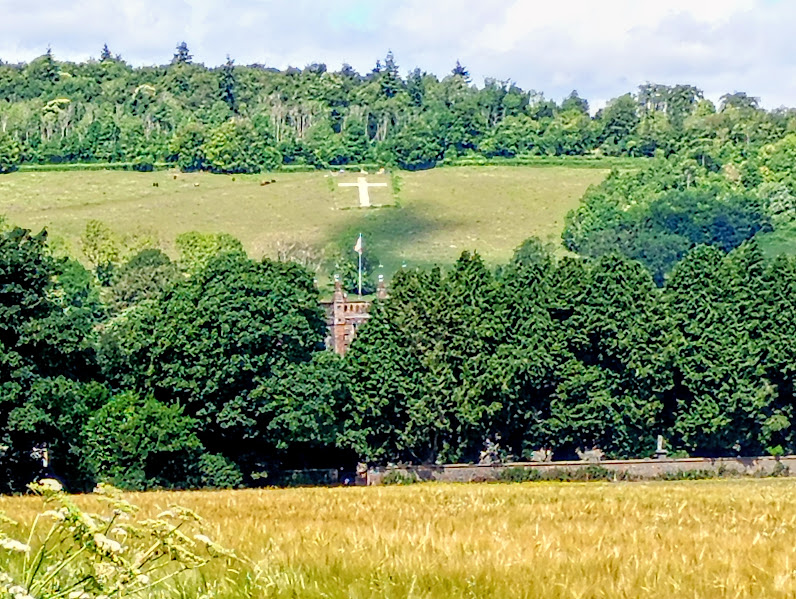
So, two trains and an hour and a half journey time later, we alighted at Shoreham station and followed a path across a field into the village. Ahead of us was the brick tower of the church, and a chalk cross on the hillside; a memorial to the fallen of the 1st World War.
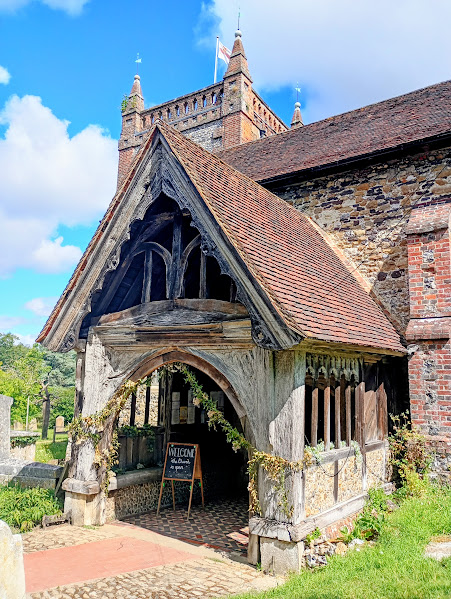
The church, which was reached via a picturesque avenue of yew trees, had been decorated for a wedding and looked very pretty with a garland of flowers around the porch. Obviously, we stopped for a look inside.
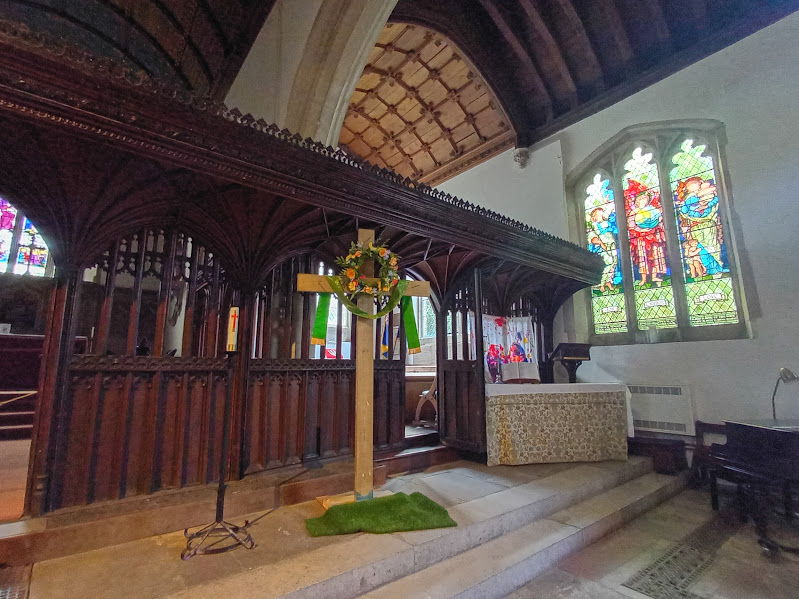
It had a beautiful medieval wooden rood screen. I love the fact that you can just pop into a fairly regular parish church in a small village and know that you are more or less certain to find something fascinating and a little bit different from other churches.
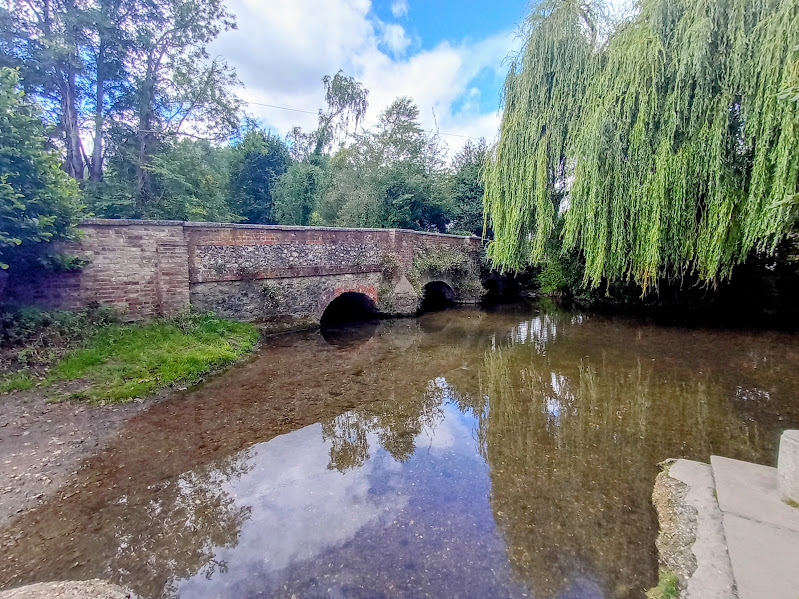
We then headed down to the river and the old stone bridge to join the Darent Valley Path, passing the entrance to the Mount Vineyard on the way. We were there too early to pop in and enjoy a glass of wine, but we straight away decided that if we did the walk again (and having done it, we definitely will!) then we would do it in the reverse direction so that we can end with a tipple!
We were already throoughly enjoying our walk, even though we had barely begun, when we spotted this little fellow on the verge.
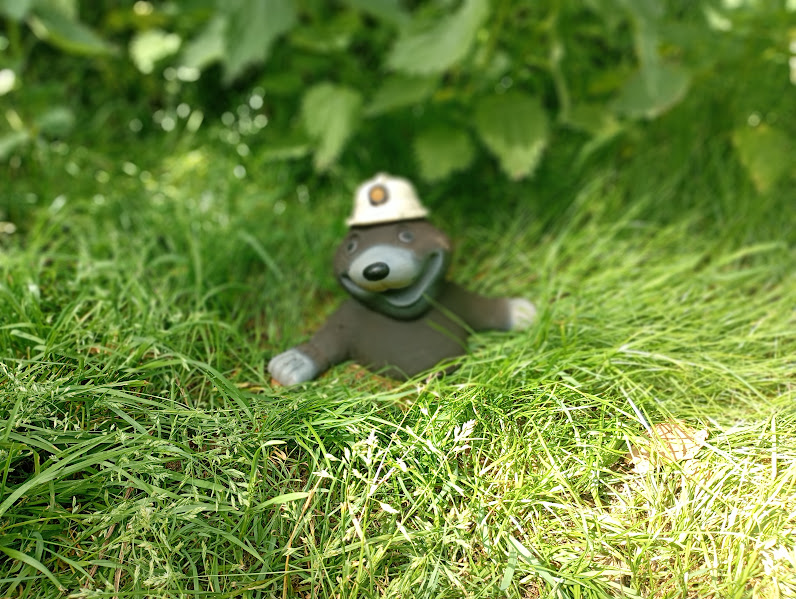
He was just one of a whole array of little moles that were hiding in the grass., and whoever put them there deserves our wholehearted thanks for making us smile.
The path was very easy to follow, and wasn’t as busy with people heading to see the lavender as we had thought. It looks a bit straight and boring here but there were lovely views over the rolling countryside.
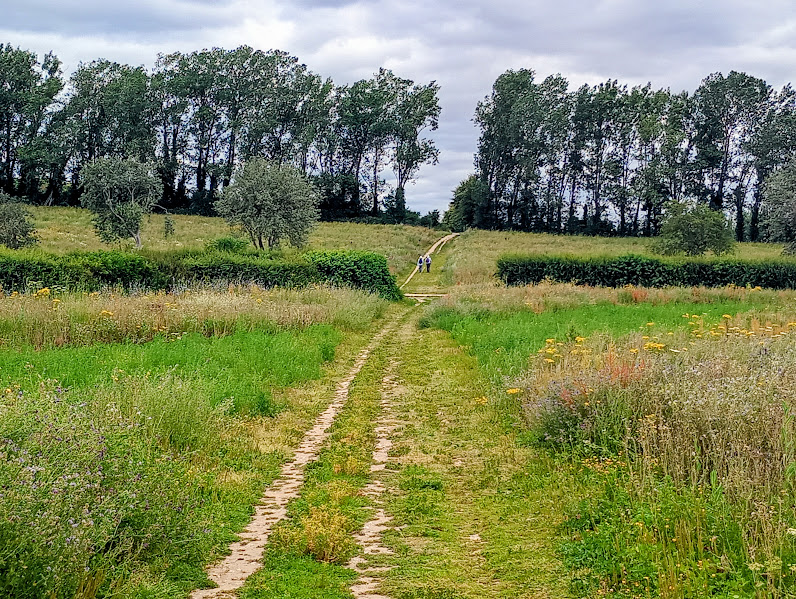
And then we got our first glimpse of the lavender fields. That splash of purple in the distance made me so, so happy..
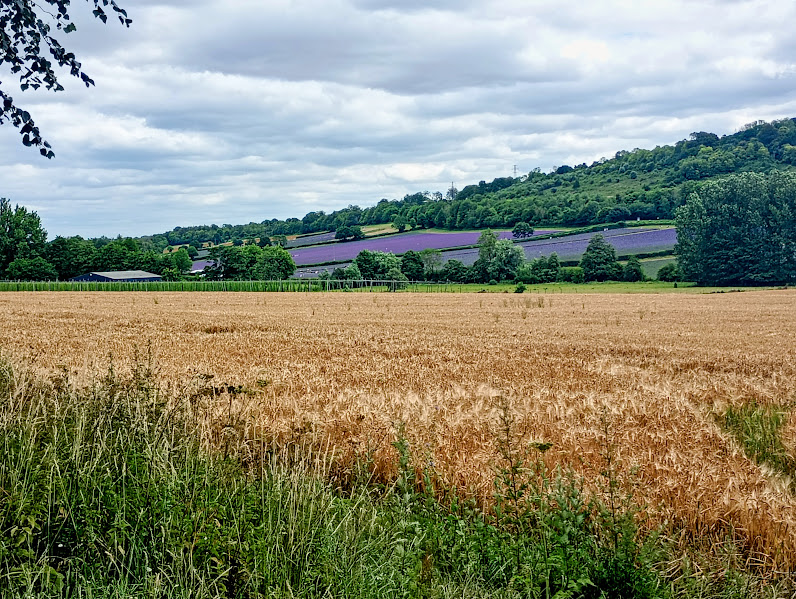
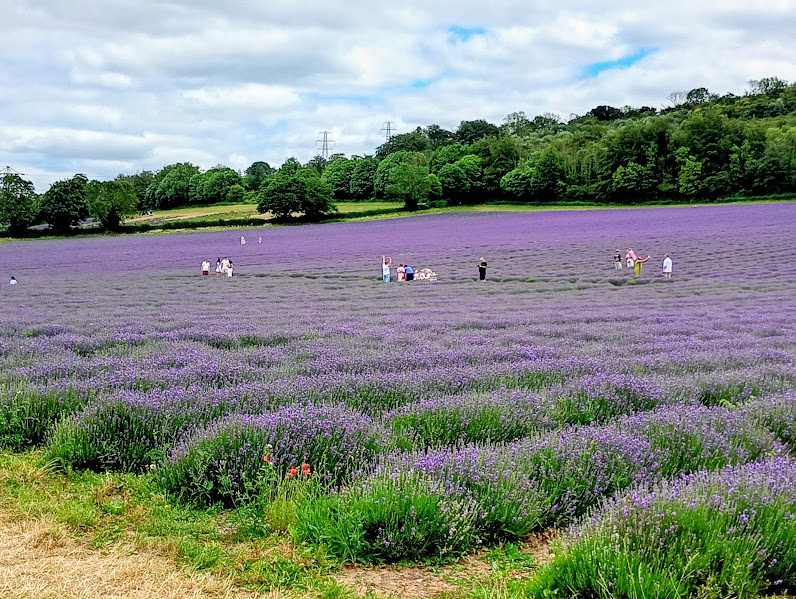
We soon found ourselves at the farm, where there was a courtyard with a coffee cabin, food stalls and a shop. We bought an iced coffee and nabbed a just vacated bench before wandering down to have a closer look at the fields, where we discovered that it cost £7 to actually go in and walk up and down the rows for an hour or £15 to bring your own picnic and sit and eat it in the field. I’m sure it would have smelt lovely, and if you wanted the perfect instagram picture then it would have been money well spent. We were quite happy just looking over the fence, but we did support their business by buying some. hop and lavender sleep spray (although ironically when I tried it that night, I ended up sleeping even worse than usual!) and had we not been at the start of our walk, I would have bought a bunch of lavender too.
Continuing along the path, we soon came to Lullingstone Country Park. I love a colour marked trail, and a large map showed that there were three different ones that you could follow to explore the park. As tempting as it was, we couldn’t get side tracked by extra walking though, so used the toilets and moved on.
Next, we came to the gatehouse of Lullingstone Castle. We couldn’t see the ‘castle’ but apparently it’s a manor house rather than what you might stereotypically imagine a castle to look like. It dates from the late 15th century, and Henry VIII and Anne Boleyn were regular visitors – maybe not that surprising given that Anne grew up at Hever Castle in Kent, which is not so far away. The gatehouse was being guarded by Royalist costumed soldiers, demanding allegiance to the Crown from all who entered. It seemed that there was a reenactment day going on, and we considered going in to have a look and maybe eating our lunch there, as the reenactment would add an extra element of fun. Then we discovered that entry was £17.95 for adults which would be fine if we had more time at our disposal, but was too expensive for a fleeting visit. Another time maybe.
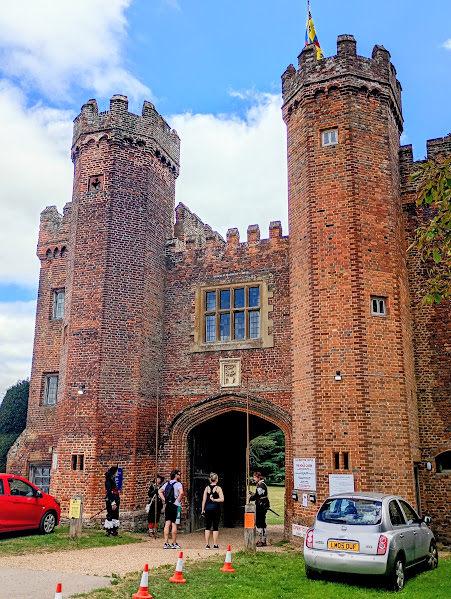
So we continued heading up to the lane and came to the next attraction – Lullingstone Roman Villa. It was quite incredible that all these tourist attractions were coming so thick and fast when we were seemingly in the middle of nowhere. Lullingstone is known for its beautiful mosaics, but as it is partially closed for conservation work at the moment and you could only see them from behind glass from an upper viewing gallery, entry was free (though with a suggested voluntary donation). We didn’t have time to look at the displays and only wanted a quick glimpse of the mosaics themselves, so were in and out within minutes, but, again, it would be worth a longer visit once it is fully open again.
Up some steps and up a steep hill, and all of a sudden there were lots of walkers, all heading in the opposite direction. Clearly it is more popular to walk to Castle Farm from Eynsford than it is from Shoreham! We stopped at the top, in the corner of the field, for a picnic lunch – which included some very delicious Castle Farm apple juice (they grow apples and hops as well as lavender)

and admired the view over the countryside and down to the Eynsford viaduct.
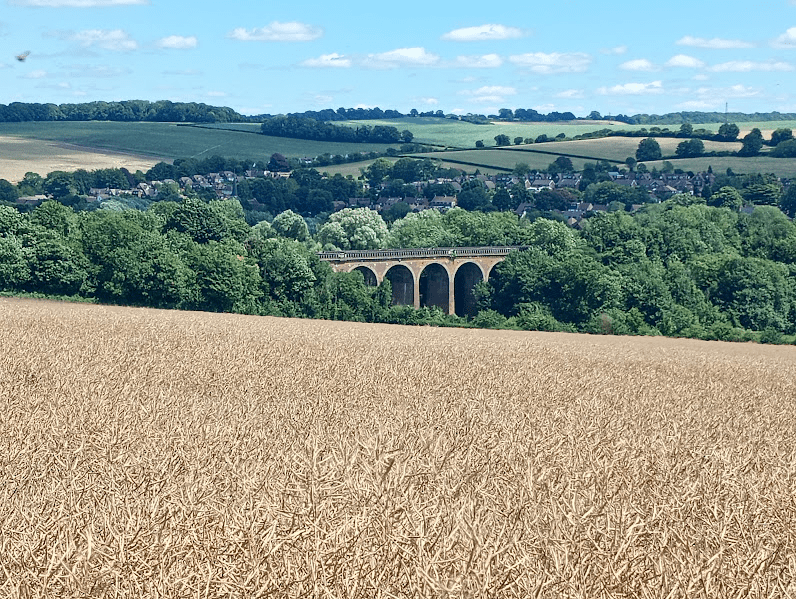
Would you believe that there was yet another tourist attraction almost immediately afterwards? The Eagle Heights bird of prey centre was at the other end of the field. I must confess that I wasn’t quite so tempted by that one, although I’m the first to get excited when I spot a bird of prey in the wild!
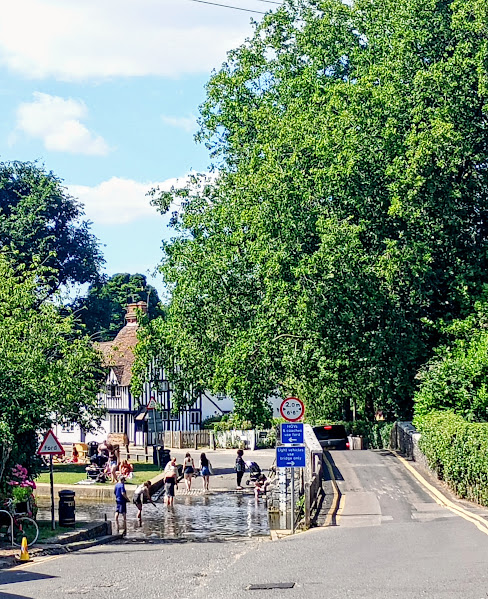
Then it was downhill, crossing the railway line just before it went over the aforementioned viaduct, and on into Eynsford.. We couldn’t believe how busy it was. The green space next to the river was absolutely packed with families picnicking and the river itself was full of children paddling. In this inland part of Kent, this was clearly like having a day at the beach. The Darent is a chalk stream which makes the water very clean and clear and so it did look very tempting. The ford here is what gives the village its name.
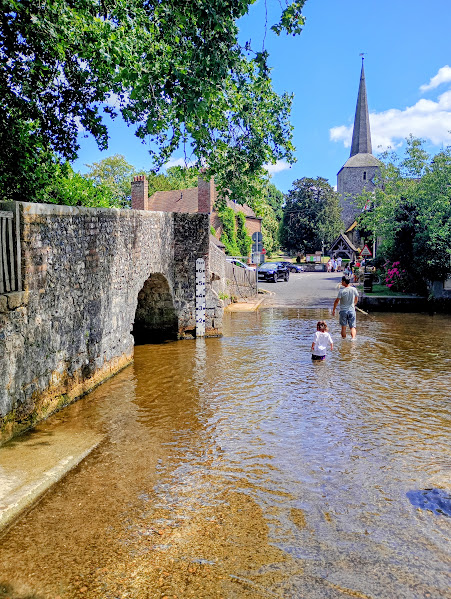
There used to be a tea rooms next to the bridge, and, during our research beforehand, we were disappointed to discover that it has now closed. I do love a tea room stop at the end of a walk, but we had to settle for a couple of drinks from the village shop instead. That was an experience though, as it was very old fashioned and looked like something from a period drama. (It also sold cakes made by one of the contestants from the Great British Bake Off, who apparently lives in the village.)
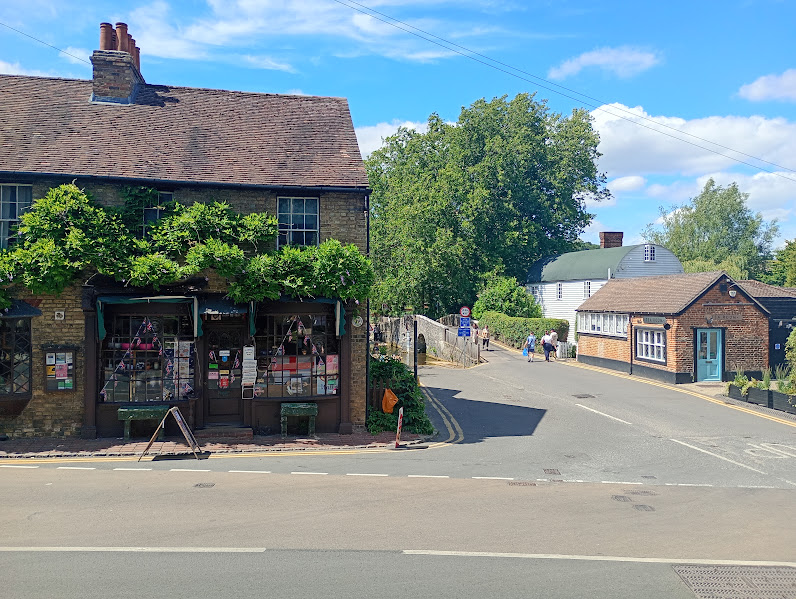
We then sat in the churchyard, watching the comings and goings over the bridge and ford. The road signs told us that cars need to go over the bridge, coaches and lorries go through the ford. There were no coaches and lorries, but a group of bikers did take their motorbikes through the water, which caused a bit of excitement – as well as some unexpected waves in their wake – for those paddling!
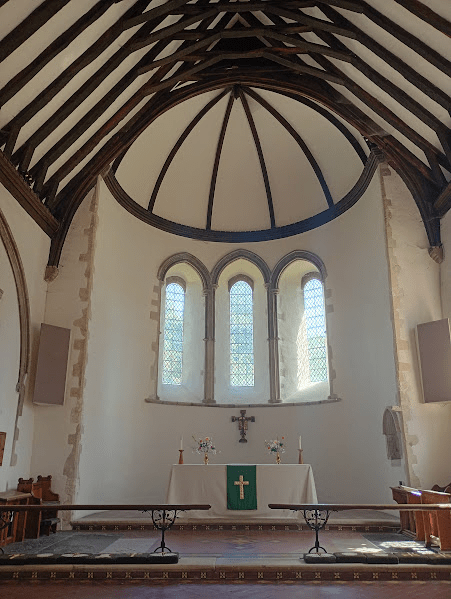
There was just about enough time to have a quick look in the church before we headed to the station for the first of our hourly trains home. There was a domed apse and, although in the grand scheme of things I realise that there are considerably more English churches that I haven’t visited than those that I have, I don’t remember ever having seen one before, and in fact I have since discovered that there aren’t that many surviving. See what I mean about never knowing what you’re going to find when you go into an English church? (Also, fun fact, the church is built into the side of a hill and the floor slopes upwards as a result!)
I very rarely go on a walk that I don’t instantly want to add to our repertoire, and this is one that I would definitely like to do again during the lavender season. Not only was it a great walk in its own right, but it seemed that at every turn there was something else that you could stop and do as well. This was a new part of Kent that I had never visited before, but I am sure to be back to explore some more – as well as complete the full length of the path.


Leave a Reply