
I am so fickle. Two nights away in Stamford, South Lincolnshire and it’s my new favourite town (outside of Kent!). It was my turn to organise a surprise destination for our half term mini break and I am feeling pretty smug that I absolutely nailed it!
I’ve never really thought of Lincolnshire as a destination before, beyond a vague wish to go to Skegness based on the Jolly Fisherman railway holiday poster (random I know, but I love a bracing walk by the sea, and the idea of visiting a seaside town that brands itself as being ‘so bracing’ has always had a bit of a strange appeal.). However, when I read about Stamford being the first town in England to be designated as a conservation area, with 600 listed buildings and five medieval churches as well as lots of independent shops and cafes, it seemed as if it was just our kind of place.
I was bowled over from the minute we arrived, although ironically, after an initial wander through the centre, we headed straight out of town on a walk that I had discovered online. We love a whimsical walk, and, as it turns out that Stamford sits very closely on the border of four different counties, this one was appropriately called the Four Counties Walk. You can’t get more whimsical than that! (Interestingly, it’s the only place in the country where there is almost a quadripoint – a place where four borders meet – but a 20m gap at the point where they should all converge, means that there are just two tripoints instead.)
So, we began in Lincolnshire, following the River Welland from the Town Meadow in Stamford to the village of Tinwell in Rutland. As we weren’t really sure where Rutland began, we made a short diversion to have a look in the church in order to make sure that we had definitely set foot in the county. It was a beautiful limestone building, although I must confess that as we had chosen one of the 30+ degree heatwave days to do the walk, we were more interested in having a brief respite from the sun than appreciating the interior – although I did dutifully sit and read the information pamphlet.
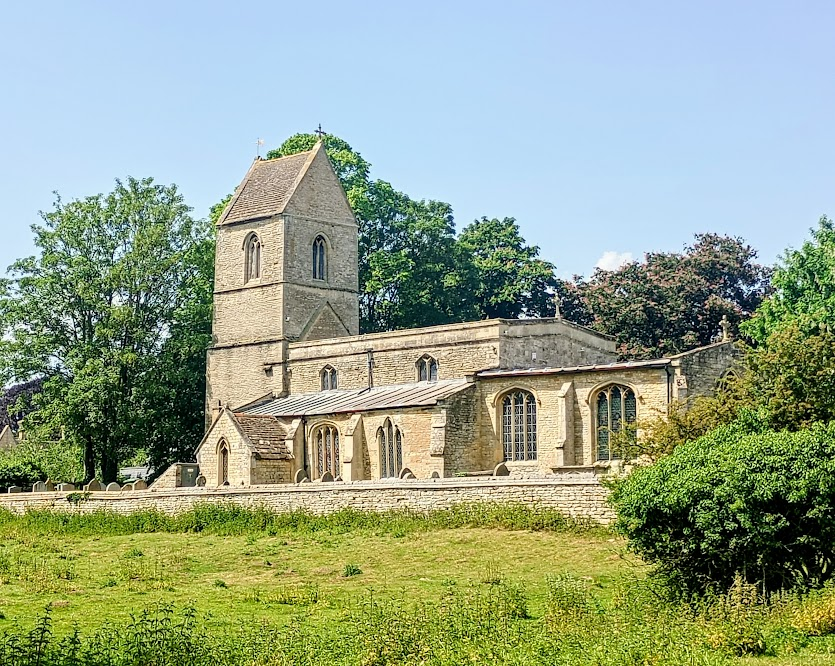
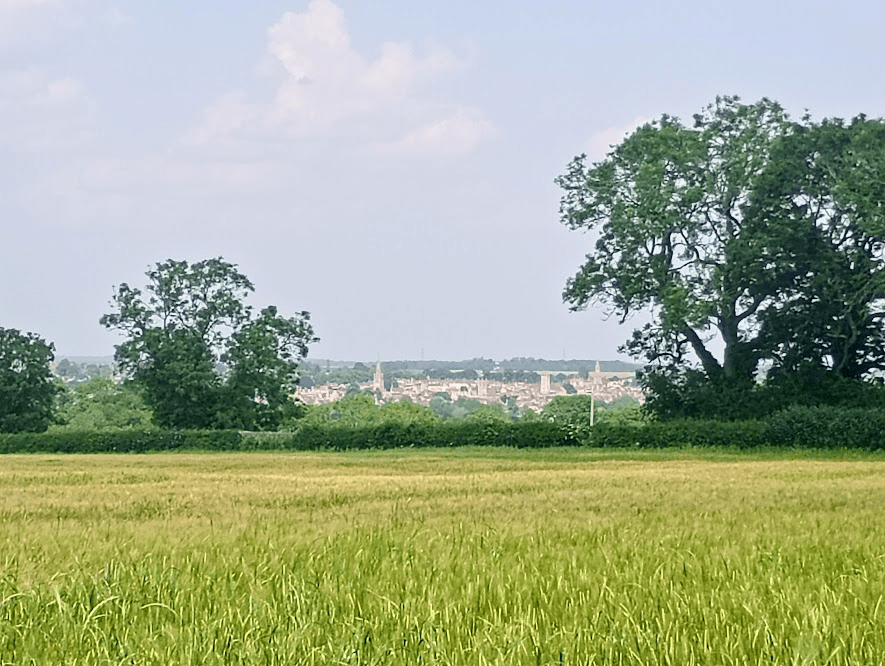
From there we headed to Easton on the Hill which is in Northamptonshire. In an otherwise flat landscape, we climbed the only hill in sight (though with a fairly gradual incline) to reach it, but it was a picturesque stretch, and we were accompanied by the echoing call of a cuckoo – the first and only one that I heard this year. From the top we were rewarded with lovely views back over Stamford.
No need for a diversion to the church this time as it was right on the edge of the village and we had to walk right past it.
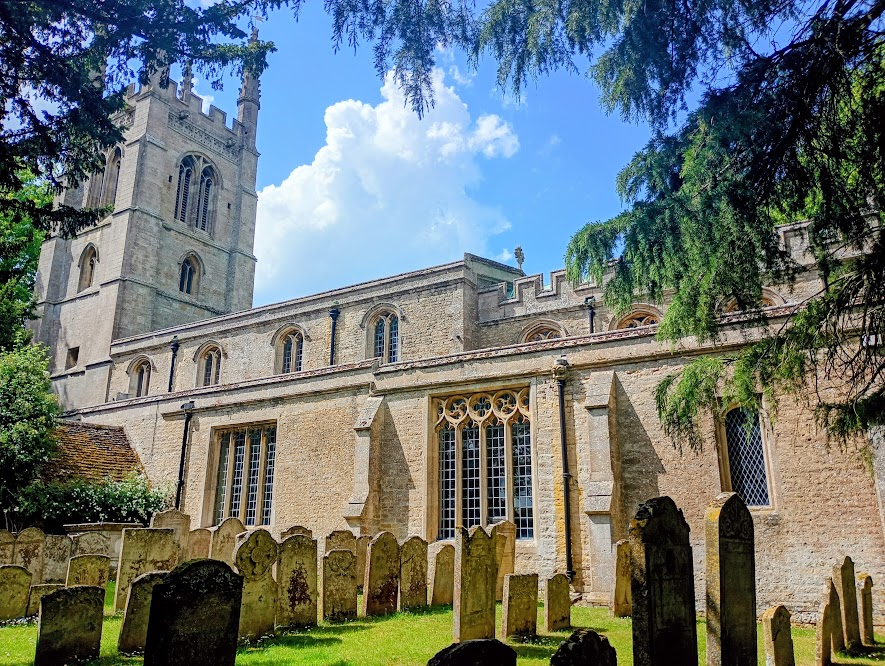
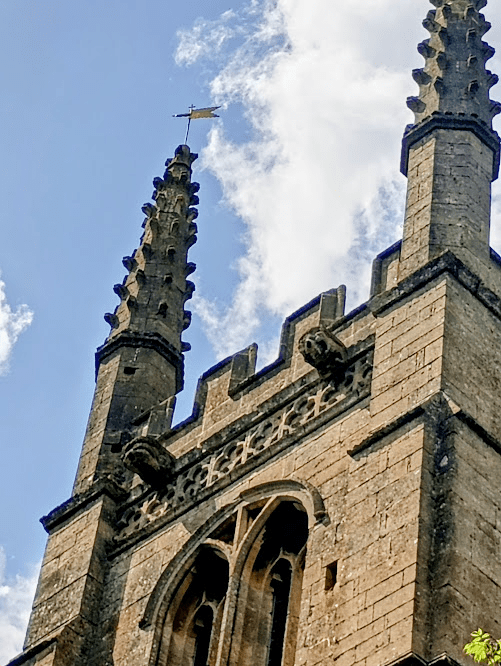
One of its most interesting features is the mooning male gargoyle on the south wall of the tower. (It’s the one on the left but sadly – or maybe not – you can’t see him very clearly in my photo. However you can see him here. in all his glory, and learn more about mooning gargoyles if you are so inclined!) Legend has it that it was carved leaning towards Peterborough Cathedral as a protest by an underpaid stonemason, but regardless of whether this is true or not, it is one of only a handful of examples of mooning gargoyles in the world, so it was interesting to spot.
Easton on the Hill was a picture perfect village but it was absolutely deserted. I thought it was easily as pretty as the Cotswolds and so it was strange to be the only people walking down the street, and not be jostling along with hordes of tourists..
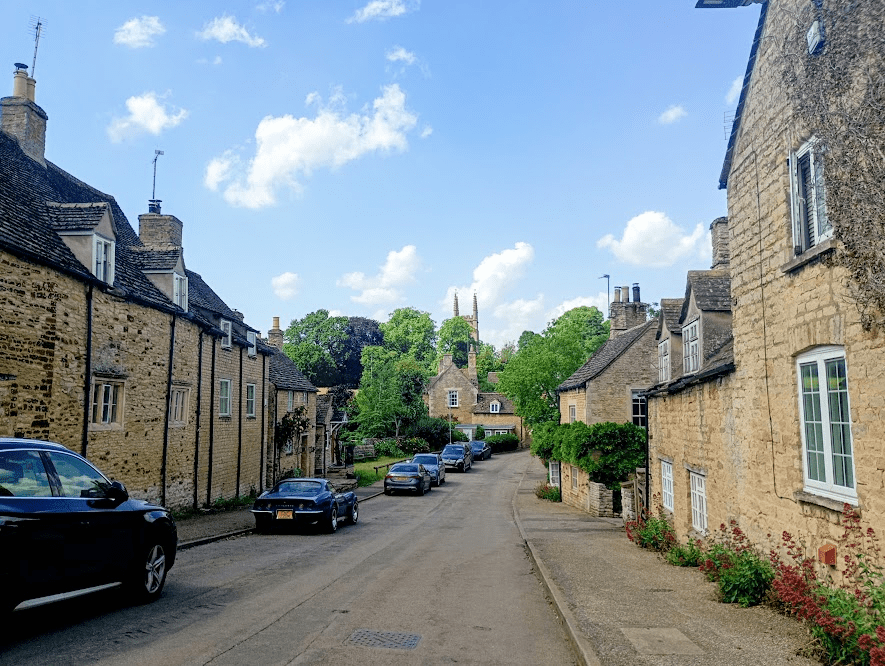
I absolutely love the heat, but by this – the half way point – we were both feeling hot and bothered and thirsty because we had drunk all our water, but were spurred on by the promise of a cafe stop. How excited I’d been when I’d discovered that this little village had a highly rated cafe. Oh how we were looking forward to an iced coffee! And then, having made another short detour to reach it, discovered that it was closed – despite the internet telling me the contrary. It was a very low point. How quickly you can go off a village!
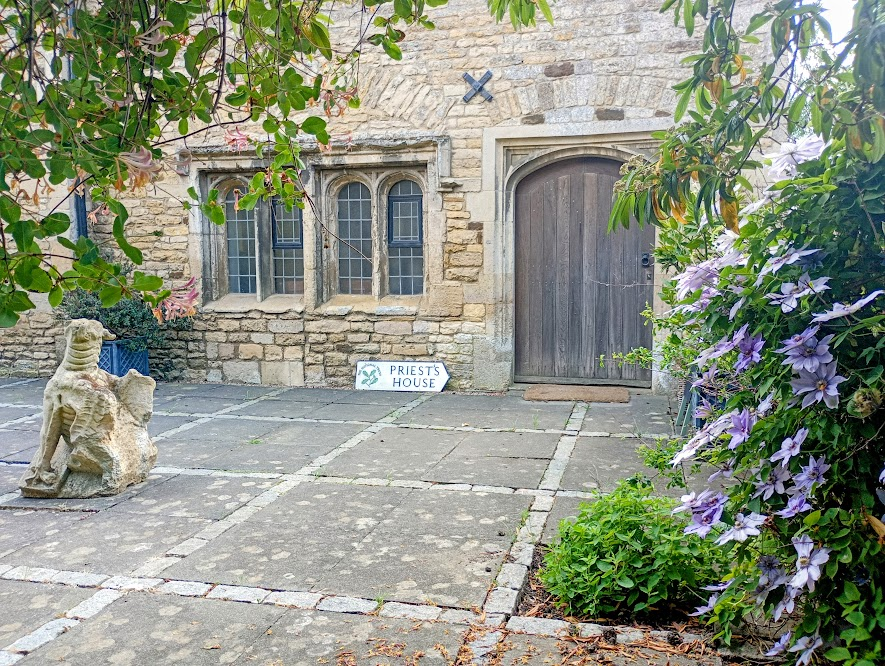
The pub was also closed, but luckily there was a small village shop which saved the day. Two litres of water and two Mars milkshakes (for energy) were purchased, and needing to sit down and get out of the sun for a while, we trudged out of our way again to the Priest’s House, a small National Trust property, in the hope that it might have a small garden we could sit in. Luckily there was a small courtyard around the back where we huddled under a tree on a stone bench in the corner The Priest’s House was free to visit but you needed to fetch the key from one of the neighbouring houses. It was a sign of how tired we were that neither of us had the energy to do so.
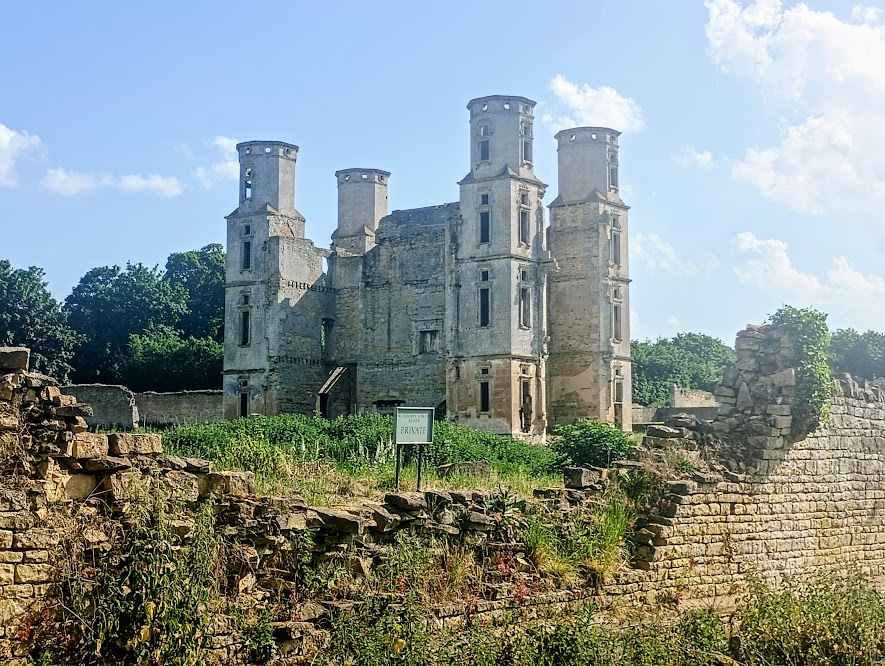
We were both losing enthusiasm as we headed into Cambridgeshire. We knew we were there when we walked past the ruins of Wothorpe Towers, all that remains of a grand hall built by Thomas Cecil, eldest son of William Cecil who was chief adviser to Queen Elizabeth I and original owner of nearby Burghley House (which you can read about later!). It was sad to see the towers looking like this, but apparently they have been designated as a scheduled ancient monument and as such can only be conserved rather than restored to their original glory. However, having once been on the at risk register, they are no longer, so at least they are not going to fall into further disrepair.
It was with great relief that we arrived back in Stamford. And not just in Stamford, but right by the George Hotel, one of the oldest coaching inns in the country.
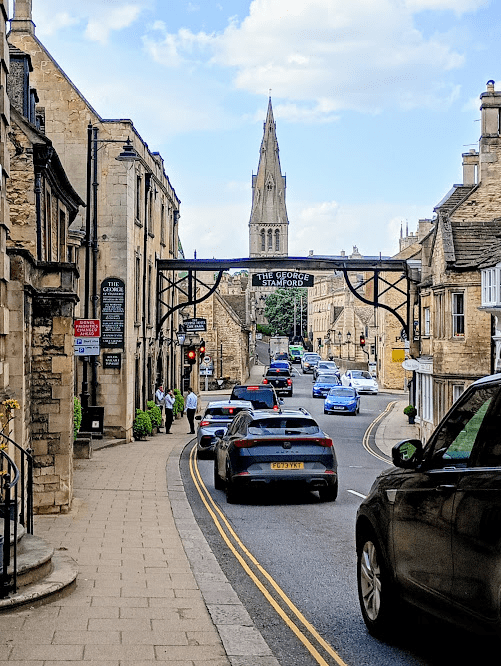
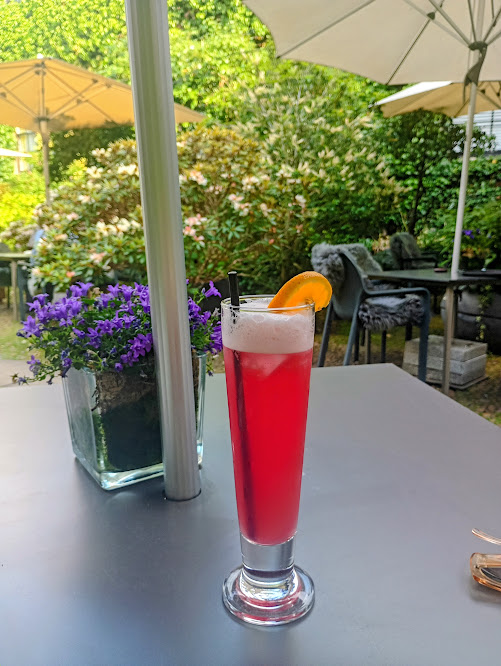
I couldn’t afford for us to stay there (we were in a very cosy Airbnb just off the high street), but it would have been rude not to stop and have a little drink. The opportunity to walk through and have a good nose didn’t go amiss either, before we settled in their courtyard garden with a very welcome spritz. And we really deserved every sip after a walk in high temperatures.
I had been half thinking of taking a day trip to Lincoln while we were in the county, as I knew my daughter wanted to go there, but then a few weeks beforehand she happened to be talking about how much she loved the children’s book Tom’s Midnight Garden by Philippa Pearce and how she had always wanted to go to Ely., which features prominently. Furthermore, she informed me that the train line between Peterborough and Ely was called the Hereward the Wake line, in honour of one of her historical heroes, and so how cool would it be to not only go to Ely, but to travel there on that, although she doubted when she might ever find herself in Peterborough. Of course, little did she know that we would be staying 10 minutes away, so a plan was immediately formed!

We went to Ely on our full day away, but after a bit of research on exploring the Hereward Line, we stopped off en route in the market town of March. I had discovered that the church(St Wendreda’s) has an amazing 16th century double hammer beamed roof (no, I still don’t really know what this means and I’ve been there!) adorned with 118 carved angels. It is said to be the most spectacular example of an angel roof in the country and John Betjemin said that it was ‘worth cycling forty miles into a headwind to see’.
I haven’t been on a bicycle since I was about 12 years old so I definitely wouldn’t trust myself to be cycling forty miles anywhere for anything, but the church was about forty minutes walk from the train station along mostly quite uninspiring roads, and it was most definitely worth that.
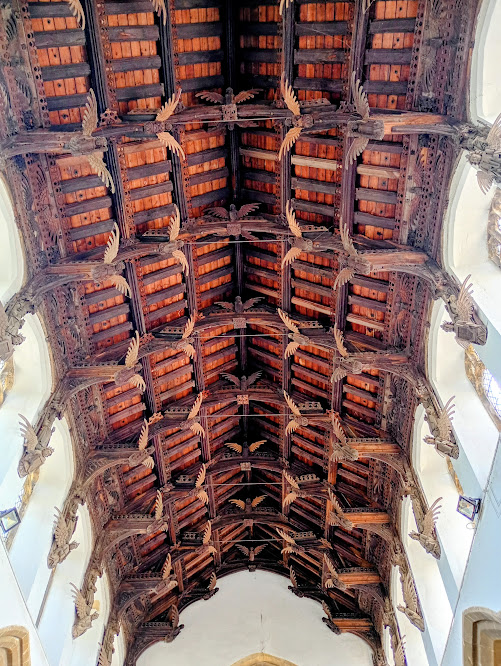
It truly was spectacular, and I am in awe of the skill of the carpenters.
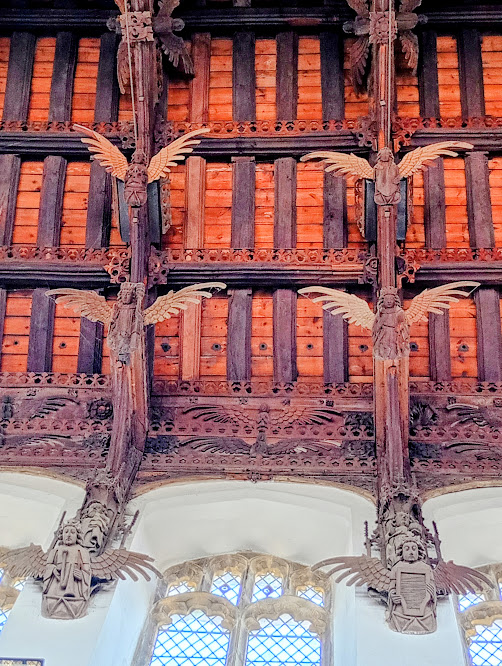
A whole host of angels. Aren’t they amazing?
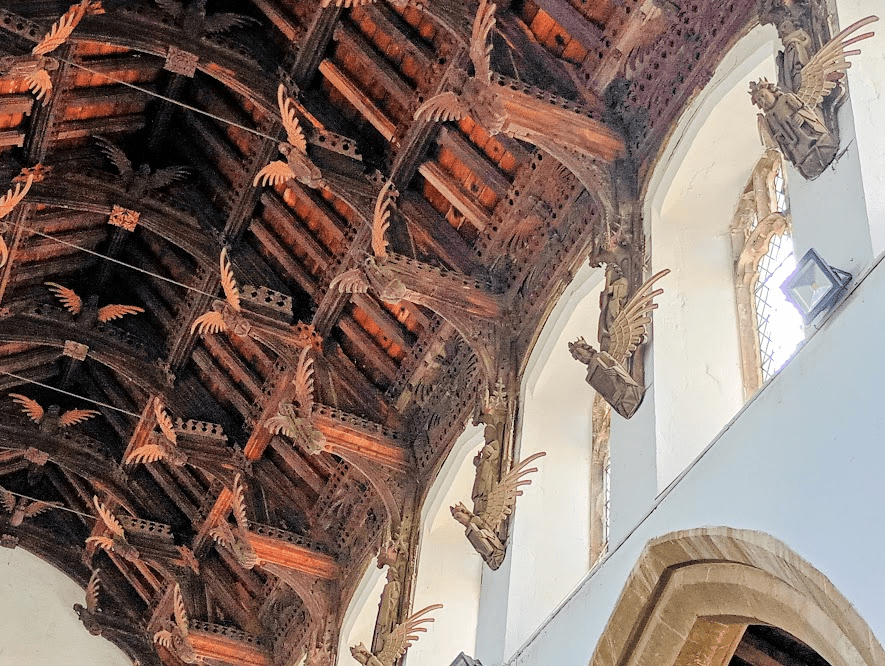
Some of them were just flying, and some of them were playing musical instruments.
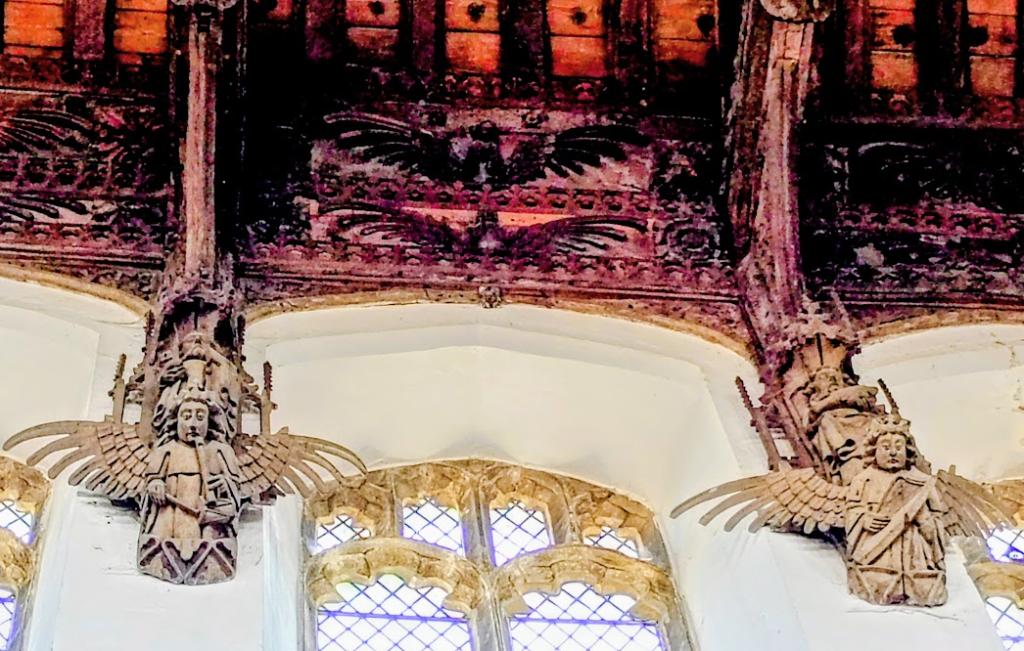
At the back of the church, there was some information about Dorothy L Sayers (author of the Lord Peter Wimsey series of detective novels). She had said that St Wendreda’s Church was one of the three Fen churches that inspired her when writing The Nine Tailors – a book which I have heard adapted on the radio but never read. In it, Lord Peter is shown around the church of the fictional Fenchurch St Paul by Mrs Venables, the rector’s wife, who tells him that ‘Of course, the angel roof is our great showpiece – I think myself it’s even lovelier than the ones at March and Needham Market’. I am never going to have the opportunity to visit Fenchurch St Paul, but I can’t imagine a lovelier angel roof than that in March (although I know want to go to Needham Market to have a look at that one too!). I have heard the radio adaptation of The Nine Tailors many times on BBCSounds, but after our visit to the Fens, I am now reading the book and each time Wimsey refers to it, I can picture it exactly.
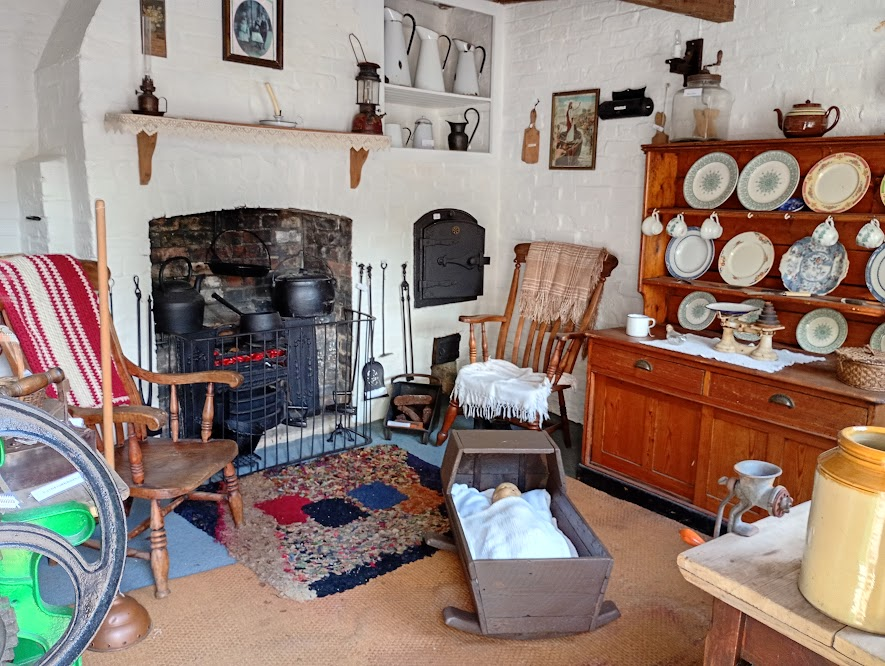
We stopped off at the March museum on our way back to the train station – and a big shout out to them because this small town museum was so interesting, and it was free. We actually wandered round the back to begin with as there was a sign pointing to outdoor exhibits. We peered through the windows of some sheds before a lovely man appeared and offered to open them up to us. We could step inside a replica kitchen and an old forge.
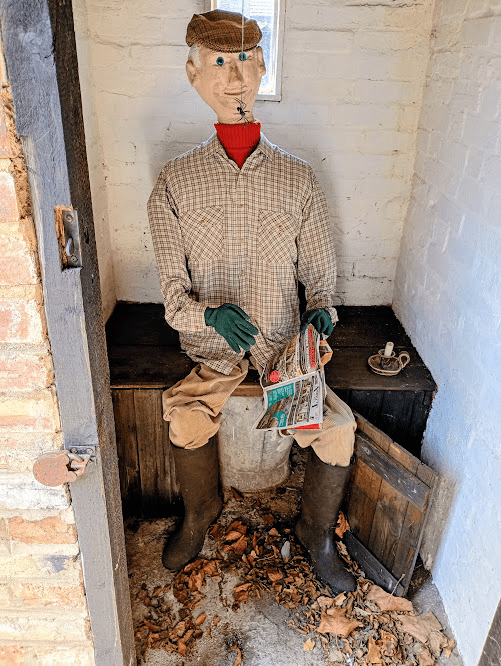
There was even an outside privy, complete with occupant, which rather took us by surprise!
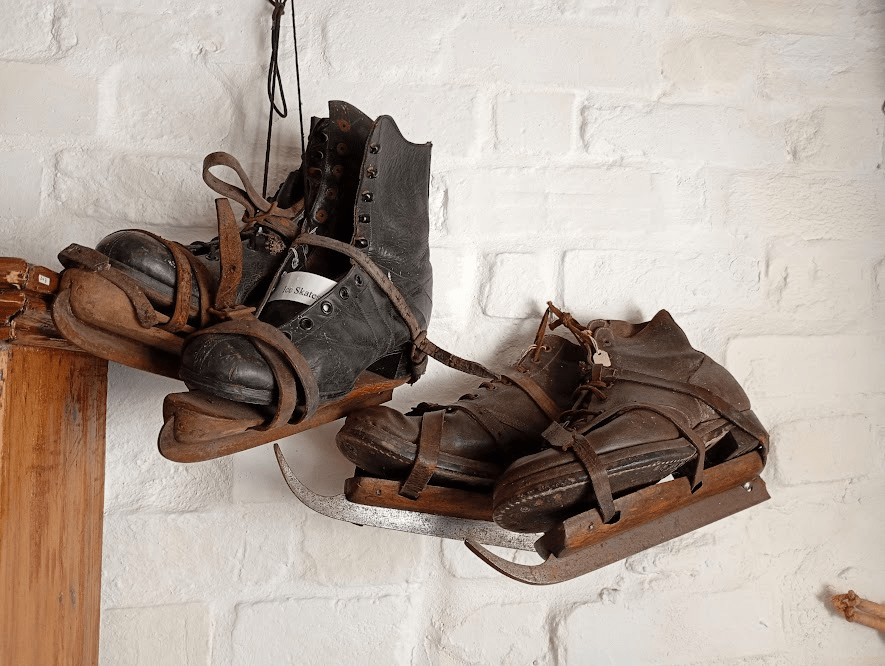
Inside it was small but bursting with eclectic exhibits, including lots of information about skating on the fens, which tied in nicely with the Tom’s Midnight Garden connection where Tom and Hatty skate all the way to Ely along the frozen river.
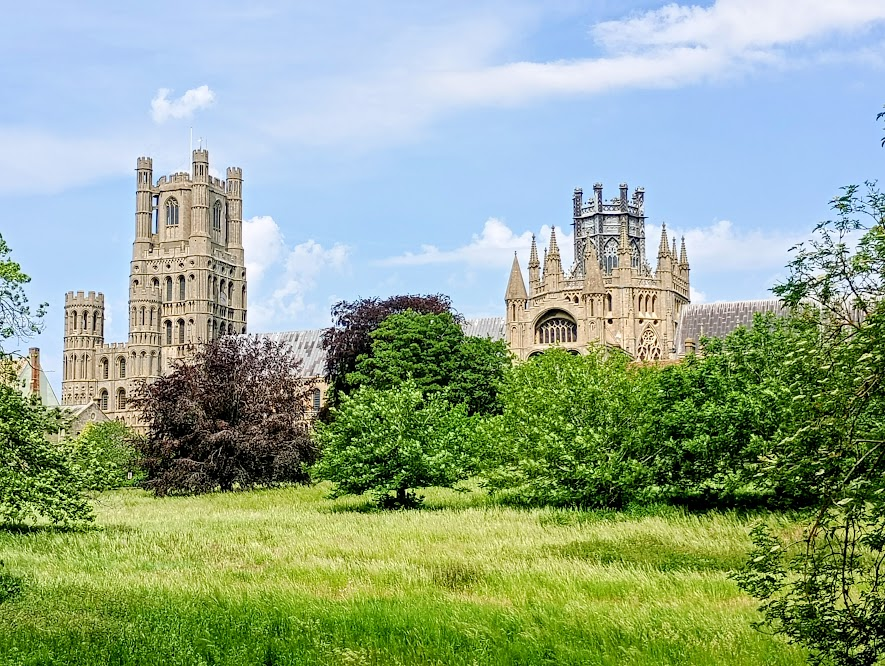
On to Ely, where we swapped to seats on the opposite side of the train carriage to catch our first glimpse of the cathedral, known as the Ship of the Fens because of the way it dominates the otherwise very flat landscape. Our first closer view was as we crossed the park, and used to a city centre cathedral surrounded by buildings, it was amazing that from this angle it appeared to be on the edge of countryside.
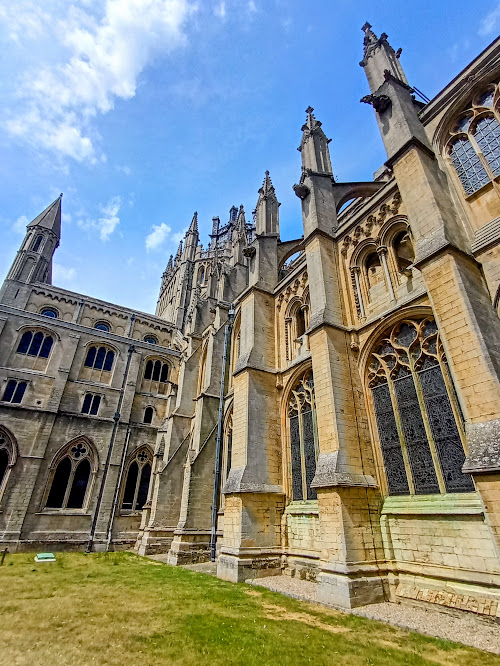
Through the precincts
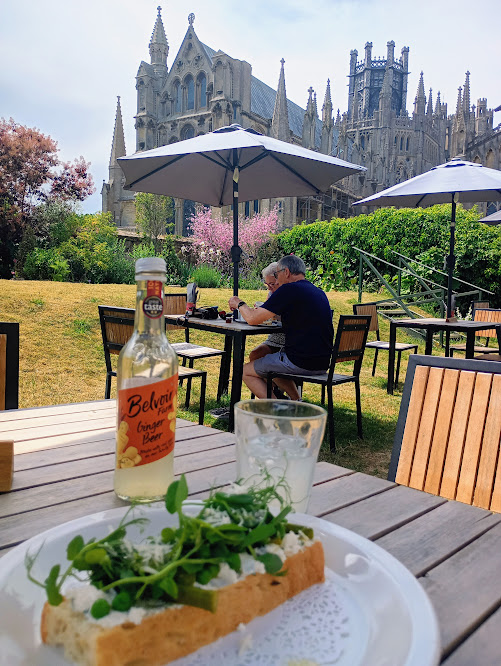
and on to the Almonry Kitchen for lunch – .asparagus and pea bruschetta with lemon and mint ricotta. What a fabulous view!
We decided not to go inside the cathedral itself but to just have a wander around instead. We came across Oliver Cromwell’s house, now a museum and Tourist Information Centre,
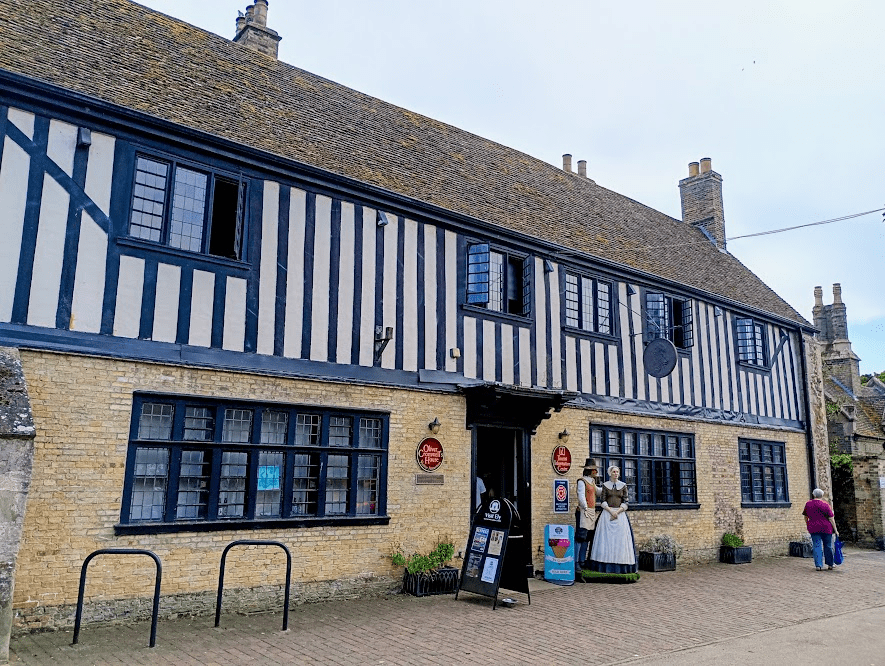
and then window shopped in the High Street, stopping to have a browse in Topping and Company book shop (we have been to their Bath branch, now just Edinburgh and St Andrew’s to go!), wending our way down to the river. It was small for a cathedral city, but was full of beautiful buildings and had a lovely atmosphere.
My daughter may have wanted to go to Ely for literary and historic reasons, but I have to confess that for me it was all about the sweet treats! Several years ago I read an article from BBC Good Food that recommended Peacocks Tea Room as the best budget afternoon tea in the country and, as I love an afternoon tea, I have wanted to go ever since.
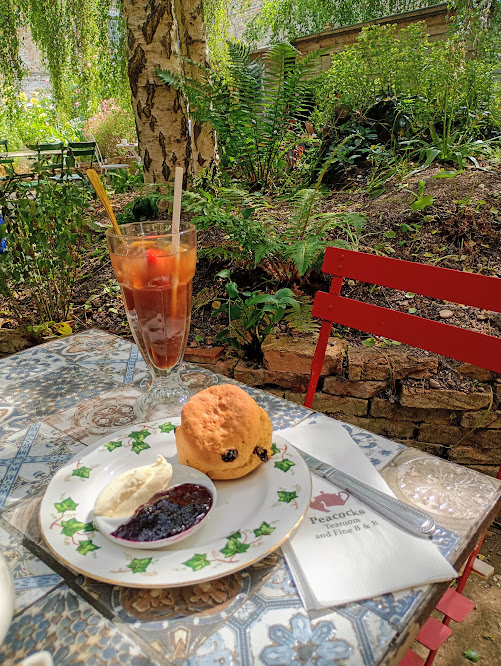
We discovered that there was a lovely peaceful garden at the back, and although we didn’t have a full afternoon tea this time (a good excuse to go back!), I thoroughly enjoyed my peach iced and scone – with which I went rogue and had blackcurrant jam. I am normally a creature of habit and would normally go for traditional strawberry or raspberry, but I may just have been converted.
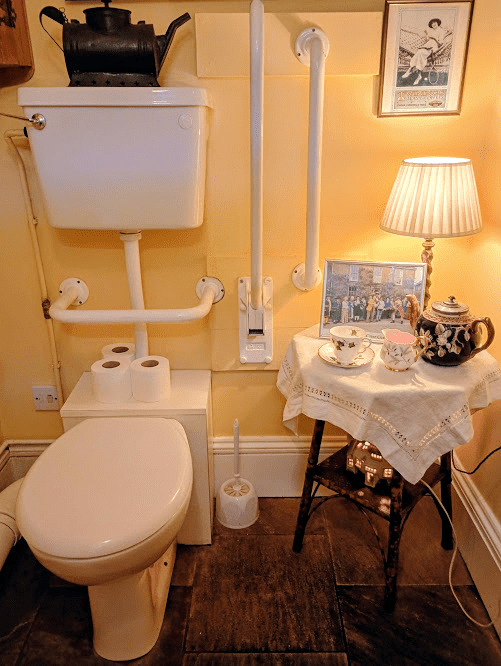
Even their toilet was tea themed. I’ve never taken a photo in a toilet before, but there’s a first time for everything!
We ended our day with a walk along the Great River Ouse heading out into the countryside, along water meadows with grazing cows (luckily on the opposite bank), and geese with a gaggle of goslings.
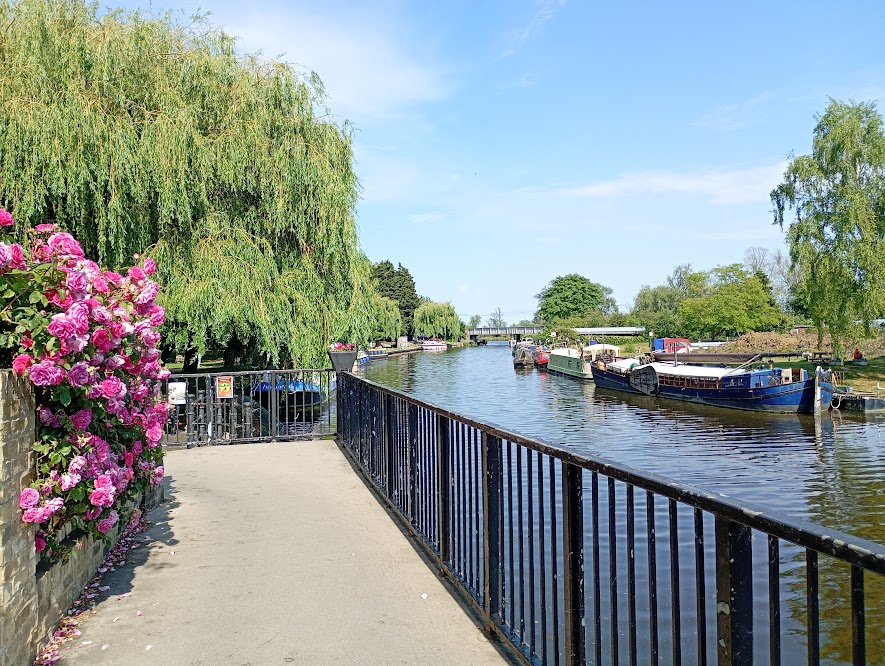
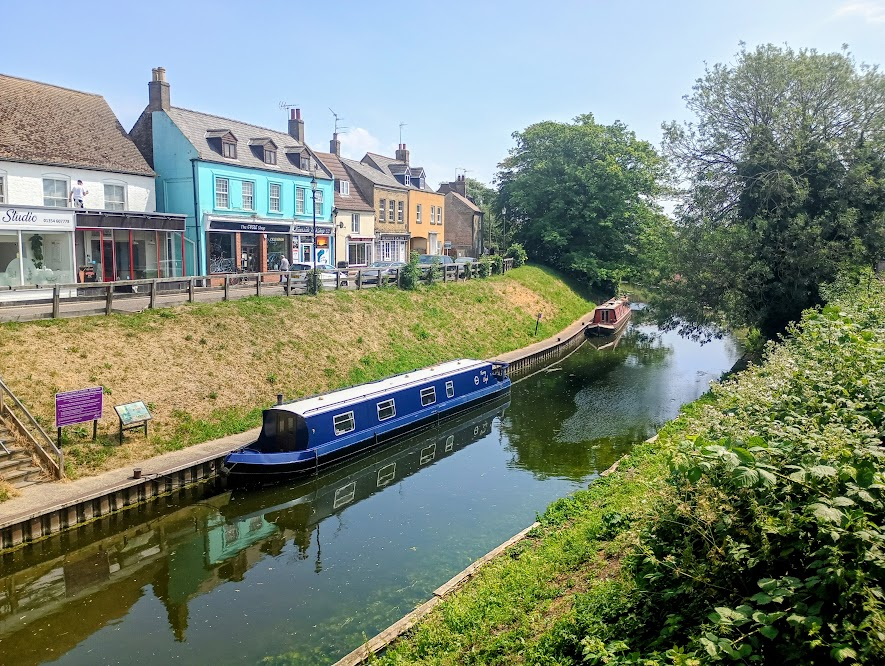
Then returned and walked in the opposite direction to admire the colourful narrowboats before catching the train back to Stamford.
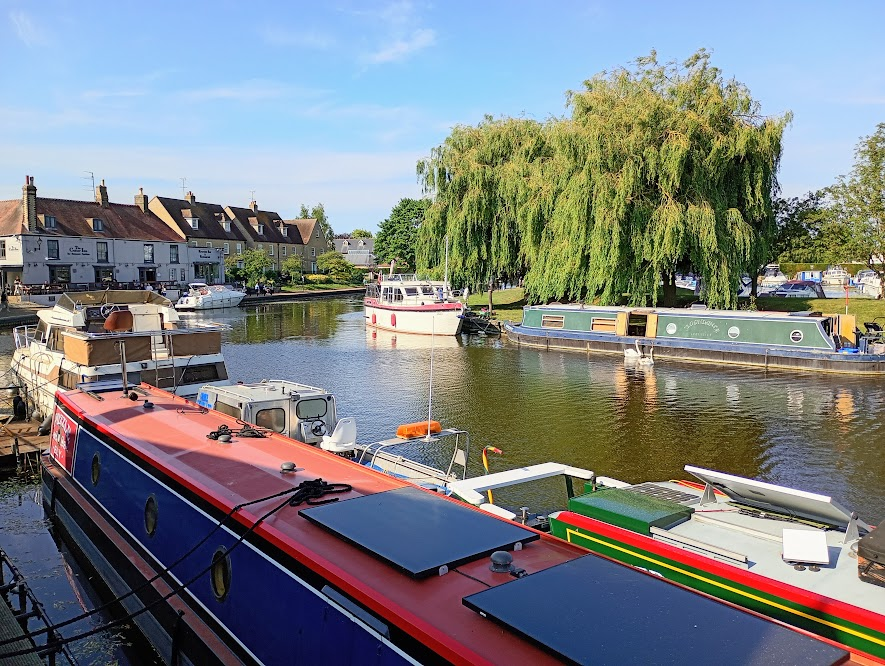
On our final day, we spent the morning exploring Stamford and visiting some of its medieval churches, where we soon discovered that angels adorning the roof are quite a feature in this part of the country, although none were quite so fine as those in March.
We began at All Saints, where our attention was drawn to some screeching from the top of the tower as we walked past. It turned out to be peregrine falcon chicks, as there is a resident pair of adult birds who have made their next up there, and there are cameras so you can watch a live stream.
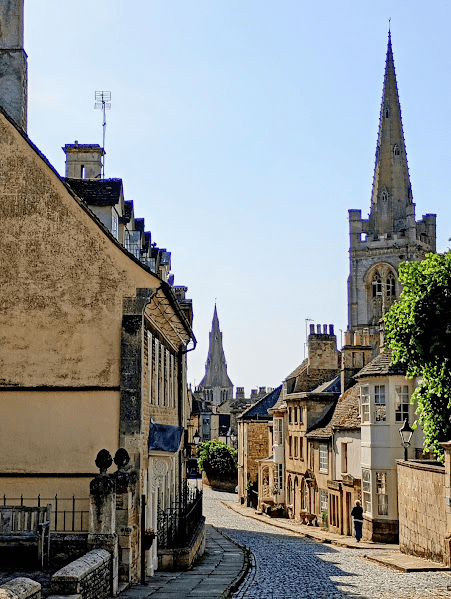
Inside there were some painted angels with golden wings although they were just in the chancel.
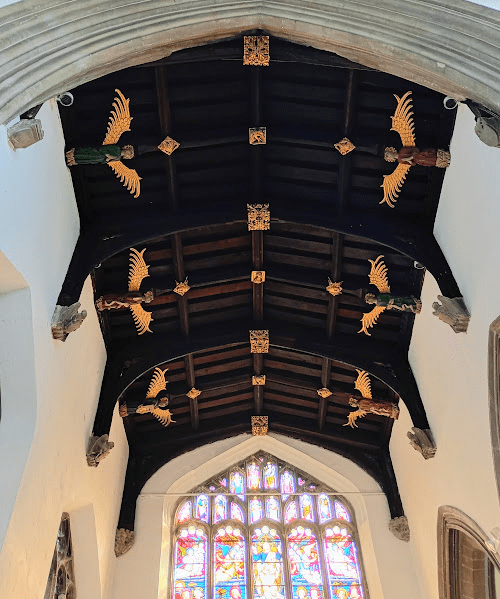
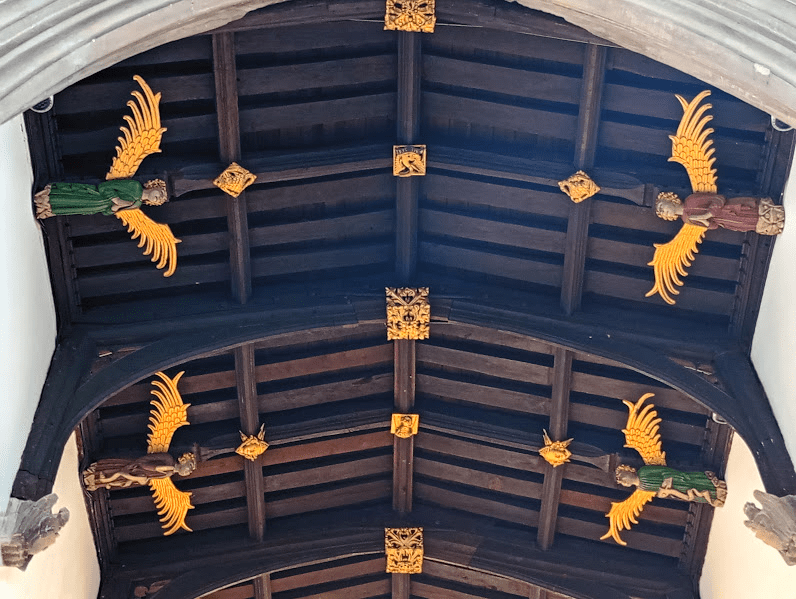
The angels at St John the Baptist church filled the nave. These were also painted, but apparently when the job was done during restoration works in 1856, it met with great disapproval and the Stamford Mercury newspaper described the architect as clothing the angels ‘in motley and theatrical attire.’ I have to say that I quite liked them.
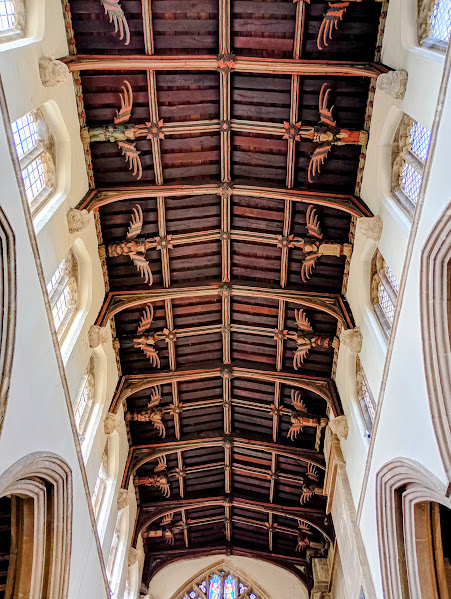
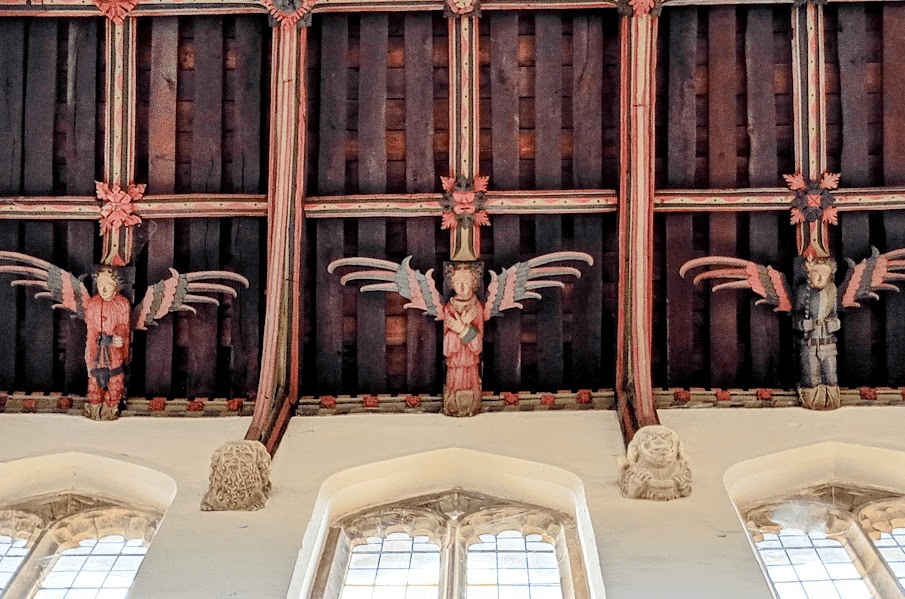
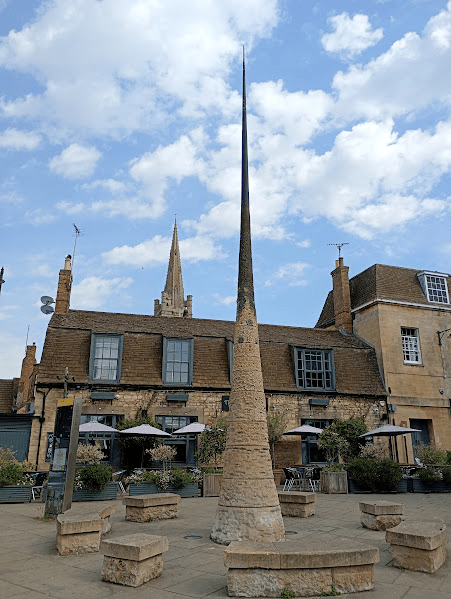
You can see that I’m getting a bit obsessed by the angels by now, so as a brief respite, here’s the Eleanor Cross. This one is a modern monument after the original one was destroyed, but the original cross was one of twelve erected by King Edward I to mark the overnight resting place of the coffin of his wife, Queen Eleanor of Castile, during her funeral procession from Lincoln (where she died in 1290, and where her organs, minus her heart, were buried in the cathedral!) to London (where her body was interred at Westminster Abbey. Her heart, incidentally, was buried at the Dominican Priory of Blackfriars in London, along with that of her son!). A fun fact is that Charing Cross in London was the final resting place before the internment and is actually named after the twelfth Eleanor Cross, that once stood on the site.
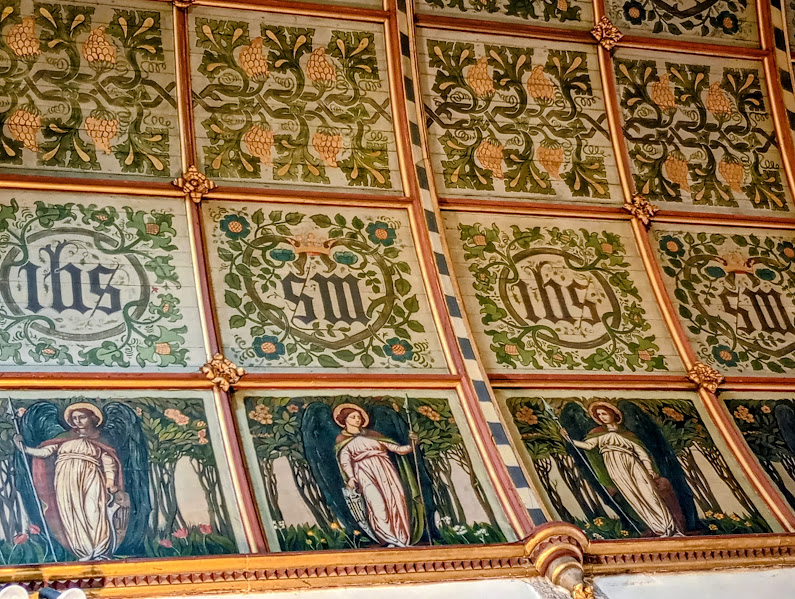
At St Mary’s there was a notice telling us that the church features in Simon Jenkin’s ‘England’s Thousand Best Churches’ book, and are mentioned for its ‘arts and crafts reordering’ and statue of the Madonna (which I think we may have missed).
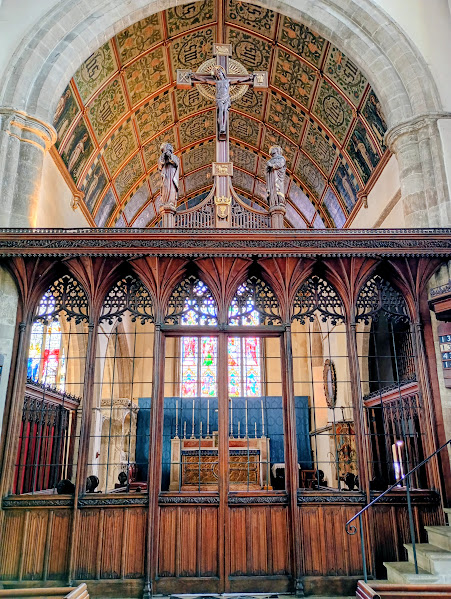
No angels, although it did have a beautiful painted ceiling,
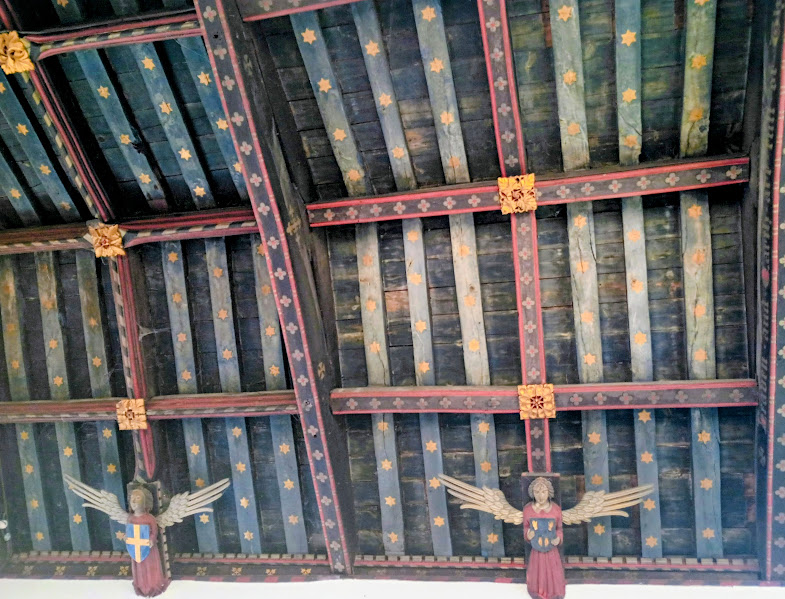
but we were fully back with angels flying amongst the stars at St George’s
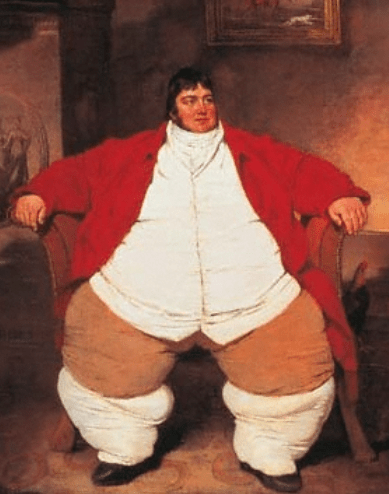
Our final destination was St Martin’s., although I must confess that we were a bit churched out by this point. so I am afraid our visit was brief. We had a cursory look around before making our way to the churchyard to see the grave of Daniel Lambert. Lambert, a former gaoler who eventually turned to exhibiting himself for money, died at The George Inn (see above) and at the time of his death in 1809, was the heaviest man ever recorded in England., weighing in at 52 stone and 11 lbs. A window and part of the wall of The George had to be removed to take out his body, and his coffin, which was built on wheels, took twenty men to lower it into the grave.
From there it was a short walk to Burghley House, the home of Sir William Cecil who was Lord High Treasurer to Queen Elizabeth 1. It is a great example of an Elizabethan prodigy house – one that was built with a view to housing Queen Elizabeth and her retinue as she travelled around her realm, and as such needed to be on a grand scale. The Cecil family still live there today.
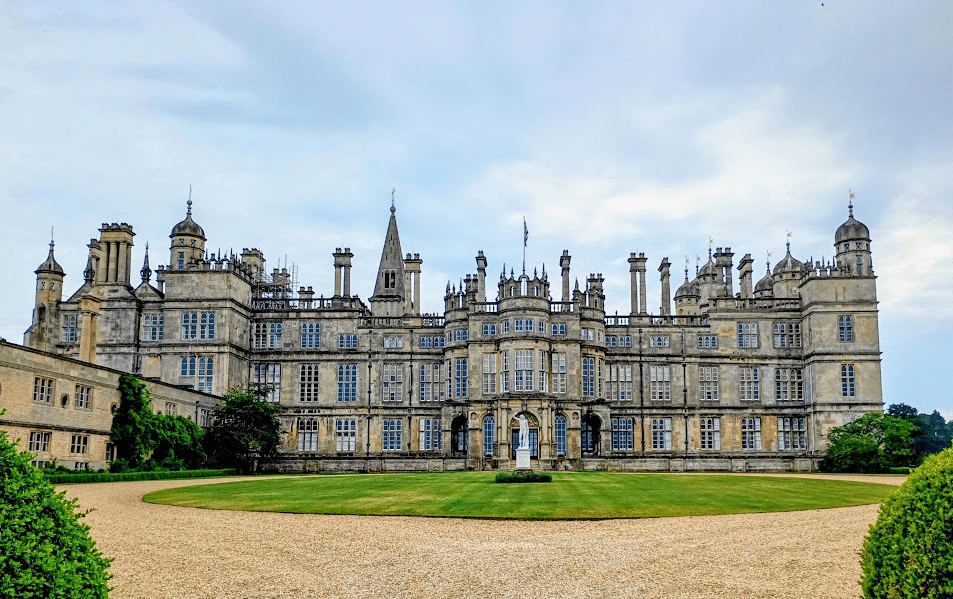
You can walk around the deer park for free – lucky locals – but we decided to buy a combined house and garden ticket After a wander around the Garden of Surprises, based on original designs by the 1st Lord Burghley, which has a variety of water features, a mirror maze and a shell grotto, we had a picnic beside the lake, and then headed into the house.
There were helpful guides in each of the rooms, something which I am always slightly ambivalent about, as my desire to learn new facts is tempered by my social awkwardness and inability to think of appropriate and intelligent questions. However we did learn a lot about the running of an Elizabethan kitchen in this way, and there was a lovely chap who, once he realised that we were interested in the paintings, pointed out some fascinating details that we otherwise would have missed if left to our own devices.
I loved said kitchen with its lofty ceilings, especially all the gleaming copper pans and moulds on the walls, although I wasn’t such a. fan of the large display of turtle skulls, remnants of many tureens of turtle soup. The most impressive features though, were the Heaven Room and the Hell Staircase, painted by Antonio Verrio in the late 1690s, covering both the walls and the ceilings. The Olympian gods and goddesses in the former and souls in torment in the latter are truly amazing.

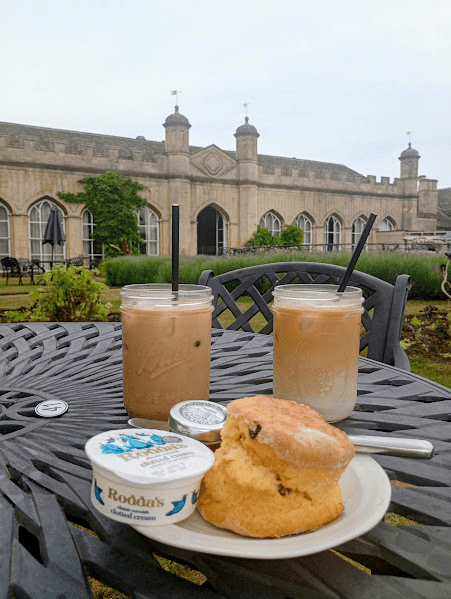
A quick stop for refreshment at the Orangery Restaurant – an iced coffee and a shared scone – where we sat outside in the garden. At one point we were the only customers and we could almost pretend that we were mistresses of all that we surveyed!
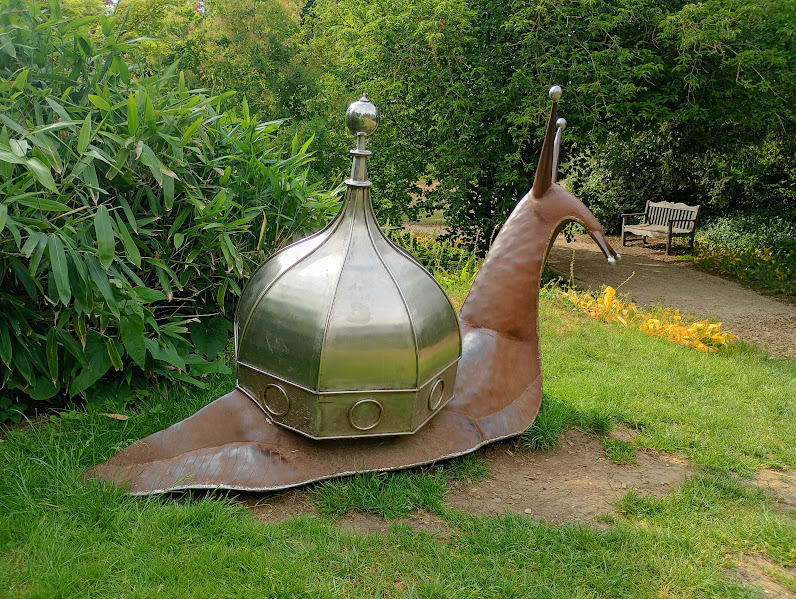
Suitably refreshed, we explored the Sculpture Gardens. The Burghley snail was my favourite,
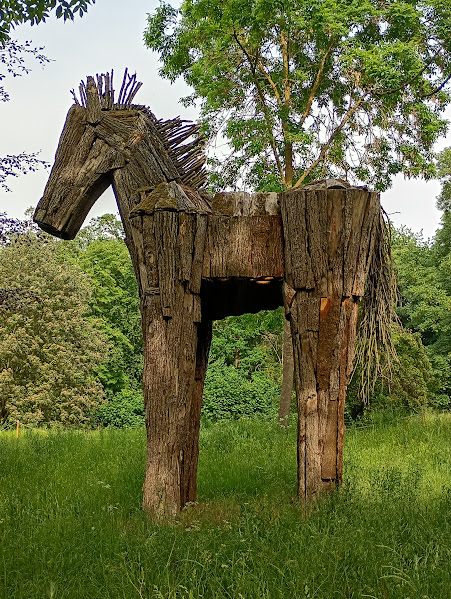
but I also loved the wooden horse,
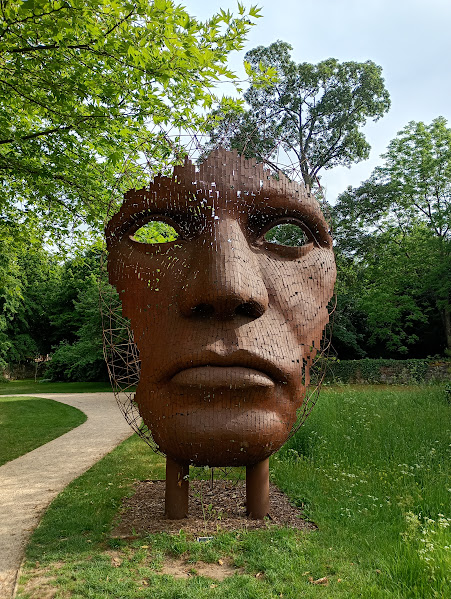
and it was interesting to discover a similar steel mask to the one that sits outside the Marlowe Theatre in Canterbury.
We were the last people to leave, and it was with great reluctance (though with very tired legs) that we headed back to collect our luggage. We still had an hour before our train, and so ended our trip with a aperol style mocktail in Sheep Market Square (with a fine view of the Eleanor Cross), feeling thoroughly chill and at peace with the world…
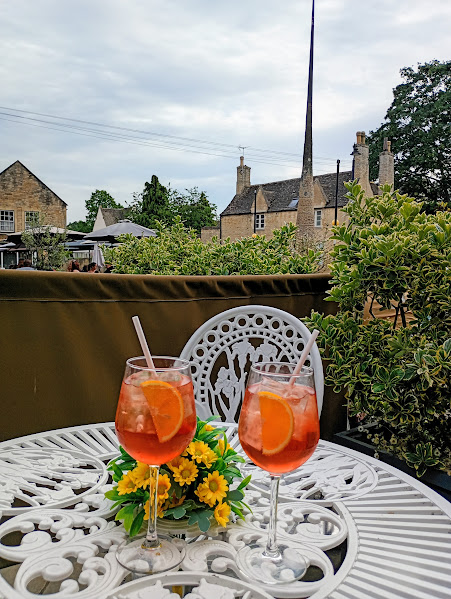
until I checked the Trainline app and discovered that there was travel chaos ahead of us, with delayed and cancelled trains, and the prospect of much more than an hour to kill, as well as the purchase of another train ticket because we needed a new journey on a different network that wasn’t covered by the existing cheap advance ticket! I’ll skirt over that bit though.
It really was a fabulous weekend away, with all the things that we like best – country walks, coffee shops, interesting churches, historic houses and a wander round a nice garden. I have also gone from never having seen – or even heard of (because I’s sure the Wimsey quote was edited from the BBCSounds adaptation) an angel roof, to developing quite an an obsession and wanting to return to East Anglia to visit more. Watch this space!


Leave a Reply