
Mundaka didn’t look far from San Sebastian on the map, and we knew that there was a train station and that the trains ran regularly. What we hadn’t realised until the day before, was that it would take nearly three hours to get there because the train chugged along slowly and stopped at lots of stations! It was a pretty amazing journey though – far more remote than I was expecting, through heavily wooded mountains, farmland and vineyards.
The three nights that we spent in Mundaka were the absolute highlight of my whole Basque trip. Nowadays it is a popular surfing destination, with the longest left hand wave in Europe (I had no idea what that meant until we stood on the harbour wall and watched the surfers and the wave as it moved across the mouth of the estuary and over the sandbank which contributes to making this wave so famous!), but back in the day it was a small fishing village. I mentioned in Part 1 that we had managed to trace a line of our family tree living here all the way back to the 16th century – all baptised and married in the local church – and I’m not ashamed to admit that I was quite overwhelmed and tearful (in a good way) when we first arrived and wandered through the narrow winding streets, down to the harbour.
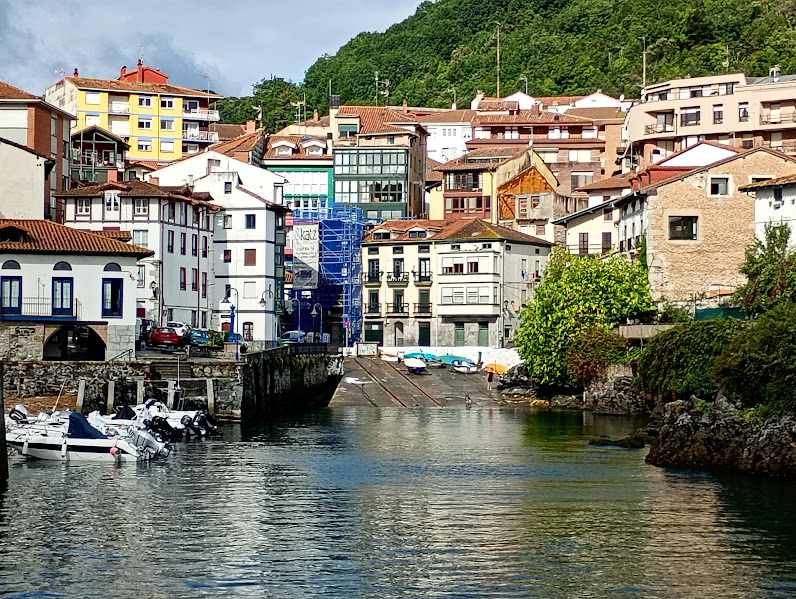
It really felt as if nothing had changed in hundreds of years, and knowing that I was walking the exact same streets that generations of my ancestors had walked was very moving – and I was also quite struck by the idea that I was possibly passing distant cousins many times removed without even realising.
Unfortunately, although the Spanish baptism and marriage records are excellent, there are no census records like we have in England. This meant that I had no idea whereabouts in Mundaka they night have lived, or what their occupations might have been, although they probably would have been fishermen. (I do know that Feliciano’s maternal grandfather, Pablo, was a tailor, but he was born in Bilbao and presumably learnt his trade there, before he married and settled down in Mundaka, which is where his wife, Maria Antonia, and her maternal line had lived for generations.)
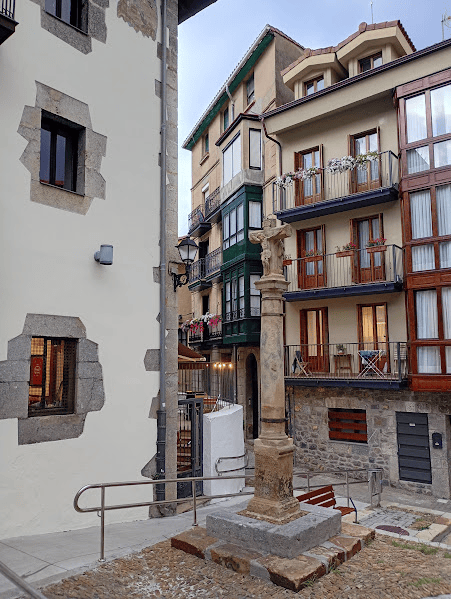
The oldest part of the town seemed to be centred around the calvary cross (which is also where our hotel was)…..
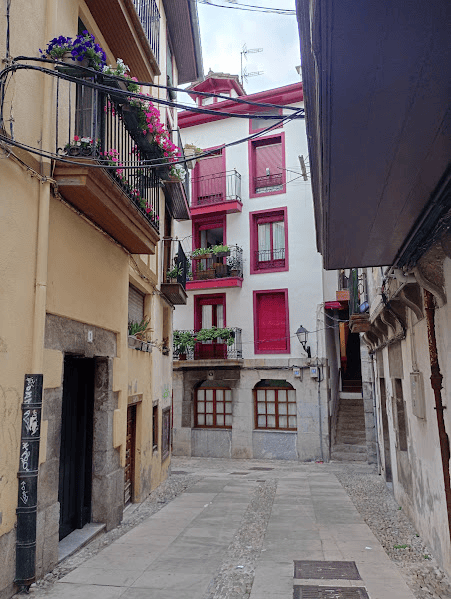
…. and we enjoyed just wandering around the narrow streets and alleyways, soaking up the atmosphere and wondering which houses might have been theirs. Some of them had carved wooden names above the door in the distinct Basque font, indicating the name of the family that had historically lived there, but try as I might, I couldn’t spot one with a name that I recognised. I guess they weren’t important enough!
As I was unable to pinpoint where they had lived, I had at least been very excited about visiting the church. It sits on the edge of the clifftop, and in fact the only disappointing thing about our whole trip was that it was locked. Firmly locked behind iron gates. There was nothing outside to indicate when it might be open, and there were no times of services posted outside either. We walked past at different times each day, hoping that we might get inside, but were let down every time. In the end we went to the tourist information office to find out if it was only open for Sunday services (although that wouldn’t have been much help as we weren’t there on a Sunday), but were met with a shrug and a “Maybe” from the girl working there, which wasn’t very helpful.
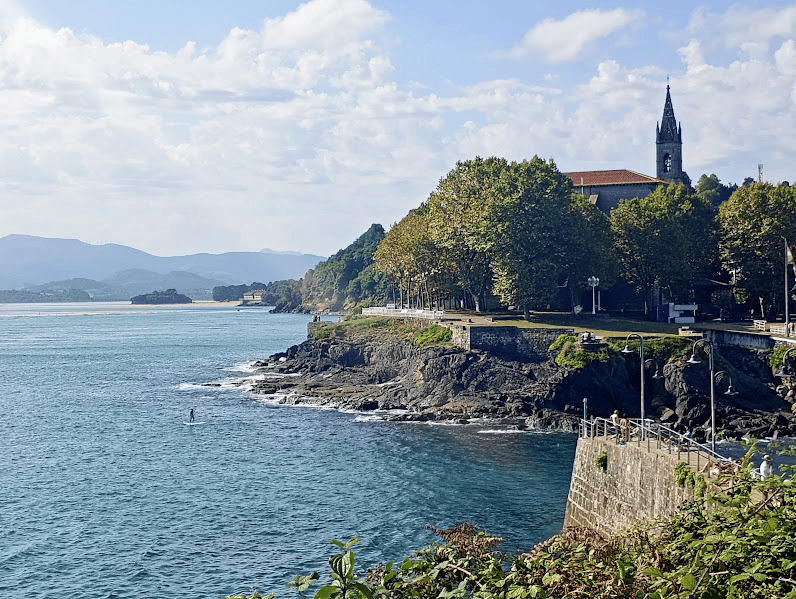
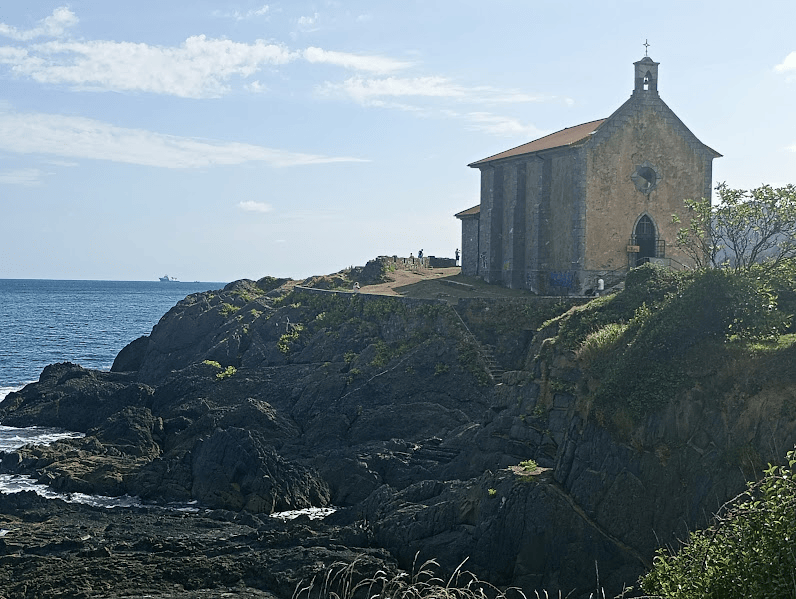
The frustrating thing was that, perched on the clifftop on the opposite side of the bay, the tiny Santa Catalina Hermitage was open for visitors.
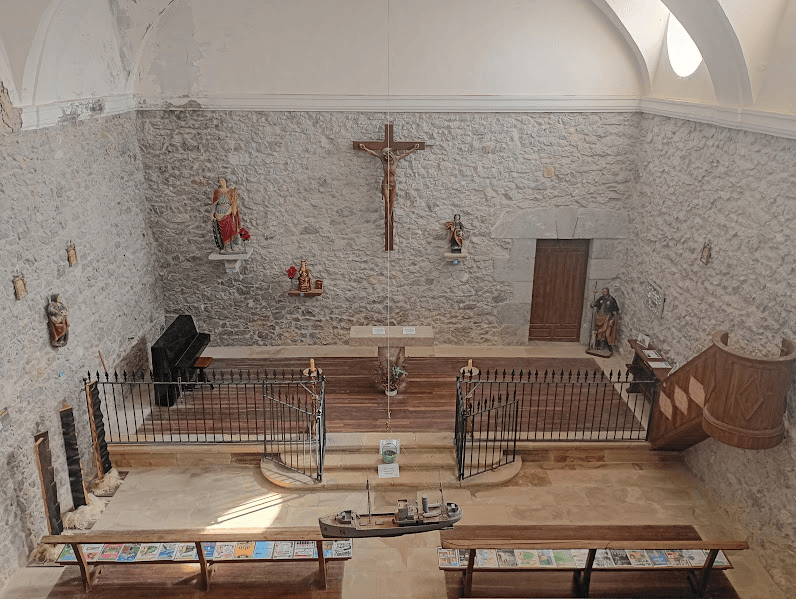
We did visit the cemetery which was in a beautiful spot on the hillside, a little further out of town. It only opened in 1826 so in theory some of my more recent relatives should have been buried there. (Prior to this, residents were buried next to the church, but the bones were apparently dug up and re-located in order to make way for the park that is there now.) To be honest, I had already checked on the Find a Grave website and came up with nothing, so it was perhaps unsurprising that I couldn’t find anything when we were actually there. There were quite a few graves with inscriptions that could no longer be read, so I liked to think that one of these was the final resting place of my great great grandparents – but there were a lot of recognisable surnames from the family tree that were cropping up over and over again, that I assume were distant relatives. There were some interesting monuments, (and I liked the Basque laburu over the door of the chapel)….
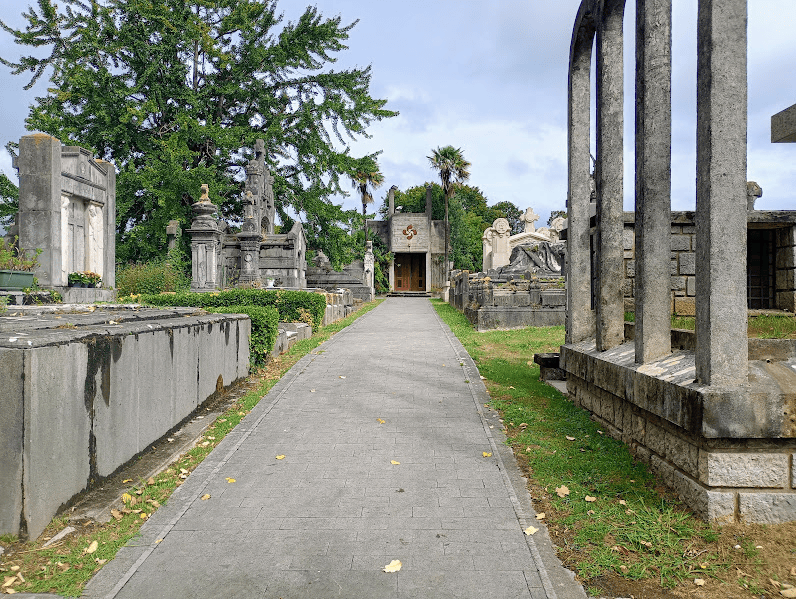
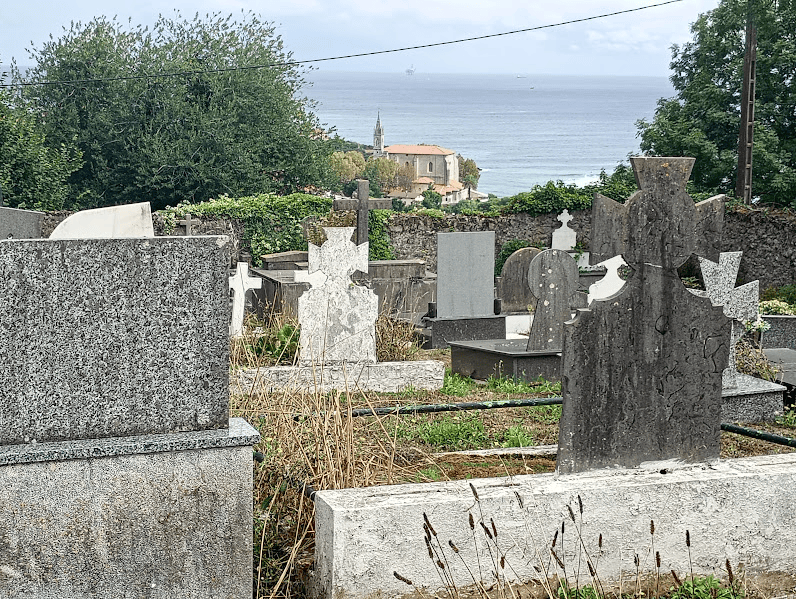
….and with the sea and the church as a backdrop, it was a peaceful place to explore.
Mundaka sits within the Urdaibai Biosphere Reserve, and neither of us were quite prepared for how stunning the area was. We had planned a couple of possible walks to do, but in the end went rogue and did our own, following a path along the estuary….
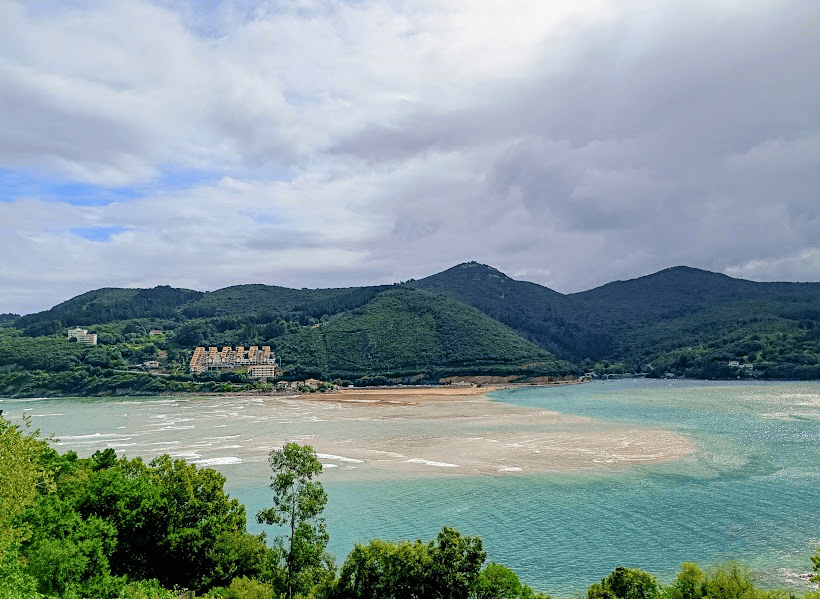
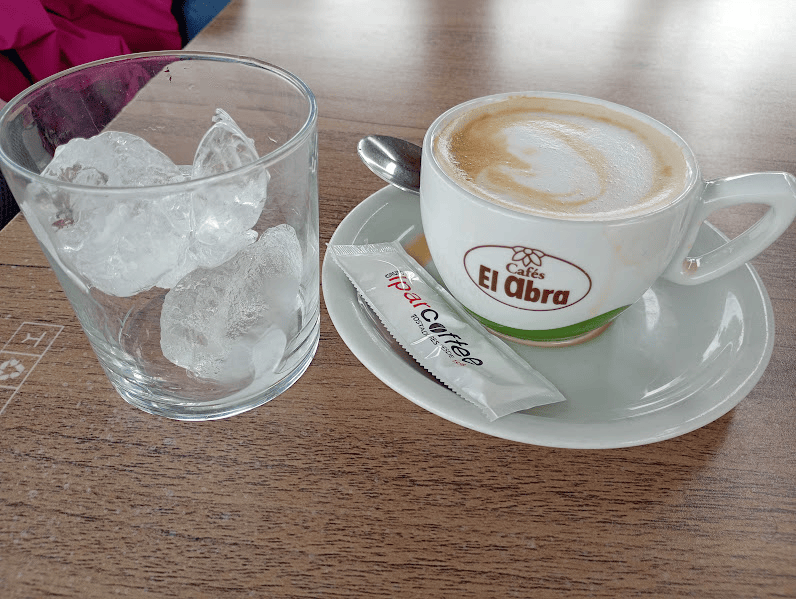
….to the next village, Sukarretia, with a quick pit stop at a small bar by the water for a DIY iced coffee, which is how it seems to come in this area.
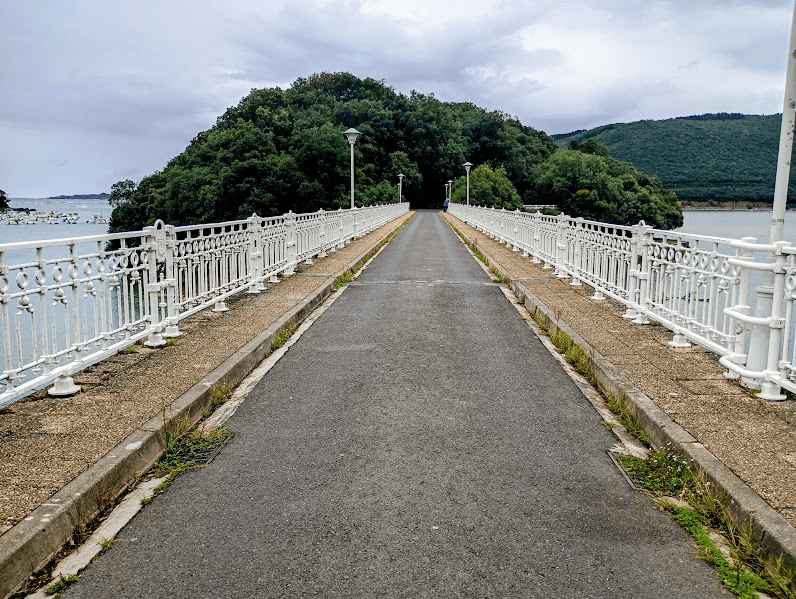
When we’d arrived on the Euskotren we had seen that there was an island here (Txatxarramendi) that you could reach by crossing a bridge, so were keen to take a look. We walked around it and were amused by the fact that there was a footpath sign at the end, pointing across the water, that you needed to catch a boat to the other side in order to continue. There was no sign of any boat though, so it was a good job that we weren’t doing that walk!
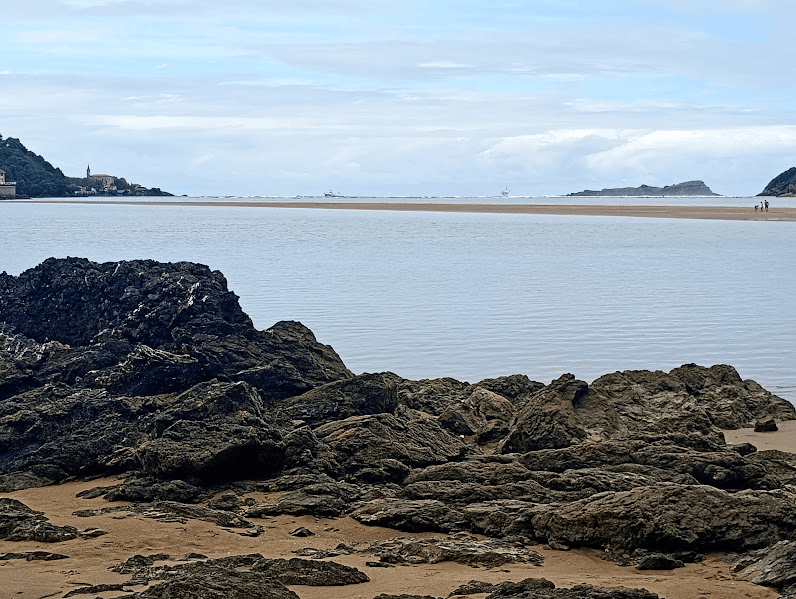
We carried on to Playa San Antonio, a beautiful sandy beach, with more amazing views, looking back up to Mundaka and the mouth of the estuary. That’s Mundaka church, which you can just about see on the headland on the left.
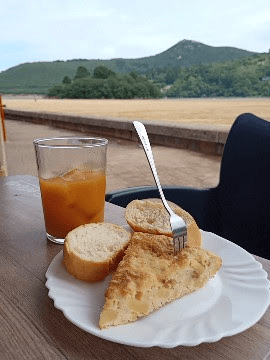
The beach was almost deserted, and the number of lifeguards outnumbered the visitors, but despite that. there was a little beach side cafe, so we stopped for a slice of tortilla – once again the only veggie option – and a very nice peach juice.
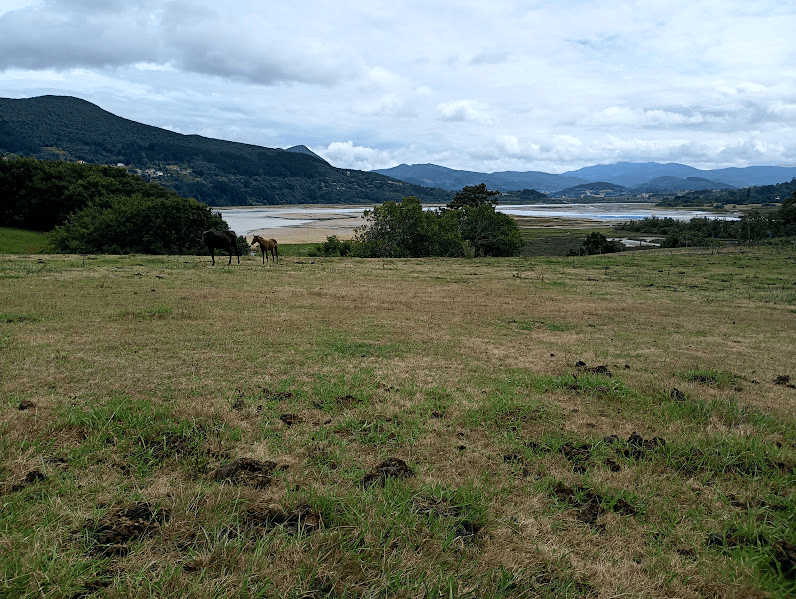
We continued our walk into the Busturia region, and the scenery seemed to be getting better and better. Imagine living in the farmhouse here and waking up to this view every morning! I was all for giving up my life in England and moving here straight away! (I later discovered that an ancestor lived in this village. I’d like to imagine it was here and I was feeling a deep rooted connection!)
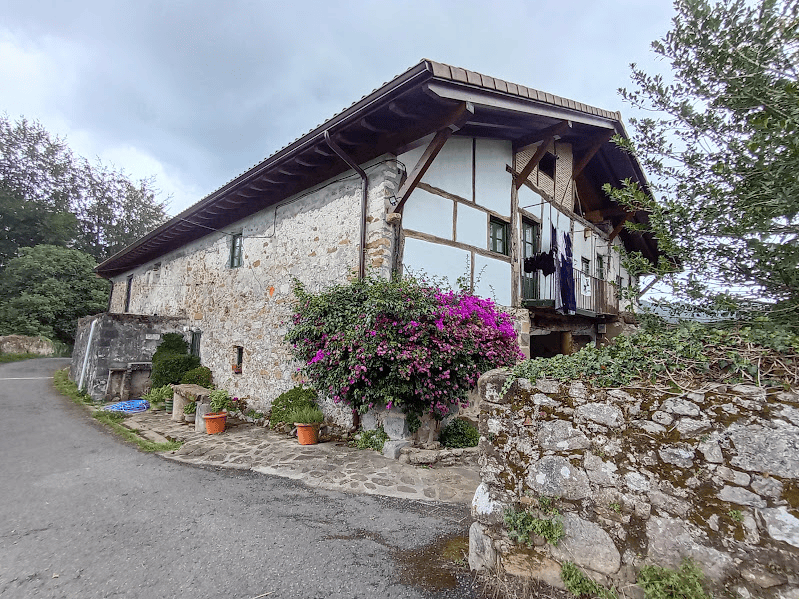
I was particularly interested in the traditional Basque farmhouses that we saw as we had started to unearth evidence of other ancestors beyond the Mundaka ones, who were living in much more rural areas and so would almost certainly have been living as self sufficient farmers. In fact, the farmhouse or basseri, was so important that families would be known by the name of their farmhouse rather than the typical surnames that we are used to. Almost all of the surnames in my Basque family tree are toponymic ones, meaning that they relate to the position of the original family home, for example Urrutia (far away or distant), Ybinaga (place of the river ford) or Ugarte (between rivers).
The basseri were designed so that the ground floor would have been the shelter for the livestock, which would also provide a source of heat for the family living on the first floor, and then the upper floor would have been used for storing the crops.
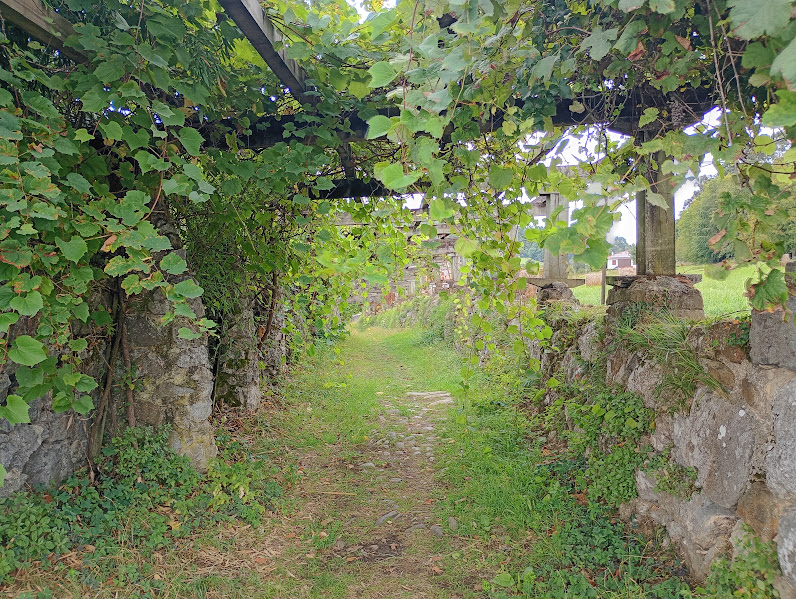
On the way we came across an area where the traditional way of growing grapes for the Txakoli wine in this region was being restored, with stone pillars topped with wooden cross beams for the vines to grow over. This method was apparently used because, surrounded by steeply wooded mountains as it is, flat arable ground was at a premium, and so positioning these pillars over footpaths and outside their farmhouses so that other crops could be grown underneath, meant that grapes could be harvested without sacrificing valuable space.
We continued on until we reached the Madariaga Tower, part of a 15th century fortification which now houses the Urdaibai Environmental Centre. It was quite unexpected as we had been walking without any real purpose, and it sounded really interesting, but unfortunately it was closed for lunch.
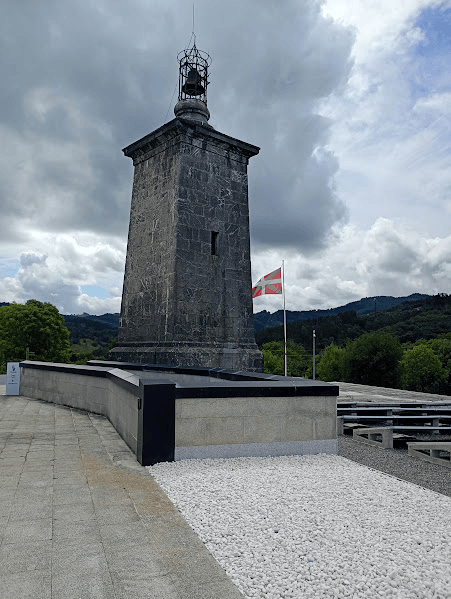
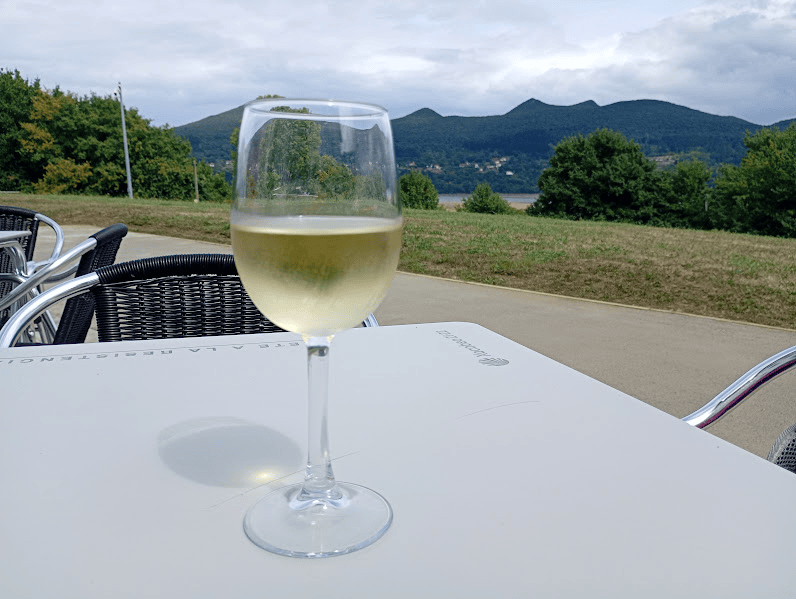
However, the Madaixagate Restaurant next door was open for business, so we stopped for a glass of txakoli and sat on the outdoor terrace feeling very sophisticated.
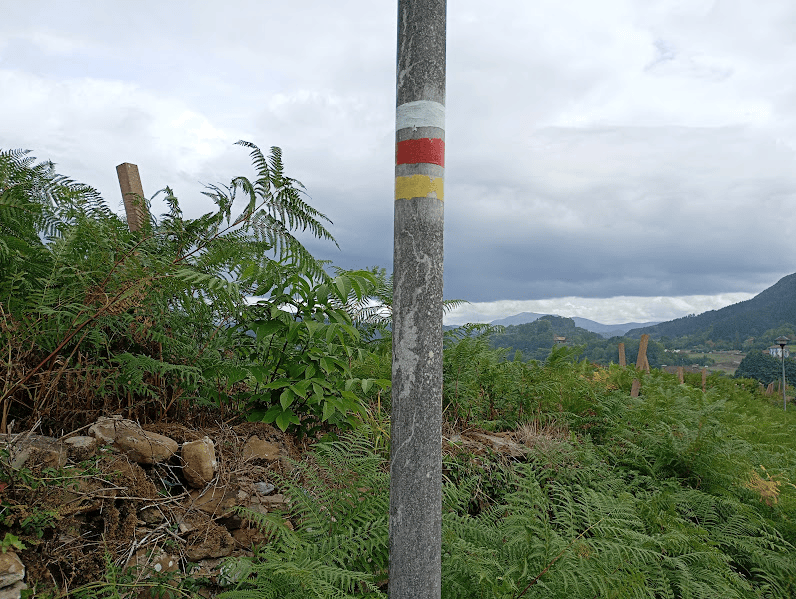
From there, we made our way to the station at San Kristobal-Busturia and the Euskotren back to Mundaka. We weren’t really sure what walking trail we were following at this point, but I was very impressed by the coloured marker stripes that were painted on posts and walls at very regular intervals, and which offered reassurance that you were still following the correct path. I felt that we could learn a lot from this in England, where you usually only find signage at points where paths split, and even then it is often missing.
The whole Mundaka leg of our trip was one highlight after another, and our visit to nearby San Juan de Gatzelugatxe was amazing. I had been blown away by the pictures that I’d seen online whilst researching our trip, but such is its popularity since becoming a filming location for Game of Thrones (which I have never watched), you now have to book a timed slot in order to visit. It’s free, which is great, and this ticketed system is a way to control visitor numbers. Unfortunately, the information online regarding visiting by public transport was very sketchy, and by the time we had ascertained that we could get there by bus, all available slots for the whole of August were taken. They do however encourage people to cancel if they know that they are going to be unable to go, and in fact if you fail to show up for your timed slot without having cancelled, you are unable to book another slot for a whole year. We were therefore very lucky, a couple of weeks beforehand, to find two tickets suddenly became available for one of the days that we were in Mundaka. We were very excited!
We caught the Eusketren to the neighbouring town of Bermeo (an easy walk that we did do on another occasion, but there was no point in overdoing it on this day), and then a regular Bizkai bus service that stopped right outside the site. (Such a great bus firm – more like a coach than a bus, but be aware that they only take cash unless you have a Barik travel card!) We were knew that the weather forecast was for heavy rain, but en route, the fog came down and we could barely see more than a couple of metres ahead of us. And boy was it heavy rain!
Past the entrance, and heading down a steep and slippery path, you could barely tell that we were by the coast. Despite our raincoats, we were soon soaked through, and I also very quickly discovered that one of my walking boots had a hole in the bottom. Perfect timing. I hadn’t realised before we left because all our walking this spring/summer had been in the endless dry spell we have enjoyed this year.
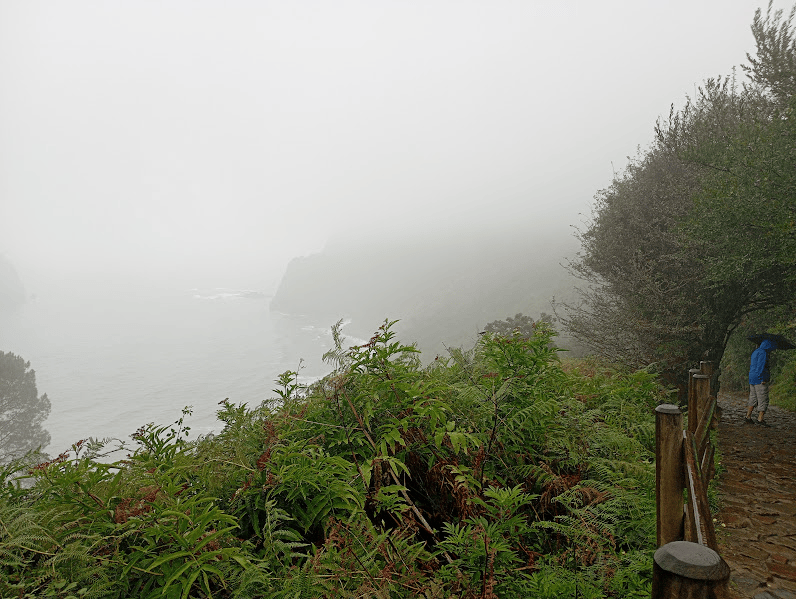
My daughter said that she had remembered reading that the causeway was sometimes closed because of adverse weather, and as we passed the drenched visitors toiling back up the path, we wondered whether this might be the case today. As we got closer, we could at least see our destination, so were a bit more hopeful and began to embrace the conditions. How much more atmospheric was this, we tried to convince ourselves, than if it had been blue sky and sunshine!?
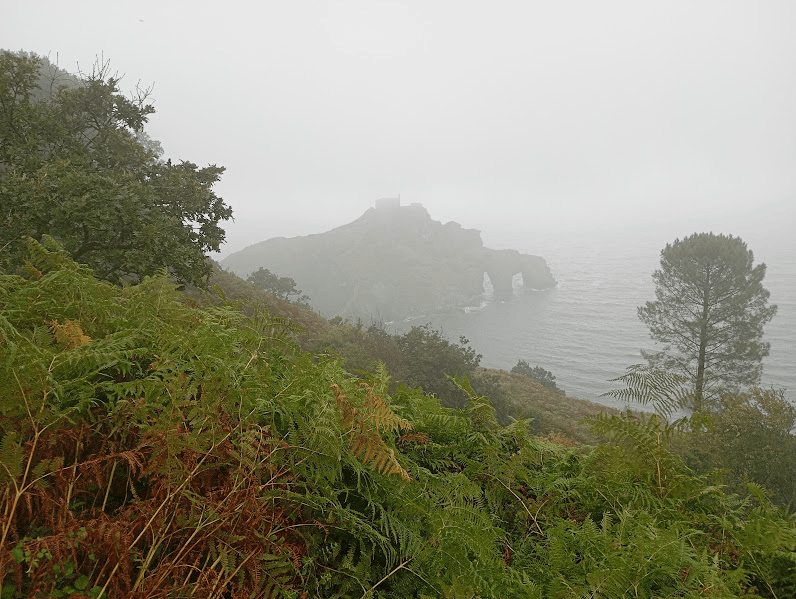
By the time we had made it to the start, the fog had started to lift, although the rain was still persistent, but undaunted we set off along the 241 steps that zigzagged their way to the tiny hermitage at the summit. It really felt as it we were making our way on a pilgrimage, and the weather brought an element of camaraderie amongst our fellow visitors, all wrapped up in their wet weather gear.
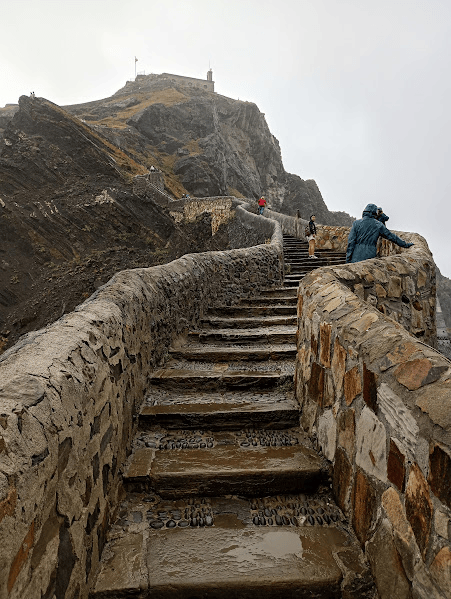
Unfortunately, we weren’t able to go into the hermitage when we got to the end. It was open, but there was someone on the door who seemed to be only letting in people who had booked a tour. We weren’t ready to walk straight back again, so sat under a small sheltered area and looked out at the mist and rain!
Despite the weather, It really was one of the most spectacular places that I have ever been to, and walking back to the mainland was just as impressive, as you really got to appreciate the true extent of that zig zagging path.
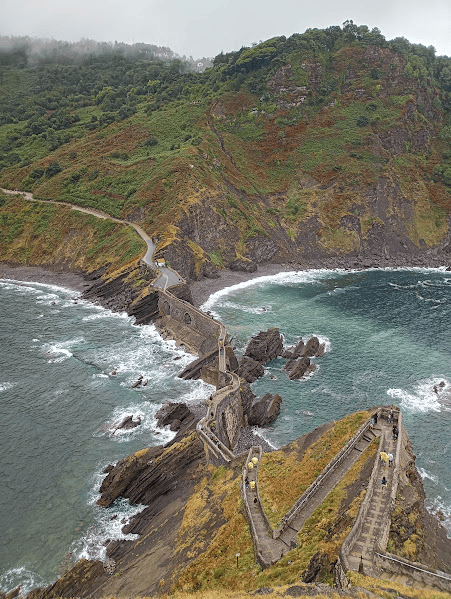
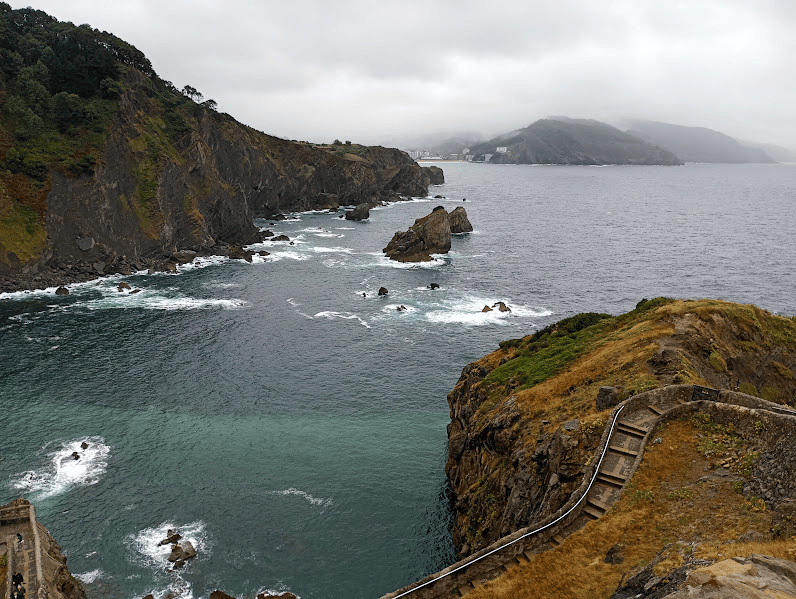
When we first obtained the tickets, we had looked into nearby walking routes that we could incorporate into our day, and I had been very excited by a walk along the cliff path to Cape Matxitxako, which is apparently a great spot for whale and dolphin watching. I had packed my binoculars specially! Sadly, the visibility wasn’t going to be good enough for spotting anything, but by the time we were back on mainland it wasn’t so bad that we couldn’t go for a bit of a walk without falling over the edge of a cliff, so instead we decided to go in the opposite direction, towards the town of Bakio. (You can just see the sandy bay emerging from the mist in the distance!)
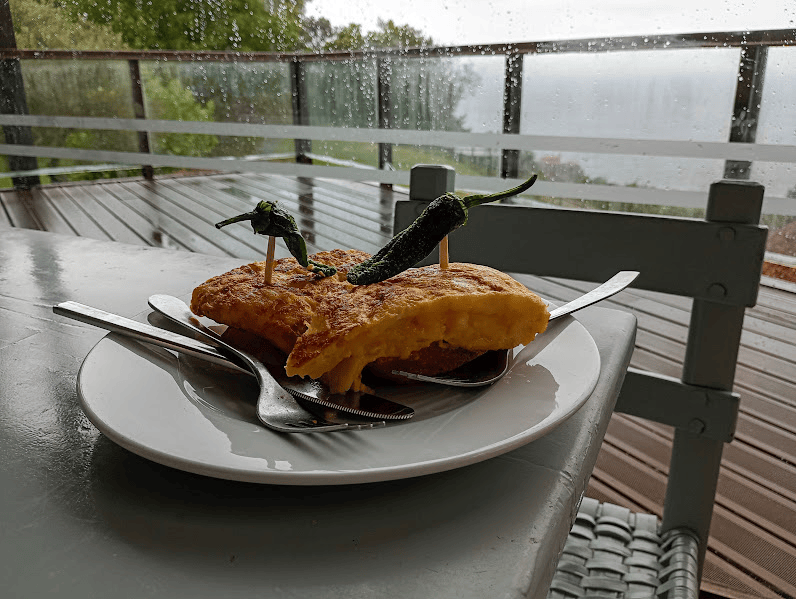
Fuelled by a slice of the ubiquitous vegetarian tortilla, we sat by the rain spattered window of the Gatzelugatxe cafe…..
….. heading through a deeply wooded area with a last view of the hermitage.
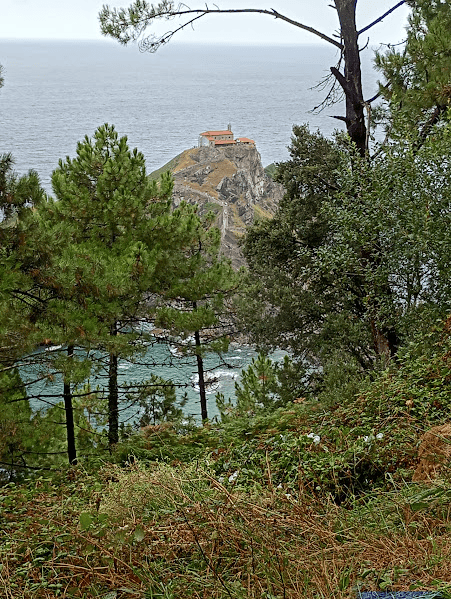
There was a clearly marked path along the clifftop…..
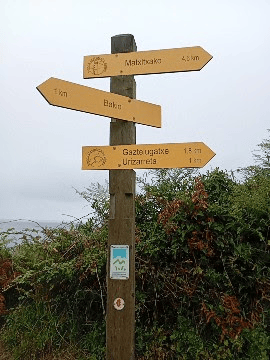
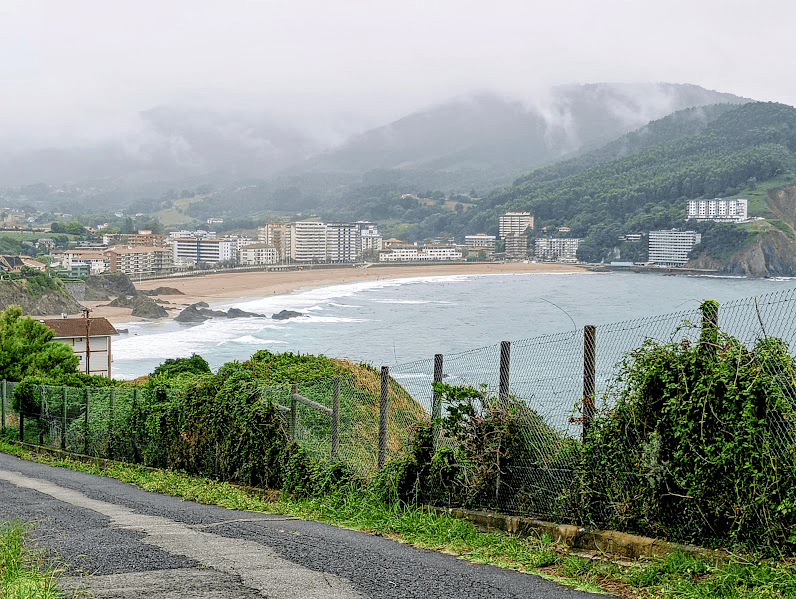
…..and we soon found ourselves following the road down into Bakio, where we strolled along the whole length of the promenade, watching the surfers. I can’t really say what Bakio was like as we were too cold and wet too hang about – and I was definitely fed up with my squelching walking boots – o headed to the bus that would take us back to Bermeo. However, there was a poster about a Txakoli Museum, with tastings, at the bus stop which would have been fun on a better day.
We returned to Bermeo for a better look around on our final morning, walking there along the path that my ancestors would no doubt have taken – past the hermitage and along a well marked path which then joined the pavement along the main road into the town. Bermeo was similar to Mundaka, but much bigger. In fact, it used to be the capital of Biscay until 1602 when the title passed to Bilbao.
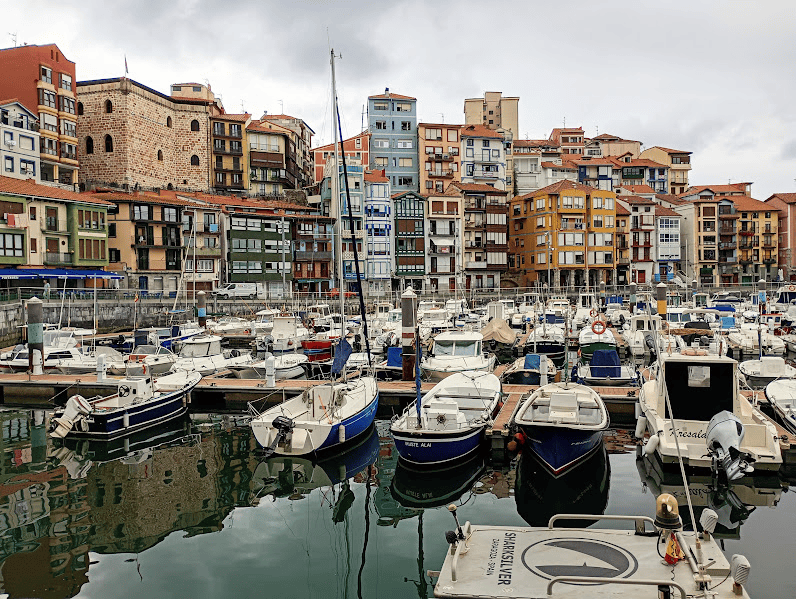
We explored the port area that was lined with cafes, bars and colourful houses…..
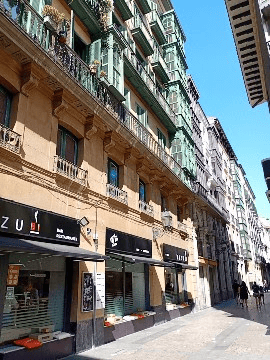
…..and the narrow winding streets of the old town.
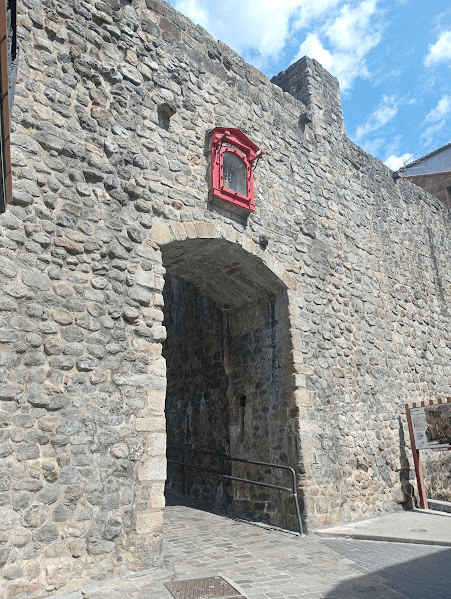
During the course of such wanderings, we discovered the San Juan Gate, the last remaining gate of the seven that were originally built into the town’s 14th century medieval walls. It was dedicated to San Juan because it was the gate that led to the hermitage of San Juan de Gatzelugatxe. There is an image of San Juan in a niche above the gate, and underneath is a footprint. This symbolises the fact that, according to legend, San Juan (St John the Baptist) disembarked in Bermeo and walked to Gatzelugatxe in three or four giant strides. Apparently, there are four separate footprints that mark the route he took, and I blame the heavy rain for the fact that we missed the final one that is at the end of the steps at Gatzelugtaxe when we made our own journey there!
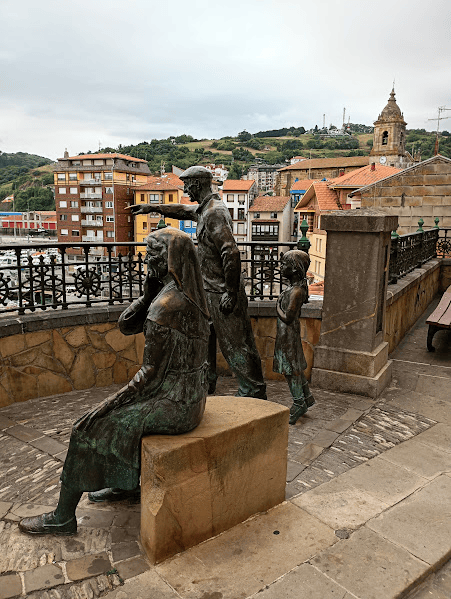
Like Mundaka, Bermeo was dependent on the fishing industry – in fact it was the most important of the fishing villages in Bizkaia. There were several statues that honoured this heritage, but I particularly liked the one overlooking the port entitled Badatoz or Han Datoz (meaning There They Come). It was very moving and captured the anxiety and relief of the fishermen’s families as they watched and waited for the safe return of the boats. (Bermeo also has a Fishermen’s Museum which would have been interesting, particularly if we had known that our ancestors had definitely been fishermen, although there was no time to visit on this occasion.)
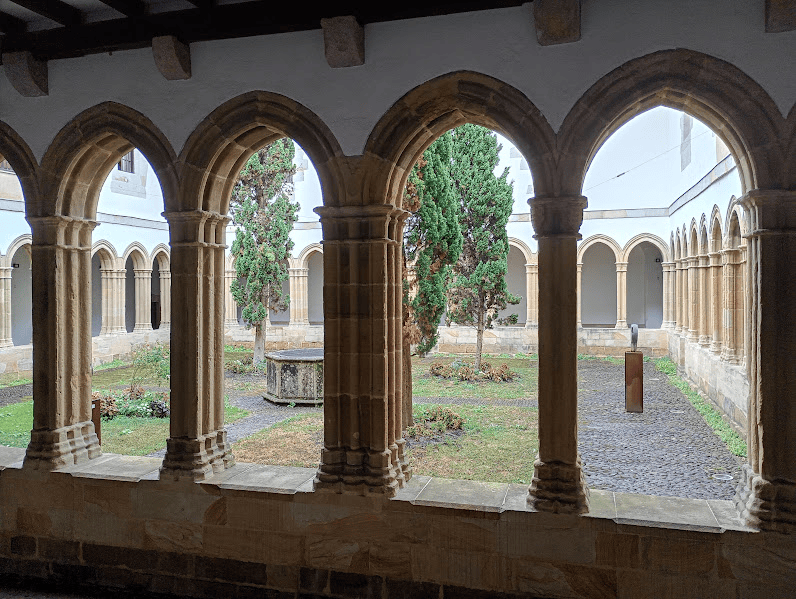
Interestingly, the churches in Bermeo were all locked as well, so although to us, used to being able to visit even the smallest village church in England, it seemed very strange, maybe it’s just not possible in the Basque country. We were able to access the cloisters of the church/monastery of San Francisco however, which offered a moment of peaceful reflection.
I may have left my sodden and musty smelling walking boots in a bin in Mundaka, but more importantly I left a piece of my heart. I loved it there so much, and felt a huge connection that I really wasn’t expecting. I know that if my family had never left then I wouldn’t be here, but at the same time, I couldn’t stop wondering why on earth they had ever wanted to leave all this beauty behind and trade it for a new life in Liverpool. (Yes, I know, it would have been for economic reasons and it’s easy for me to romanticise their lives when it was almost certainly very hard.) The culture shock must have been incredible, although interestingly, two generations of them did go on to run Basque boarding houses near the docks, providing lodgings for Basque sailors and newly arrived Basque immigrants, so they would have still retained contact with their culture and heritage.
As exciting as the next leg of our holiday was going to be, I really didn’t want to leave, although I can say with absolute certainty that I will be back! Since the holiday we have unearthed much more of our Basque ancestry, tracing back one line living in the village of Alboniga, (now known as Almike) – a rural neighbourhood in the mountains above Bermeo – and another to Errigoiti, a small village near Gernika, both going back to the 1560s (and both in the Urdaibai region), so I now need to go and visit them. There are also plenty of other interesting towns and villages without a family connection to be explored, and add to this the wonderful walks in the Urdaibai Biosphere that remain on my to do list – seeing the megalithic dolmens on the hills above Mundaka, crossing the estuary to Laida beach and climbing Mount Atxarre, visiting the painted forest – to name just a few – I am going to need more than one more Basque holiday to fit it all in!
Read my Basque Adventures Part 1 – Hendaye and San Sebastian here


Leave a Reply