
This is my great grandfather, Feliciano.
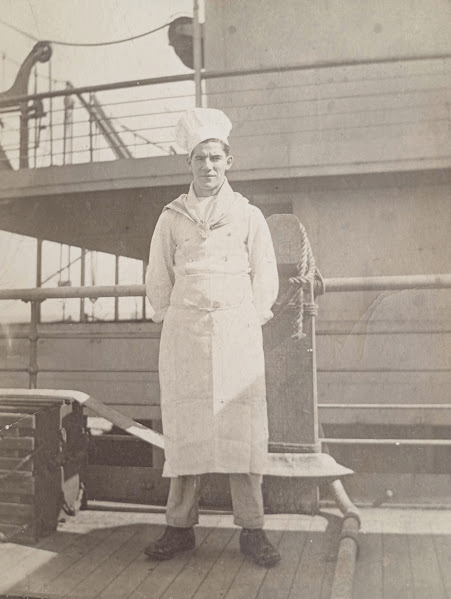
He has always been a skeleton in the family cupboard, as he abandoned his wife and young family and went off to live with a second secret family that he had been keeping in London. As a result, nobody ever spoke about him, although my paternal grandmother would occasionally refer to her Spanish father and his fiery temper. It wasn’t until lockdown when my daughter and I resumed the genealogy research that I’d started many years before, that we started to make inroads on that side of the family. By then, my grandmother was no longer alive to ask questions so we were flying solo, but we soon discovered that Feliciano’s family were from the Basque region of Spain.
Feliciano was the youngest of seven children, and his father and grandfather were both sailors from Bilbao, although we quickly ran out of leads and found no further information about either of them. It was a different story with his mother, Alejandra, however. She had been born in the fishing village of Mundaka, a little further along the coast, and so great are the Spanish baptismal records, which list not only the parents names but also those of the maternal and paternal grandparents, that we were able to trace her own mother’s family living there all the way back to the 16th century, which is when the Catholic Church in Spain first began keeping records! I have strong memories of the day when my daughter first showed me a picture of Mundaka – now a popular surfing destination – on the internet. It looked lovely and we joked about how we’d have to go there one day, not really thinking that it would ever happen – especially in 2020 when the world closed down and no one was travelling anywhere.
Roll on 5 years and I had done a DNA test. I was 11% Basque (and also 4% Spanish, possibly linked to a 3 x great grandfather who seems to have been born in neighbouring Asturias), but beyond a vague recollection of hearing about the Basque Separatists in the news, I knew nothing about the region or the people. Once I had got over the disappointment of not being Italian, I was ready to embrace my heritage however, and soon discovered that the Basques not only have their own unique customs and language – Euskera, which is completely unrelated to any other language in the world – but they also have a unique genetic profile, The more we researched, the more we wanted to visit, and spurred on by a new found love of Basque folk music, my daughter – travel planner extraordinaire – was soon working on an itinerary!
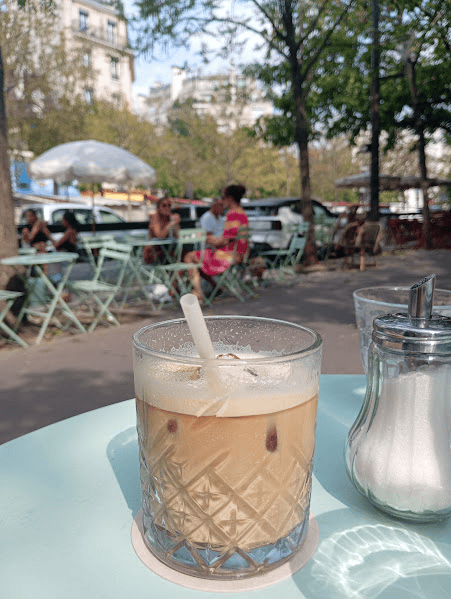
I don’t like flying but I LOVE train travel, and this summer we caught the Eurostar as usual, but decided to spend a night in Paris to break the journey. We stayed in Montparnasse, ready for our early train in the morning, and had a lovely afternoon sitting in a pavement cafe feeling very Parisian,
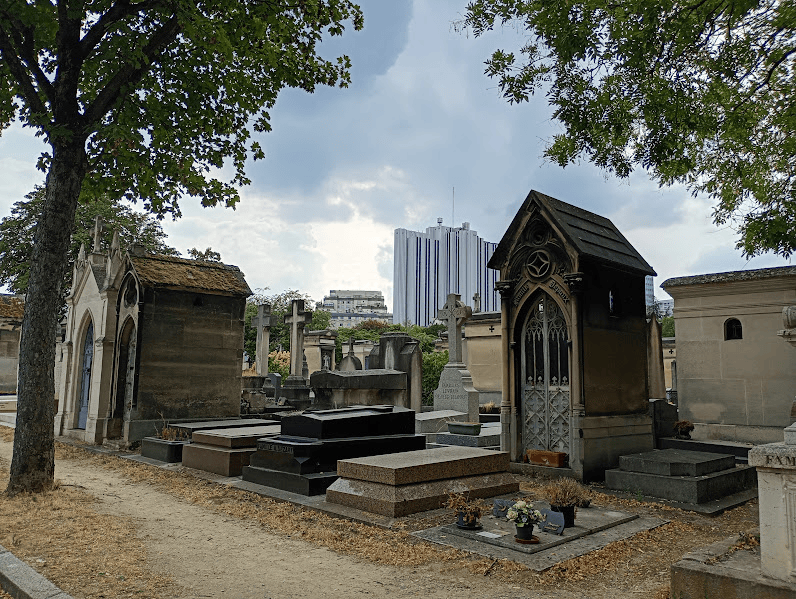
before strolling through the Montparnasse Cemetery. It was such, a peaceful spot in the middle of a bustling city. The graves of many famous people including Jean-Paul Sartre and Simone de Beauvoir, Samuel Beckett and Serge Gainsbourg are there, although I was more interested in the various styles of the phone box sized tombs that marked the entrance to the family vault of more ordinary people.
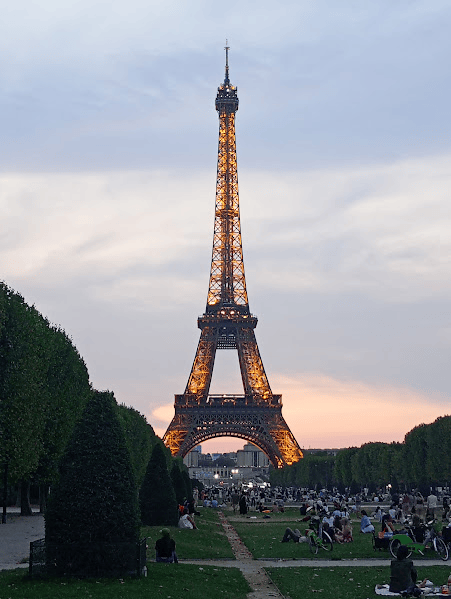
In the evening we walked in the direction of the Eiffel Tower because my daughter had never seen it and felt that she probably should (and it’s been well over thirty years since I have!). We only intended to view from a distance, but not only ended up walking further than we had planned, and finding a park, joined the crowds who were waiting for it to be lit up at sunset. It certainly put us in the holiday spirit, and our only regret was that we hadn’t bought drinks and snacks with us like everybody else! (And that an early start the following morning meant that we weren’t able to sit and wait for the sparkle that happens every hour on the hour!)
The following morning we were at Gare du Montparnasse bright and early, ready to board the 7am train down to Hendaye in the French Basque region, which is as far as you can get by SNCF. From there we had to change to the local Euskotren – the Basque railway which runs between Hendaye and Bilbao – to complete our journey to San Sebastian. We were ready to stretch our legs before another train journey however, and leaving our bags at a local museum which had a left luggage facility, we had the idea of taking the ten minute boat ride across the bay to Spain and the town of Hondarribia, which is apparently one of the most beautiful towns in the Spanish Basque region. That’s Hondarribia on the other side of the estuary,
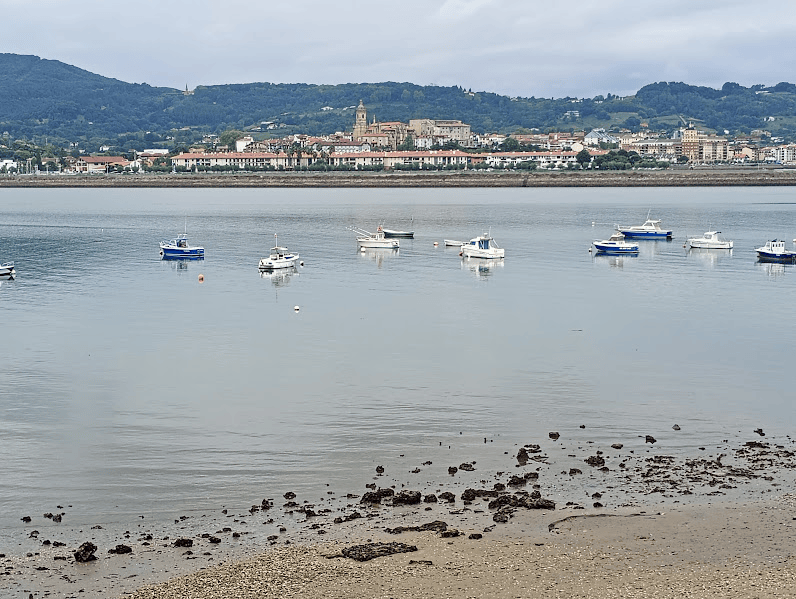
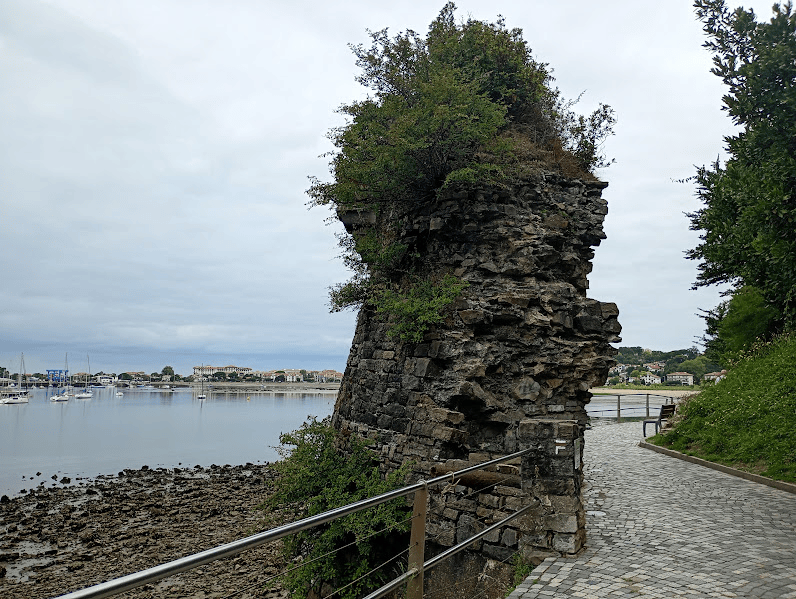
It was roughly a 45 minute walk to the harbour, but it was a very pleasant one – a short section through the town, but mostly with scenic views along the Bidassoa Estuary across to Spain. We passed the ruins of fortifications
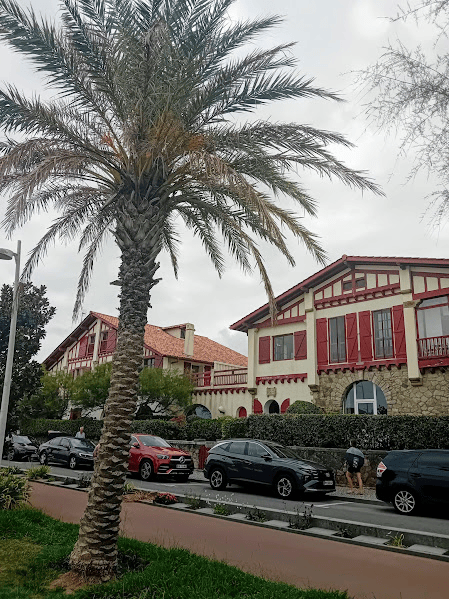
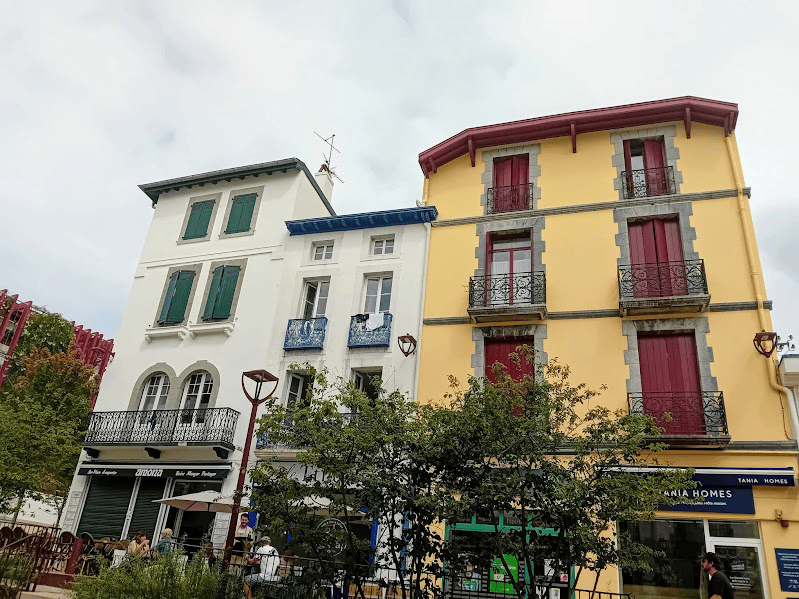
and had our first glimpse of traditional Basque houses, with their coloured timber frames and shutters, and wrought iron balconies.
Unfortunately, when we reached the harbour we found an enormous queue of people waiting for the ferry. Leaving my daughter in line, I wandered up towards the front, trying to get a rough estimate of how many people were ahead of us, and calculating how long we might have to wait if the ferries ran every 15 minutes (two different companies operate, each running half hourly services!) each carrying about 50 passengers at a time. There were a lot of people and the answer was at least an hour, and we decided that this was an hour we couldn’t spare – particularly if we were also going to have to queue for another hour on the other side to get back again. As we could get to Hondarribia from San Sebastian by bus (not so much fun – or as quick – as the boat, but at least doable, we decided that we would leave it for another day (spoiler alert -we didn’t, there was too much else to do!) and set off to explore Hendaye instead.
It was the right choice as Hendaye was an absolute delight. We picked up a freshly made roasted vegetable panini from a tiny supermarket – very different from the tired pre-packaged sandwich that we’d have got from somewhere similar in England – and headed through this archway,
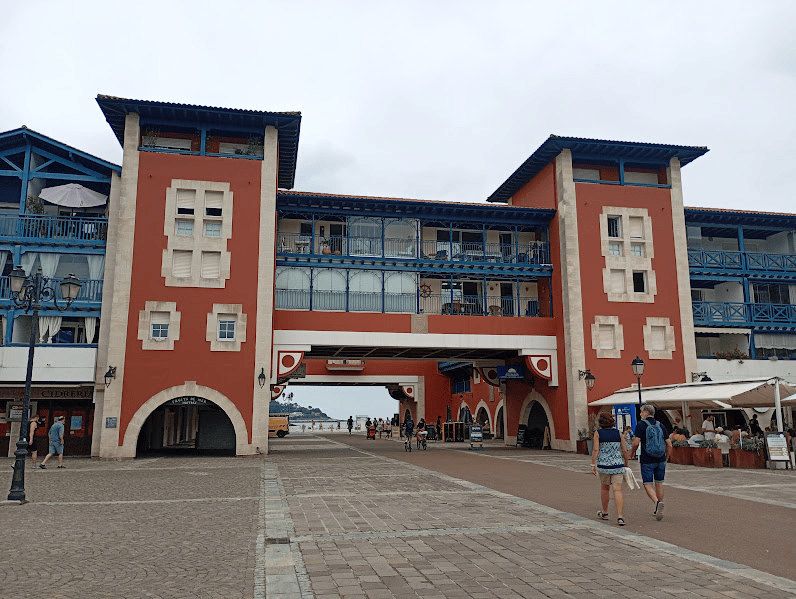
where we found ourselves by a huge sandy beach. It came as quite a surprise to me because, geographically, I wasn’t really sure where Hendaye actually was, and I wasn’t expecting any more from it than the lovely estuary that we had already walked along, although my daughter had been looking at google maps and already had it planned! We found a bench and ate our lunch and watched the world go by
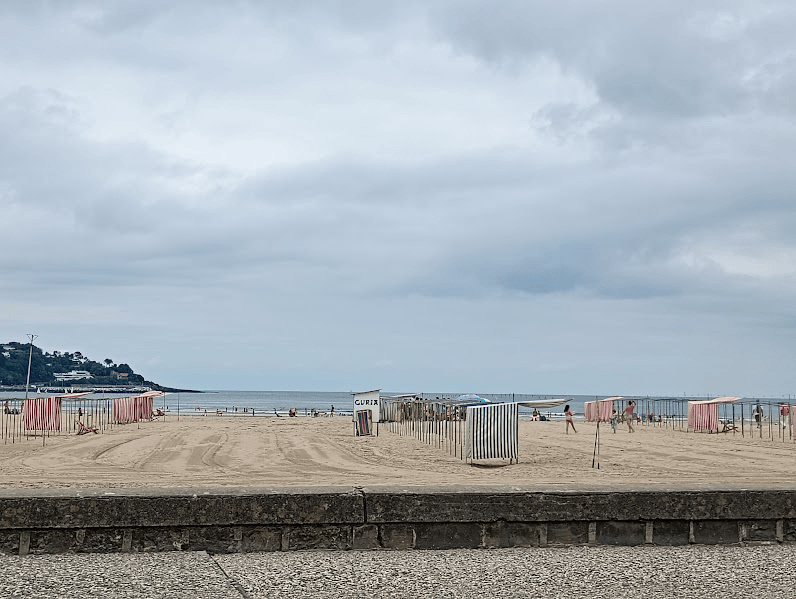
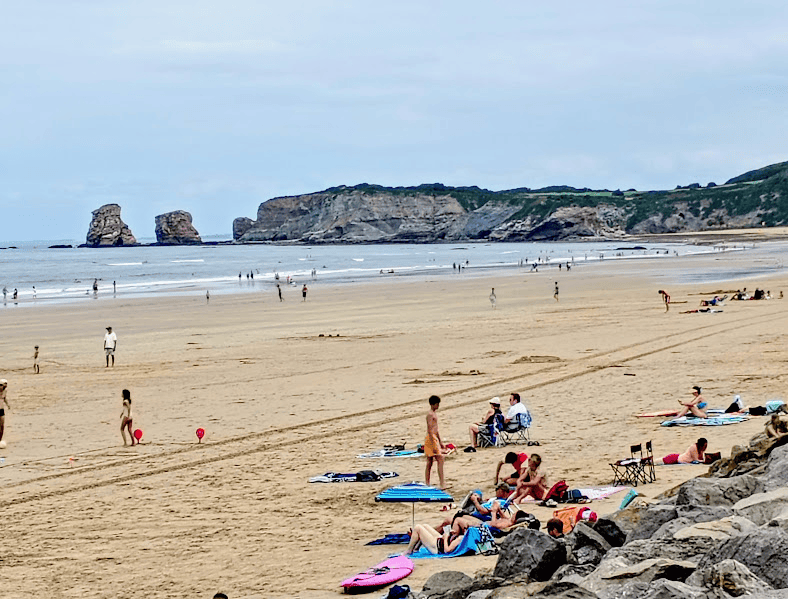
before walking along the promenade. There was such a jolly holiday vibe, with shops selling souvenirs and beach items, and we were both so pleased that we weren’t waiting in line for the ferry! Ahead of us were rock formations called Les Deux Jumeaux (or Bizkiak in Basque), meaning the two twins, and some unusual looking cliffs. It seems that they are an example of flysch, a feature of the Basque coast, made of alternating layers of hard sedimentary rock with softer layers of clay and shale. It would have been interesting to go and have a closer look – or even better to go up on the cliffs to explore the walking trails and see the castle that is up there – but unfortunately we didn’t have time.
Instead, we turned off the seafront at the Moorish inspired casino building and wandered back through the town,
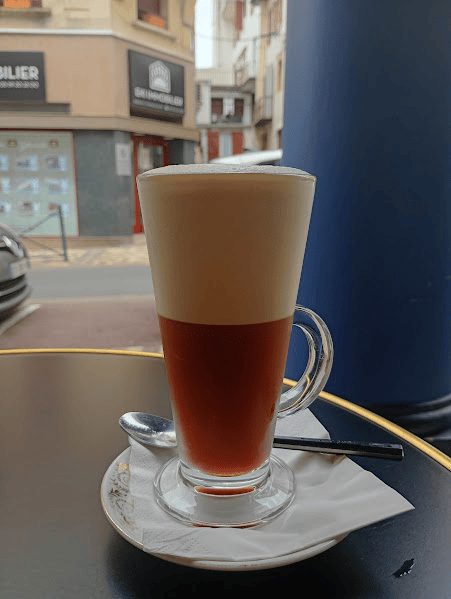
stopping for refreshment in a chocolate/coffee shop (where we regretted the fact that unlike the lady who sat at the table next to us, we hadn’t thought to choose a couple of their chocolates to have with our coffee)
before re-claiming our luggage, using the museum’s toilets, and heading to the Euskotren station for the journey to San Sebastian (or Donostia in Basque). We have no family connection with San Sebastian incidentally – our ancestors were all from the neighbouring province of Vizcaya – but we couldn’t pass through without including it in our tour.
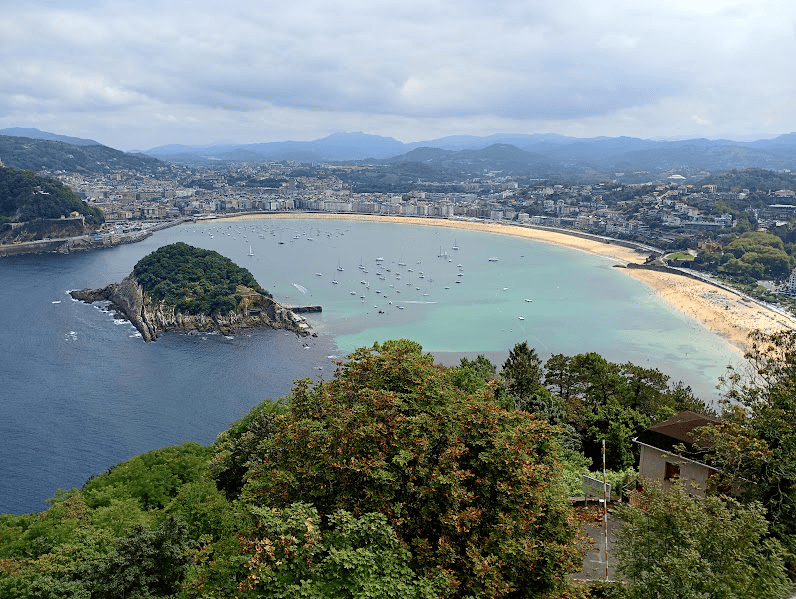
We stayed for two nights in an Airbnb in the Gros district, close to Zurriola beach (the surfing beach), and a short walk from the Old Town and La Concha beach. In fact, San Sebastian is a very walkable city full stop and we did a LOT of walking! It was fun to watch the surfers, but it was La Concha which blew me away: a huge sweeping bay of golden sand, bookmarked at either end by wooded hills, and with a small island (Santa Clara – or Turtle Island, so called because of its shape) just out to sea.
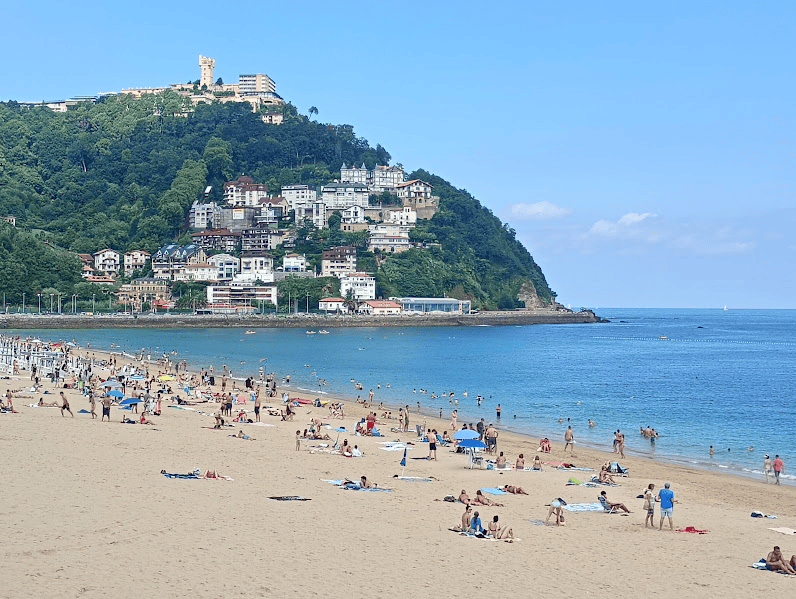
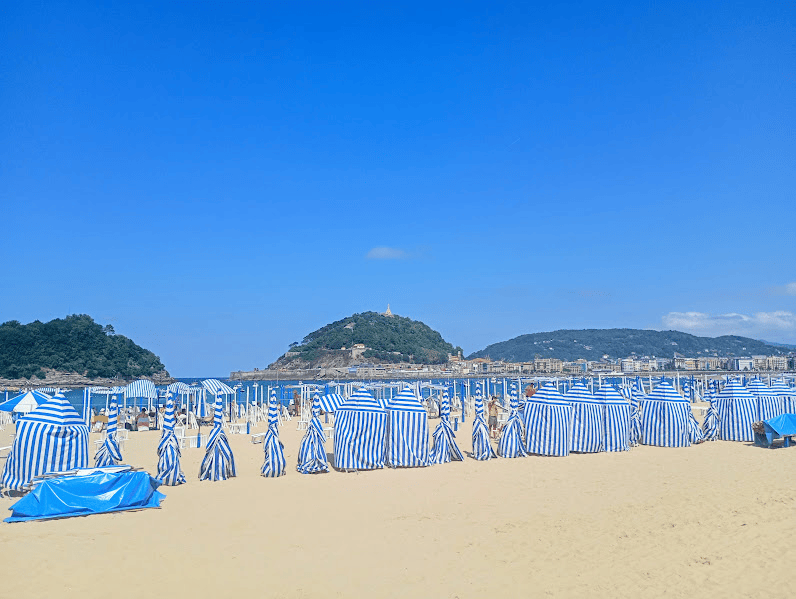
We walked the full length of the coast from Zurriola and along La Concha, heading for the funicular that would take us up to Mount Igueldo. I absolutely love a coastal walk, but am not a lying on the beach kind of girl and have never been to a foreign beach resort before, so although we had seen a few in Hendaye, the stripy canvas tents were still a novelty and I absolutely loved them. It was almost enough to get me on to the sand – but not quite!
Having made a pit stop for a lemon iced tea at one of the beach cafes, by the time we reached the funicular we found ourselves once again facing a very lengthy queue. My daughter said that she had read online that it could take up to 45 minutes to reach the front, and we debated whether we should walk up the ‘mountain’ instead – except we had already walked quite a long way and intended walking down from the summit later on. I was also mindful of not overdoing it at the very start of the holiday so that I ended up too fatigued to enjoy all that we still had planned.
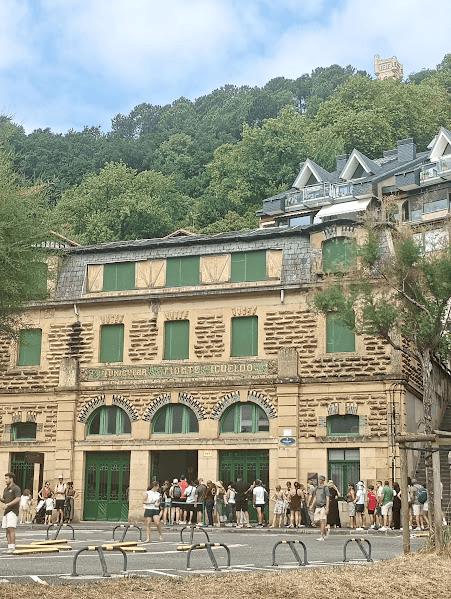
We decided to wait ten minutes and see how much further forward we got, and the queue seemed to be moving quite fast so surely, we optimistically thought, it wouldn’t take that long? It did! And as we reached the door of the funicular station, we discovered that far from being ready to step on board, there was another long queue snaking around the inside – but by that point we were committed!
Still, the view from the top was spectacular and was one of the highlights of my time in San Sebastian. You can see how Santa Clara Island really does look like a turtle – and it was amazing to see how the city is completely surrounded by mountains.
There’s a small, old fashioned amusement park at the top as well, and although we didn’t go on anything – I hate roller coasters, even little family friendly ones, and viral instagram posts had ensured that the water flume ride had risen in popularity to such an extent that queues were over an hour (we were definitely not doing any more queuing!) – but we enjoyed wandering about, mostly enjoying those views from a multitude of different angles.
There weren’t that many benches, but some judicious hanging about near a man who looked like he was preparing to depart, meant that we were able to leap in to occupy one as soon as it became available and we enjoyed a picnic lunch overlooking the bay. This included a pastel vasco, a traditional basque cake which is a buttery pastry tartlet filled with either pastry cream as this one was, or cherry jam (we had one of these in Hendaye – I think they might be more common in the French Basque region). I am easily pleased, but the little Basque flag in the top made me incredibly happy (and of course it came home to go in the scrapbook)!
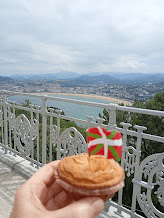
(The traditional Basque cake should not be confused with a Basque cheesecake which was invented in a San Sebastian restaurant in the 1980s and is not really traditional at all!)
Having ascended one mount, then in the spirit of fairness we also needed to climb Mount Urgull on the opposite side of the bay. There are a number of different paths that you can take, with handy maps and information boards and lots of helpful signposting. At the top is a fortress with preserved ramparts and canons, and above that is a statue of Jesus, which was the first thing we had seen, looking out over the city, as we headed from the train station to our accommodation.
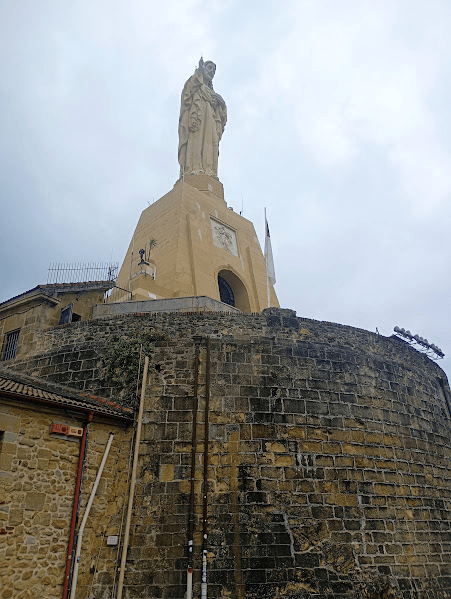
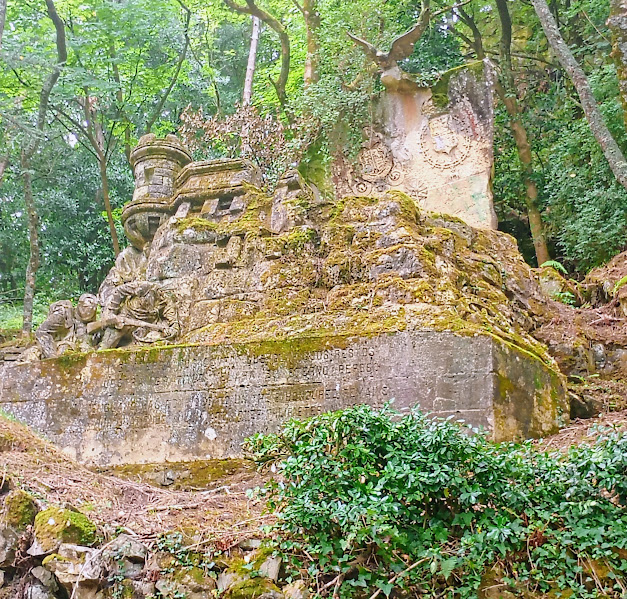
There is a small free museum and from inside you were also able to go up one more level to the base of the statue, but in order to control numbers, you needed to book in for a timed slot. We decided that the view was good enough from where we were, so we wended our way back down, following a different path to find the English cemetery – the burial ground for English soldiers who had died in the First Carlist War, 1833 – 1840.
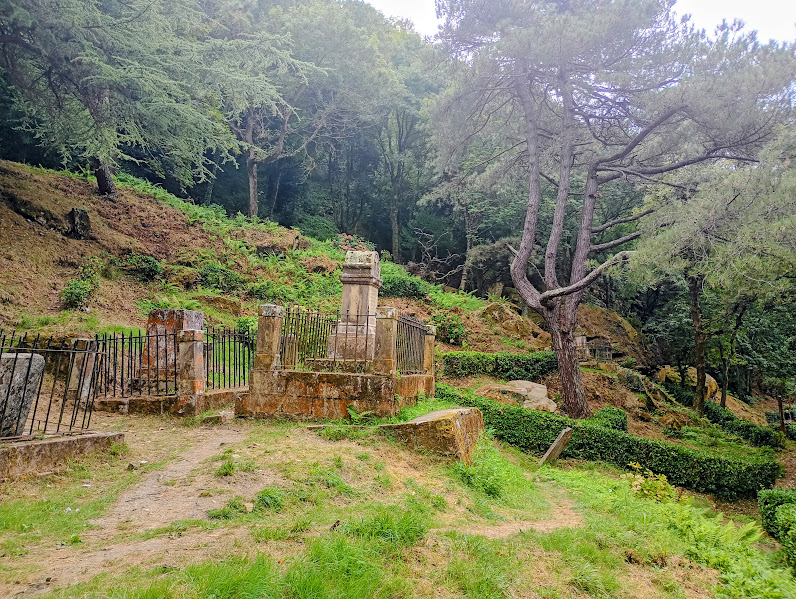
Nature had taken over and, far from looking neglected, had created a uniquely beautiful and tranquil spot. It was very atmospheric and definitely worth seeking out.
As well as wandering the streets admiring the beautiful architecture, we also managed to squeeze in a visit to the San Telmo Museum as it has free entry on a Tuesday, one of the days that we happened to be there. Housed in an old 16th century monastery, the San Telmo is the oldest museum in the Basque country, and as well as permanent exhibitions about Basque history and culture, and an interesting art collection, also has temporary exhibitions, which at the time of our visit included The Disasters of War, a series of eighty pen and ink sketches by Goya, depicting the brutality and atrocities of the Peninsular Wars. My favourite painting however was from the permanent collection, of stripy canvas beach tents on La Concha beach, showing that very little had changed.
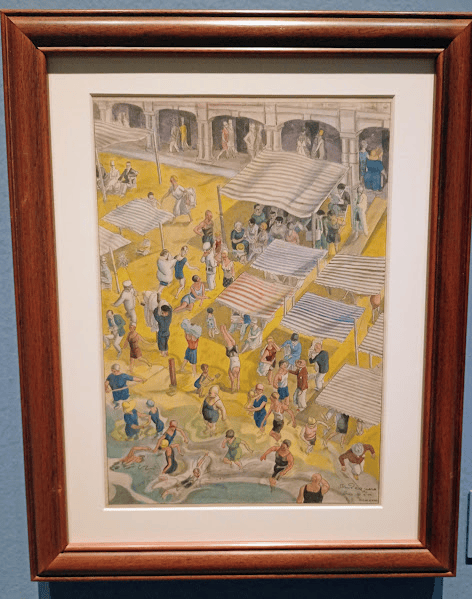
The old chapel was used as an exhibition space, with huge canvases depicting Basque history in a biblical epic kind of way, and we were also able to wander around the cloisters,
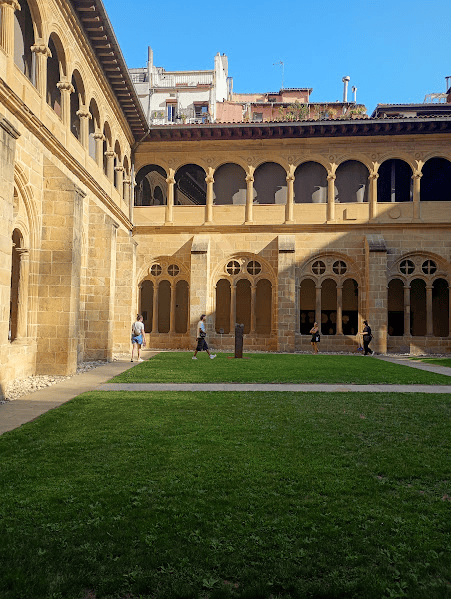
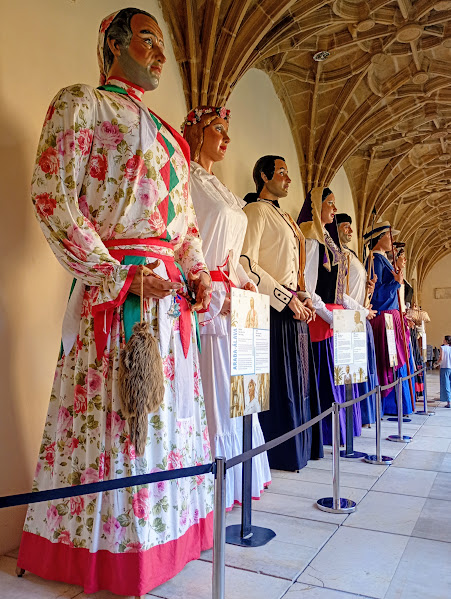
where we found the giants that are used during street festivals and which were being displayed following San Sebastian’s Semana Grande which had taken place the previous week. (As we couldn’t do both, we had timed our holiday in order to be able to experience the Bilbao festival of Aste Nagusia instead. See part 3, following soon!)) Giants are a big part of Basque festivals, and these ones were dressed as traditional Basque characters such as fishermen, shepherds and cooks.
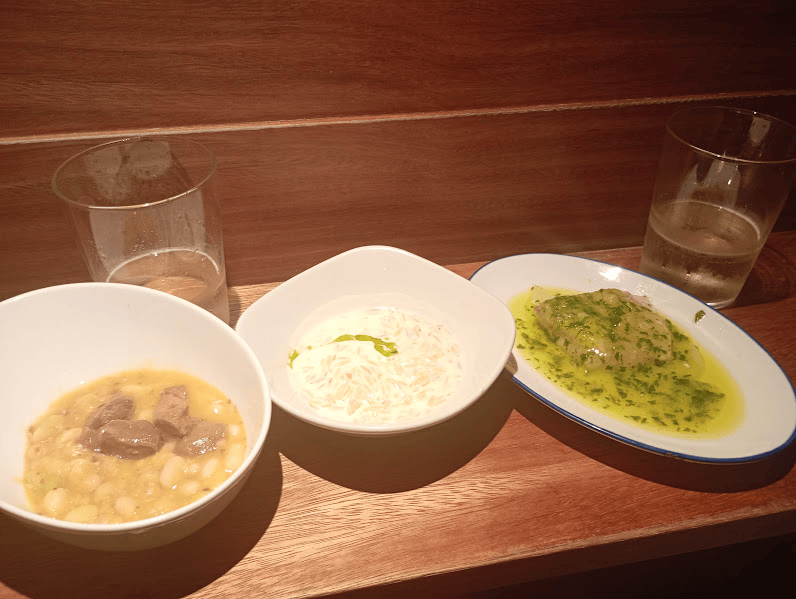
In the evenings we did what every self respecting person in San Sebastian does, and hit the pinxtos bars. Pinxtos are the Basque equivalent of tapas, from the Basque word pinxto, meaning stick or skewer, as they usually come on top of a piece of bread, held together with a cocktail stick. As someone who hates crowds and noise, I did find the pinxtos bars to be pretty overwhelming. Add to the fact that I am vegetarian and apart from tortilla, almost everything was fish or meat, it was initially quite a stressful experience. Cheap glasses of txakoli – the local white wine – that washed them down, may have had something to do with the fact that it became a little less daunting as the evenings wore on, as did the realisation that pinxtos hopping actually combines two of my favourite things – going for a stroll and eating picky bits! It clearly comes from my Basque DNA! Ironically, some of the best dishes I had (bean stew with mushrooms and a risotto – the fish isn’t mine!) did not come on a stick but in bowls. If you are a vegetarian in San Sebastian then I recommend Bor Borda Berri.
After two nights it was time to move on. San Sebastian was a wonderful city but there was no family connection, and the excitement of following in the footsteps of my ancestors was about to begin!


Leave a Reply