
I have always been very attached to Ramsgate, maybe because it is somehow rooted in my DNA. My maternal great grandparents used to holiday in the town every summer, travelling from their Lambeth home with their six sons (one of whom was my grandfather), on the steamer from London Bridge. The steamer would stop at Margate first, but apparently my great grandmother spurned that town in favour of, in her eyes, the classier Ramsgate, where it made its final call. They continued to holiday there throughout their lives and there are many family photos of assorted relatives on the sands. In fact, it was his holidays in Ramsgate, along with the family’s annual hop picking trips to Paddock Wood, that prompted my grandad to later make the move from South London to Kent when my mum was small, for which I am forever grateful!
I’d finished the last stage of the walk outside Ramsgate Wetherspoons, thinking that I might begin this one with breakfast there. Instead, we decided to breakfast at home and just make a coffee stop. We wanted to try somewhere that we hadn’t been to before, and after a bit of research, my daughter chose the cafe at the Granville Theatre as it was set to be a lovely day and they apparently had lots of outdoor seating. It’s on the top of the cliffs, so on reaching the harbour, instead of heading past Spoons, we turned up Madeira Walk.
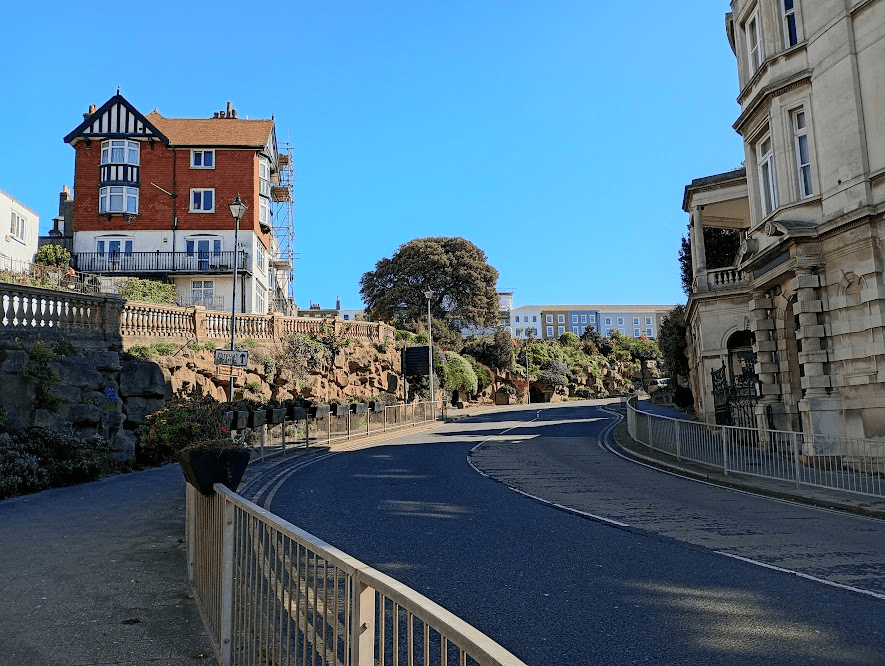
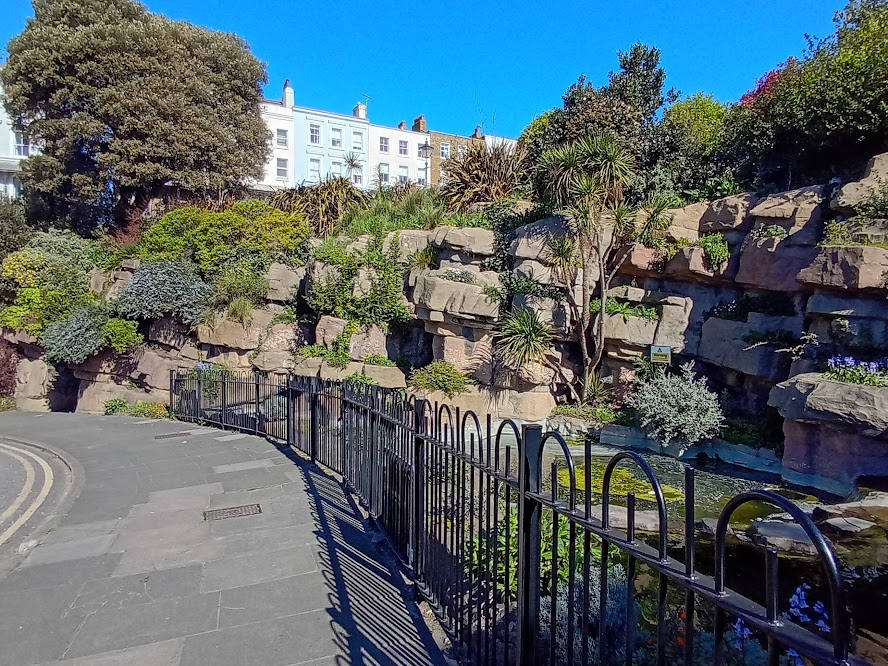
During the 1890s, the council wanted to transform the town from a fishing port to a holiday destination by creating picturesque parks and promenades, and this new road that wound up from the harbour to the East Cliff, was the first part of that scheme. They had a vision to make it look as if the road had been cut through a gorge with rocky cliffs on each side, and so engaged James Pulham to use pulhamite rocks (artificial rocks made out of sand, cement and clinker and very popular with Victorian landscapers) to create the desired effect, complete with a waterfall half way up.
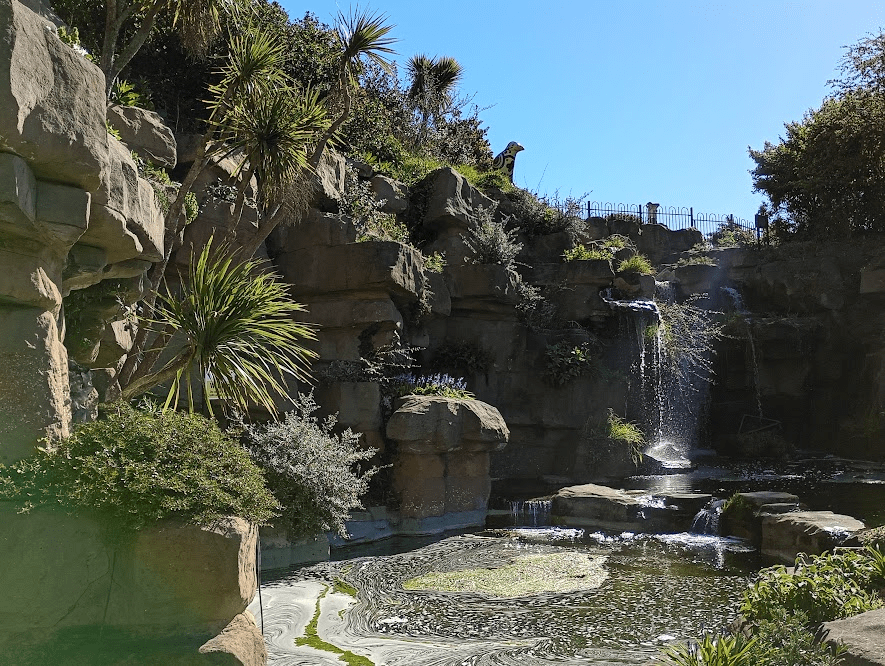
I’m not quite sure that I’d describe it as a gorge, but the pulhamite still exists and looks pretty splendid. Here’s how it looks now,
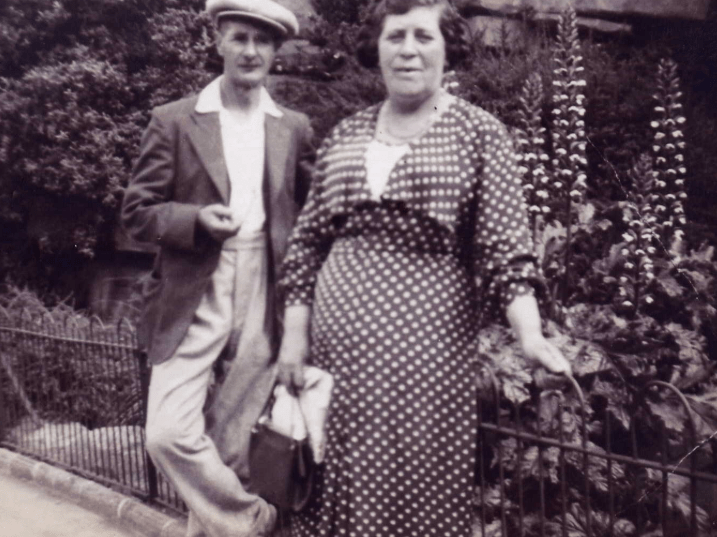
and here are my great grandparents posing for a picture in Madeira Walk, probably some time in the 1930s.
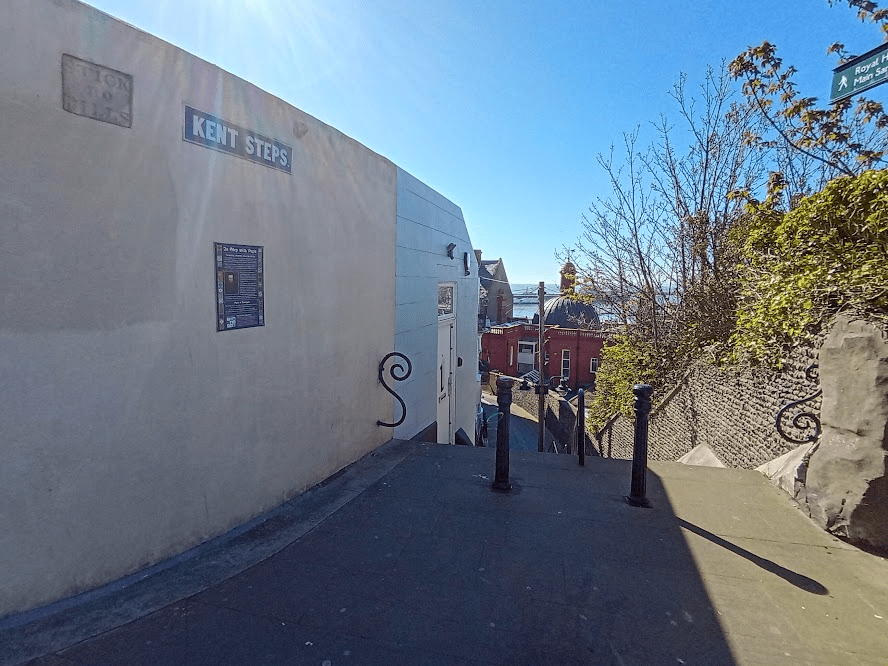
You can head down the nearby Kent Steps to reach the beach
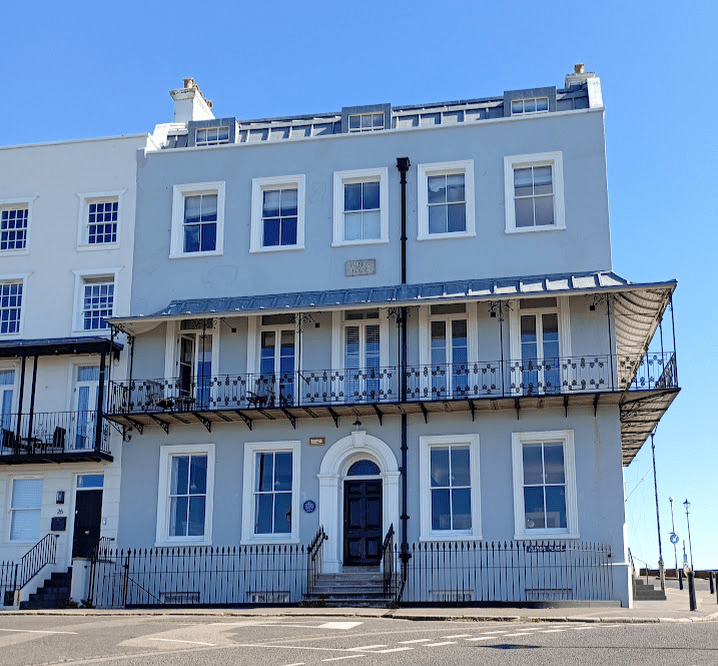
but we continued along the top, past the house where a young Princess Victoria stayed whilst convalescing from typhoid between September 1835 and January 1836. (You may recall from my Pegwell Bay to Ramsgate walk that she stayed in the town a number of times and had visited the Belle Vue Tavern in Pegwell Bay to eat their famous shrimps!)
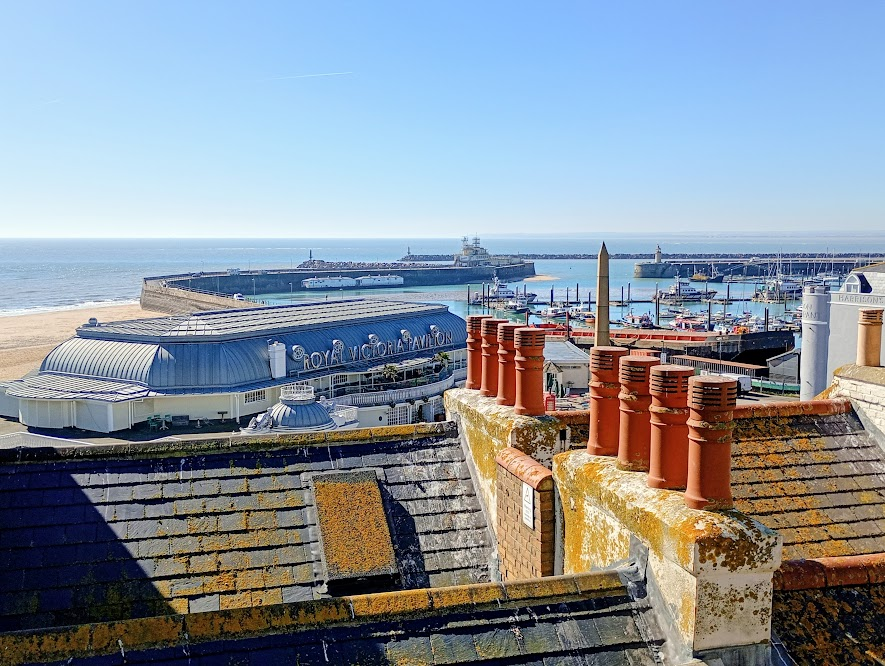
We paused to admire the view over the rooftops to the beach, the harbour and the Royal Victoria Pavilion – the largest Wetherspoon’s in the country,
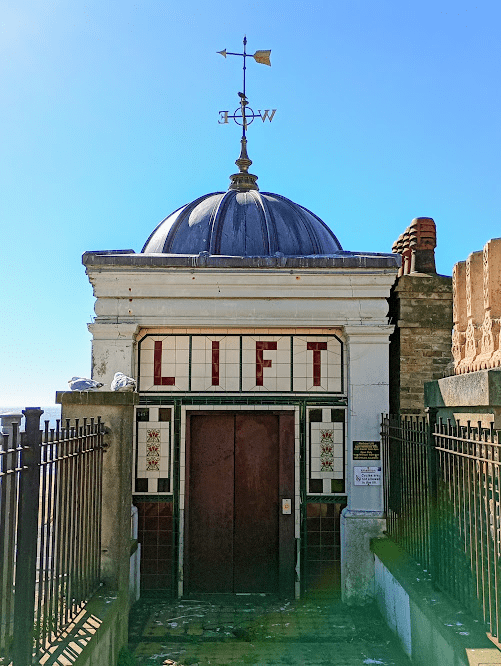
and the East Cliff lift, partner to the West Cliff lift that I’d seen on the previous leg of the walk. This one isn’t in use either, so walking is the only way up and down nowadays.
Here’s Wellington Crescent, built on the camps and parade grounds where The Duke of Wellington’s troops trained to fight Napoleon’s armies.
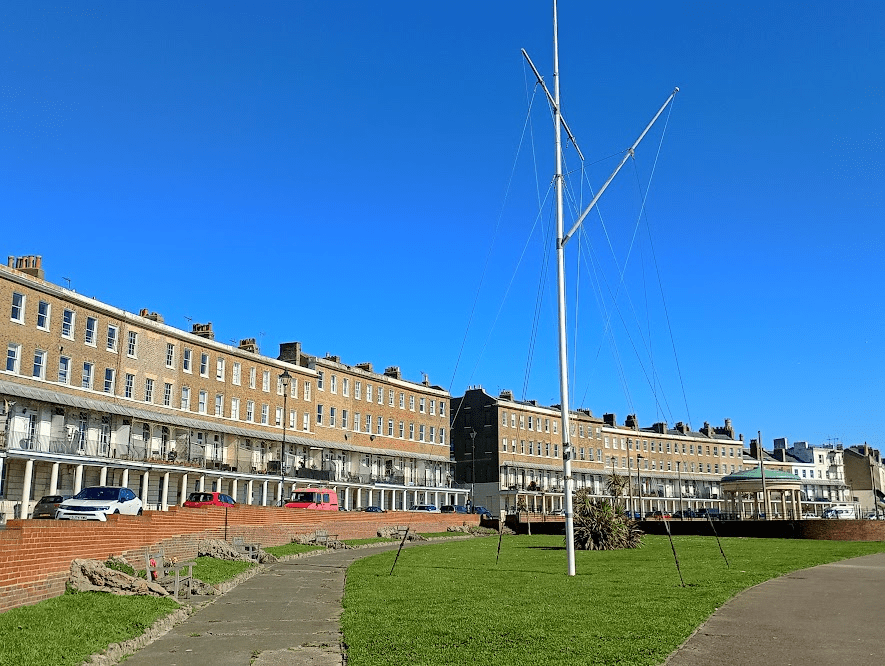
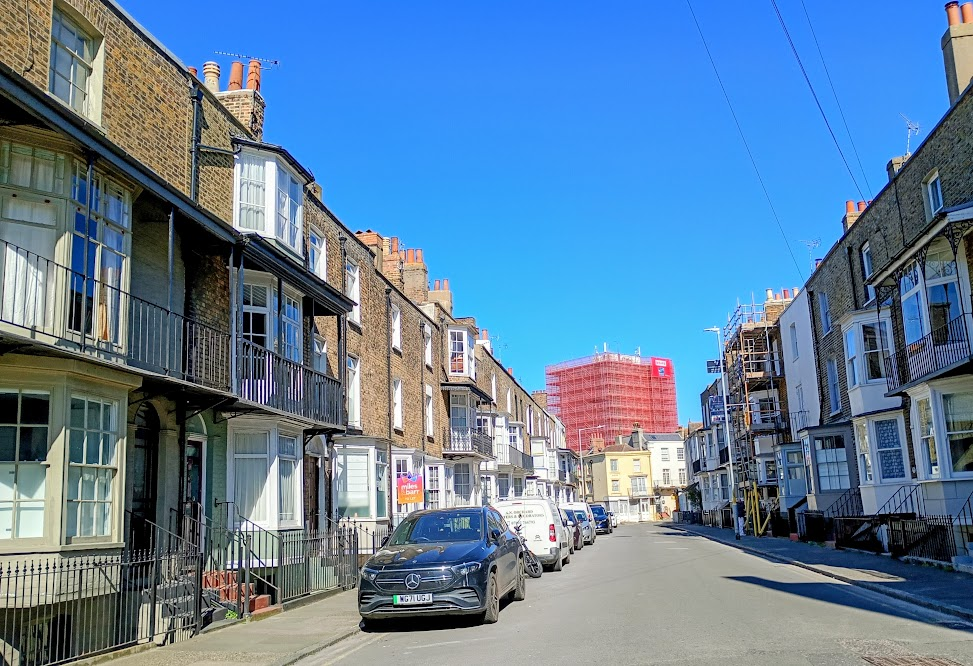
As we never usually walk along the top here, and as my great grandparents were very much in the forefront of my mind, we crossed the road to have a look at The Plains of Waterloo (clearly following the Wellington theme with the naming), which my mum tells me is where they used to lodge when on holiday.
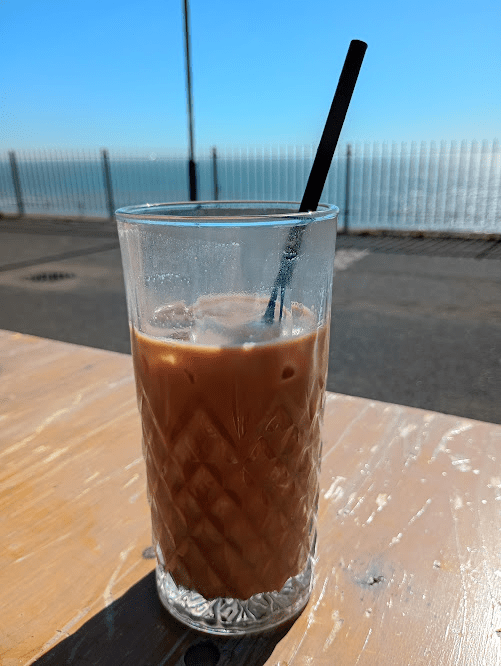
Then it was on to the Granville Theatre, where we sat outside in the sunshine with an iced mocha and a sea view. I was slightly put off when my daughter asked if I had noticed how dirty the fingernails of the chap that brought out our drinks were – I hadn’t, but had to trust that his hands were otherwise clean!!
The seafront promenade doesn’t run all the way to Broadstairs, so when the tide is in you have to take the cliff top path through the King George VI Memorial Park (where it’s worth seeking our the beautiful Italianate glasshouse). So, as the tide was out – which never seems to coincide very often with our visits (yes, we could check the tide tables beforehand, but that would be too organised!) – we wanted to make the most of being able to walk along the beach, and headed down the nearby access road.
Thanet (this part of Kent) is renowned for its beaches. In fact there are sixteen sandy beaches and bays between Pegwell Bay and Minnis Bay. With Ramsgate main sands just behind us
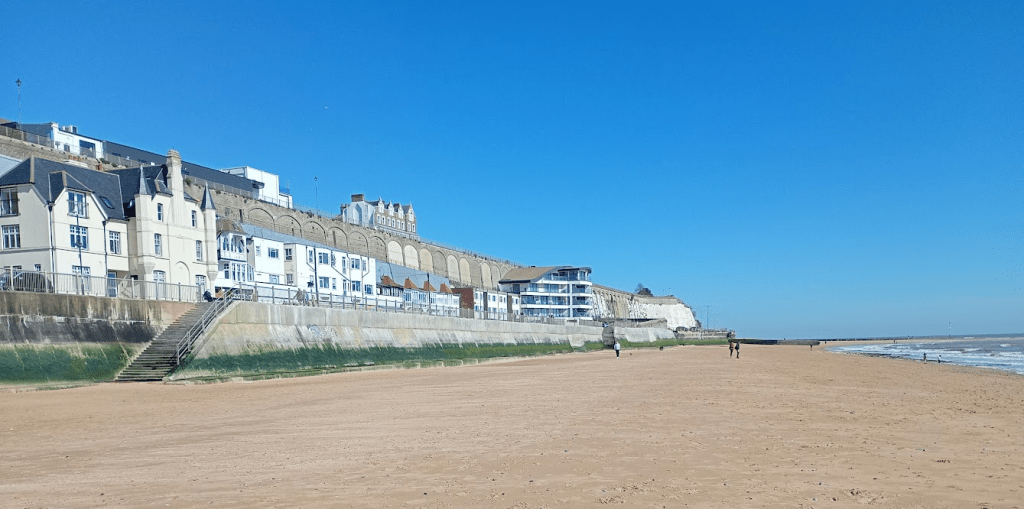
we continued along the beach, with the houses soon replaced by the white cliffs gleaming with a dazzling brightness in the sunshine.
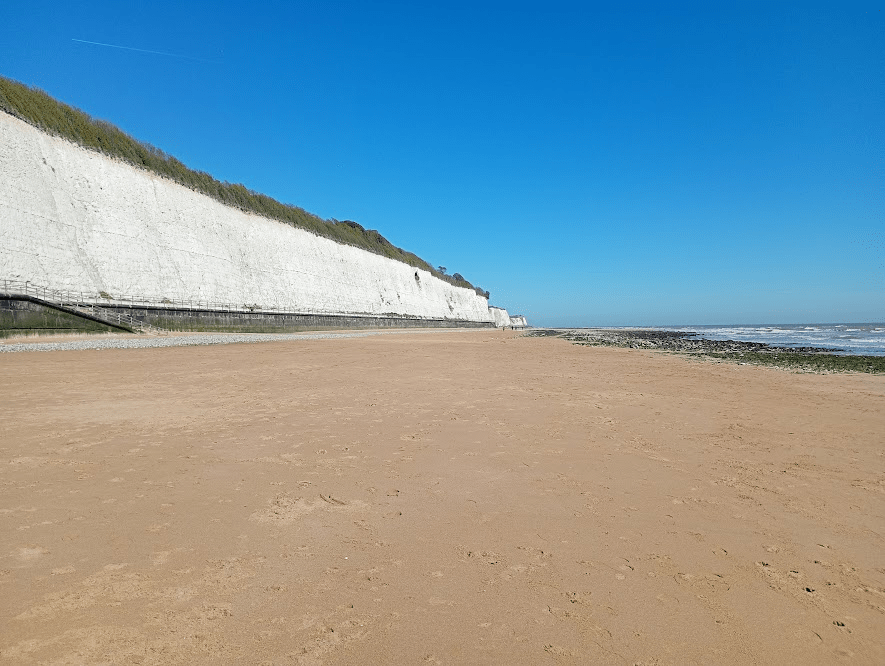
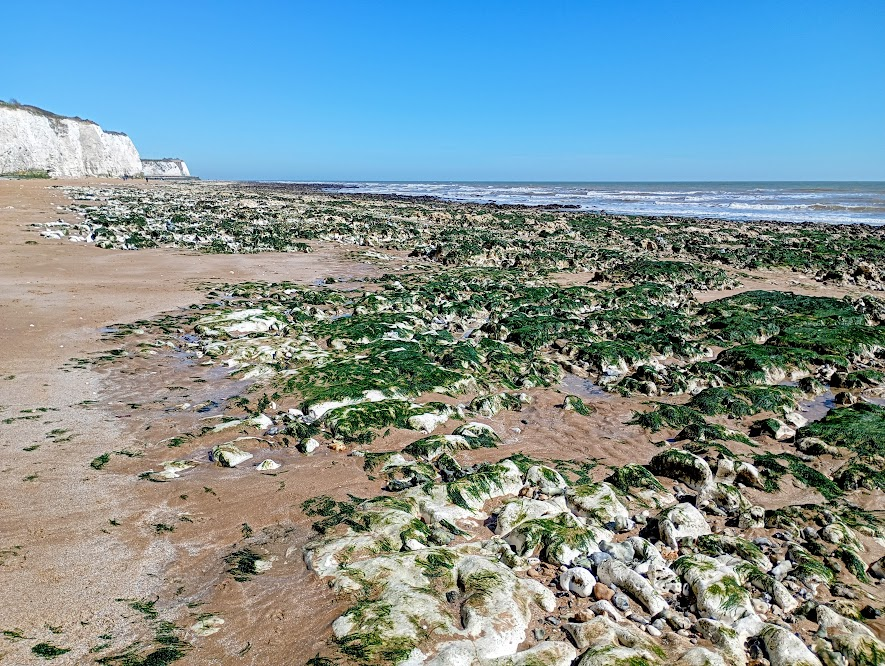
This stretch is perfect for rock pooling as at low tide there is an expanse of chalk reefs to explore.
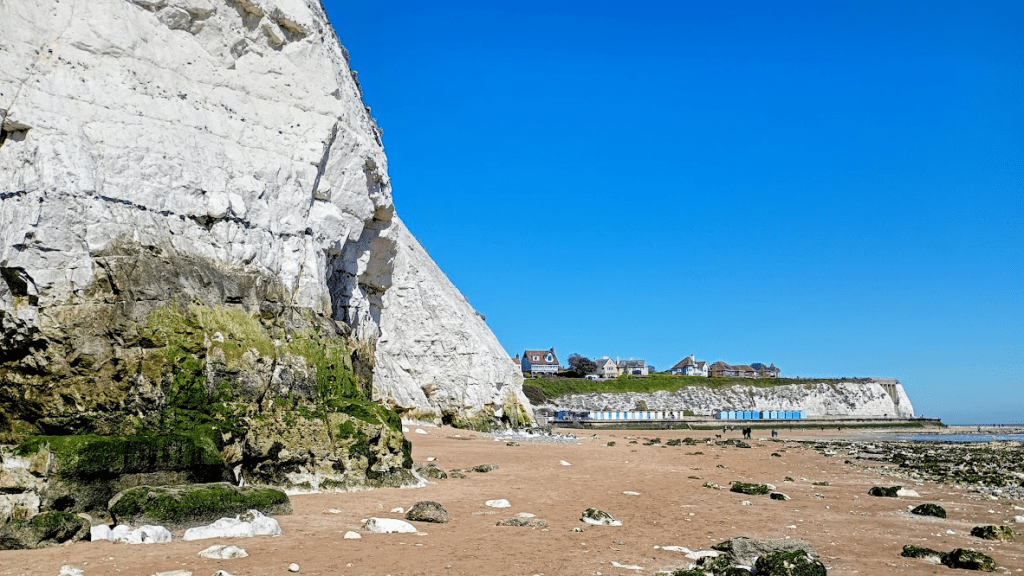
Up ahead is one of the many bays – Dumpton Gap – where there are beach huts and a small cafe.
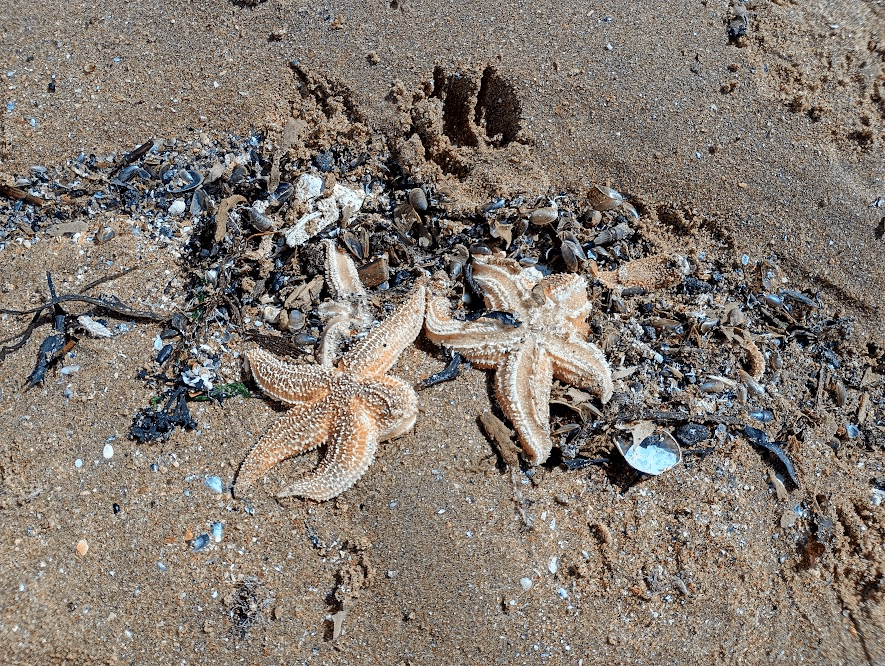
The sand here was absolutely covered in starfish. We were standing looking at them, wondering whether they were still alive and would be safely returned to their life in the sea when the tide came in again, when a dog walker stopped and told us that the mass stranding was caused by something called star balling. Apparently, slow moving starfish can bloat their bodies, curl their arms up into a ball, and then tumble along the sea bed in order to travel to new feeding/breeding grounds, but sometimes storm conditions occurring whilst they are doing this can then cause them to be washed up on beaches in large numbers, which is what had happened here. (Unfortunately it turns out that they perish quite quickly once they are out of the water.)
The next bay round is Louisa Bay, which looks a lot like Dumpton Gap, with another little cafe and another row of beach huts. The beach front promenade starts again here, so if you have had to walk along the top of the cliffs at high tide, you can head down the very steep path to once again walk alongside the sea.
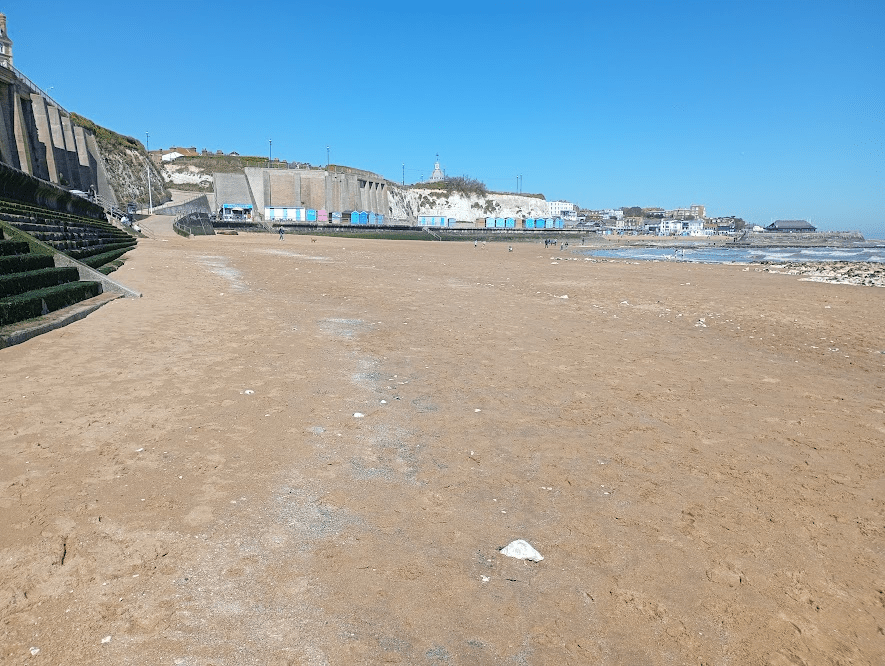
Then just around the next corner is Broadstairs and Viking Bay.
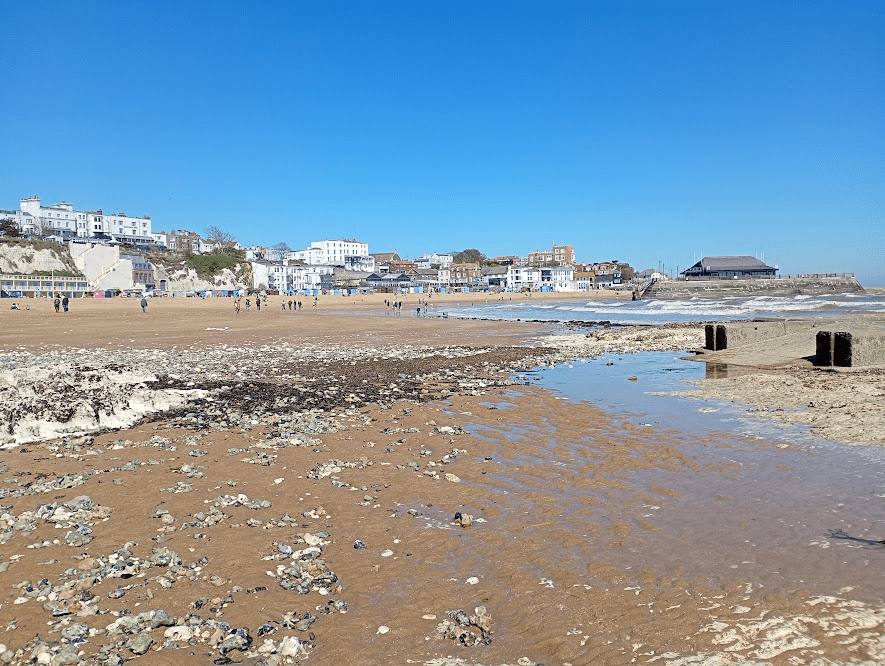
We walked across the bay and round to the harbour, where there are plenty of sheltered benches,
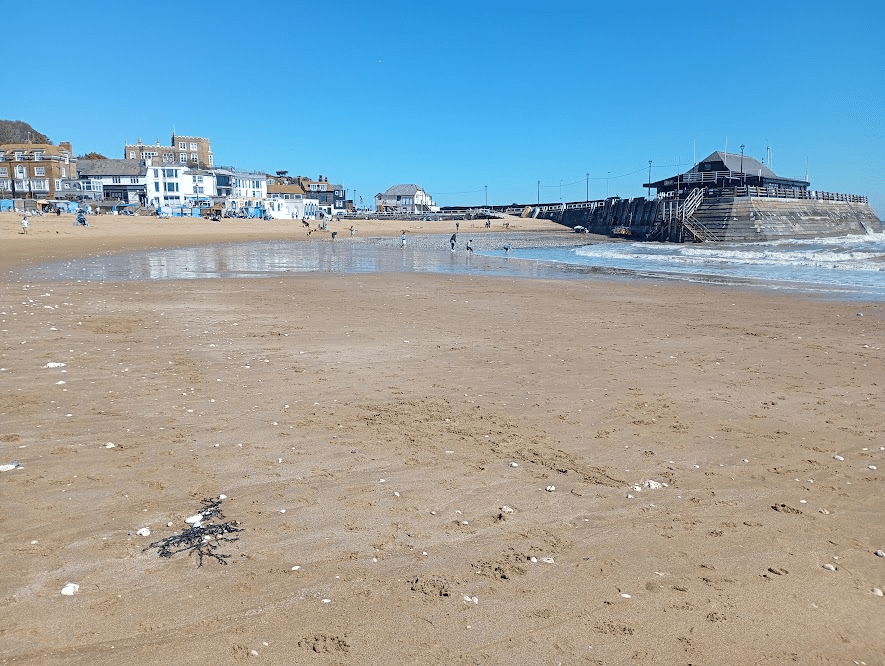
perfect for surveying the splendid views across the sands to the picturesque clifftop architecture- a combination of holiday lets, restaurants and not one but two 1950s ice cream parlours!
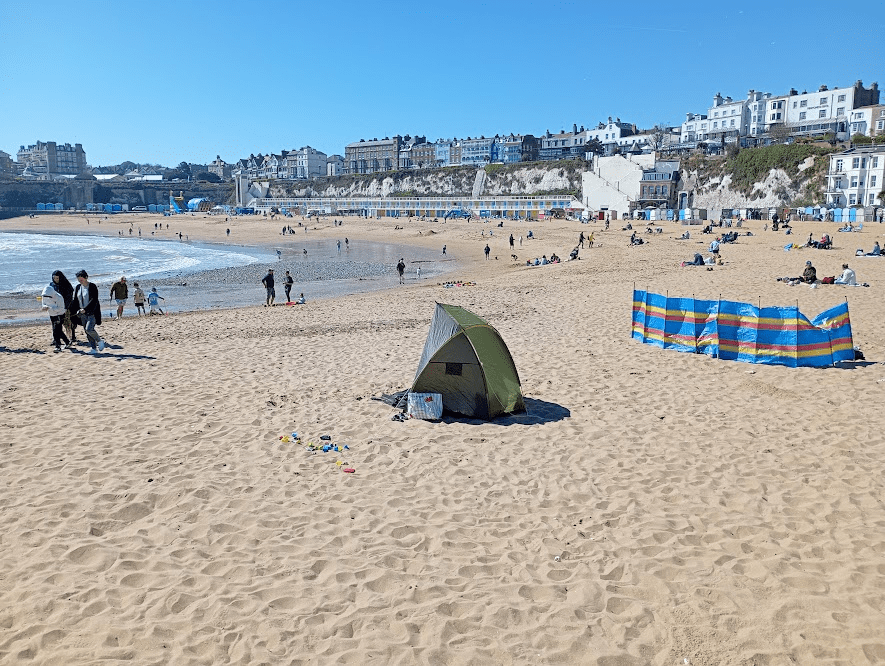
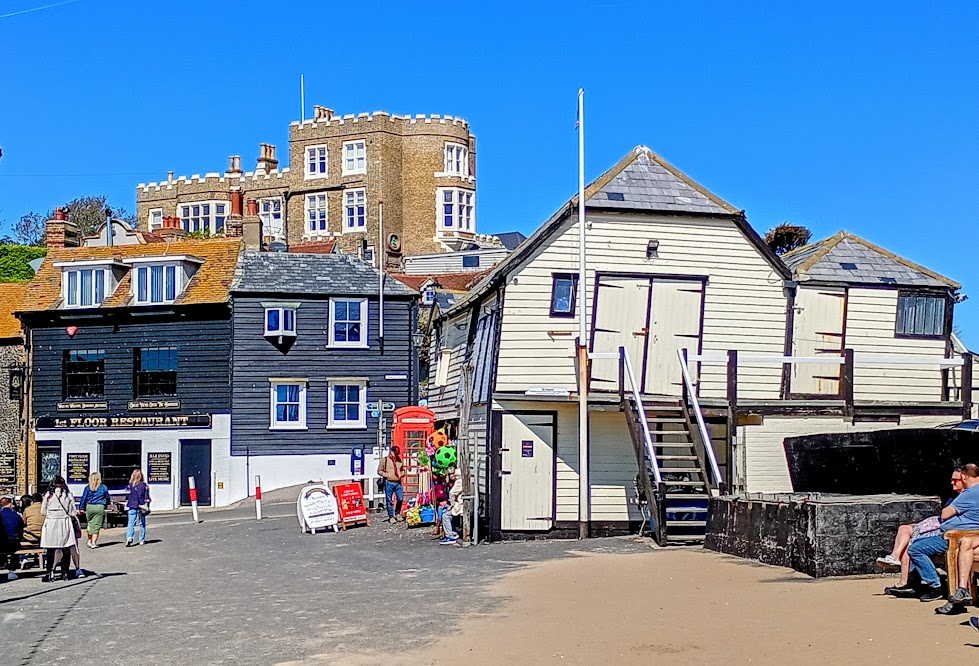
Unlike my great grandparents, Broadstairs was Charles Dicken’s favourite holiday spot, and the house on the hill is Bleak House where he stayed in the 1850s and 60s, and where he wrote parts of David Copperfield and Bleak House. (At the time he stayed there it was called Fort House but it was renamed in his honour!) Amongst the buildings on the main clifftop stretch, there is a Dicken’s museum which celebrates the author’s connection with the town and which is housed in the cottage that is said to be the inspiration for Betsey Trottwood’s house in David Copperfield! (The white higgledy piggledy weatherboard building has variously been a boat house, lifeboat station, harbour office and lookout, but now sells buckets and spades and other beach paraphernalia.)
So ended this leg of the coastal walk. It was a short one but a good one. Next stop Margate!
Read my Kent Coast Walk Part 9: Pegwell Bay to Ramsgate here
Read my Kent Coast Walk Part 11: Broadstairs to Margate here


Leave a Reply