
May festivities were first recorded during the Roman period, when the Festival of Flora (the goddess of flowers, fertility and spring) took place. Later, in the Gaelic world, a Pagan festival known as Beltane was held on 1st May, and people would light bonfires and decorate their houses with flowers, and later still, May Day celebrations came to include the crowning of a May Queen and dancing around a maypole.
Sunrise celebrations often take place, and although one year I would love to be up and out and up a hill before dawn, this 1st May was on a Friday and a work day, and so wasn’t that year! However by 6 o’clock, I was sitting in the garden, wrapped up in my winter coat, eating my breakfast and watching the sun climb above our back wall, with the Merlin bird app open. I was only serenaded by a robin, but it still felt rather special!
On the following day however, the revelry began in earnest when I met my daughter in Rochester for the annual Sweeps Festival. It gets its name from the fact that, in the 19th century, young chimney sweeps were given an annual holiday on 1st May and would celebrate by holding processions through the streets, singing and dancing as they went. You can still see the odd person dressed as a sweep, but there is folk music and dancing in abundance, as the festival is one of the largest in the country, with the biggest gathering of Morris dancers.
Rochester Cathedral makes a fine backdrop to a performance, but the whole high street is full of dancing and the town resonates to the sound of jingling bells, clattering clogs and clashing sticks.
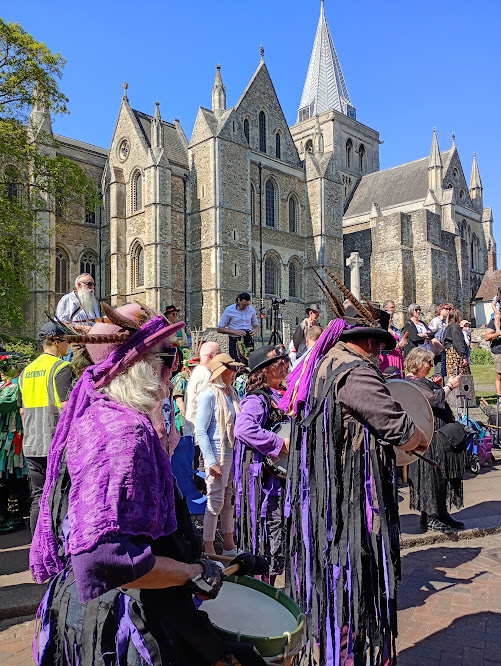
There weren’t so many groups in white outfits, performing what is generally considered to be the quintessential style of English ‘bells and hankies’ Morris dancing,
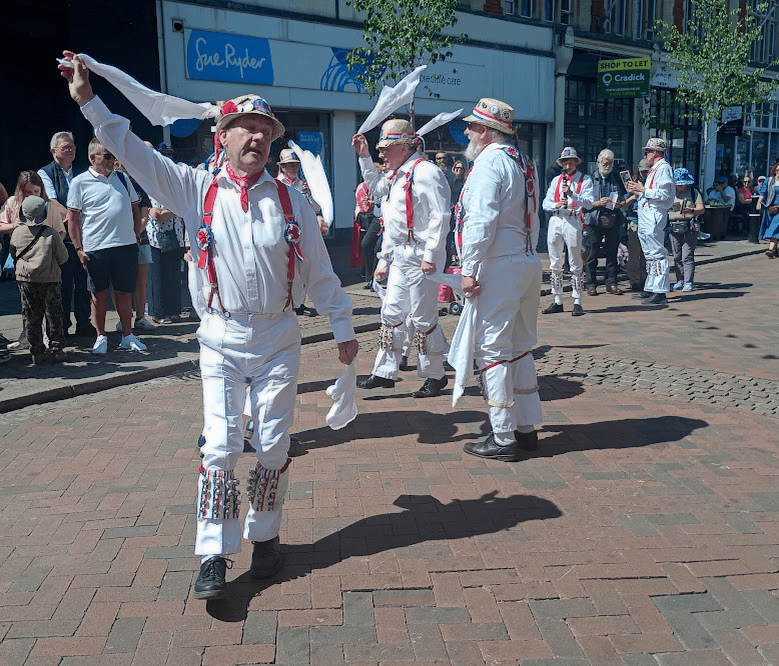
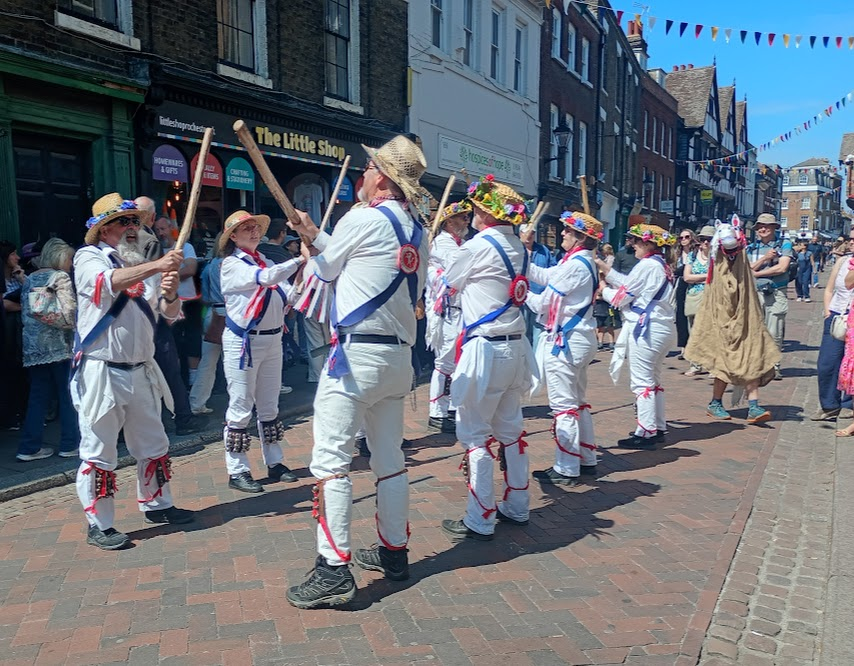
(although in this traditional Cotswold Morris style, the hankies are sometimes replaced by sticks!)
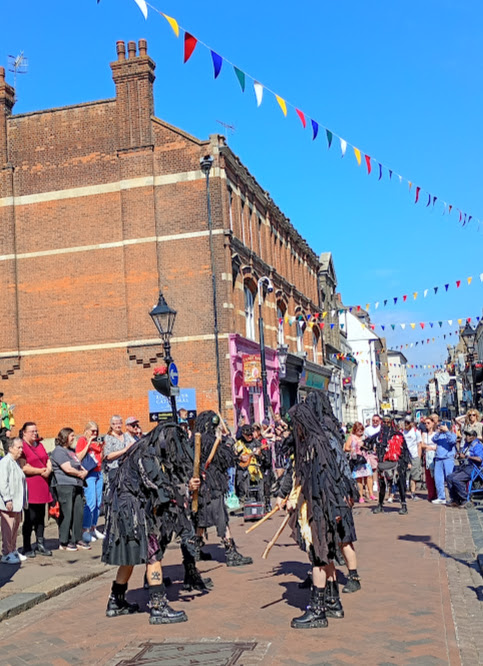
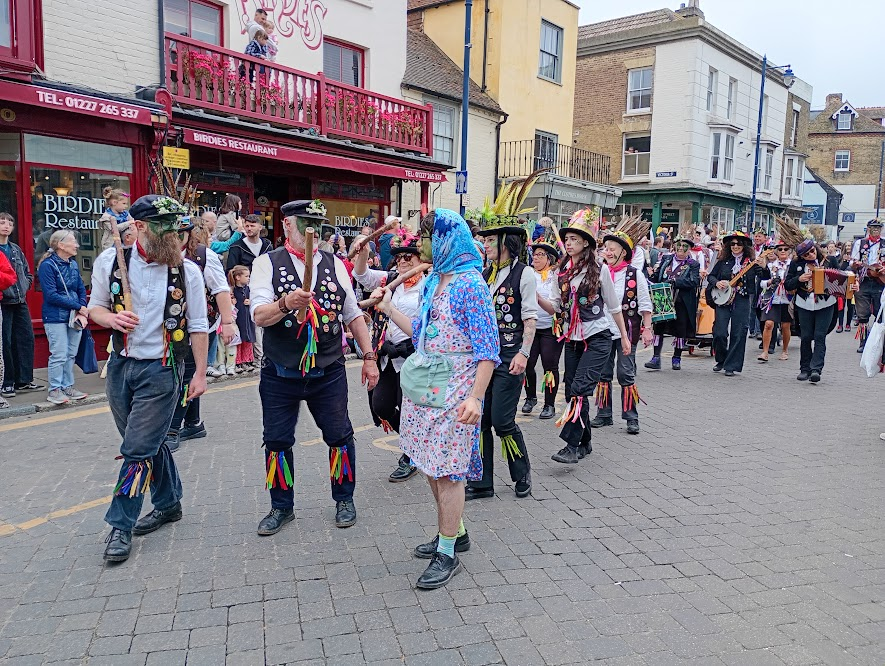
Far more popular seemed to be Border Morris – a folk dance style originating in the English/Welsh border counties of Shropshire, Herefordshire and Worcestershire, where dancers have painted faces and wear jackets decorated with rags. The dance is characterised by much loud and vigorous stick clashing and raucous shouting, and so probably makes for a more popular performance with modern audiences (and is potentially more cool for those wishing to take it up!)
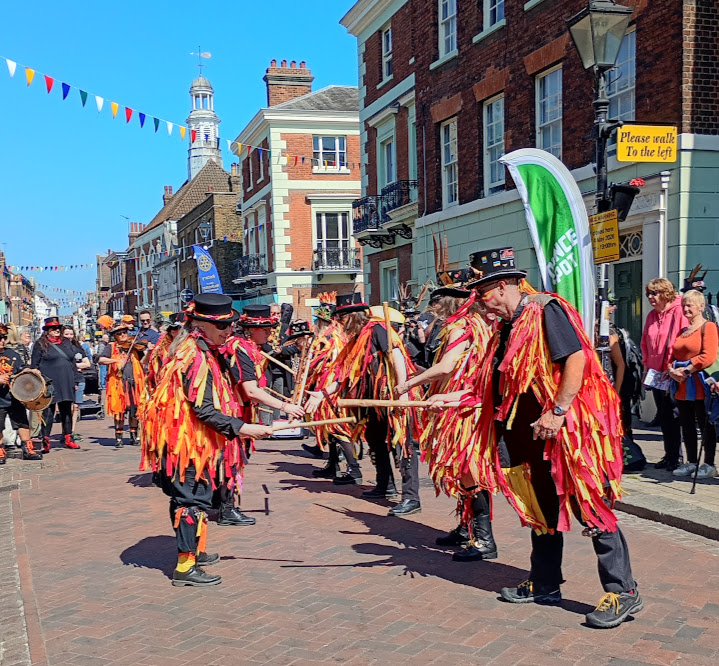
There was also a good representation of North West Morris, danced in wooden clogs, with the original dances inspired by the mill workers in the industrial towns of North West England.
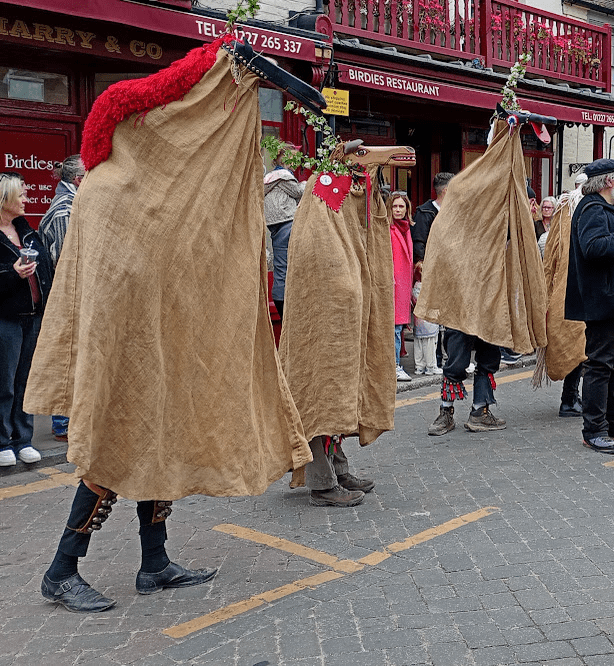
Many Morris sides are accompanied by some kind of ‘animal’, most often a horse, with a wooden head with snapping jaws, mounted on a pole and carried by a person covered in sacking. I have only just learnt that these horses originated in East Kent from the tradition of ‘hoodening’ that took place at Christmas time. Farm labourers would dress up (always including one man dressed as a woman, known as a Molly) and, accompanied by their hooden horse, would visit pubs and houses in the local area, performing a short play or singing songs in exchange for money. Over time, these horses began to be used by Morris sides to add extra theatricality – and mischief – to their performances.
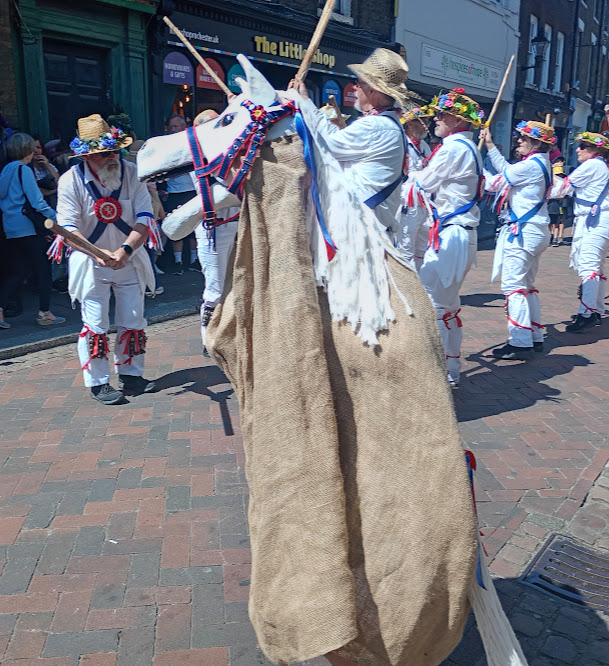
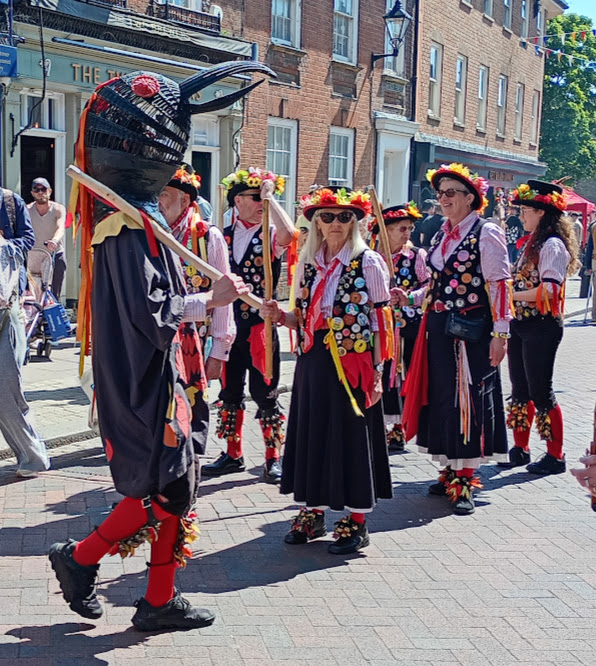
As well as a horse, we also saw one side with a dragon and one with a rather sinister looking bird!
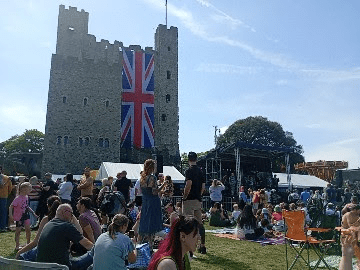
There was a bit of a festival feel in the grounds of Rochester Castle, and before escaping the crowds and heading off for a short walk along the River Medway, we sat and enjoyed a glass of Pimms whilst listening to a Cockney singalong, performed by a group of Pearly Kings and Queens on the main stage. It was great fun, and I quite impressed myself by the number of old fashioned crowd pleasers that I was able to join in with. The weather was glorious and it felt more like a summer’s day than early May.
You could be forgiven for thinking that we would have had our fill of Morris dancing by this point, but we were so embracing the May day vibes that we headed to Whitstable on Bank Holiday Monday. As well as Morris dancing in the street, they also had a procession, which is something that we didn’t see in Rochester (although apparently they do also have one on the Monday). We had never attended this event before, and although much smaller than Rochester’s, made for an enjoyable round up to the long weekend.
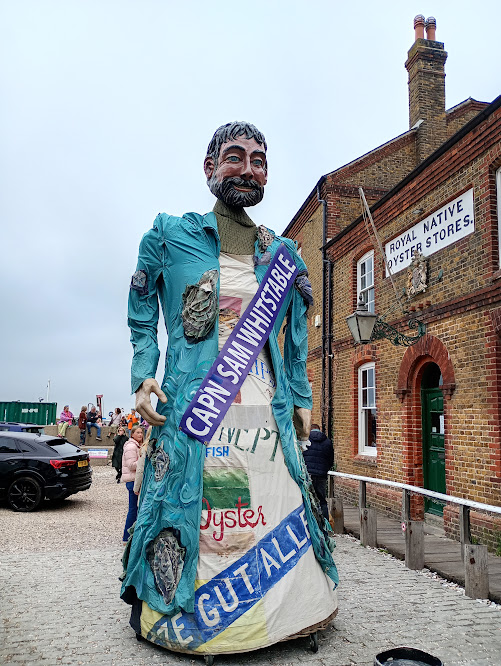
Captain Sam the Whitstable Giant (a bearded fisherman with a coat adormed with the oyster shells for which Whitstable is famous,) puts in an appearance at most local parades and so was very much in evidence,
and he was joined by a fine collection of hooden horses, which isn’t surprising, now I know that it is a local tradition.
Also in keeping with the hoodening tradition, we saw our first Morris team with a Molly,
but the real highlight was the Jack in the Green – a walking framework of foliage, that developed in England during the 18th century, from an older tradition of milkmaids decorating their pails with flowers and greenery. The biggest Jack in the Green procession takes place in Hastings, which I’m hoping to go to next year, but I was still pretty impressed by the Whitstable one.
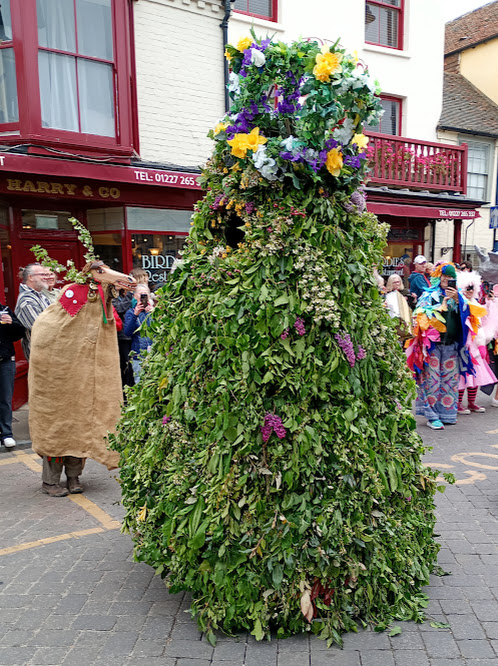
Traditionally, the May Day festival concludes with the slaying of the Jack in the Green, where he is stripped of his leaves in order to release the spirit of summer. I don’t know whether this happened in Whitstable as I was too tired to follow the procession all the way to the Castle grounds and needed to go home and rest, but the weekend left me feeling grateful that I had been able to participate in such special seasonal rituals, and looking forward to the warmer months ahead.


Leave a Reply