
Two long bus journeys and I was back in Dungeness, ready to begin part 2 of my Kent Coast Walk. My expectations hadn’t been particularly high, as the route mostly just followed the coast road that I had been along many times before, and so I knew pretty much what to expect, but in fact walking rather than driving gave me a very different perspective – I thoroughly enjoyed it and would definitely do it again.
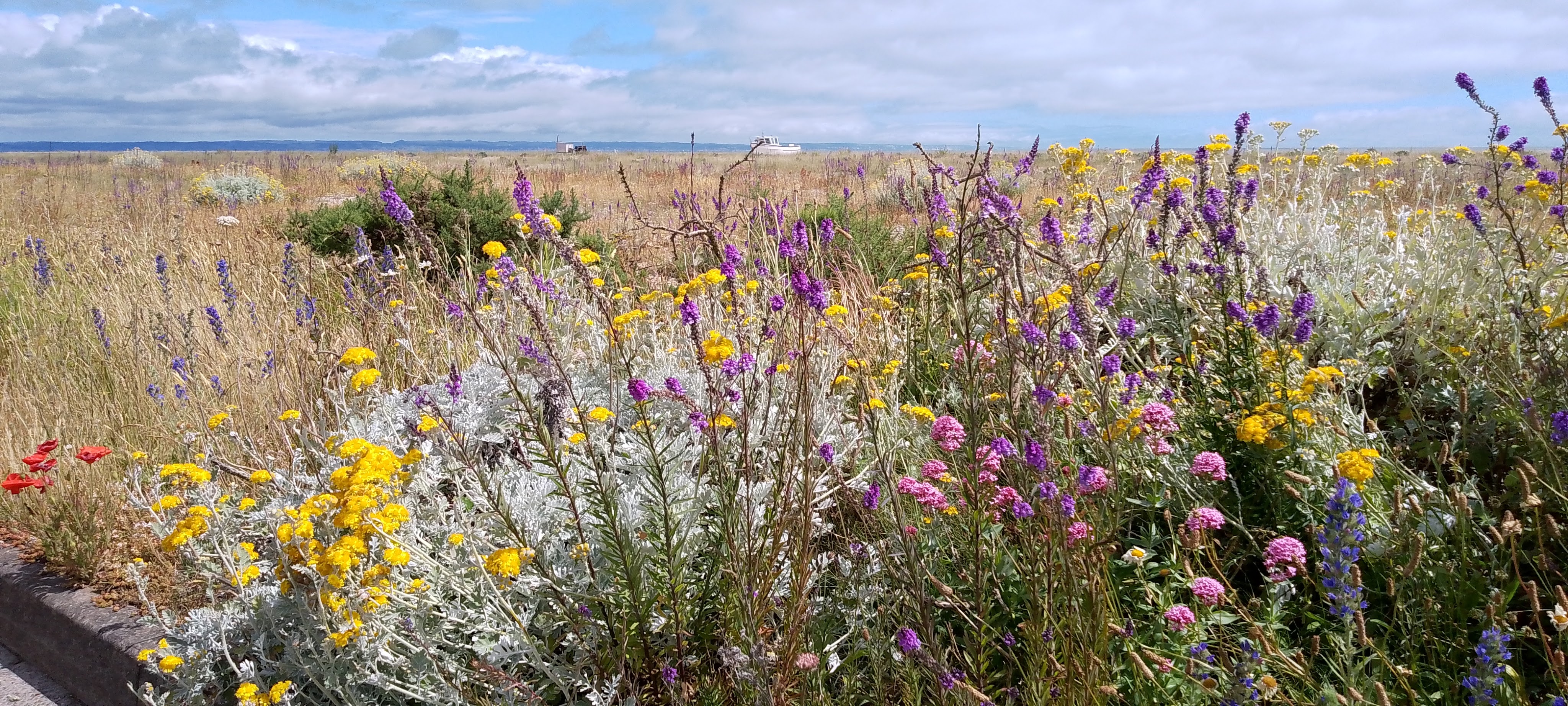
From Dungeness to Lade was pavement walking. Apparently if the tide had been out I could have walked along the lower part of the beach, because the shingle ridge next to the road is part of the Dungeness Nature Reserve and can’t be walked on, but it wasn’t so I couldn’t! The road wasn’t as busy as I had expected, and even though the pavement was on the other side of the road from the coast, I was still able to admire the beautiful wild flowers that were growing in abundance – vipers bugloss, red valerian, poppies – and beyond that I had fine views of the sea, and the curving bay all the way round to the White Cliffs of Dover.

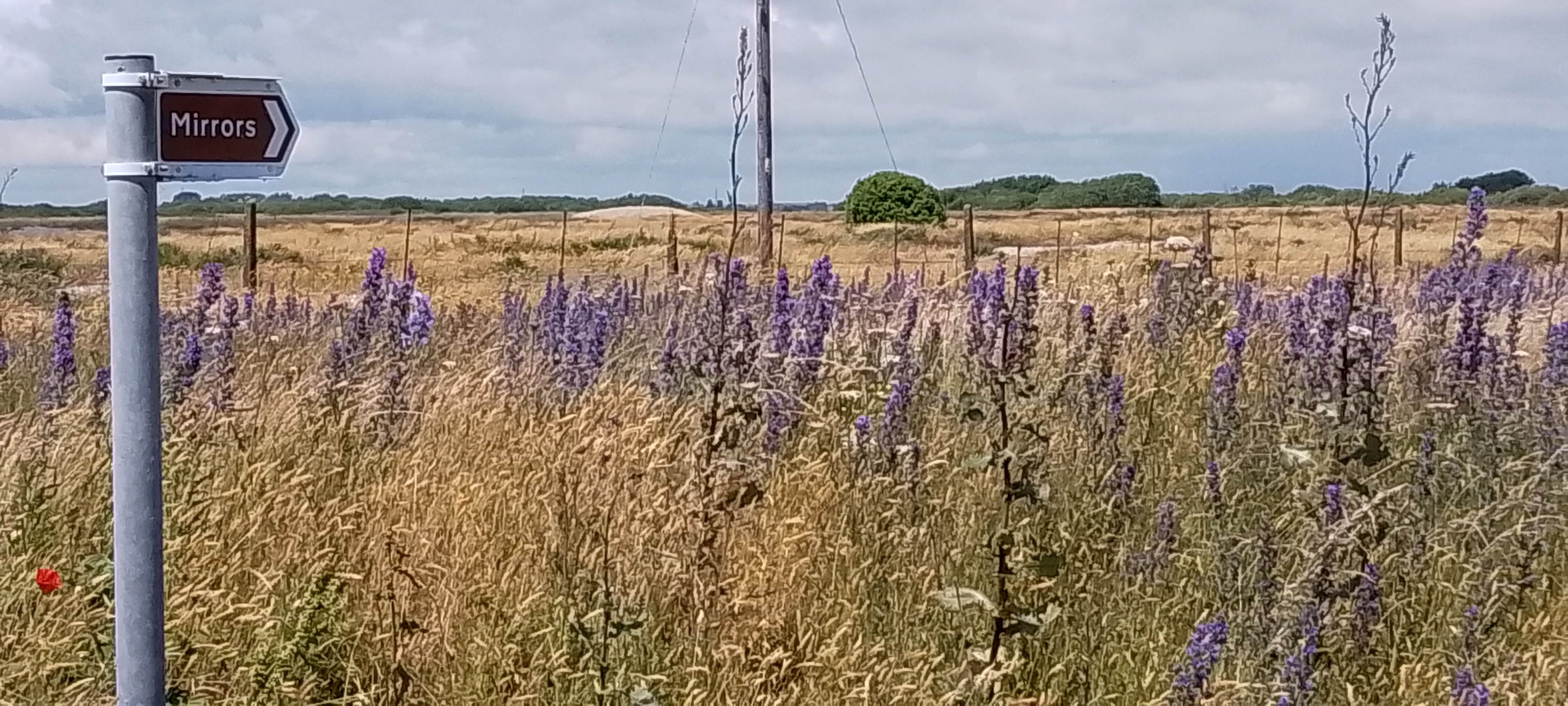
On reaching Lade, my guide book mentioned the possibility of making a short detour to see the Denge sound mirrors, and after overdoing it on the last leg, I was in two minds about the sensibleness of doing this. To date, I have never shown any interest in sound mirrors and have never gone out of my way to see one before, although there are several locally, but it did say it was only a short detour, and I might not be passing that way again ….. oh, go on then!
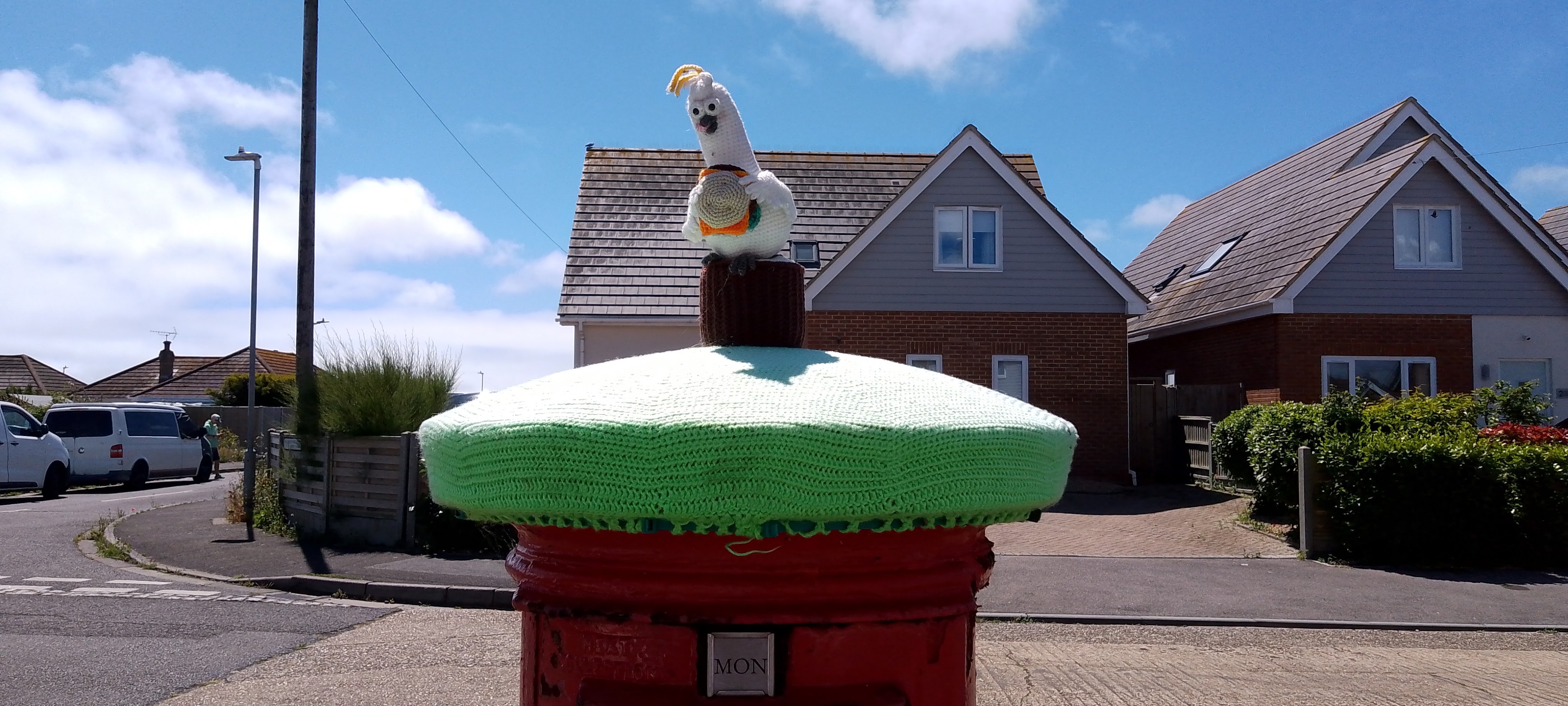
It turned out to be the highlight of the walk! After turning up a quiet residential street (with a very cute seagull postbox topper),
the path headed across a wide shingle area, towards a lake, on the other side of which the sound mirrors were situated.
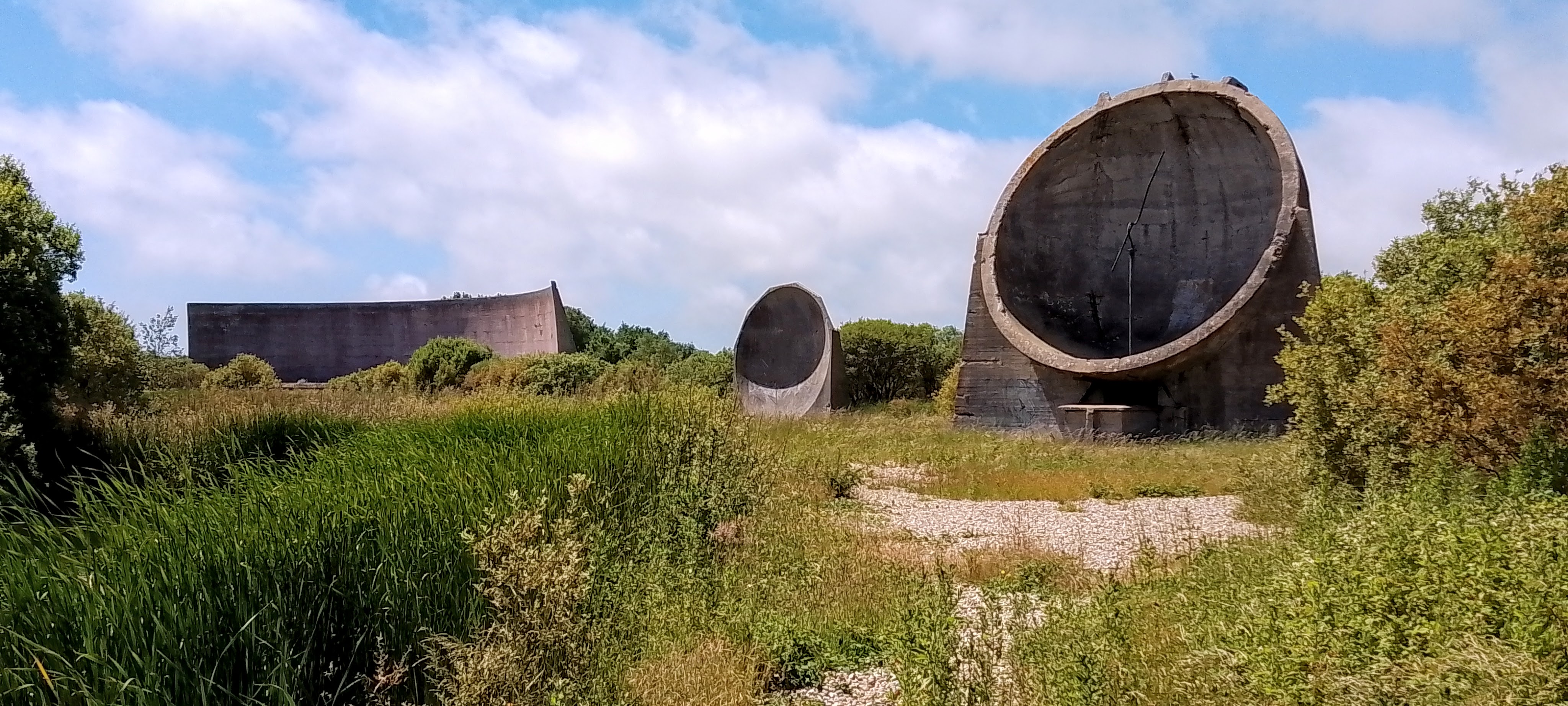
At the edge of the lake I stopped to read the information plaque. The sound mirrors were built in the 1920s and 30s as an early warning for the sound of enemy aircraft coming over the channel, and it turned out that this site is unique in that three different versions were built over successive years as an experiment to find which would be the most effective – although none of them were ever actually used because they were superseded by the invention of radar before the start of the second world war.
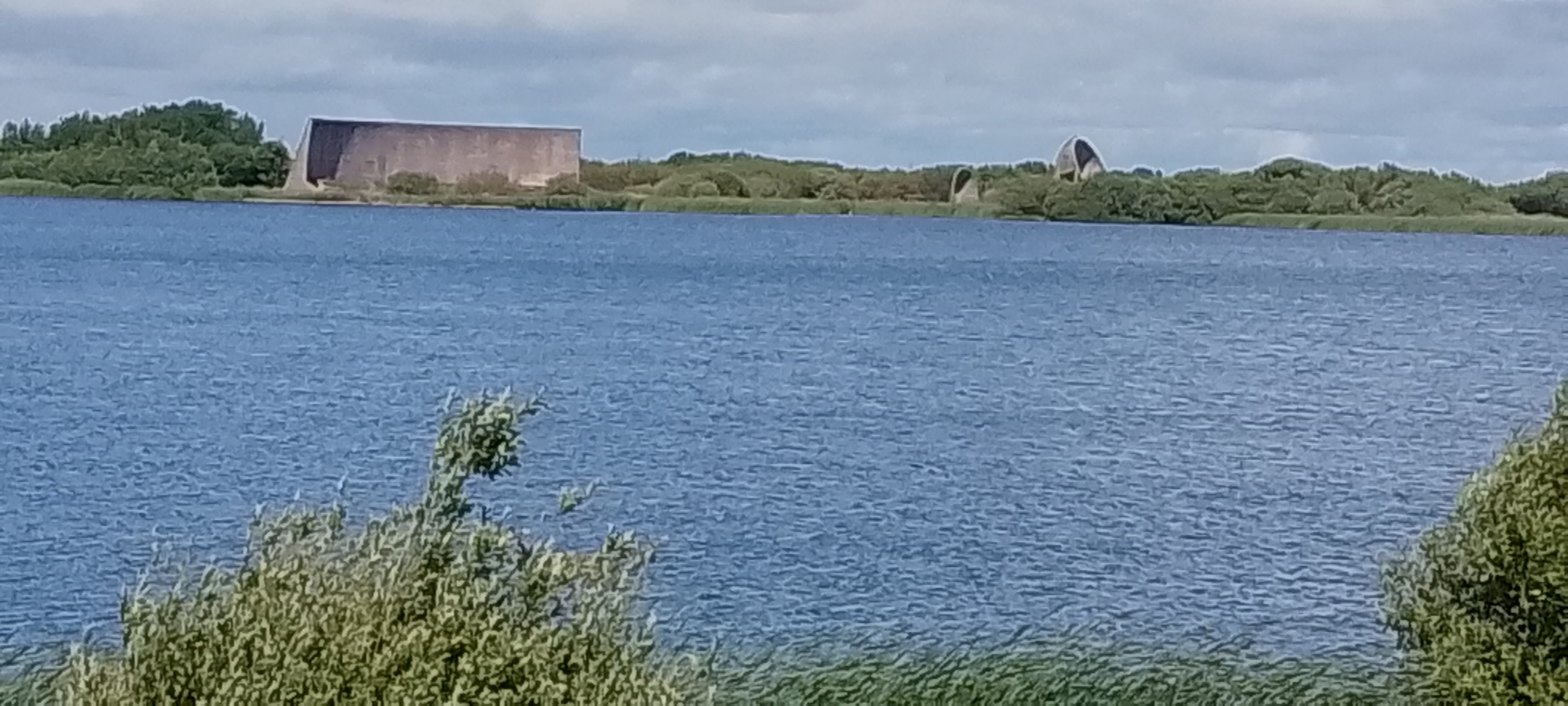
The plaque also told me that I could get a closer look at the sound mirrors by following the path around the lake to the locked access bridge (they are situated on an island). I could already see them as well as I probably needed to. I really didn’t need a closer look. I really should retrace my steps and get on with the coastal walk I had set out to do. But it was so peaceful by that lake, and I wasn’t ready to turn back yet, and despite not knowing how far I would need to walk to reach this bridge, all thoughts of being sensible went out of my head – justified by the fact that I had a sit down on a bench, with a drink and a snack to keep me going so it would be fine. (I was also enjoying watching a great crested grebe, although I didn’t actually know what it was until I got home and looked it up!)
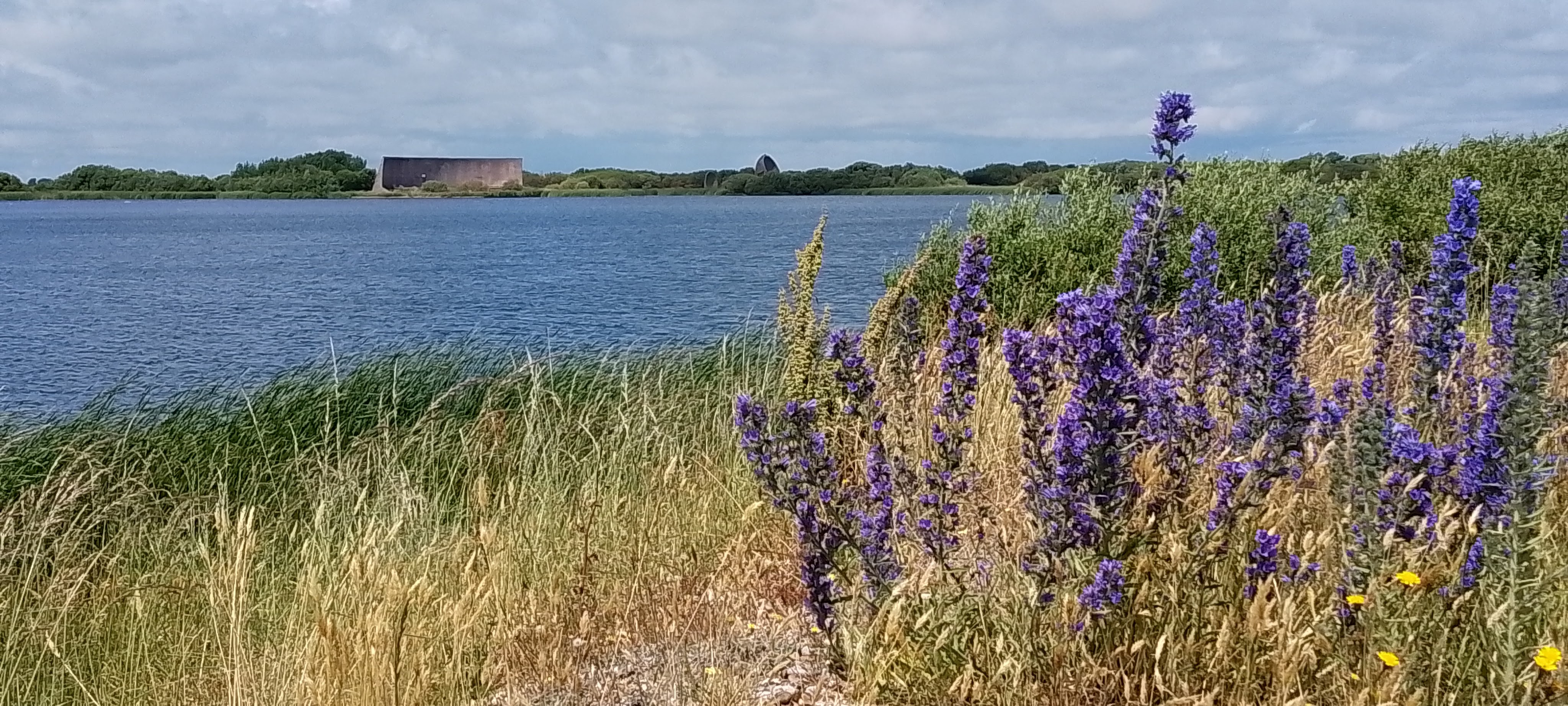
It was further than I had anticipated, initially along a grassy track, and then along a harder going shingle path. But it was actually worth it. At the end of the path, forming a barrier, was a closed swing bridge which allows access to the island on open days, and ahead of me were the three sound mirrors rising up like giant concrete sculptures. It was very atmospheric. I spent some time re-reading information about them, took some photos and re-traced my route back to the coastal path.
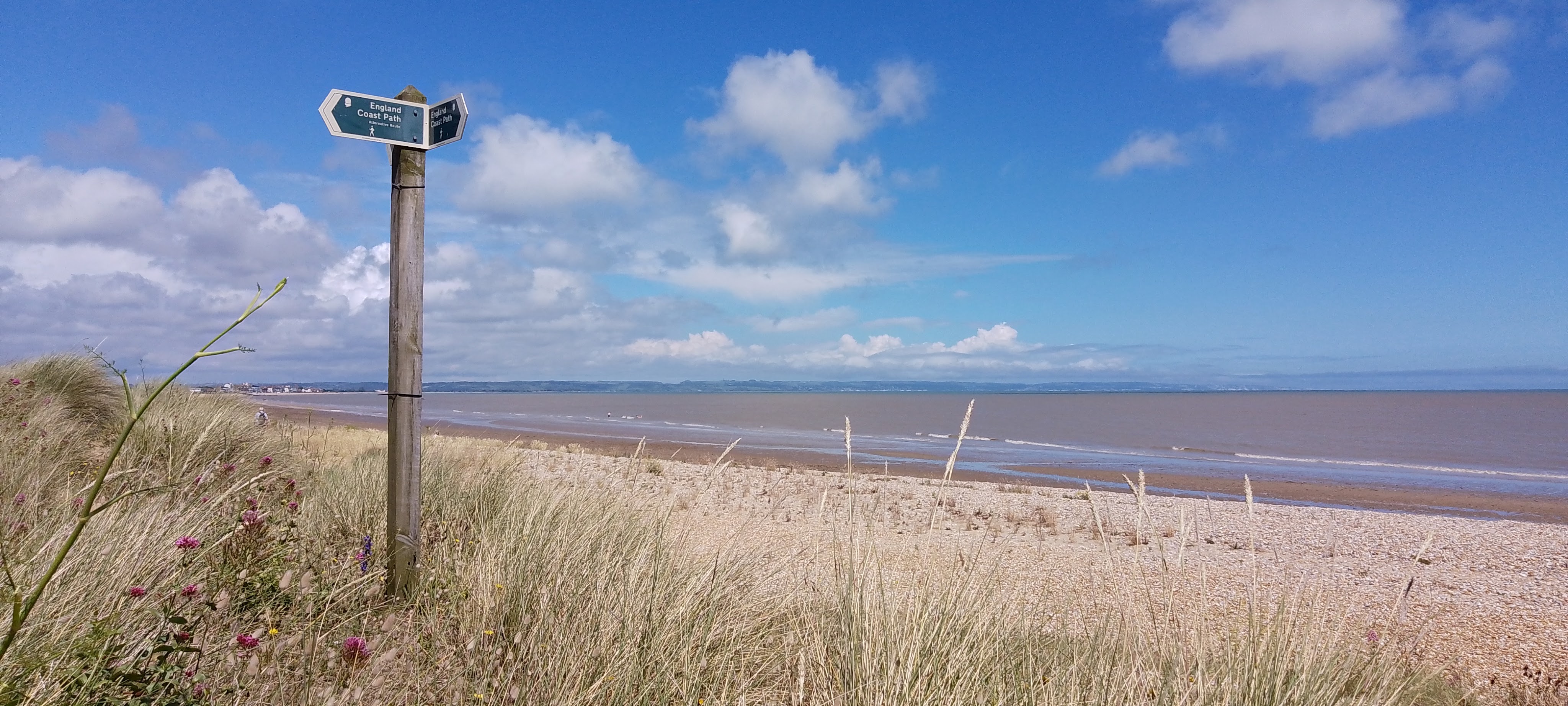
I re-joined the coast road until I reached the Romney Sands Holiday Park (accompanied by many nostalgic memories of happy caravan holidays we had had there when my children were small), and then headed across the sand dunes onto the wide expanse of sandy beach.
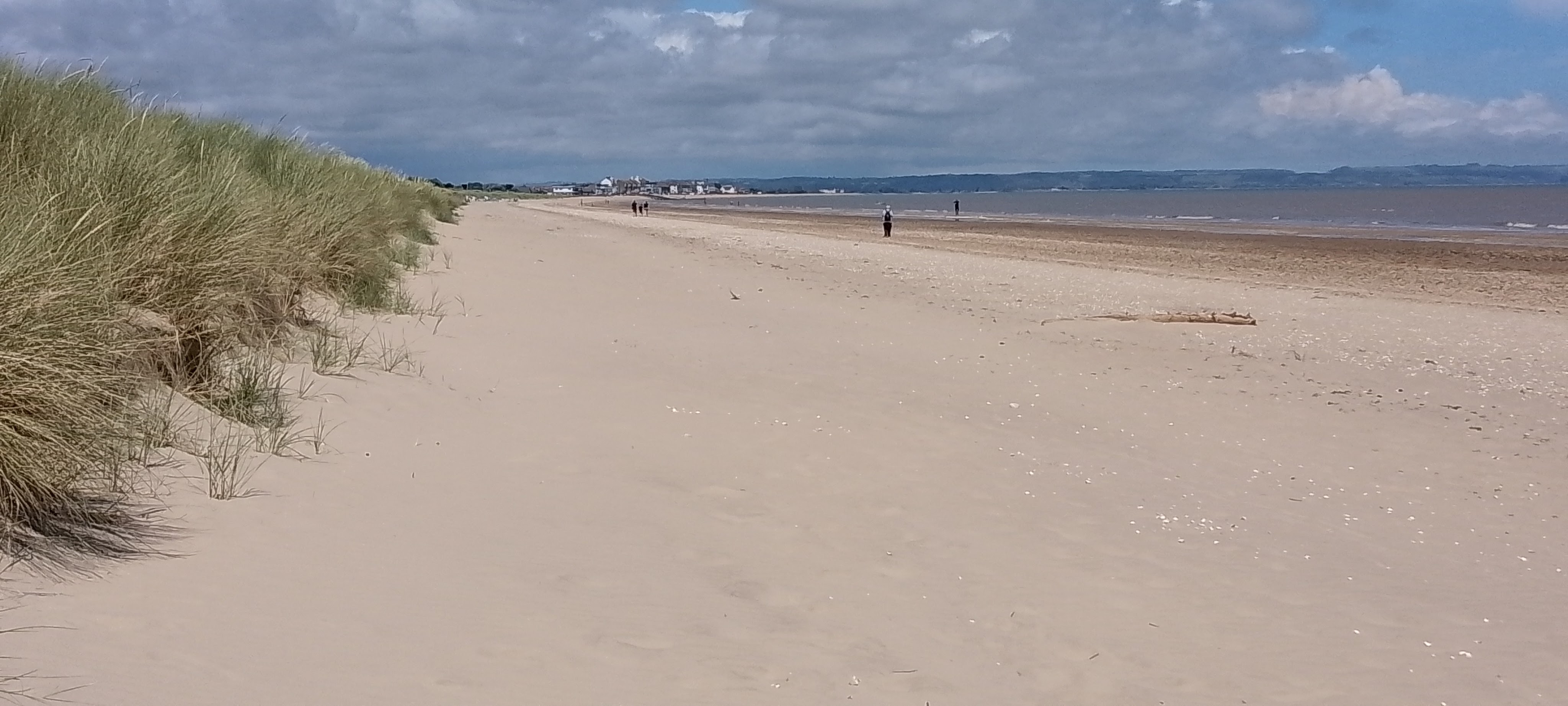
I stopped for a picnic lunch and continued walking along the sand, which was covered with tiny pastel tellin shells.
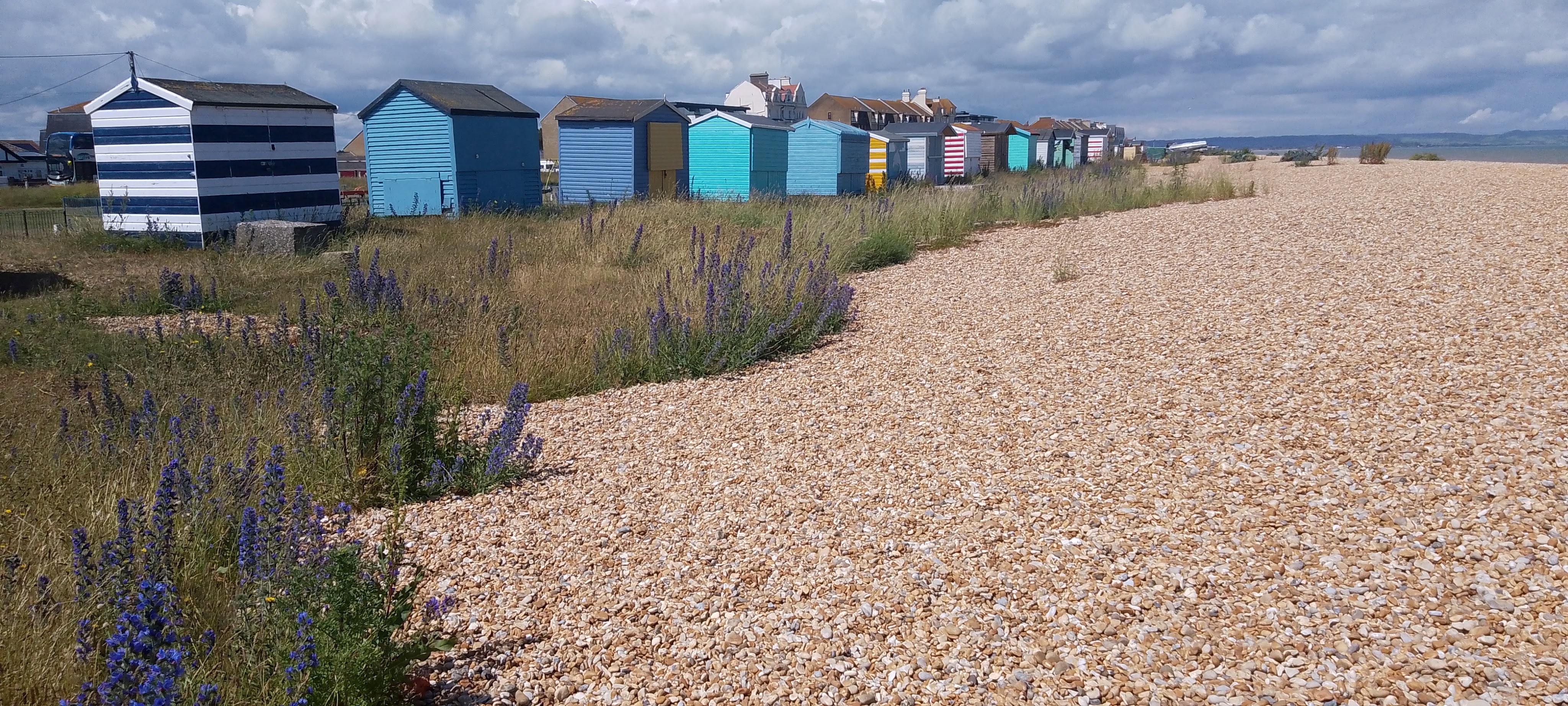
At Littlestone-on-Sea, the end point of this section, crowds were gathering outside the lifeboat station for a concert that was about to take place. However, the first of my buses only ran once an hour and one was due. I continued, now on pebbles, past the row of brightly coloured beach huts to the bus stop, bid farewell to this section of the Kent Coast until next time, and headed homeward.
See my Kent Coast Walk Part 3: Littlestone-on-Sea to Hythe here
See my Kent Coast Walk Part 1: Camber Sands to Dungeness here
 A Little Kentish Magic
Leave a reply to Kent Coast Walk Part 1: Camber Sands to Dungeness – A Little Kentish Magic Cancel reply