
I caught the train back to Thanet Parkway to finish off what, in ideal circumstances I should have managed to achieve in one go. I was the only person alighting, and in about 15 minutes, I was back on the coast. The first thing that I saw was the sand banks at the mouth of the River Stour. Were there seals? Who knows as I still hadn’t brought my binoculars!
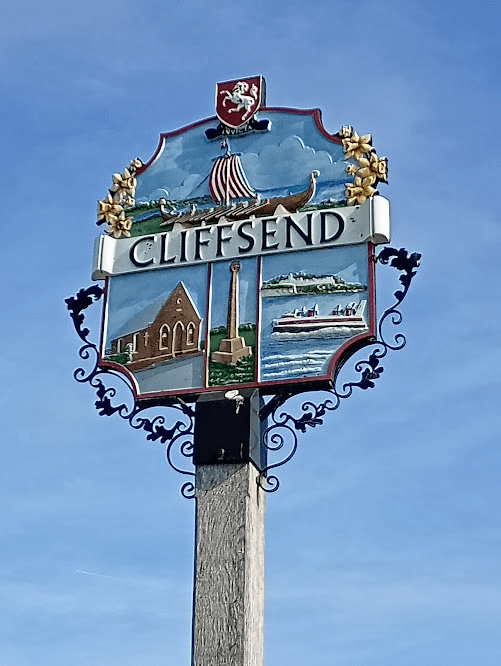
A short walk along the road and I came to the replica viking ship, Hugin. I used to be fascinated by this as a child and still love it now. Incredibly, he longship was actually sailed across from Denmark to Thanet in 1949, to commemorate the 1,500th anniversary of the landing of Hengist and Horsa in Ebbsfleet (the one in Thanet, not the one near London) in A.D. 449, and has been on permanent display here ever since. (You can see an old newsreel of the longship arriving up the coast in Broadstairs here.) Hengist and Horsa were two Germanic brothers (and mercenaries) who led an Anglo Saxon invasion of Britain to fight the Picts and Scots, at the invitation of the Celtic King Vortigem (who later married Hengist’s daughter). According to tradition, Hengist was the founder of the Kingdom of Kent. Hoorah!!
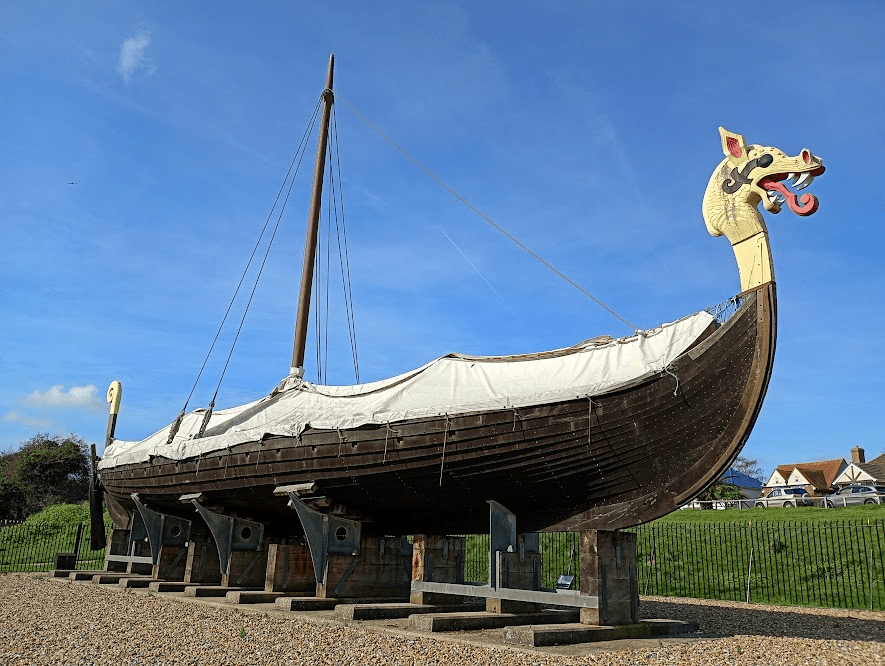
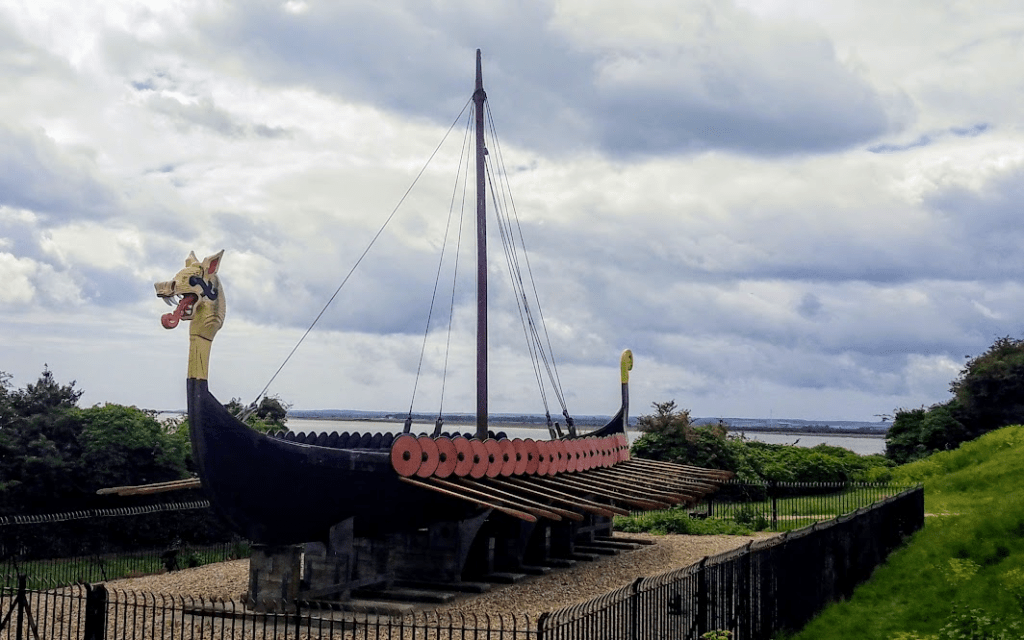
It was still covered up to protect it from the winter weather, but here’s a photo from when we were here last May, that shows it in all its glory with shields and oars on view (though on a much gloomier day).
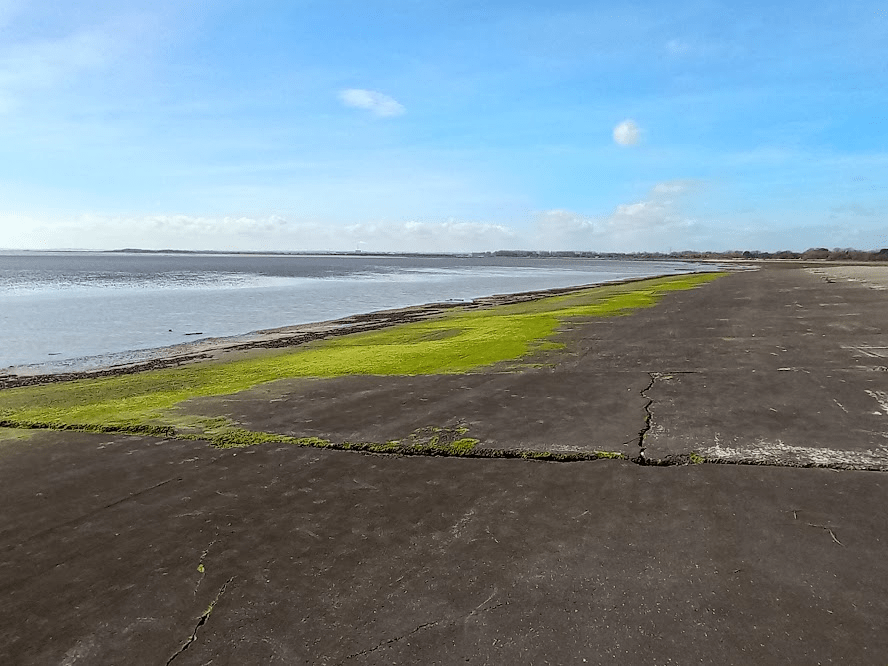
As I knew it was going to be a shorter walk, I decided that I had a spare step allowance, and so followed the footpath behind the ship down to the site of the old Pegwell Bay hoverport. Walking around the site with its bleak expanse of concrete, and now eerily quiet, it was hard to imagine that at one point this was the world’s first purpose built hoverport.. It was used from 1969 until 1982, at which point all services ran out of the nearby Dover hoverport instead.
Now, the only real sign that anything used to be here was a rogue part of a staircase, going nowhere, but still standing proudly in the midst of the undergrowth.
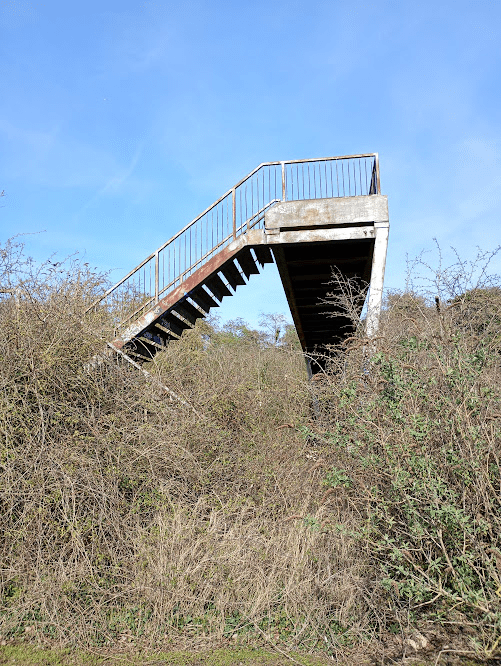
At the edge nearest Ramsgate, there was a small beach area, and I walked along to where the cliffs end (hence the name of the village), or in my case with the direction that I am walking, where they start again!
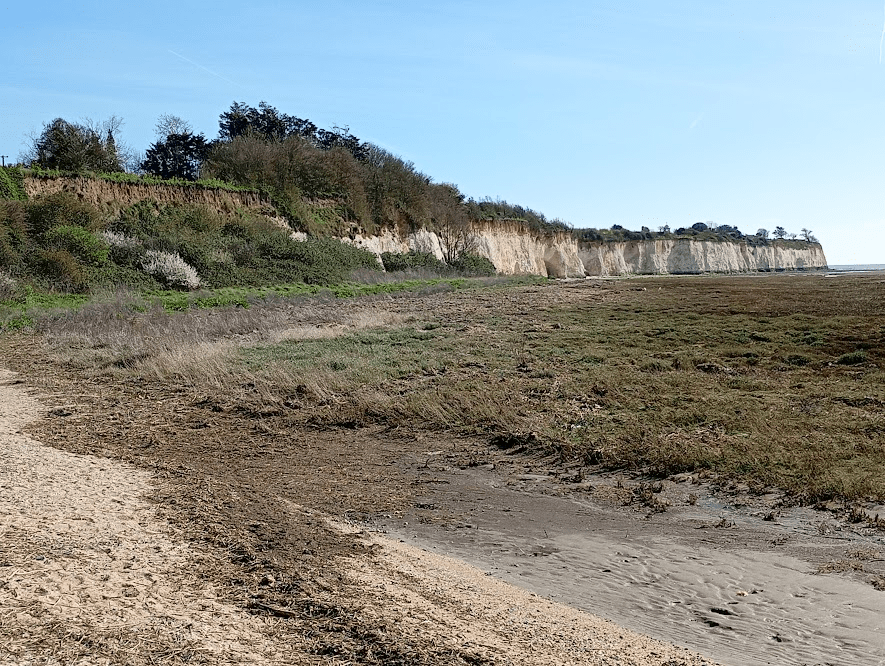
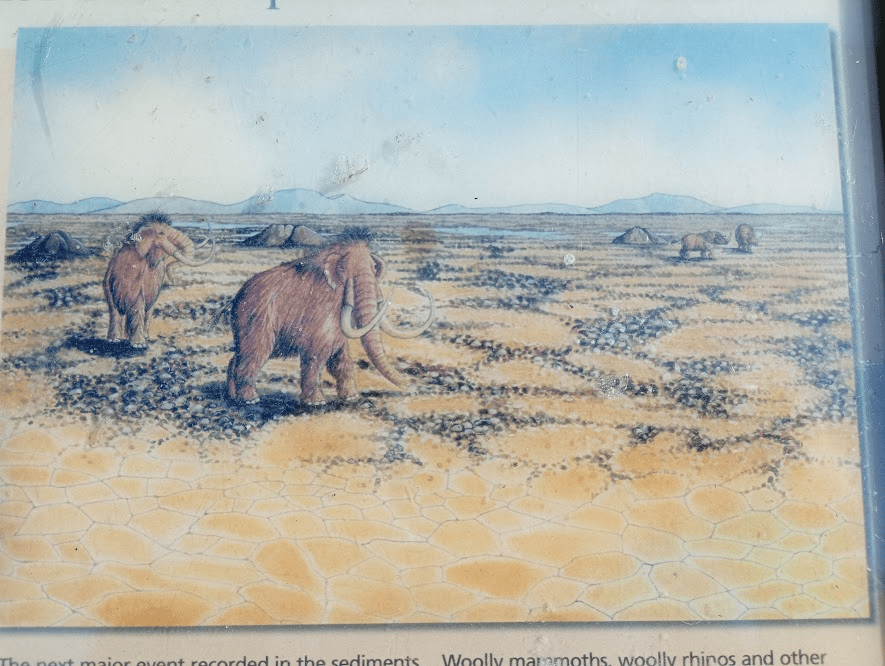
It didn’t really look as if anyone ventured along there, so I was surprised to find an information board at the end. Obviously I had to stop and read it, and it told me of the woolly mammoths and woolly rhinos that once wandered the barren landscape during the Ice Age. With the expanse of mud flats and concrete before me it was still pretty much a barren landscape and it didn’t require a great deal of imagination to conjure them up!
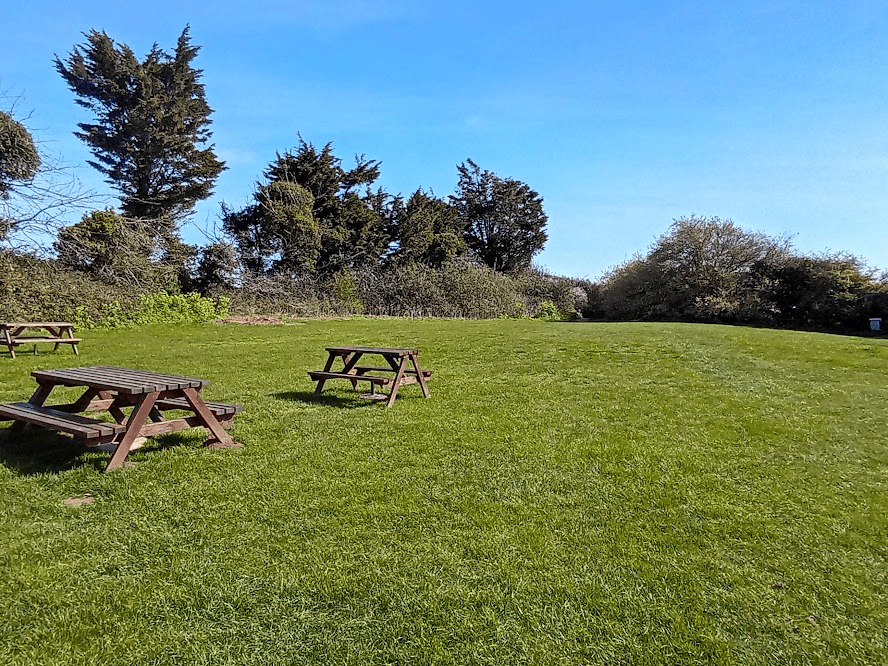
You can’t walk any further than this down here though, so it was necessary to retrace my steps back up to the viking ship, from where I walked along the grass, past the picnic tables outside The Viking Cafe (closed today – I assume they have seasonal opening), heading for the gap in the corner which leads to the cliff top path.
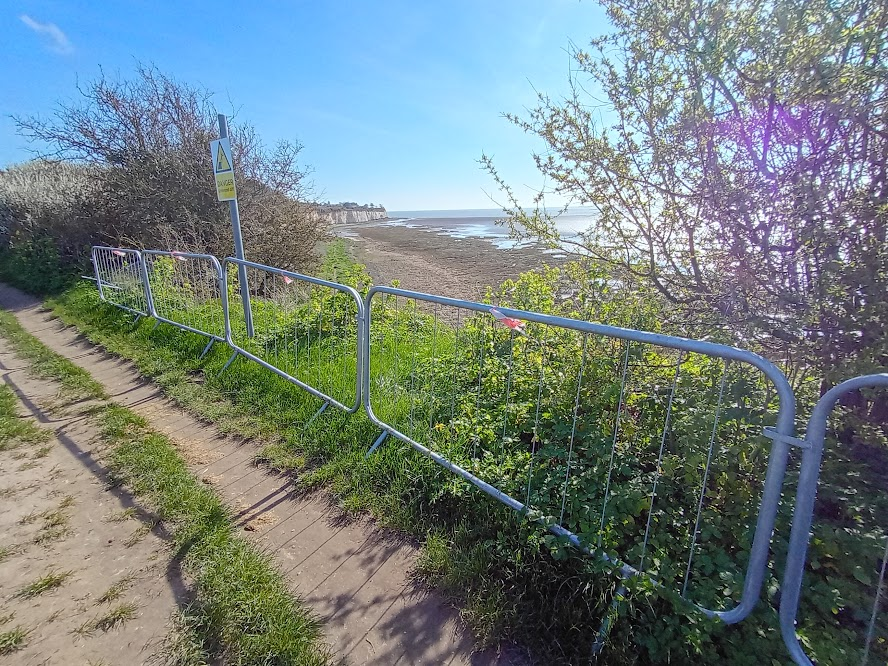
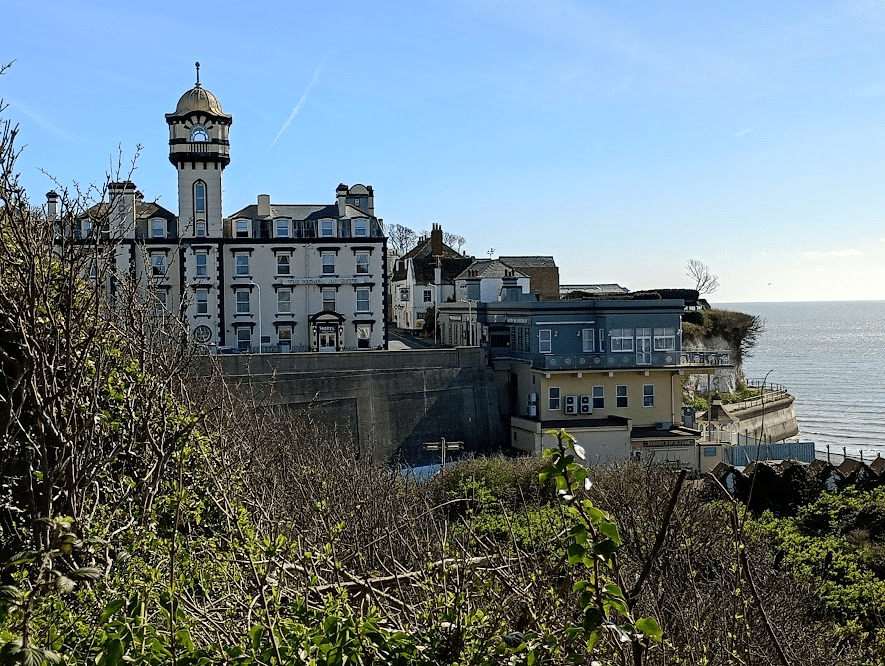
The path turns into an unmade road that serves a row of coastguard cottages, and then into the village of Pegwell, where you are greeted by the sight of the rather impressive Pegwell Hotel up ahead.
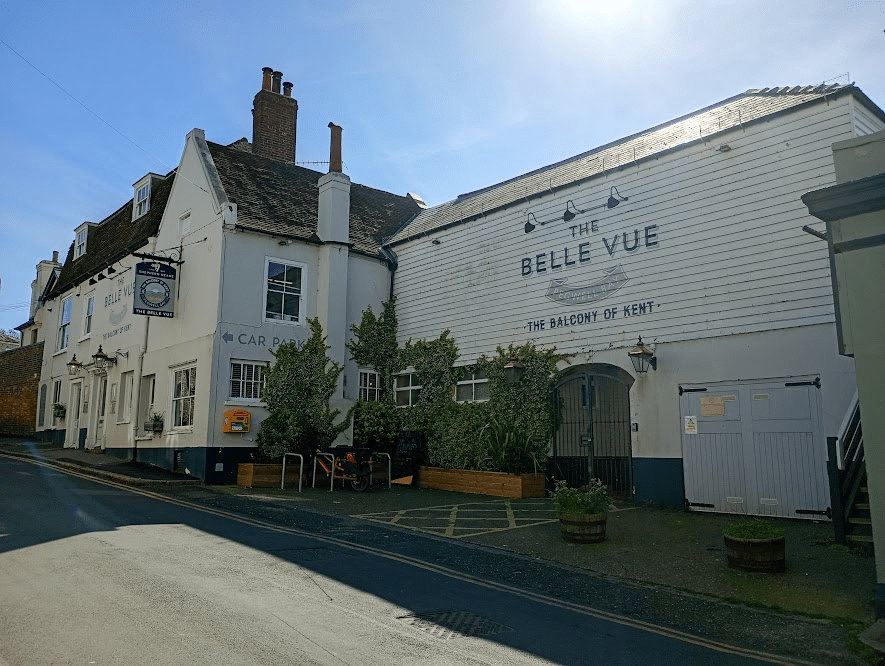
Round the corner is the Belle Vue Tavern, which I first came across in an illustrated version of The Tuggses at Ramsgate by Charles Dickens (one of his Sketches by Boz short stories)., but had no idea that it was actually a real place until we happened to walk past last year.
Dickens’ story tells of the lower middle class Tuggs family from South London, who own a grocers shop and celebrate an unexpected inheritance with a 6 week holiday in Ramsgate. It has always struck a cord because my own, decidedly working class, maternal great grandparents were from South London, owned a green grocers shop, and although they never received an unexpected inheritance, holidayed in Ramsgate every year (my great grandmother didn’t like Margate!), travelling down on the pleasure steamer from London Bridge with their seven sons. (This, and his love of their annual hop picking ‘holiday’, was the reason that my grandad chose to move to Kent when my mum was small.)
But back to the book………
” “What do you think of doing with yourself this morning?” inquired the captain.—”Shall we lunch at Pegwell?”
“I should like that very much indeed,” interposed Mrs. Tuggs. She had never heard of Pegwell before; but the word “lunch” had reached her ears, and it sounded very agreeably. “
After a rather eventful donkey ride to get there….
“Mr. and Mrs. Tuggs, and the captain, had ordered lunch in the little garden behind:—small saucers of large shrimps, dabs of butter, crusty loaves, and bottled ale. The sky was without a cloud, there were flower-pots and turf before them; and the sea at the foot of the cliff, stretching away as far as the eye could discern any thing at all, and vessels in the distance with sails as white, and as small, as nicely-got-up cambric handkerchiefs. The shrimps were delightful, the ale better, and the captain even more pleasant than either………. and then they went down the steep wooden steps a little further on, which lead to the bottom of the cliff; and looked at the crabs, and the seaweed, and the eels, ’till it was more than fully time to go back to Ramsgate again”
And it turns out that Dickens featured this scene with good reason. From 1760 onwards, Pegwell became well known for the local harvested shrimp teas that were offered by The Belle Vue Tavern in its garden overlooking the sea. So famous in fact, that in 1830 Princess Victoria visited with her mother, the Duchess of Kent, and as a result the Tavern received a Royal Appointment! The shrimps were also potted at the Banger Original Essence and Potted Shrimp Factory over the road, and sold in souvenir ceramic jars featuring views of Pegwell Bay. Buying some was considered an essential part of any visit to Ramsgate (although sadly it’s too late for me to find out whether my family ever did this).
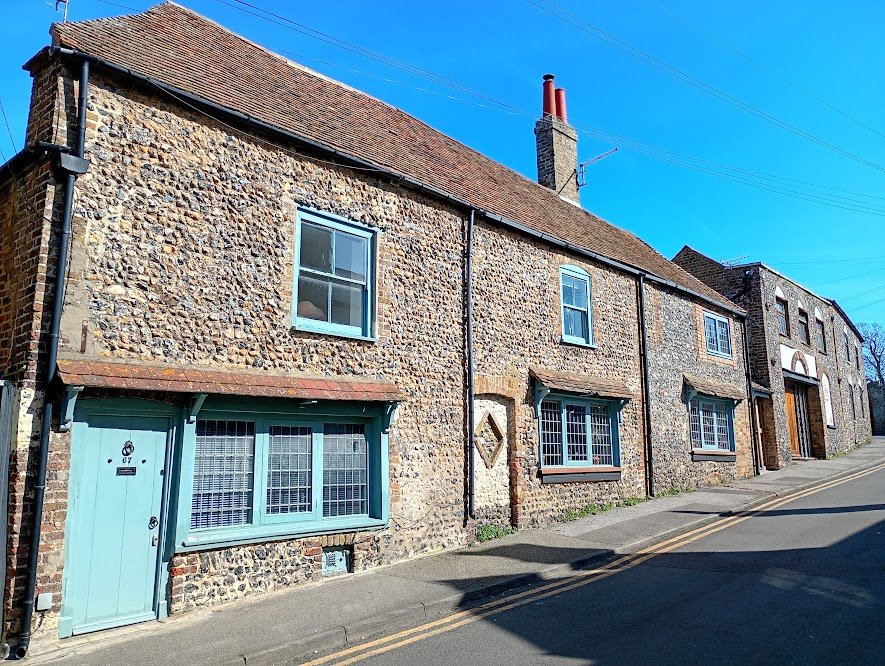
Past the flint cottages, the quiet road became increasingly residential, but after noticing a couple of dog walkers emerging through an unmarked gap in the wall next to some flats, I decided to investigate
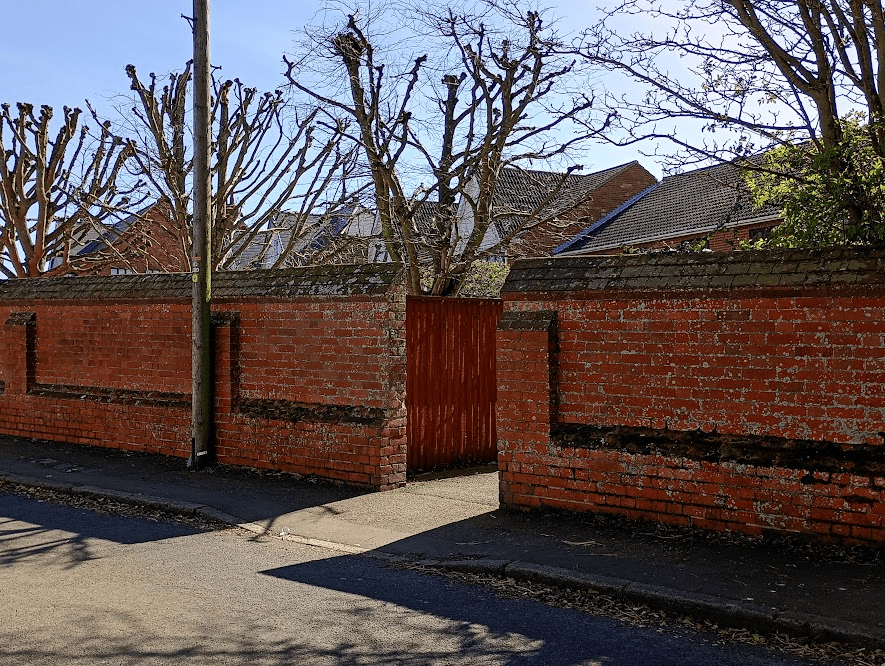
and found a small park full of daffodils
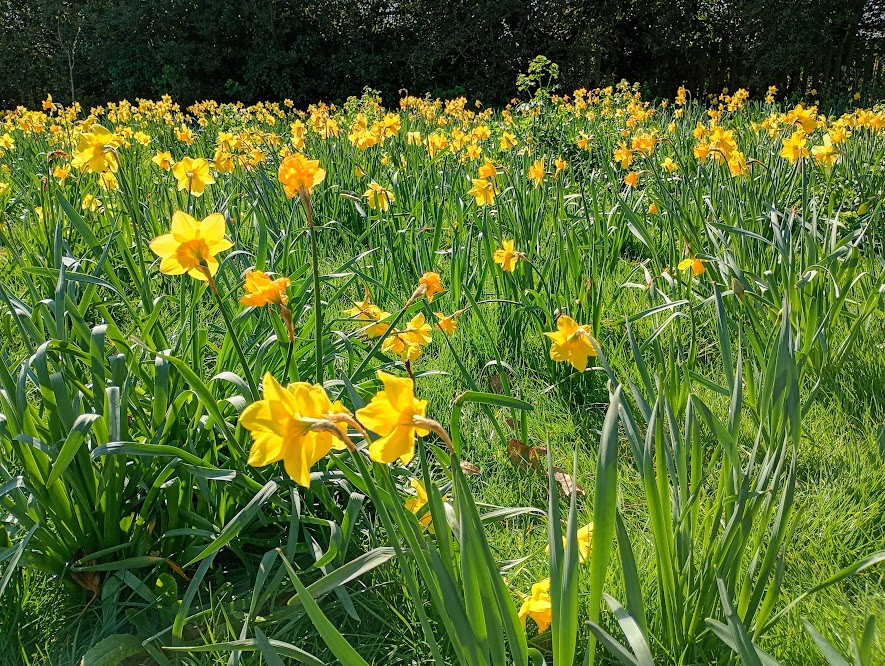
and a small wooded section with some fairy doors,
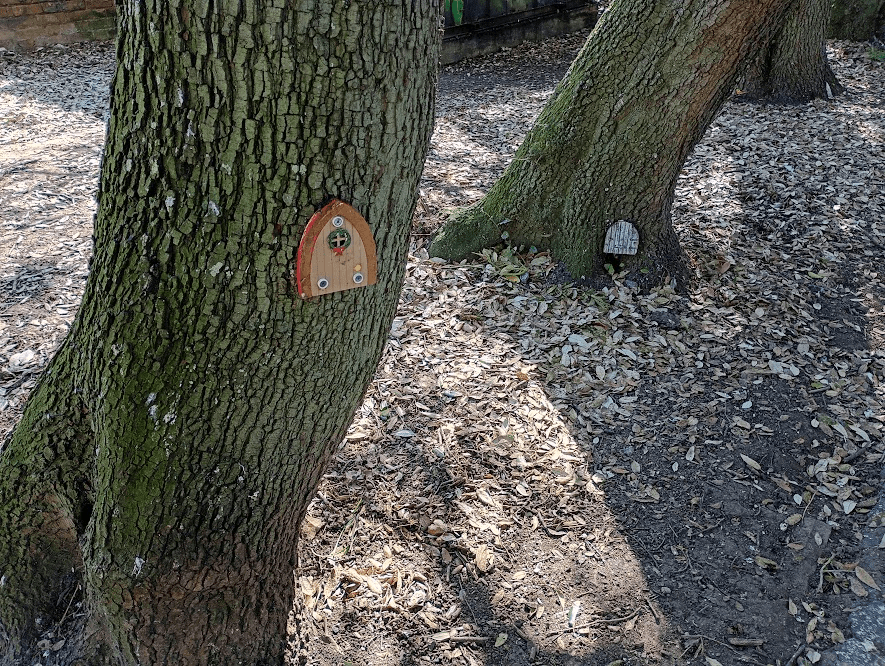
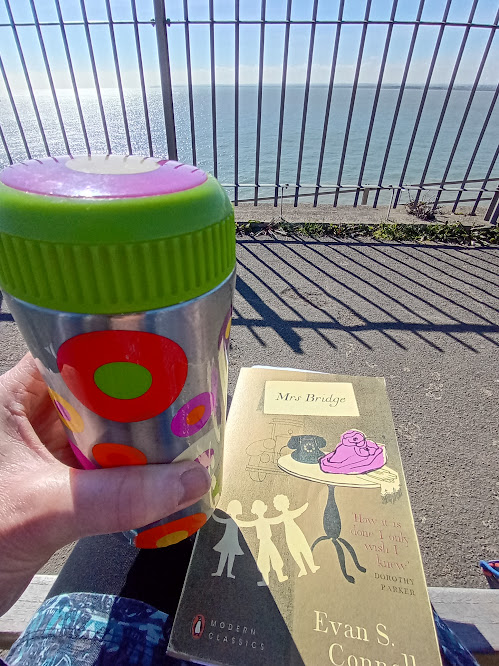
and which leads straight on to the Promenade where there were lovely views and plenty of benches. Today was a flask day as I am saving my pennies for some coffee shop treats in the Easter holidays, and I sat with my book, and alternately read, people watched, and gazed out to sea. You could see Deal pier in the distance and the cliffs of Kingsdown beyond.
I walked along the cliff top for a while, before taking the path down to the sea. I don’t really know this side of Ramsgate at all, and didn’t even realise that there was a proper useable beach here as it’s mudflats all the way from Sandwich Bay, and I didn’t think that there was any sand until you reached the main sands..
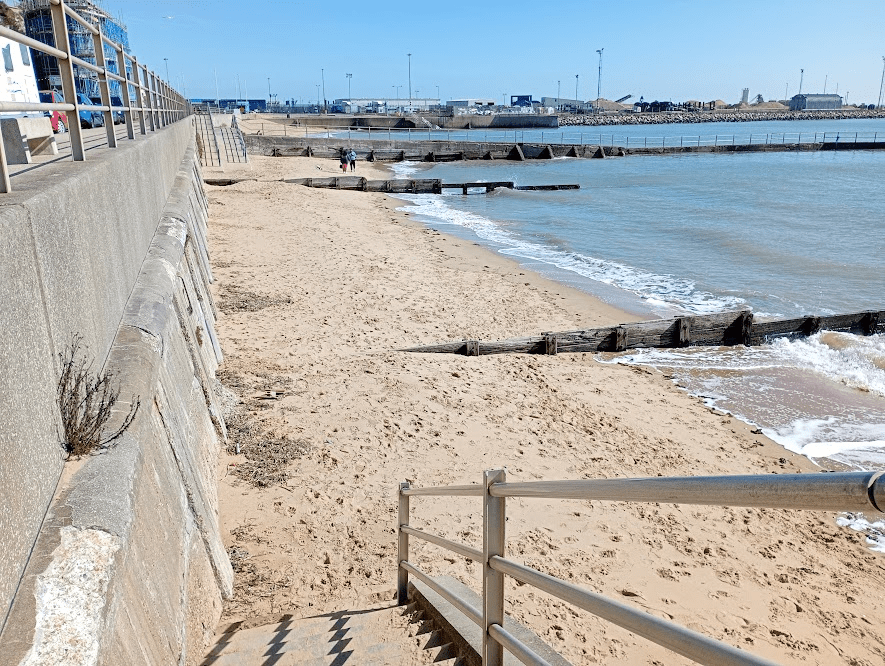
It had more of a community feel than the main sands
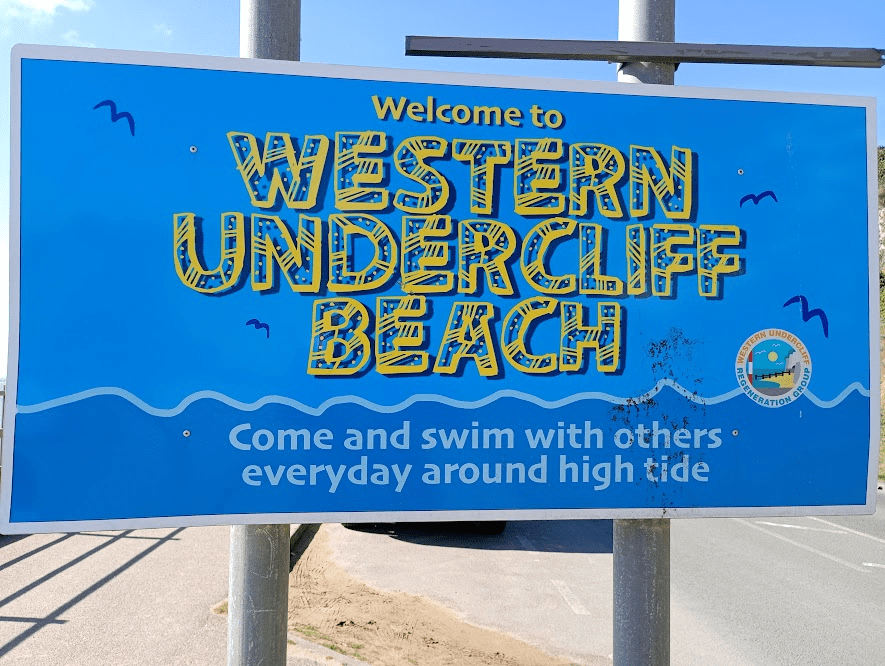
with an invitation to swim (there was a group of women just turning up in their dry robes, though I wasn’t in the least bit tempted to join them)
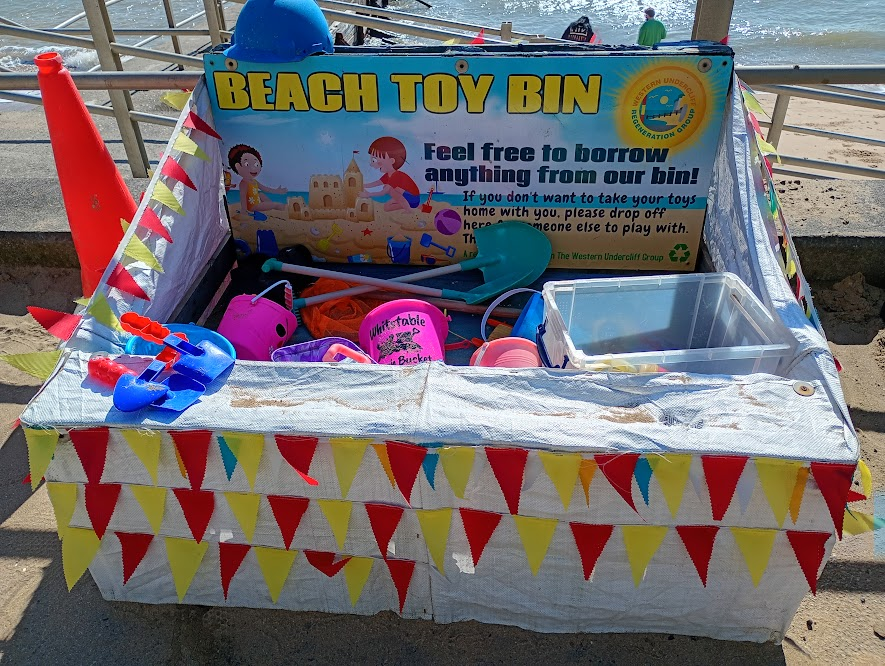
and a box full of beach toys to borrow, which I thought was such a lovely idea.
There then followed a short, ugly, industrial section past the high metal fences of the port and the offices of the London Array and Vattenfall Wind Farms, though this was as nothing compared to the unpleasant sections of Part 8 of the walk. Amidst all the greyness however, my eye was caught by the Grade II listed (and now derelict) West Cliff Lift, as the stunning blue art deco panels were really complemented by the blue of the sky. (There’s another lift on the East Cliff, and that one is also out of use.)
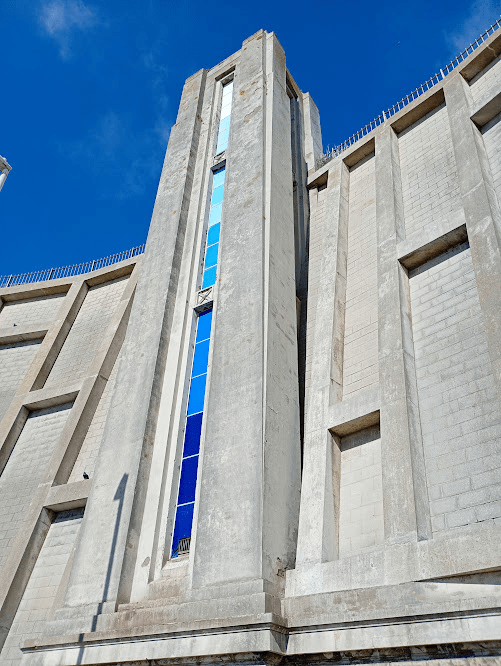
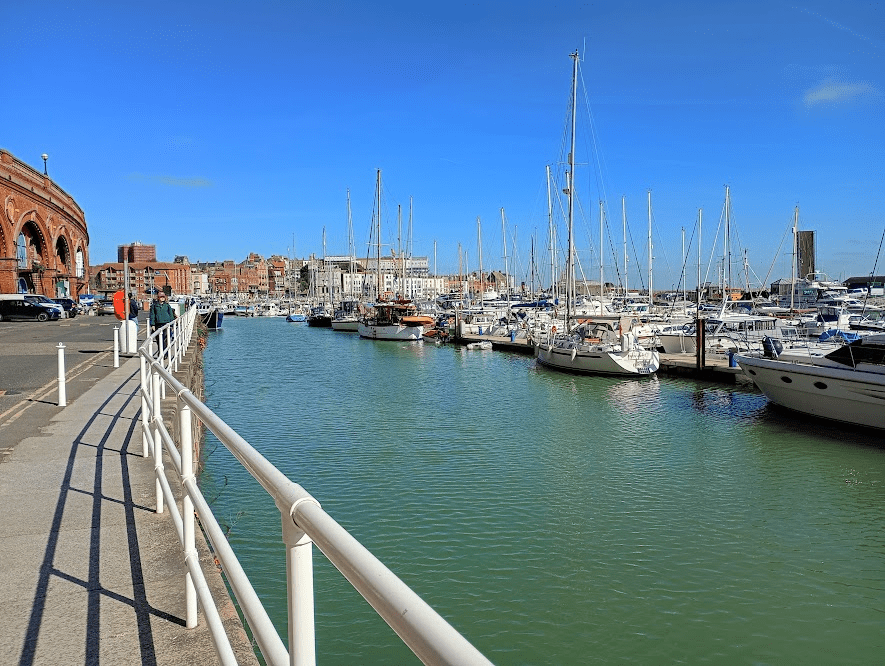
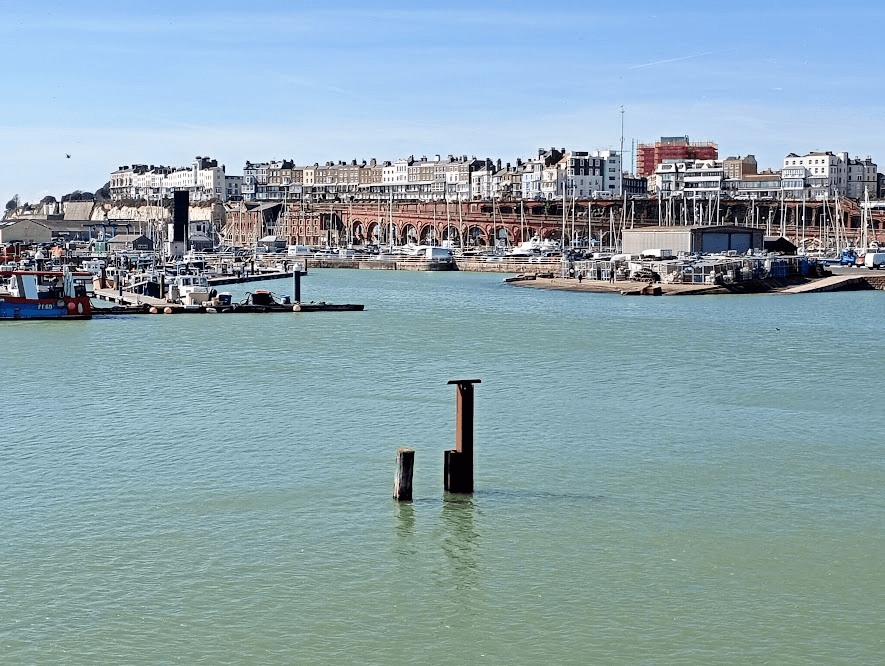
Then it was on to the harbour – not just a royal one, but the UK’s only royal harbour no less (as decreed by King George IV in 1821)!
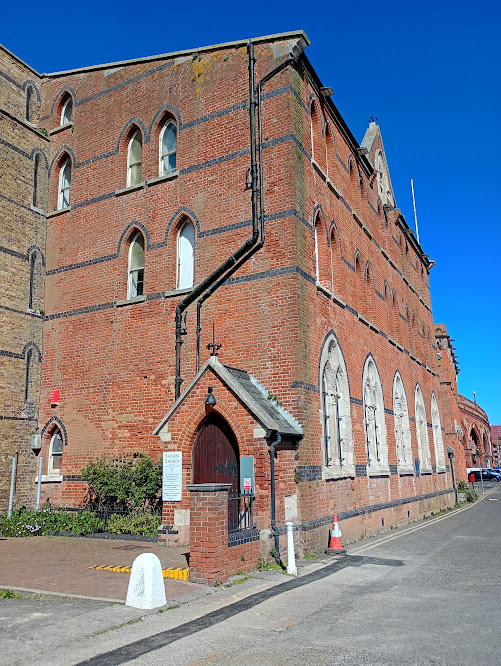
There’s a sailor’s church, full of old photos and paintings and models of boats, which is worth popping in to see if it is open,
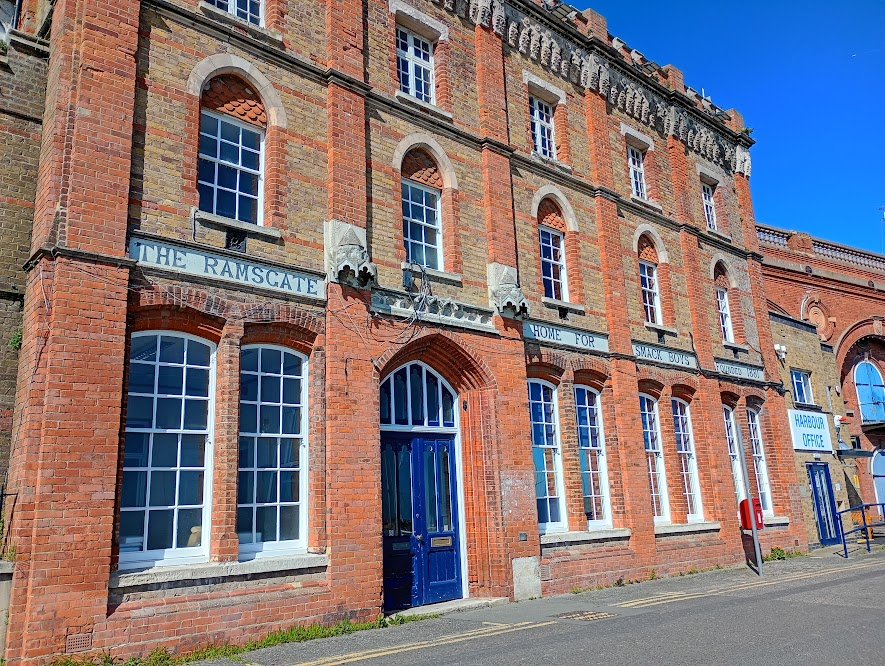
and next door is the Ramsgate Home for Smack Boys, which I can never pass without thinking of my eldest son who was captivated by the name when he was tiny. It was actually a home for boys (usually orphans or from the workhouse) who were apprenticed to the smack fishermen, a smack being a type of large sailing boat.
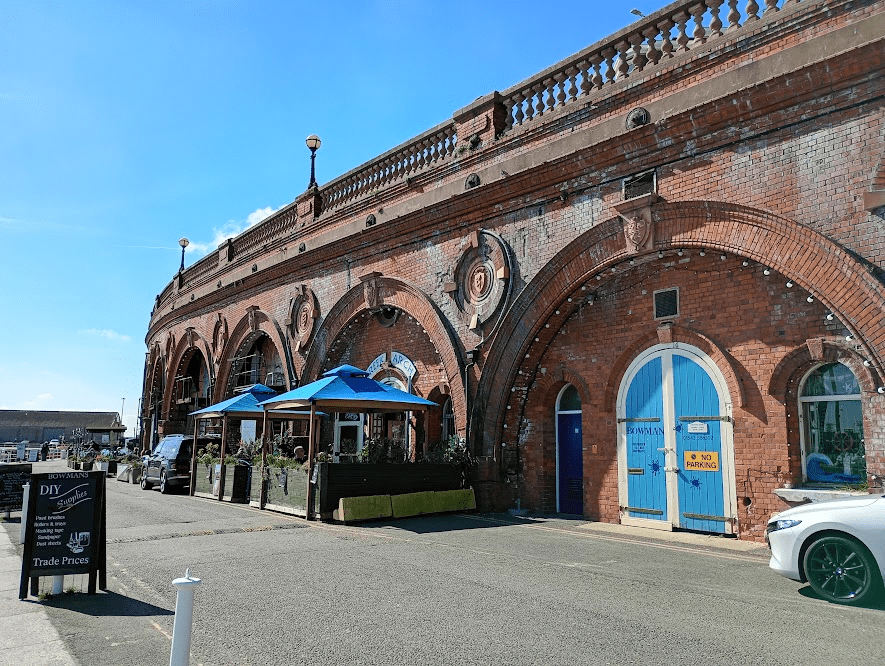
There are a few nice looking cafes in the arches along here, and there were plenty of people sitting out and enjoying the sunshine.
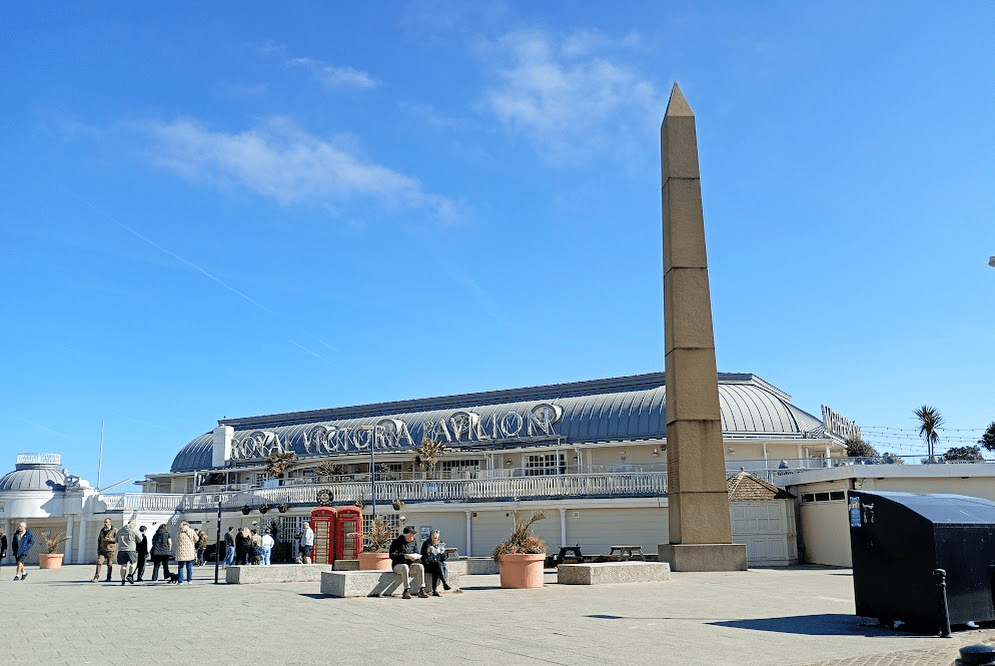
I decided that The Royal Victoria Pavilion – the UK’s largest Wetherspoons – would be an appropriate place to end this leg of the walk, partly because I nipped in to cheekily use their toilets, and partly because there’s quite a high chance that I might begin stage 10 of my walk with breakfast there! The obelisk outside was erected to ‘commemorate His Majesty’s condescension at selecting this port for his embarkation to proceed to his kingdom of Hanover on 25 September and his happy return on 8 November 1821’ – the event which resulted in the harbour becoming royal!
One final look back at the harbour and it was time for the 20/25 minute slog up to the train. A bit of an anticlimax after my enjoyable morning’s walk, but it has left me excited to continue around the coast.
Read my Kent Coast Walk Part 8: Sandwich to Pegwell Bay here
 A Little Kentish Magic
Leave a comment