
This is the first year in a decade when I haven’t been suffering from a CFS relapse, or struggling to stop myself slipping into one, and to celebrate this fact, my daughter decided to take me on a Mother’s Day mystery day out. She co-opted one of her brothers to accompany us (with the advantage that he could do the driving, although his presence on the trip was valued for far more than the fact that he has a car!) and off we set, with all my possible ideas of our destination gradually being eliminated as we travelled, until I realised that we were heading in the direction of Rye.
That wasn’t to be our destination however, as she had remembered how, every time we go to Rye, I express a desire that one of these days we really should go to nearby Winchelsea. So, having parked up in Rye, I was very excited to learn that we were going to catch the train for the 4 minute journey to this neighbouring Cinque Port.
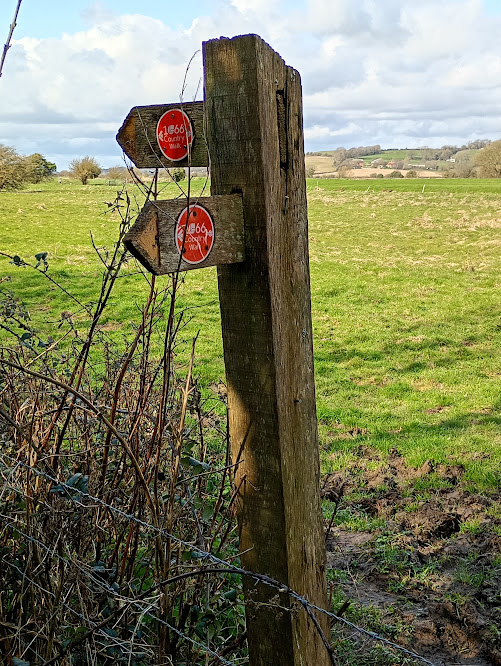
The station is a little way out of town, so after walking along a country lane, we turned onto the 1066 Country Walk,
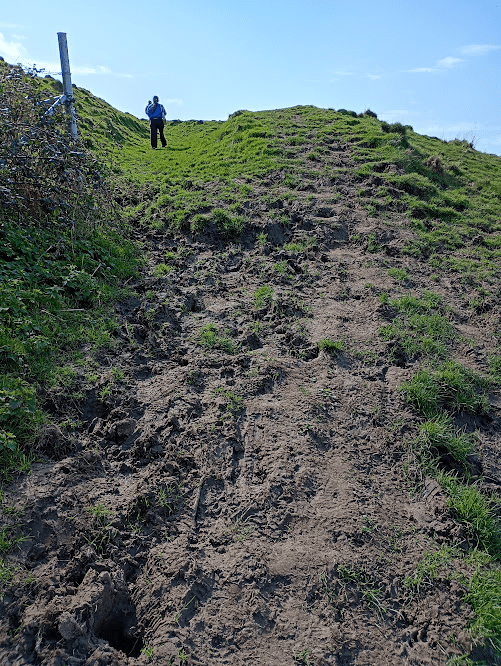
and after navigating a muddy slope,
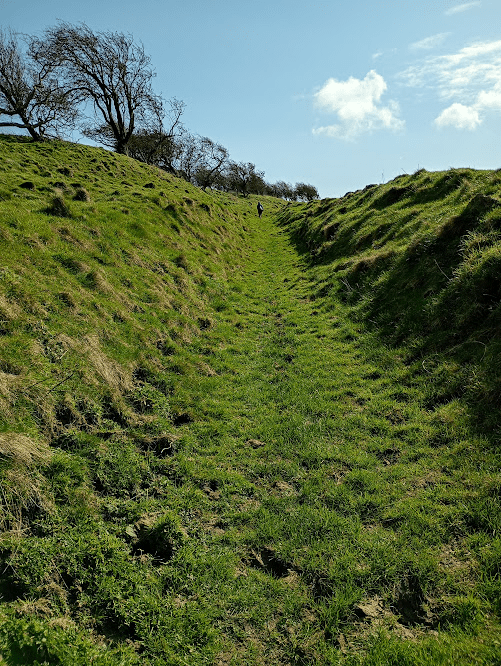
and a very pleasing grassy track
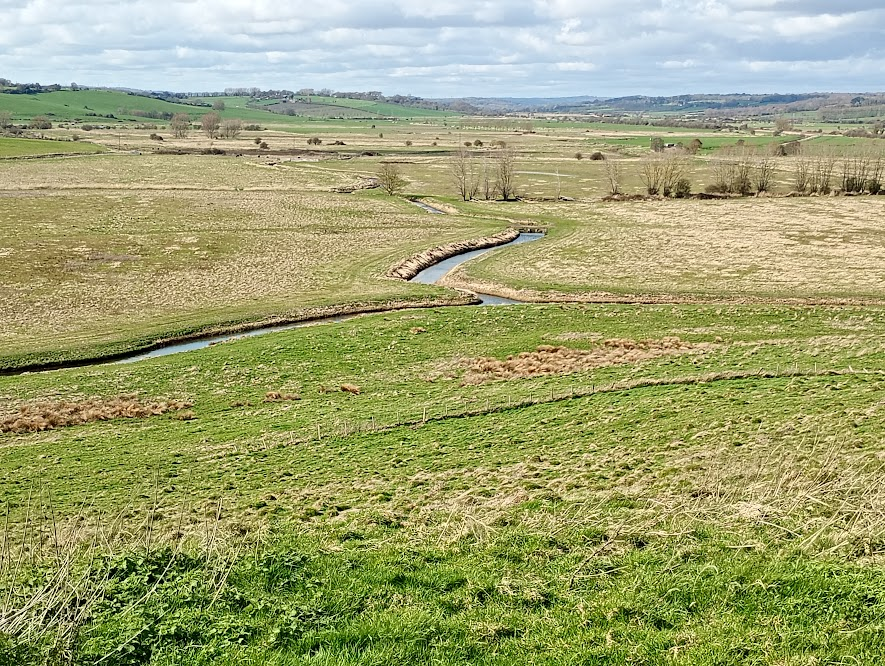
we emerged at the top of the hill, next to a beacon and a trig point, and with far reaching views across the Brede Valley (and in a different direction, out towards the sea).
From here it was a short walk to the edge of Winchelsea, where I insisted that we immediately detoured to look at some ruins. Much to my children’s relief there was no plaque for me to stop and read (I cannot pass a plaque or information board without at least a cursory skim through, and having spent their entire childhoods hanging around waiting for me to read and/or share facts, they consider this to be one of the banes of their lives!) although I subsequently found out that it was the ruins of a 14th century building known as Blackfriars Barn. There are apparently some very impressive cellars underneath which can be occasionally visited by arrangement with the National Trust, and given that the National Trust owns the site, I was surprised that they hadn’t supplied any information about it.
The Winchelsea that you see when you visit today is actually the new town, built on a hill on the orders of King Edward I in 1281, after the old town, a major medieval trading port, suffered at the hands of coastal erosion, went into decline after the silting up of its harbour, and then eventually disappearing under the sea. This new town was the first to be built on a grid system, and the centre is dominated by the Church of St Thomas the Martyr, which sits in the middle of a large churchyard. The ruins of the transept made for a very picturesque photo, but were actually as a result of attacks by the French during the 14th and 15th centuries, which resulted in many buildings of the town being completely destroyed.
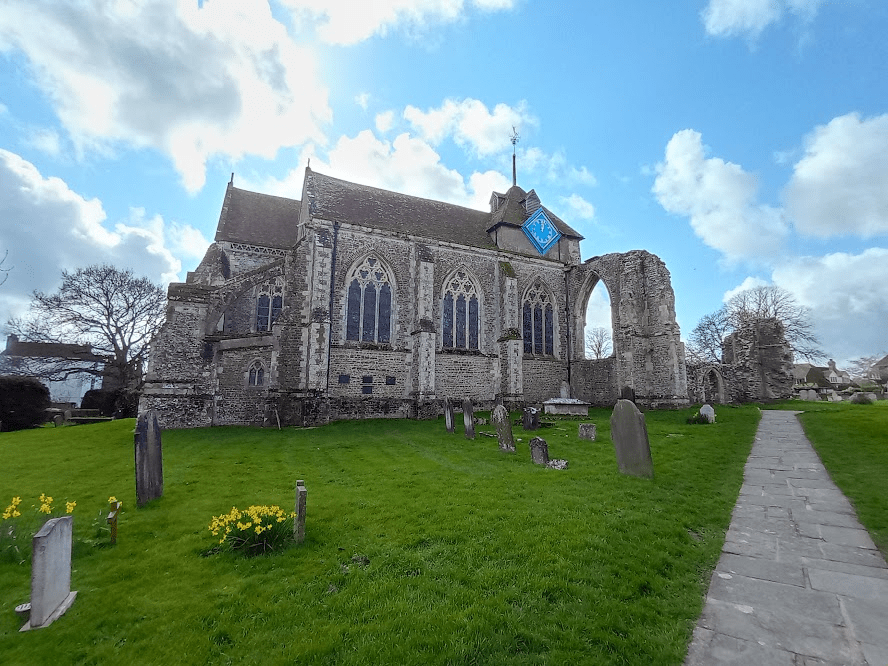
There was a service going on when we first arrived, but after stopping for refreshments at the Winchelsea Farm Kitchen in the High Street, we were able to return and have a look inside. There was some impressive stained glass and some really beautiful memorial tombs – my bad photos don’t do them justice.
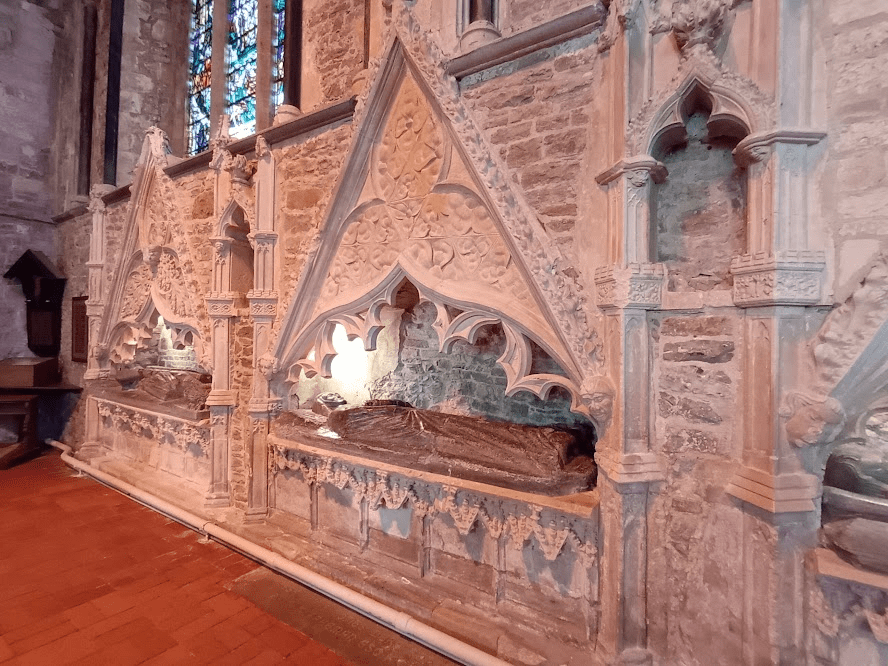
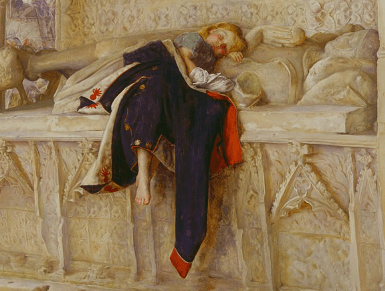
An information board told us that one of these tombs had actually been captured by the pre-Raphaelite painter John Everett Millais (one of my favourite artists) in his painting L’Enfant du Regiment.
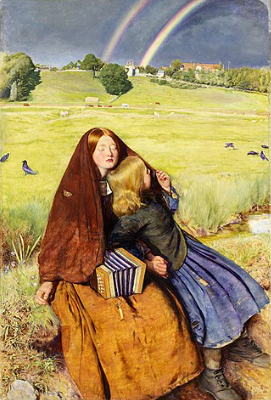
Turns out that Millais was a frequent visitor to Winchelsea and he painted the town in the background of one of his more famous works, The Blind Girl.
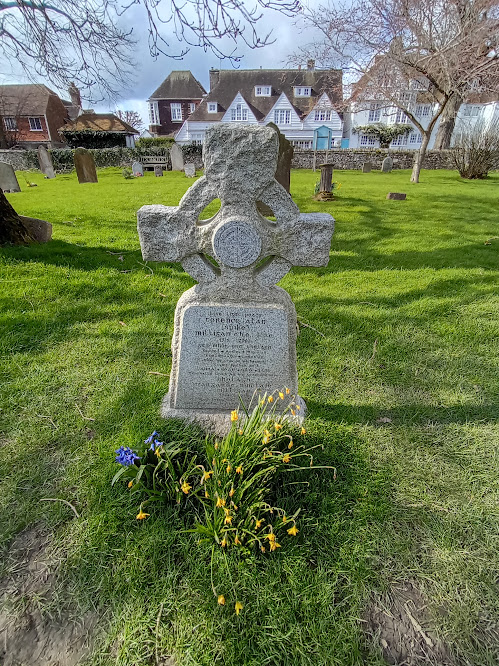
Most people have heard of Spike Milligan’s famous ‘I told you I was ill’ epitaph, but what most people probably don’t know is that he is buried in Winchelsea churchyard! We certainly didn’t know until we read it on another information board. We went to have a look and discovered that the whole inscription is actually written in Irish Gaelic which came about after a dispute with the church authorities who wouldn’t allow the phrase in English!
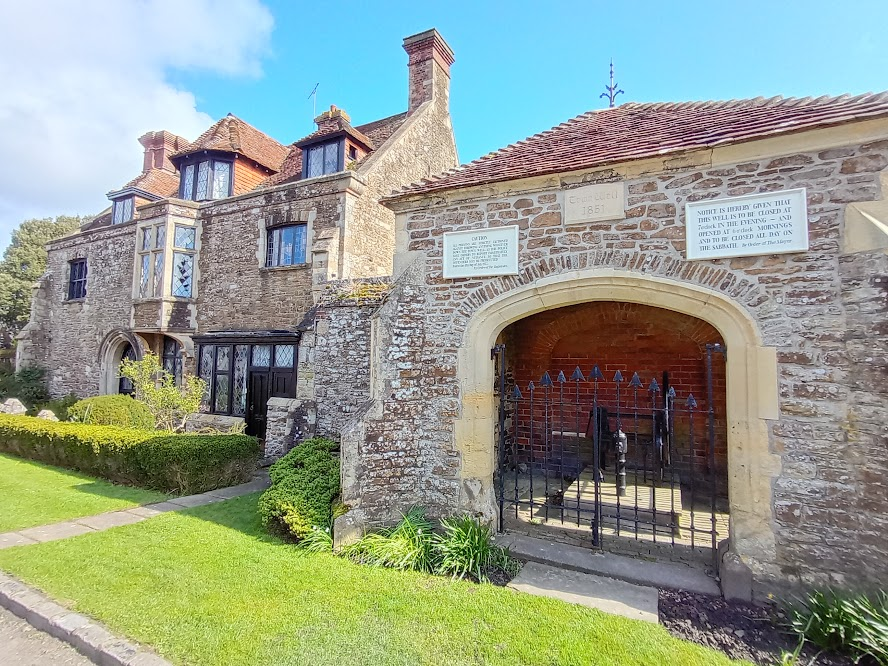
We saw the Court Hall – the oldest surviving building in Winchelsea – and the town well, but time was against us – we had a walk back to Rye ahead of us. – and we reluctantly had to leave. There was so much more to explore but we were reassured by the fact that we will definitely return, not least to do a cellar tour. There are thirty three medieval cellars beneath the town which can be visited on tours between April and October and they would be fascinating to see.
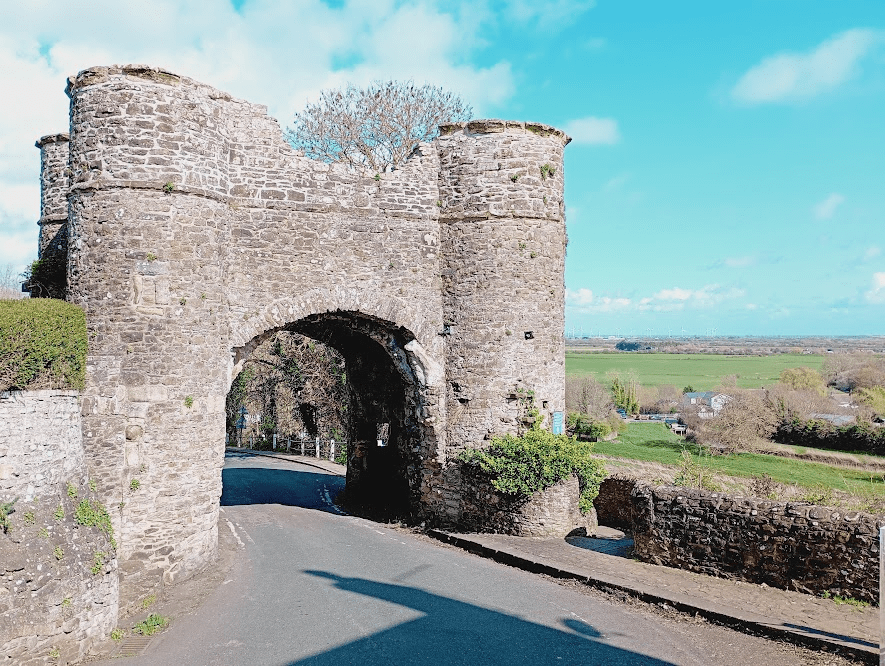
The impressive Strand Gate, one of the original gates of the town, dating from the 13th century, was a great start to the walk. It can just about be seen in The Blind Girl painting,
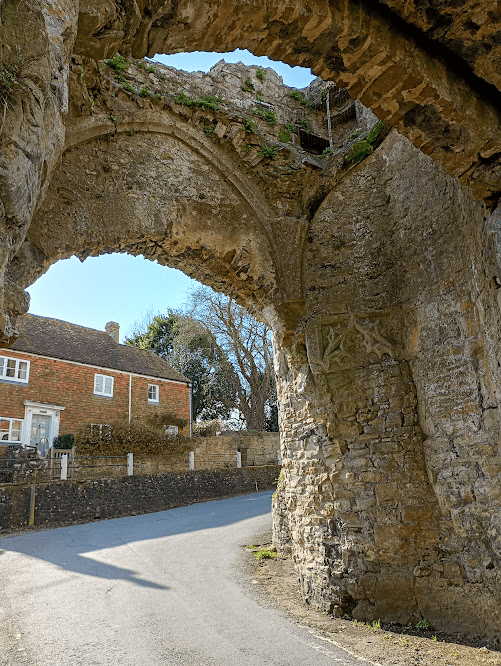
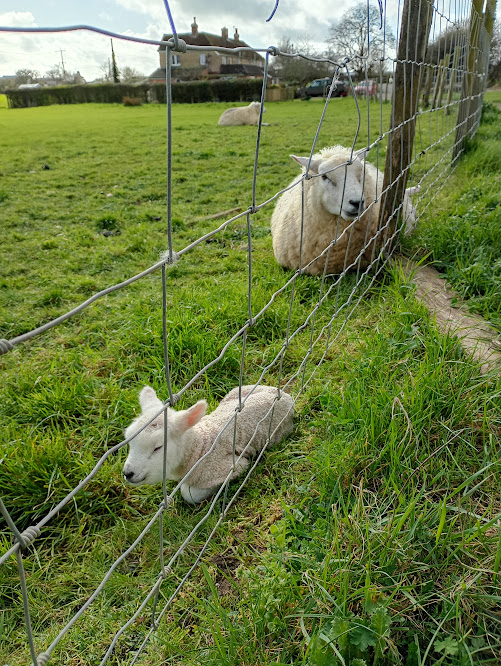
and for a short time we followed the same road that the blind girl would have taken, before turning onto a footpath past Castle Farm where I saw my first lamb of the spring. Then it was on towards Camber Castle.
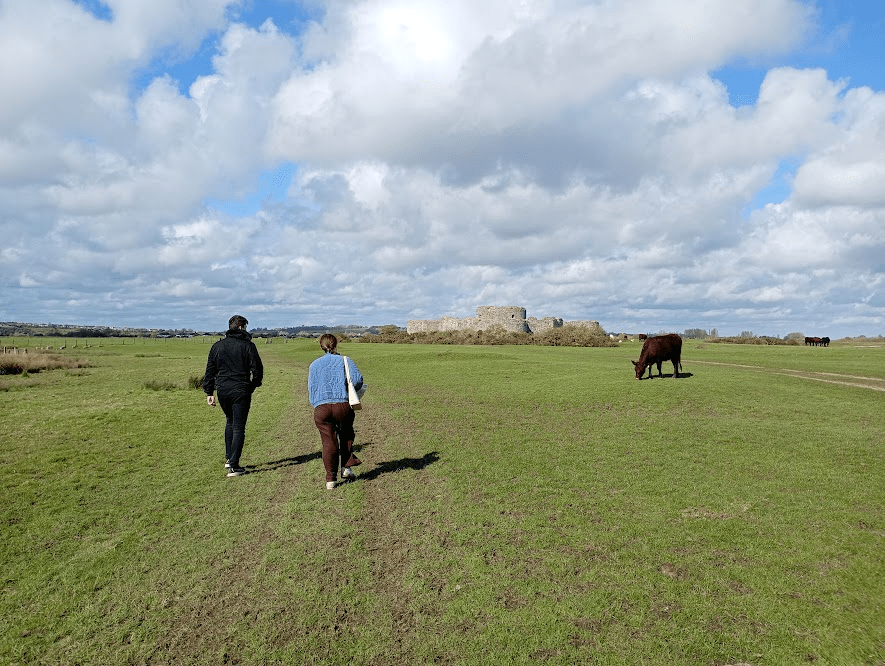
I was very excited about seeing the castle until I realised that we needed to walk through a field of cows to get there! I have spoken of my cow phobia several times before, and these were frisky cows. Some of them were leaping about and butting heads with each other. Some of them appeared to be trotting straight towards us. I was terrified. If I had been on my own, I absolutely would have turned back, returned to Winchelsea and caught the train back to Rye. Instead, I clung onto my daughter’s arm, whimpering pathetically, and keeping as close to the fence as possible in case I needed to make an emergency exit. Although I didn’t rate my chances of making it over the barbed wire unscathed, it would be better than being crushed.
(Luckily by the time the path left the field edge and headed across the middle of the field, we had passed the majority of the cows and I felt confident enough to momentarily drop a few paces behind to take a photo of the castle in the distance!)
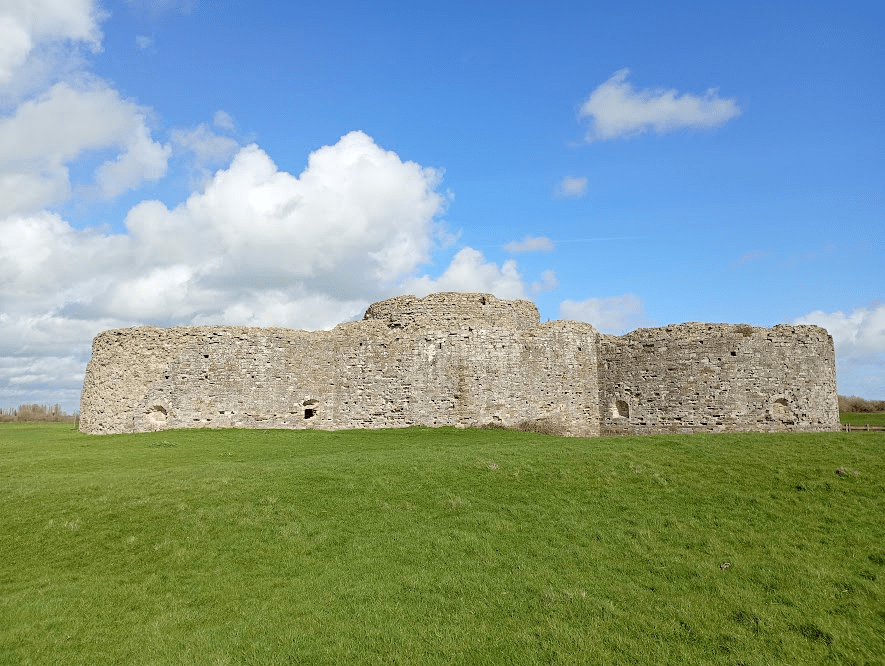
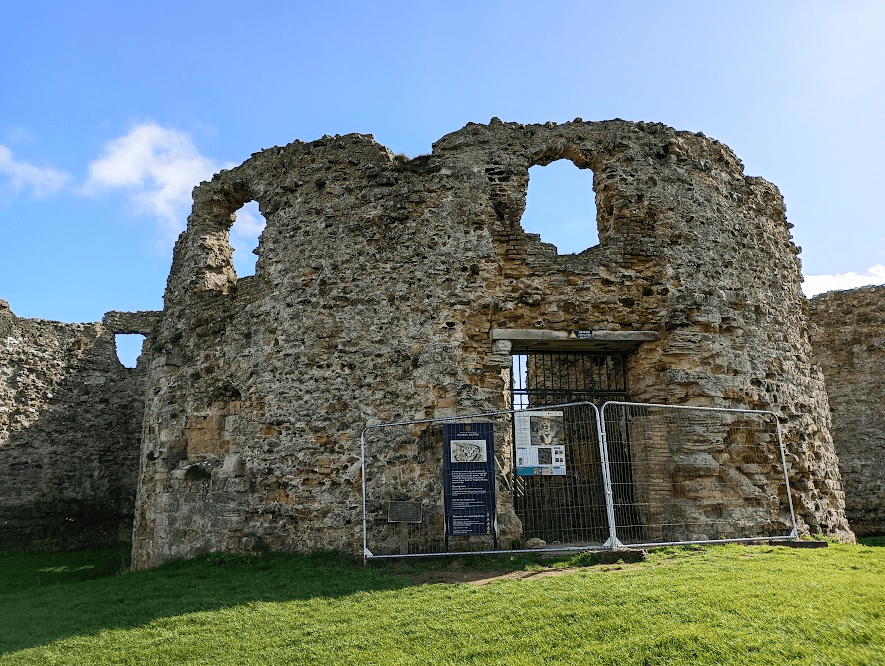
Camber Castle was another one of Henry VIII’s, built in the 16th century, as with Sandgate, Walmer, Deal and Sandown, to protect the south coast from invasion against those pesky French (although Winchester clearly could have done with such a castle earlier!) It is now nowhere near the sea and is sadly in ruins. It’s managed by English Heritage who apparently used to occasionally open it to the public, but falling masonry means that it is no longer safe to do so. I really hope it’s not just left to fall down because it’s pretty cool to just come across it in the middle of a field and be able to walk all around the perimeter, and I’d hate for it to deteriorate further.
The castle lies within the Rye Harbour Nature Reserve and we passed a number of ponds and streams before joining the Royal Military Canal Path (another one which is on my ‘to walk’ list) into Rye. (You can see the church perched up on the hill ahead.)
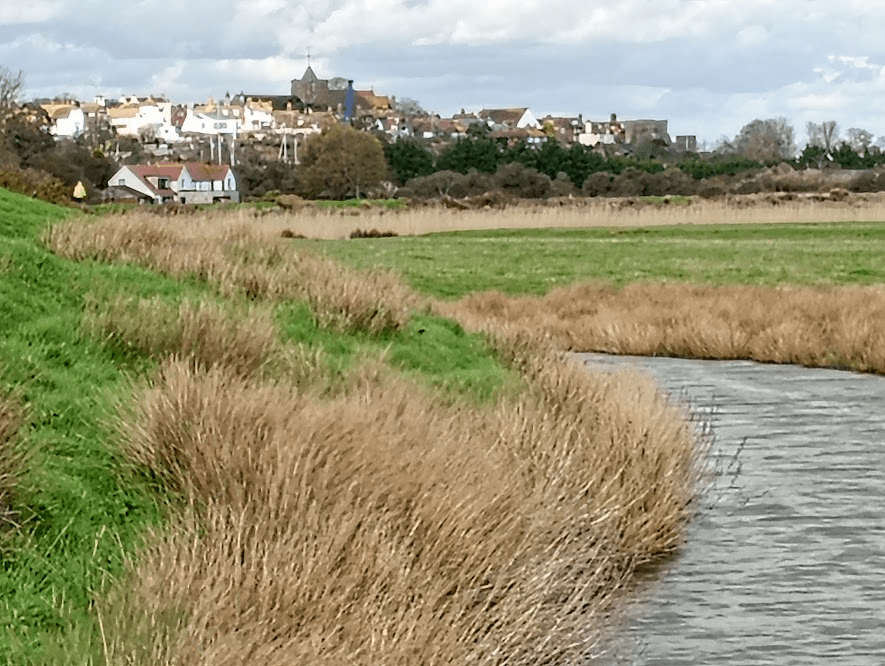
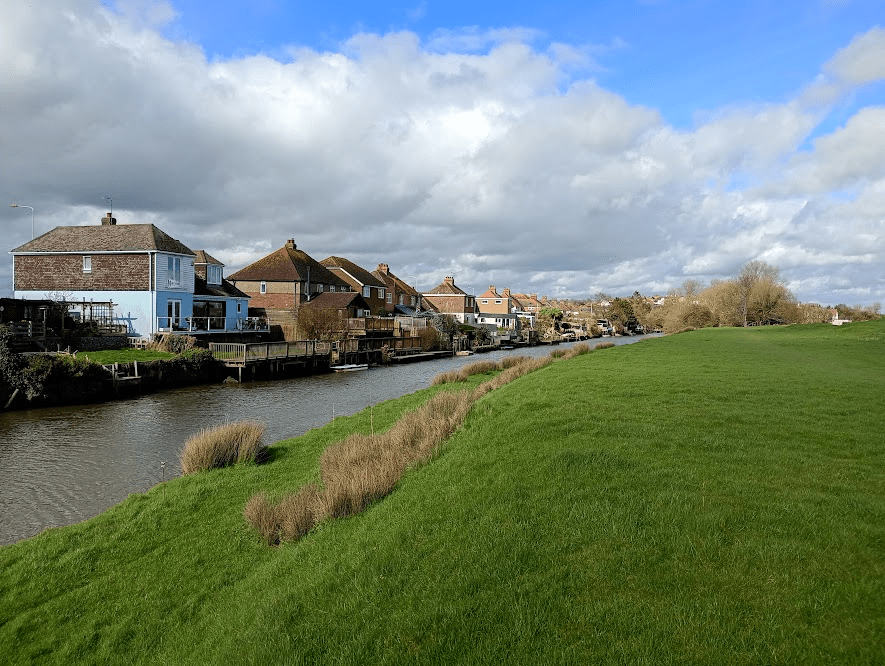
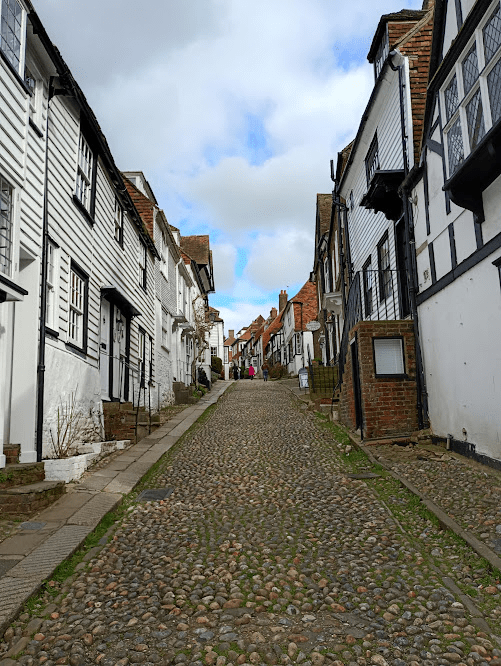
It was a whistle stop visit. Up cobbled Mermaid Street,
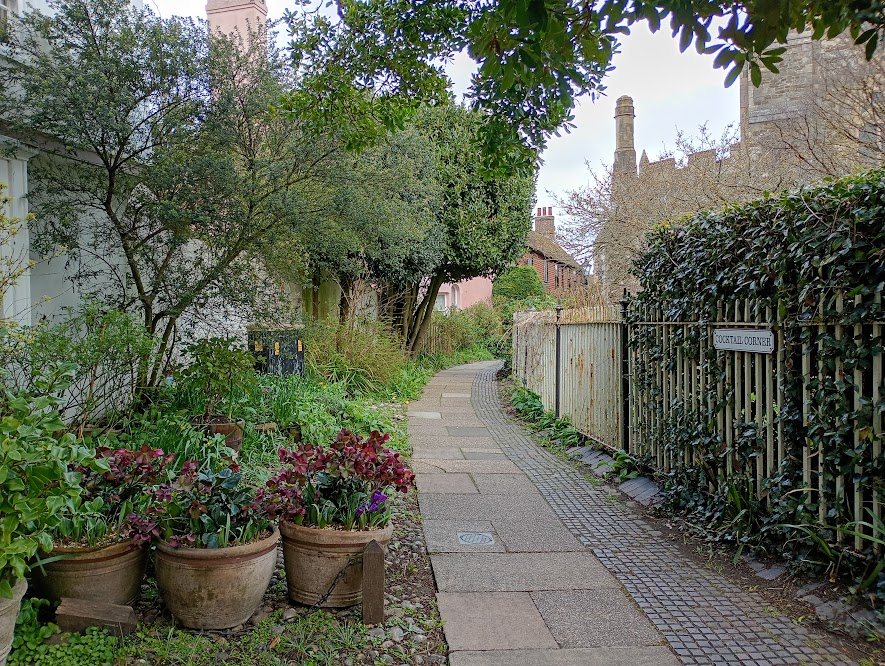
round by the church
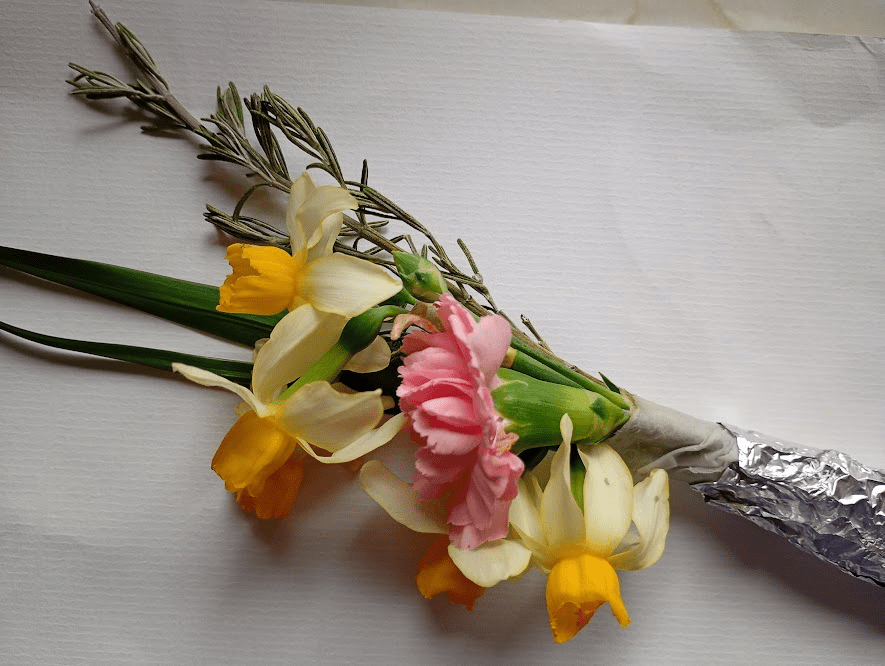
and onto Knoops (the very first shop in what is now a growing chain) for one of their fabulous chocolate milkshakes, before heading home. It was such a wonderful way to spend Mother’s Day – I loved Winchelsea and I loved the walk, despite the cows – and as well as some great memories of our day, I also had a little posy of flowers to remember it by. They were being handed out to all the ladies in the church as part of their Mothering Sunday service, and never knowingly refusing a free gift, I gamely carried them around with me for the rest of the day They survived remarkably well and looked less weary than me by the end of it!
 A Little Kentish Magic
Leave a comment