
Wingham is a village half way between Canterbury and Sandwich, and being on the main bus route between the two, is a perfect place for exploring the surrounding countryside.
The first of the walks that we did this summer was from the ‘Kent Year Round Walks’ book, which we have had for a little while but not really used, as all the more local walks are winter walks, and a large number of the other seasons are more difficult to reach by public transport. We made a decision this year that we should try and make an effort to tackle one new walk each season however, and this was such an easy one to access that we couldn’t believe that we had overlooked it.

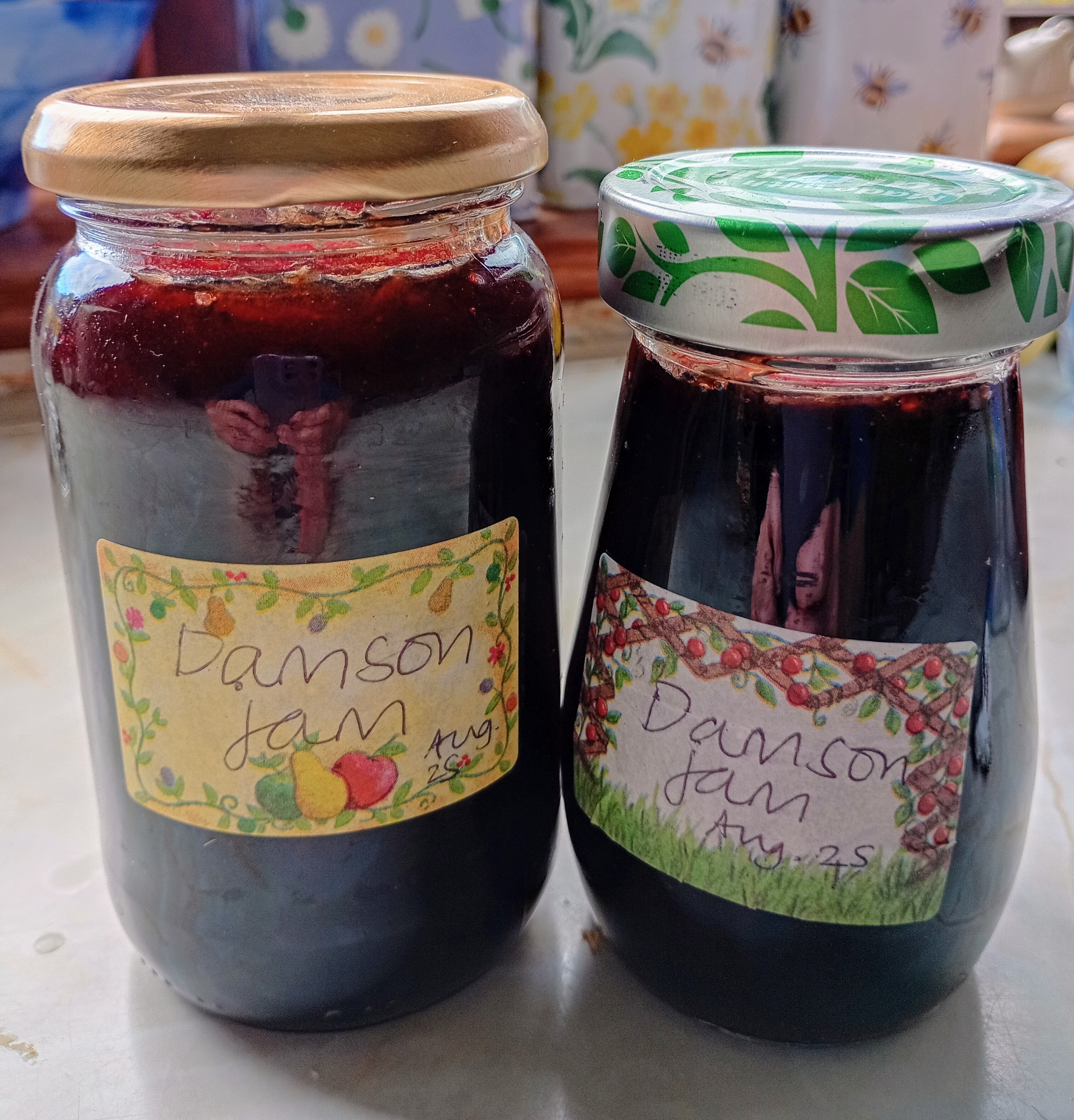
After leaving the village, we soon found ourselves walking through apple and pear orchards, with views of oast houses away in the distance. We were most definitely in the Garden of England! We also came across lots of wild damson trees – more than I have ever seen anywhere – and the fruit was so ripe that it was just falling to the ground. As I happened to have a small plastic bag at the bottom of my rucksack, I couldn’t resist stopping to pick some, much to the disgruntlement of my daughter who just wanted to get on with the walk and complained that I wouldn’t do anything with them once picked. (I proved her wrong!)

We continued on to the village of Staple where we had a quick look inside the church of St James the Great. It dates from the 14th century although there is evidence of an earlier building, including a Saxon window which we couldn’t spot. (Obviously we are all about the Saxons at the moment so we did have a jolly good look!) It was very interesting, but the highlight was the intricately carved stone font featuring the symbols of the four Apostles around the bowl, as well as St James himself with his pilgrim’s scallop shell and staff, and decorative lions and wild men around the base.

The churchyard was a wildlife paradise, with information slates dotted about, informing visitors of things to look out for and explaining the importance of habitats that had been created in certain areas. It was like being in a mini nature reserve, and we really enjoyed wandering around.

(And yes, we did see the bees!)

Some more road walking followed, as did a slight disagreement over whether we should follow the route exactly as detailed in the book (me), or follow an alternative path with slightly less road (my daughter who was in charge of the ordnance survey map). Seniority won – surely the writer of the book had chosen his route for a reason?! – and they were at least quiet country lanes with very little traffic., even if there didn’t seem to be anything particularly interesting about them. By the time we were back onto fields, we were keenly looking our for signs of Chillenden windmill, but first we came across a WWII pillbox which seemed very incongruous in the peacefulness of the Kentish countryside, but it obviously wasn’t so far from the coast when it was built as an anti-invasion defence.

And then, just across the ploughed field, there was the windmill. There were no discernible footpath signs, but the map suggested that we should head to the left of the mill, so we went for it.
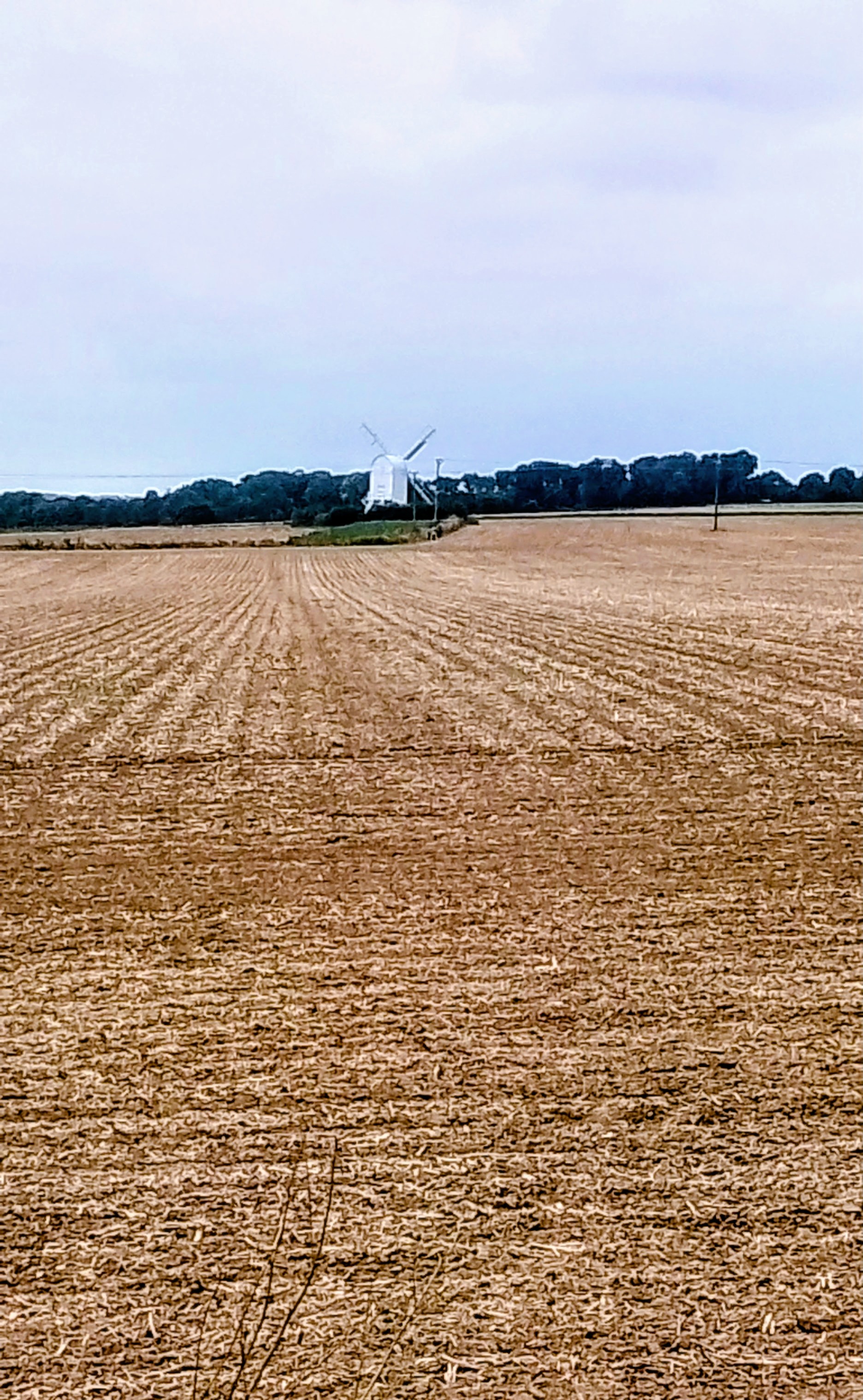
By this time it was lunchtime. We had sandwiches with us, and were ready for a sit down. We had been hoping that the mill would be a good picnic spot but weren’t sure how accessible it would be. Unusually for me, I hadn’t done any previous research and didn’t even know whether it had been converted into a house and someone was living there, but clearly the field itself wasn’t going to be a great picnic spot. In fact it turned out that the mill is owned by Kent County Council and looked after by the Friends of Chillenden Windmill, and is open to the public on Sunday afternoons during the summer (https://www.chillenden.org.uk/page4.html) We were there on a Saturday, but were still able to get into the grounds, so were able to sit on the grass and enjoy a perfect picnic spot.
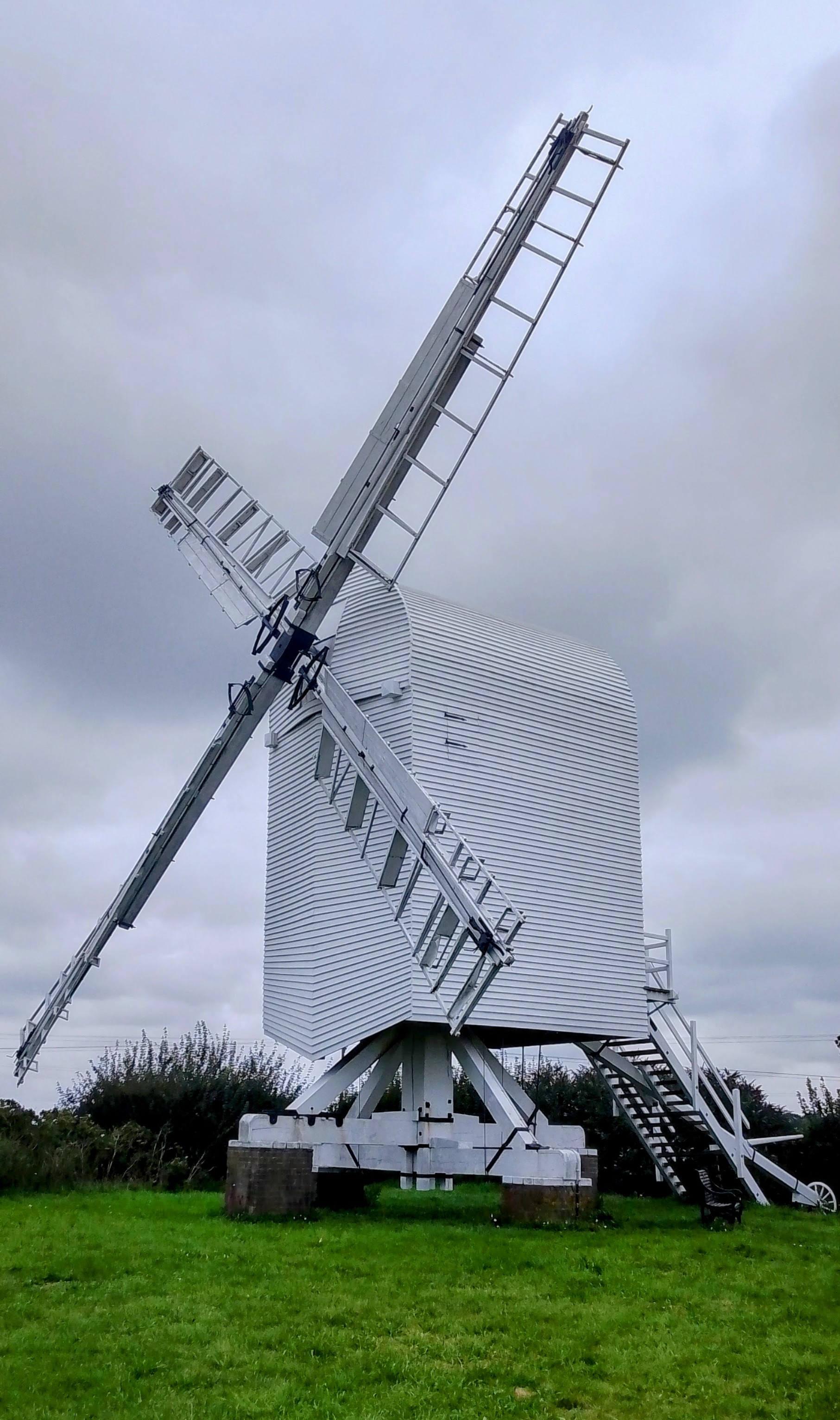
Afterwards, we obviously had to climb up the steps to admire the view of the surrounding countryside before heading onwards.

We passed through a beautiful wildflower meadow and then a section of woodland before reaching the village of Goodnestone.

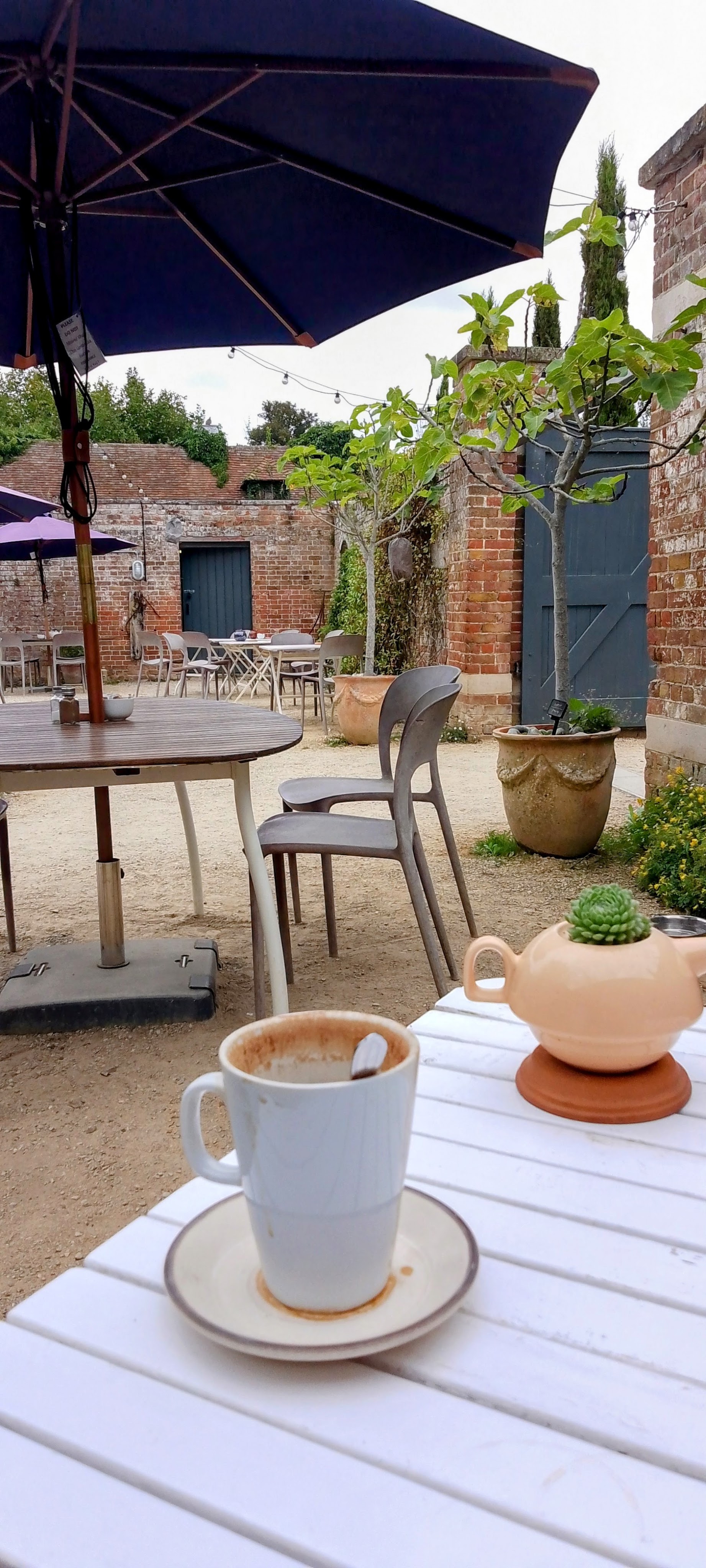
At this point, we made a short diversion to Goodnestone Park for another sit down and a hot drink. It’s been a long time since I have visited the gardens there – and I’m not sure that there even was a cafe there back then – but we were pleased that there’s one now, especially as you can visit it without paying for entry to the gardens. The cafe is in a converted dairy building with additional outdoor seating in a lovely courtyard outside. We had planned to share a scone, but there was a notice advising against eating outside because of the proliferation of wasps – and warning that they particularly liked jam. My desire to sit outside (I feel that I need to grab the opportunity for as much al fresco eating and drinking as I possibly can), outweighed my desire for a scone, so we just had a drink. There were indeed a lot of wasps and we took a slightly mischievous delight in watching everyone that did take a risk and order food, retreat indoors with their cups and plates rather quickly.
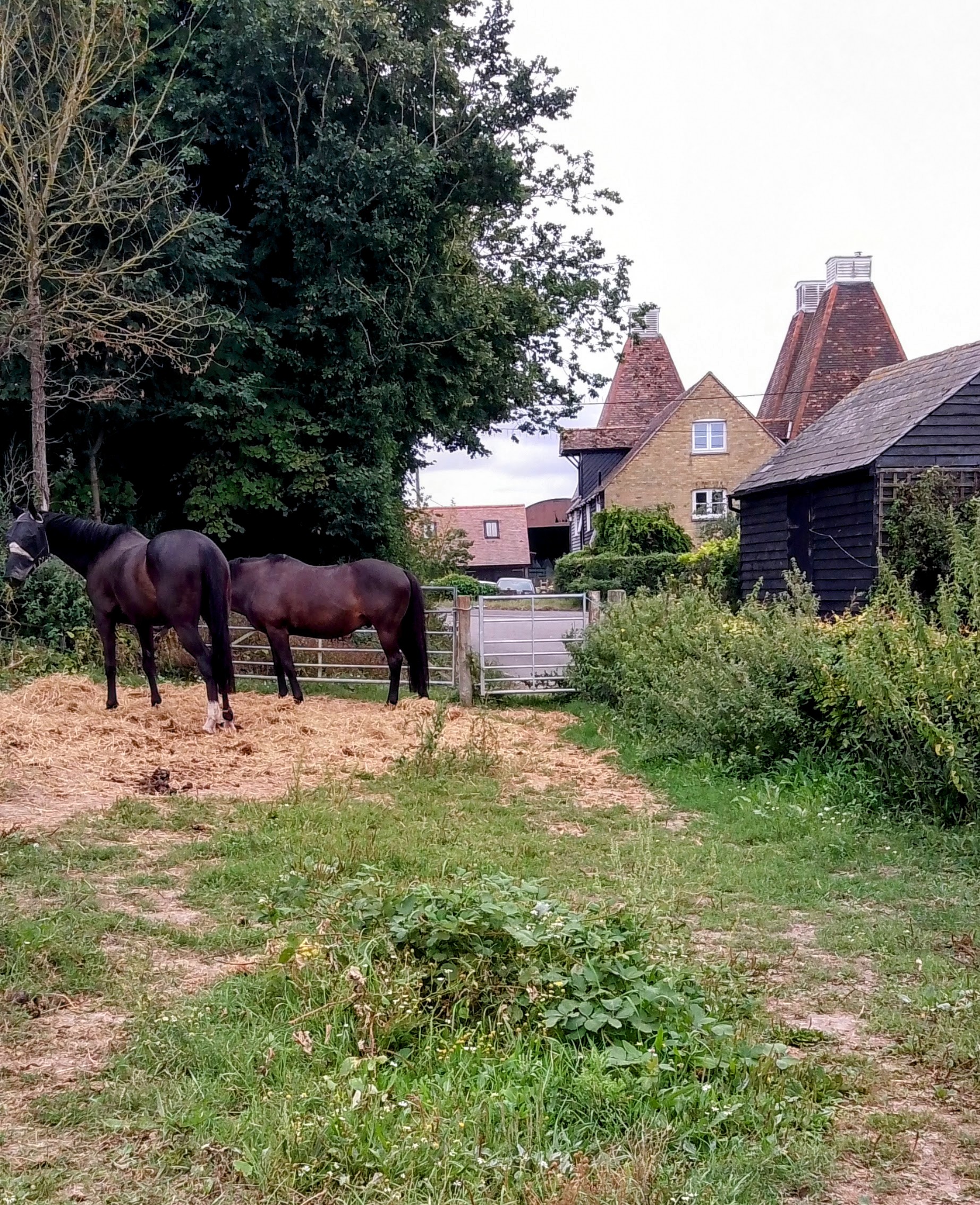
On leaving Goodnestone, we missed our path and thought we might have to navigate back to Wingham with the map rather than the walk book, but found ourselves back on track after reaslising that we had just taken a rather circuitous route around a wood, rather than through it. The book then advised that the final section was either along a road or through fields where there ‘may be horses’. We opted for the latter and thought that there might be one or two, but it turned out to be a horse livery and there were lots. Good job it’s cows that I’m scared of, although I was a little bit nervous when one of them started trotting along behind us.
It was a really lovely walk that will definitely be on our summer itinery from now onwards – and I even made a couple of jars of damson jam!
Our second Wingham walk was the Four Watermills Walk which we have done several times, and which we discovered on the Kent Ramblers website here
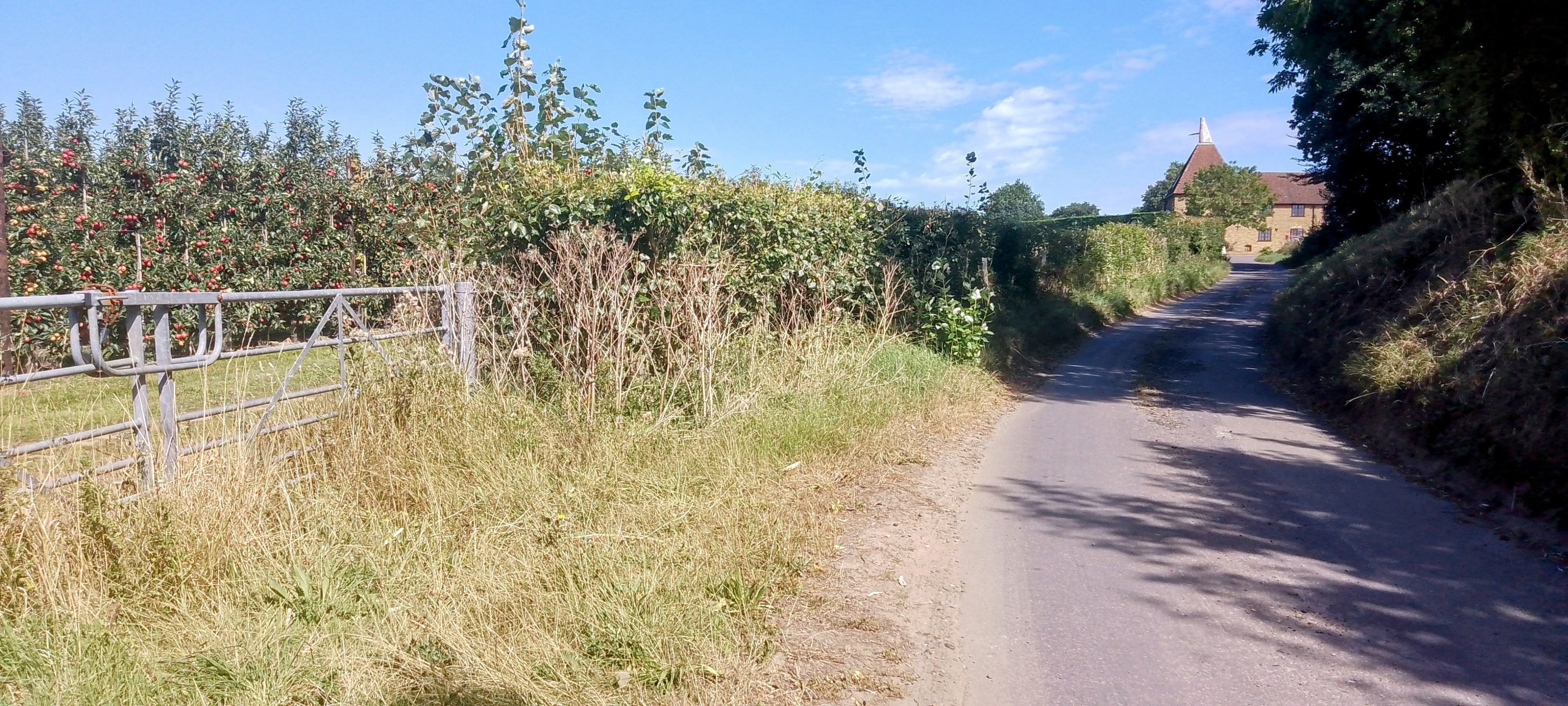
It begins with road walking but once again, the lanes are very quiet, and run alongside apple orchards.
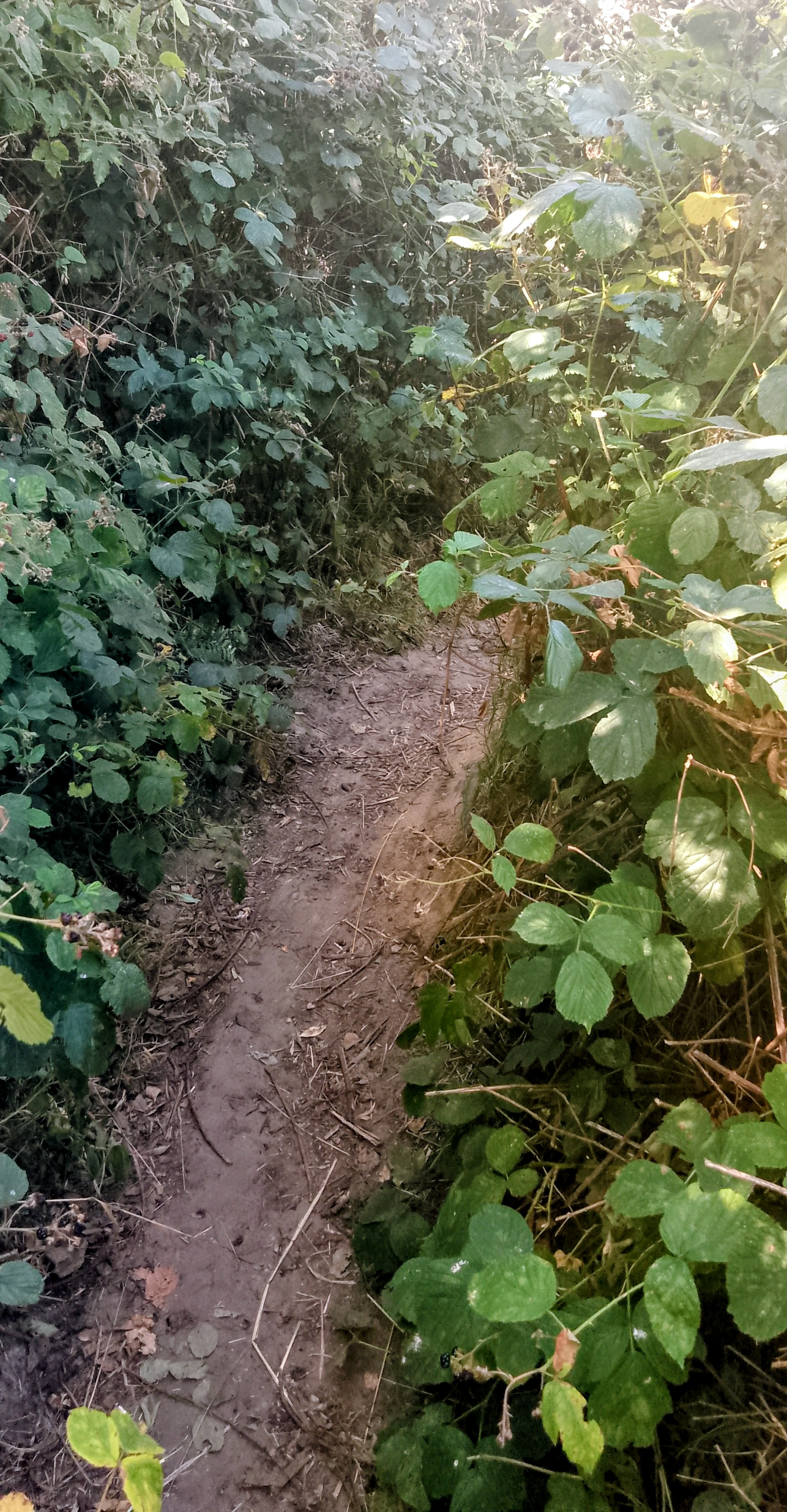
From there, we headed along the edge of some woodland, which was quite brambly and overgrown, but the path was edged with oak trees full of acorns (my favourite), and sweet chestnut trees laden with their spiky shells. It might have been a sunny summers day, but Autumn was definitely on the horizon!
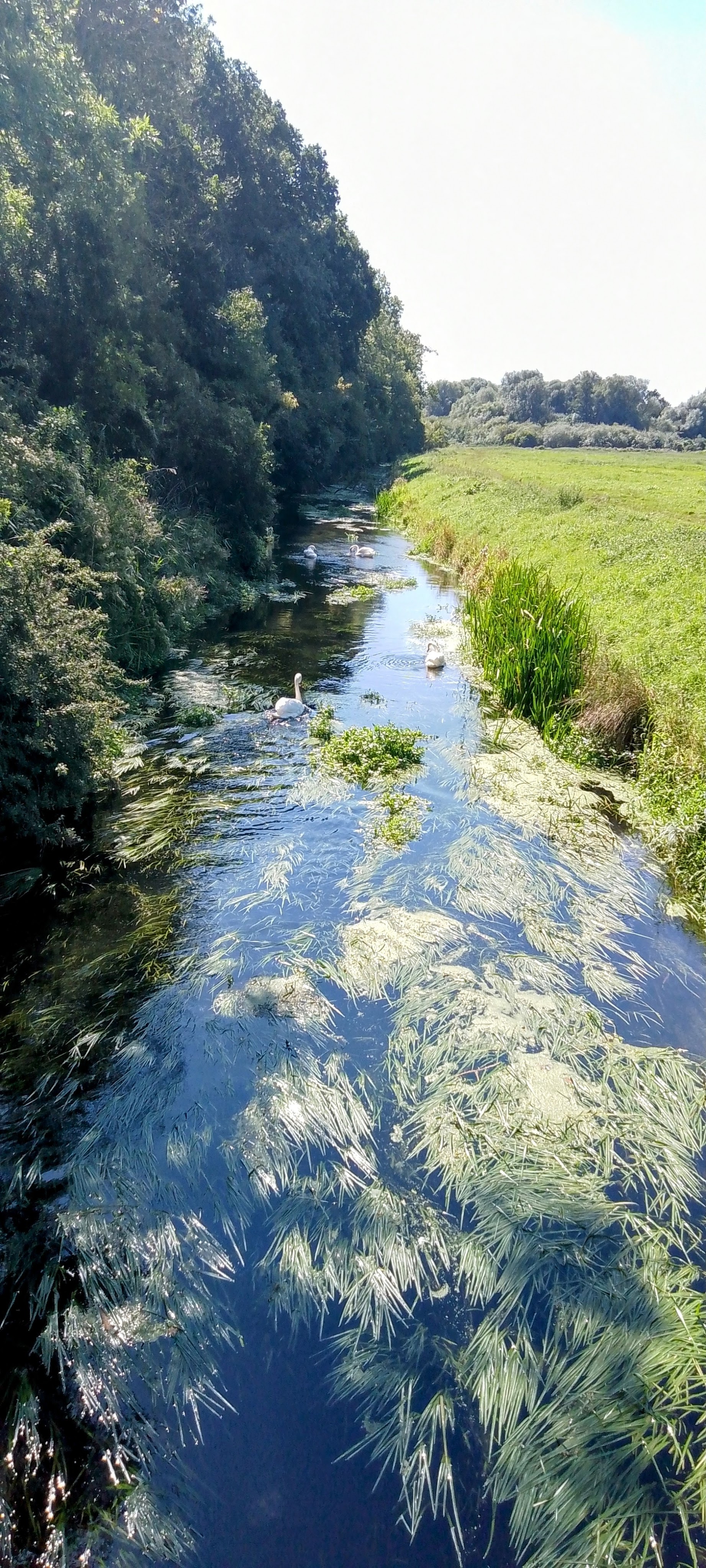
The reward for scratched legs (I don’t own any trousers and always walk in a dress!) was to emerge over a bridge and alongside the Wingham River, a tributary of the Little Stour. Apparently there are kingfishers here and, with lots of likely looking branches for a kingfisher to perch, I suggested to my daughter that we should walk quietly. Her response was that she would rather talk than see a kingfisher – although further along the bank she claimed to see a flash of blue, which I unfortunately missed.
Soon after, a field of cows had to be crossed, but luckily they were head down and busily occupied at a food trough in the opposite corner to the stile where we needed to go, and after passing our first watermill of the walk, we arrived in the picture postcard village of Wickhambreaux, with thatched cottages
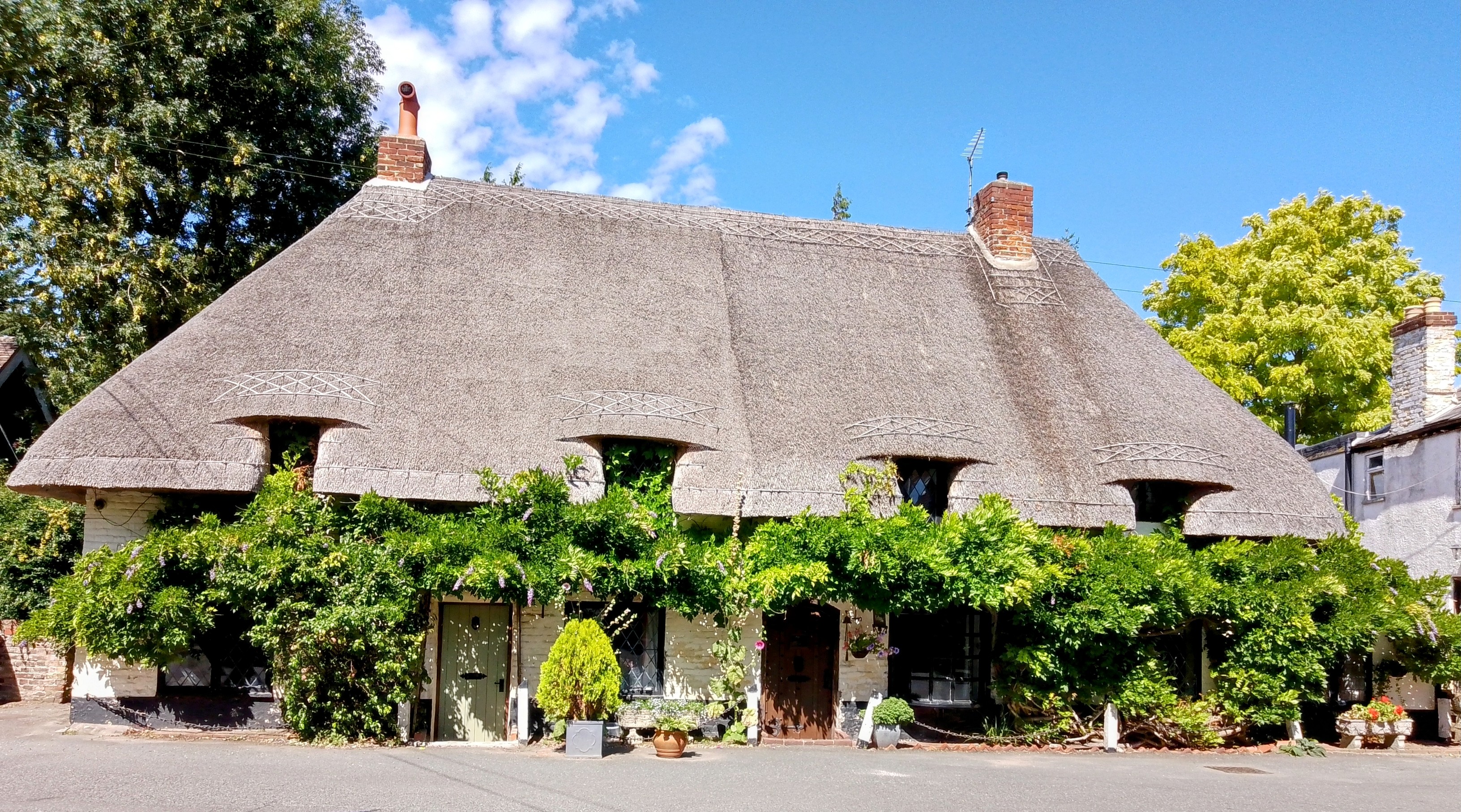
and roses round the doors.

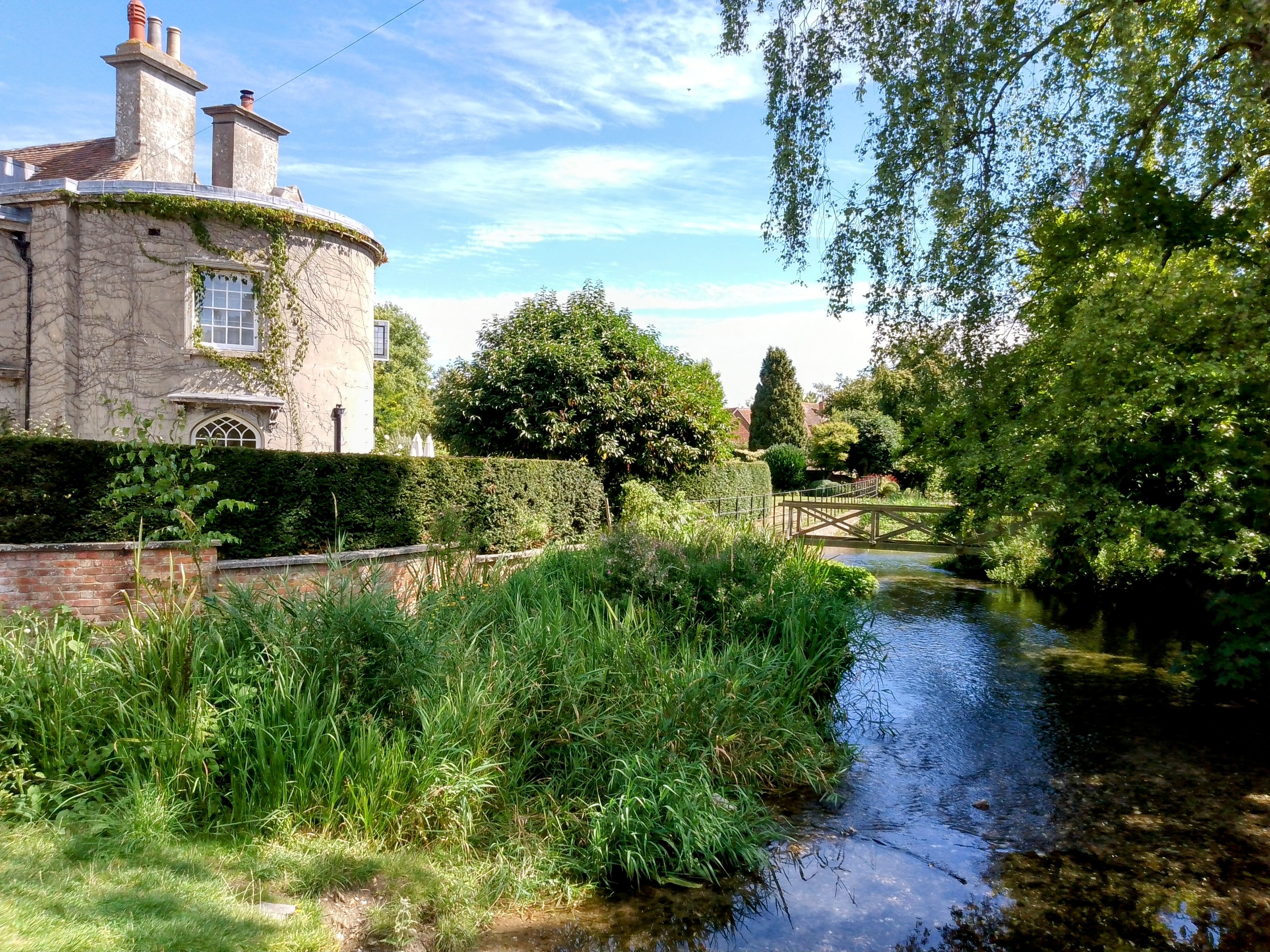
The river is obviously the reason for all the watermills in the walk, and the second of them, now converted into flats, can be found here.
The hedgerows were full of wild hops, and we found a box of ‘help yourself’ home grown cucumbers by a garden gate. We did, and it was delicious. I used to grow cucumbers many years ago when I had an allotment and I had forgotten how much tastier they are than the supermarket offerings.

We passed the third of the watermills, crossing over a tiny bridge before continuing into the village of Littlebourne.
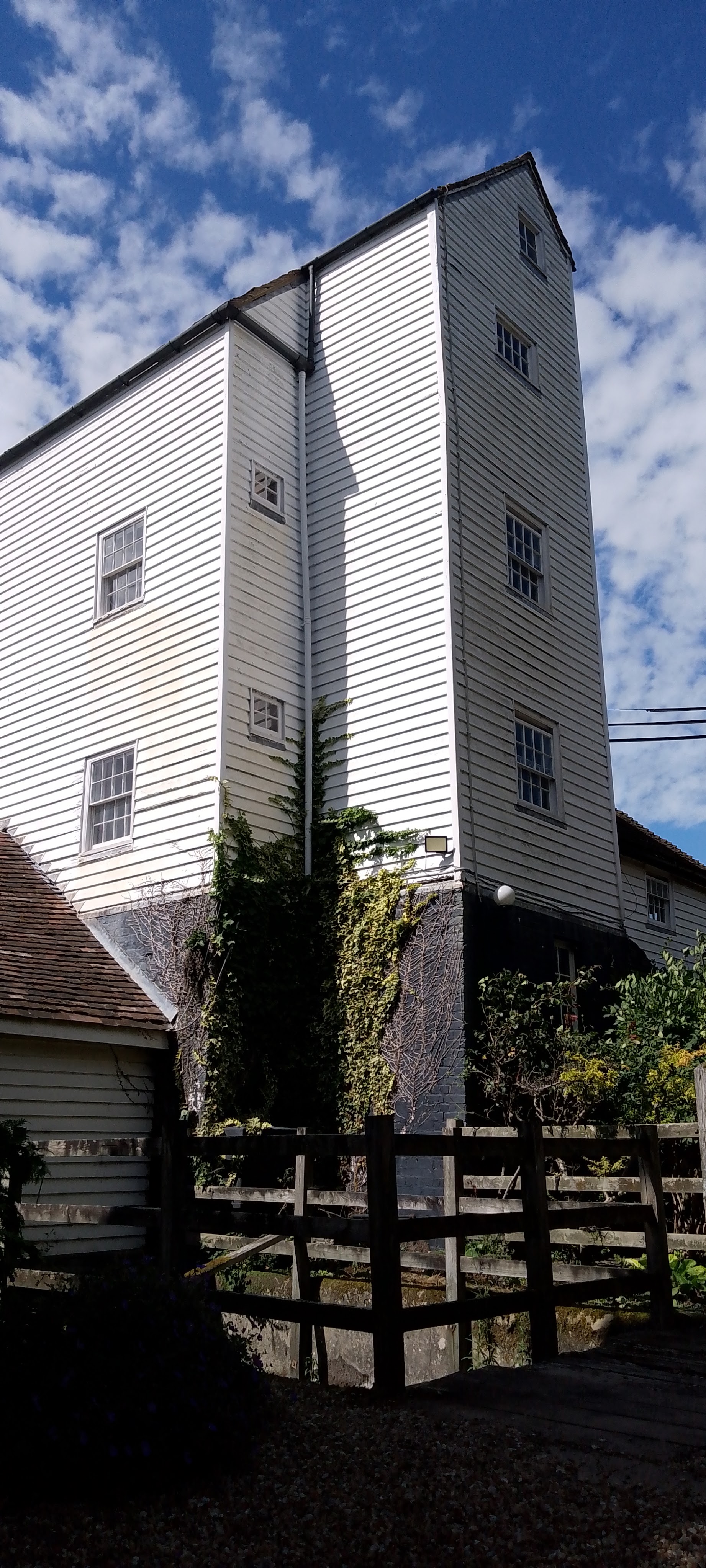
The walk is a circular one and passes through the churchyard before continuing into the village, and past the fourth of the watermills. I was too weary for the full circular that day, and we decided to finish there and catch the bus home from Littlebourne. But as all the best walks end with a drink, we took a detour, turning right as we left the church, and walked up the road to The Ivy Barn, a lovely farm shop and coffee stop. There are seats indoors and out, and obviously we sat outside for our post walk drink. For us, all the best walks feature a drink stop of some kind, both as a reward and a chance to sit and chat about what we have done and seen – and what we are going to do next!
 A Little Kentish Magic
Leave a comment