
I have been wanting to walk the Kent Coast for a few years now but my daughter, who is my usual walking companion, couldn’t see the point because we have done so much of it in assorted directions already. However, I really want to do it in order, from start to finish and, as I am trying to work on my anxiety about walking on my own outside of my usual comfort routes, and as I am more confident by the sea than in the countryside, I decided on a whim that this was something that I could do by myself.
Three different buses and a journey time of almost two and a half hours, saw me arrive in Camber Sands, and I headed to the Central Car Park which the Kent Ramblers Guide to the Kent Coast Path informed me was my starting point – now burdened with an extra jacket to carry because, as is so typical with me, I got tempted in a charity shop in New Romney while killing time waiting for my bus connection (although that is nothing compared to the notorious day when I bought a money tree plant from a stall outside a house near Aylesford at the beginning of a 10 mile circular walk, and had to carry the pot for the entire duration (including up Bluebell Hill), because it couldn’t fit it in my backpack – though I am pleased to report that the plant is thriving, has spawned several cuttings and was well worth the effort!)
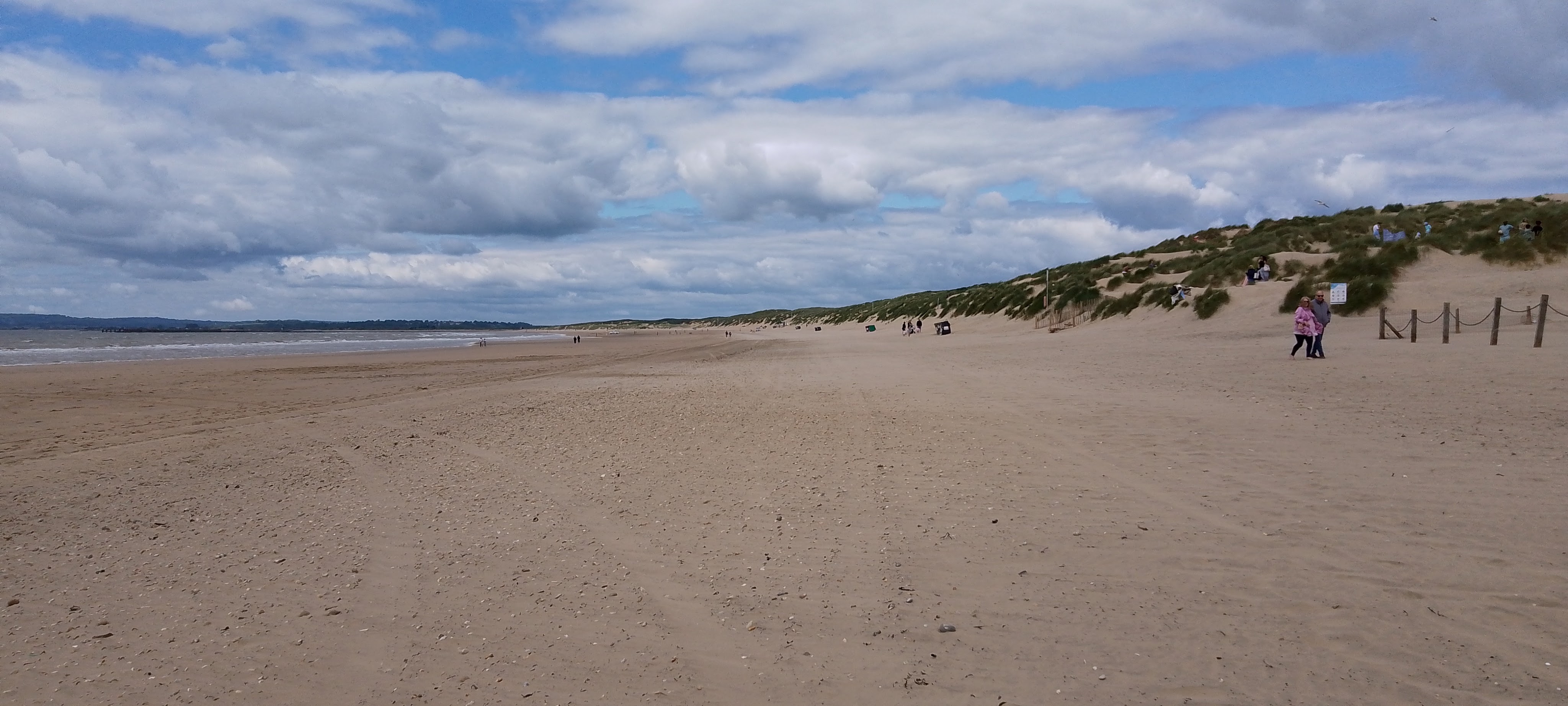
It was a very blustery day with sand whipping up across the beach, making sunglasses very necessary for eye protection, as I set off on the first leg of my journey. The beach was surprisingly busy with hardened holiday makers sheltering behind wind breaks, and as I strode along, admiring the beautiful beach front houses – many of them now seeming to be holiday lets – I was feeling proud of myself for embarking on this adventure
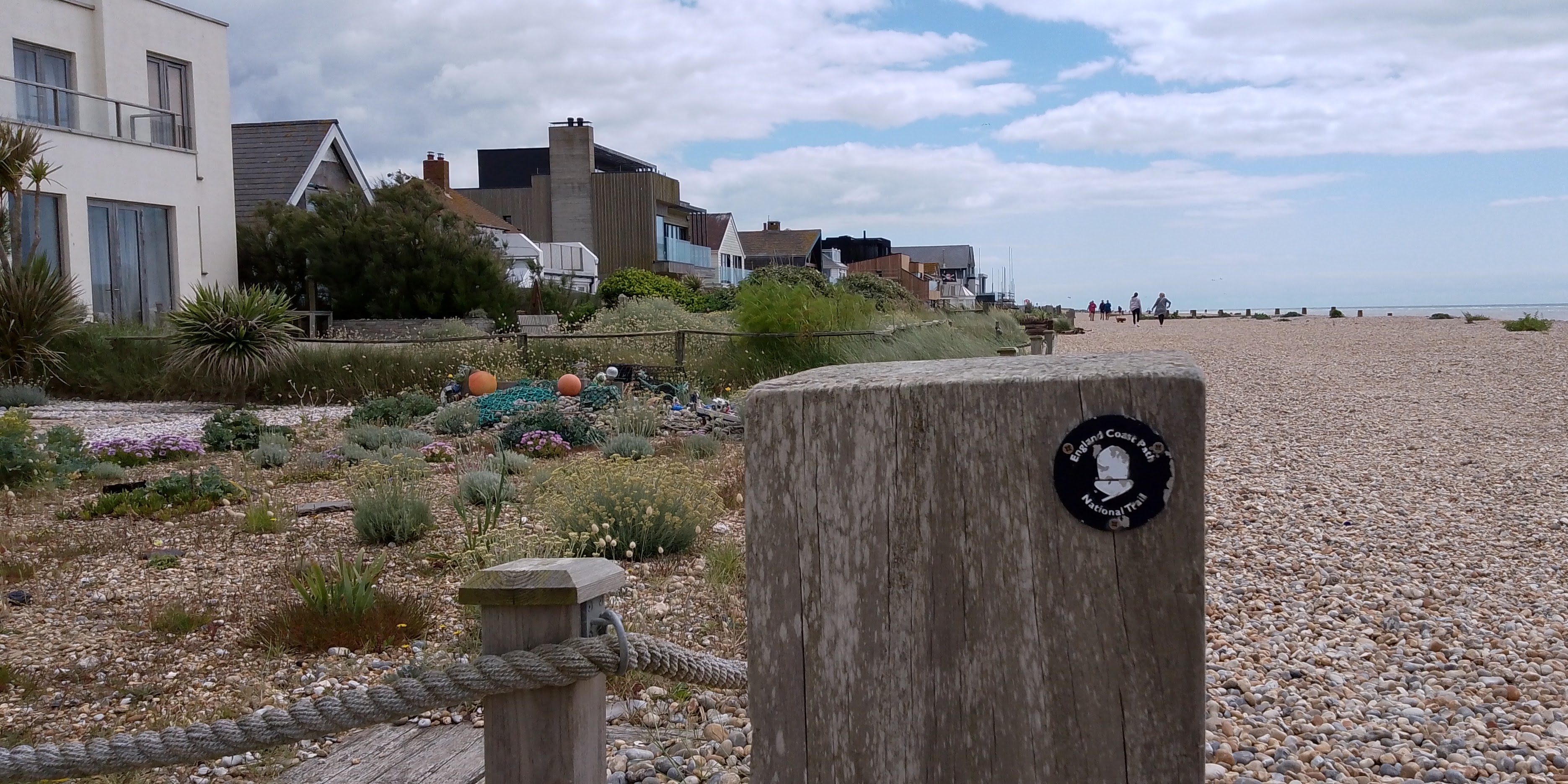
And then I saw notices announcing that the England Coast Path/shared cycle path that I would need to take to avoid the Lydd firing range was closed ahead for widening and resurfacing work. Oh no!, Apparently the path was re-routed along bridleways, but there was only a very basic map showing this, and the bridleway I would need to take was some distance before the actual closure. How would I know which was the right bridleway? And if I did find it, would I be able to work out the route? My navigation is not great and I always rely on my daughter’s Gold D of E map reading skills when we are out and about. I started to panic. Maybe this walk hadn’t been such a great idea after all.
Luckily there was a very big yellow sign at the start of the diversion that even I couldn’t miss, and once I’d got over my disappointment at having to turn away from the coast earlier than I would have liked, I think that this re-route was probably nicer than the main path which adjoins the road all the way from Jury’s Gap to Lydd. Instead of following the road, I was in the countryside following a river, and walking alongside ditches where marsh frogs were noisily calling with their laughing croak, listening to skylarks singing and watching the greylag and Canada geese (who were grazing in the fields rather than swimming in the lakes) – although my one disappointment was missing out on the moment when I passed from East Sussex into Kent because there was no sign to tell me.
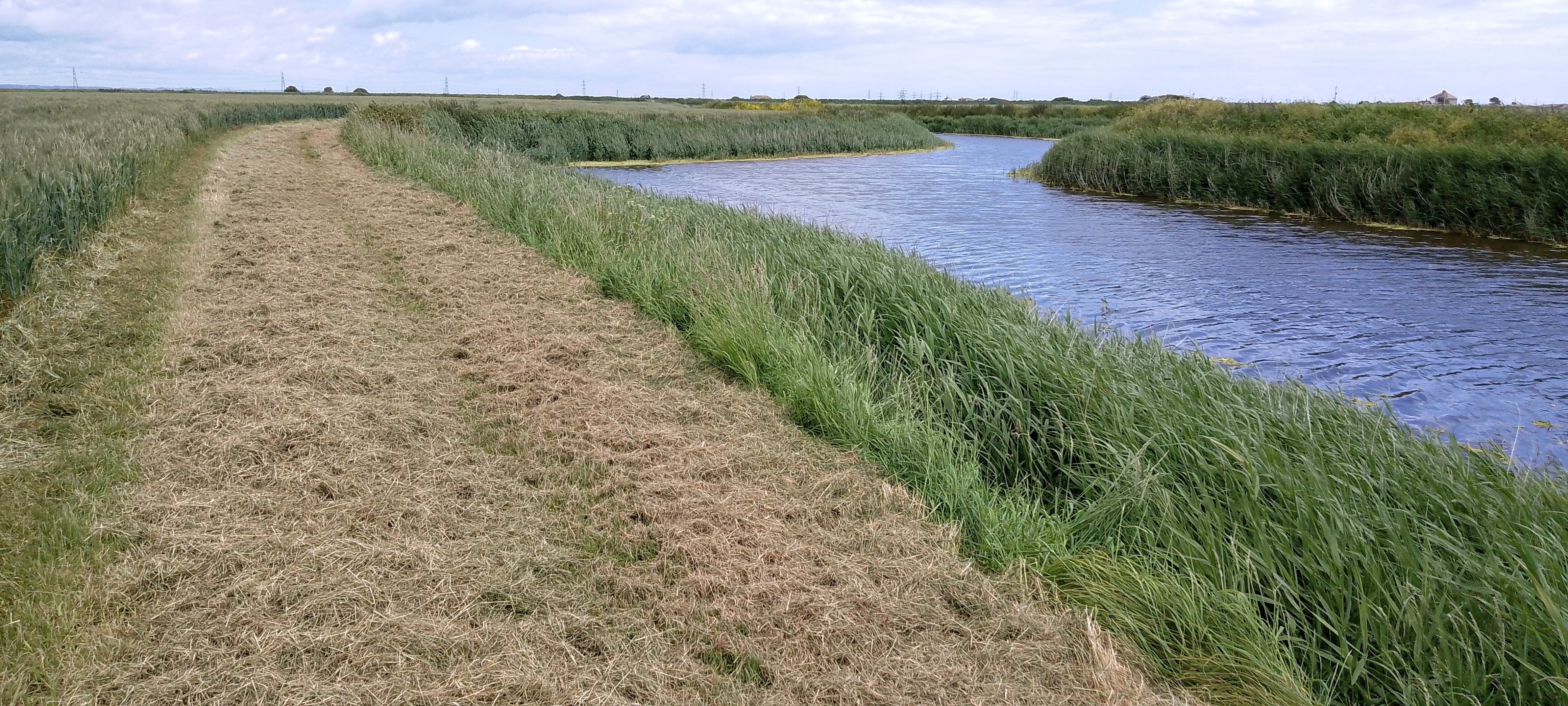
There were enough footpath arrows throughout the diversion to make me feel reasonably confident that I was on the right track, until a point near the end where I had a choice of paths. If I turned right towards the road, would it be too early and I’d find the official path still closed? Should I plough through the slightly overgrown path straight ahead? I took a gamble on turning right and although I was relieved to see it was the correct one, it did mark the beginning of quite a long slog along the road to Lydd, made more bearable by putting on my headphones and listening to the most recent Archers omnibus!
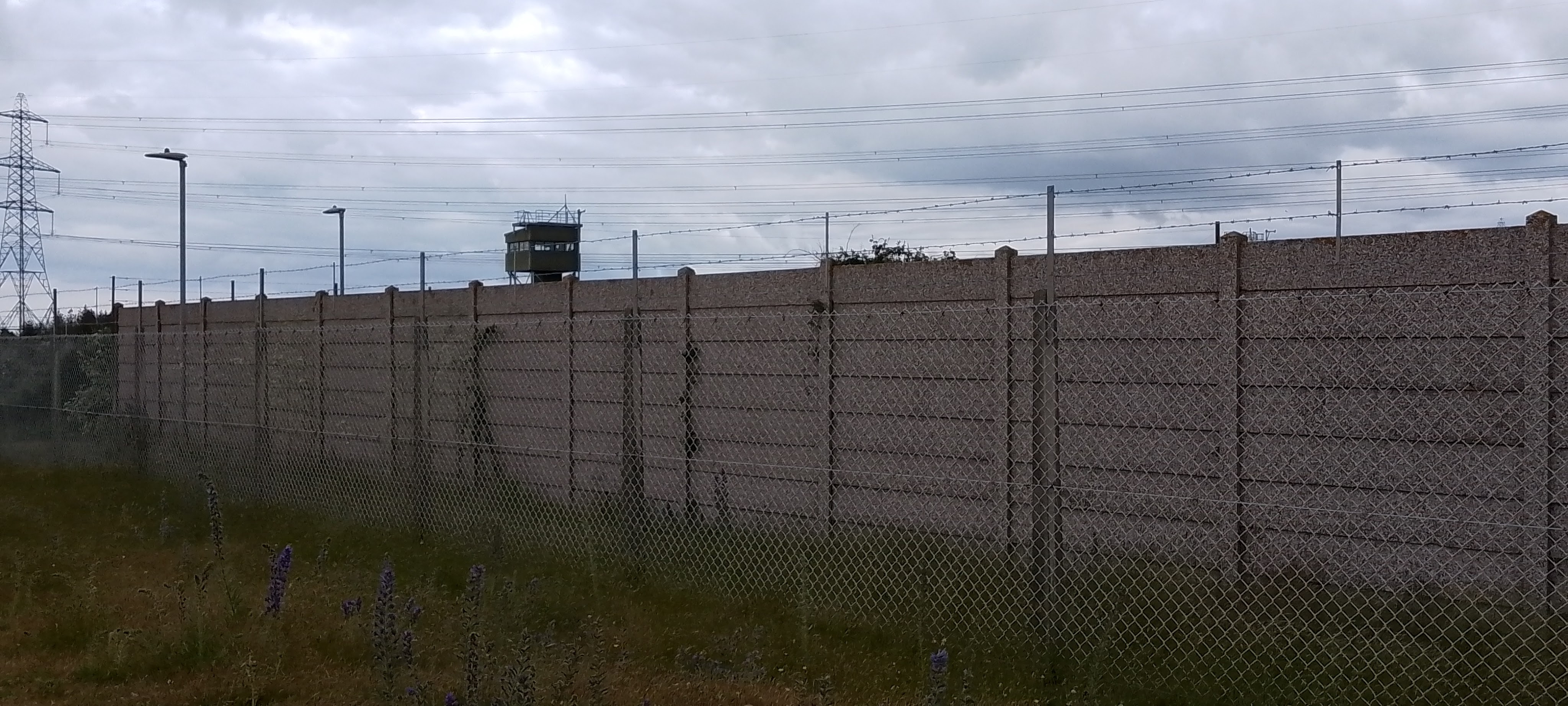
In Lydd, my Ramblers Guide told me that I needed to take a track that followed the perimeter fence of the firing range – and I was initially a bit concerned that I was trespassing, especially when I spotted an army security patrol van coming towards me. I was reassured when he didn’t stop to ask me what I was doing there, although it was initially a pretty grim trudge.
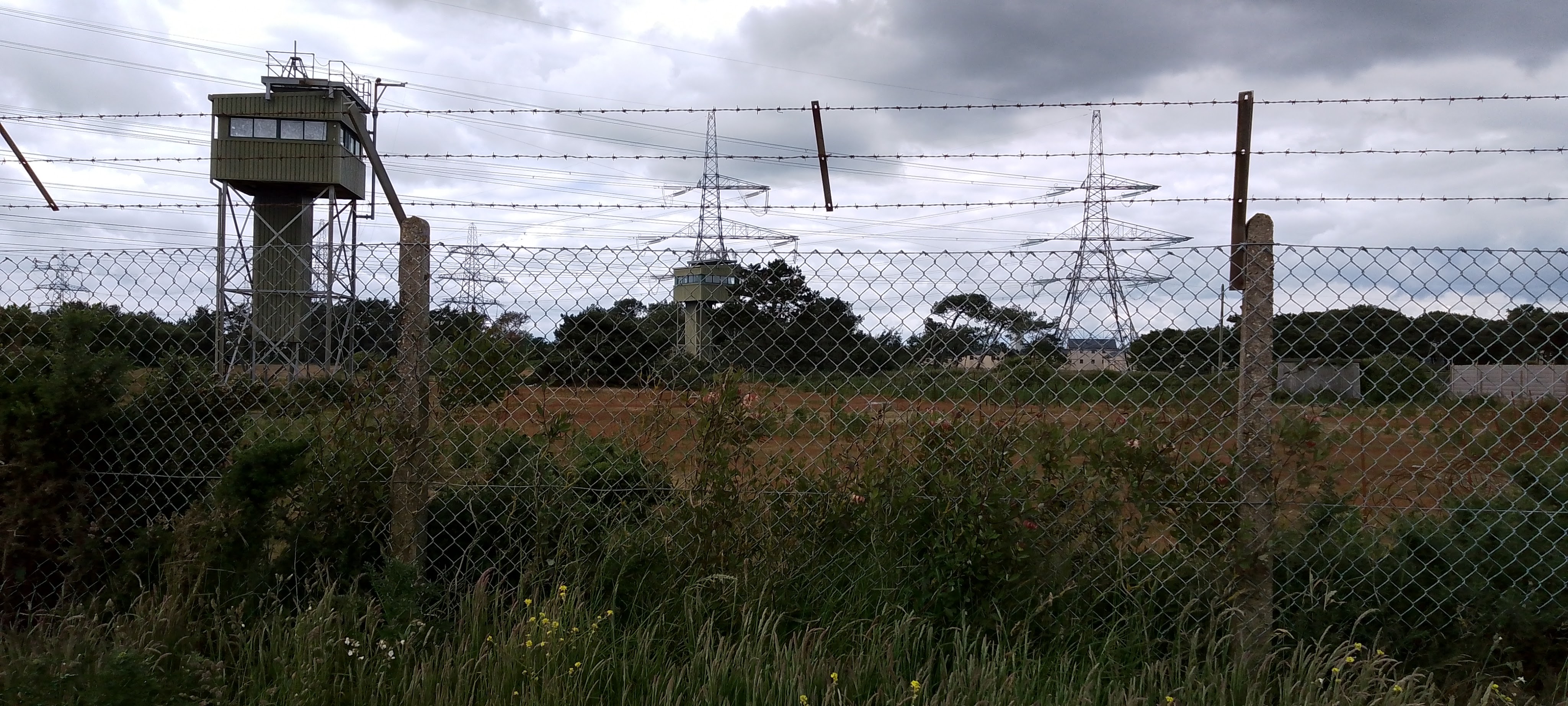
The one highlight was seeing a stoat or a weasel, not sure which, darting out of the undergrowth and scampering along the path in front of me!
By this point I was really flagging which probably made this section seem worse than it actually was. I needed to sit down and I needed some lunch but, walking along a concrete track, there was nowhere suitable to sit. I concentrated on putting one foot in front of the other. I could see Dungeness Power Station ahead to my left. Surely the beach couldn’t be too far away?
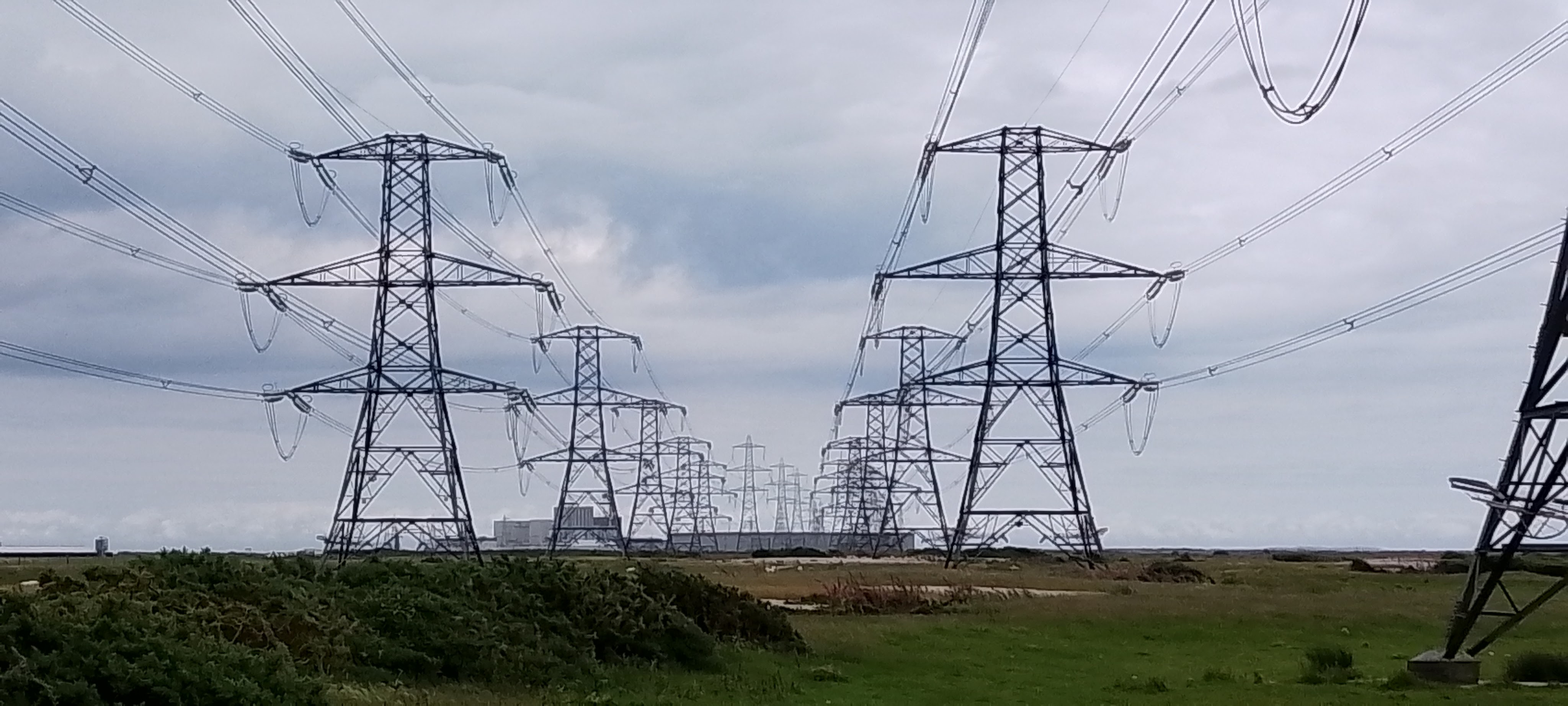
It was! But finally, two and a half hours after turning away from the coast at Broomhill Sands, and still following the perimeter fence, I could see the sea in the distance! Nearly there.
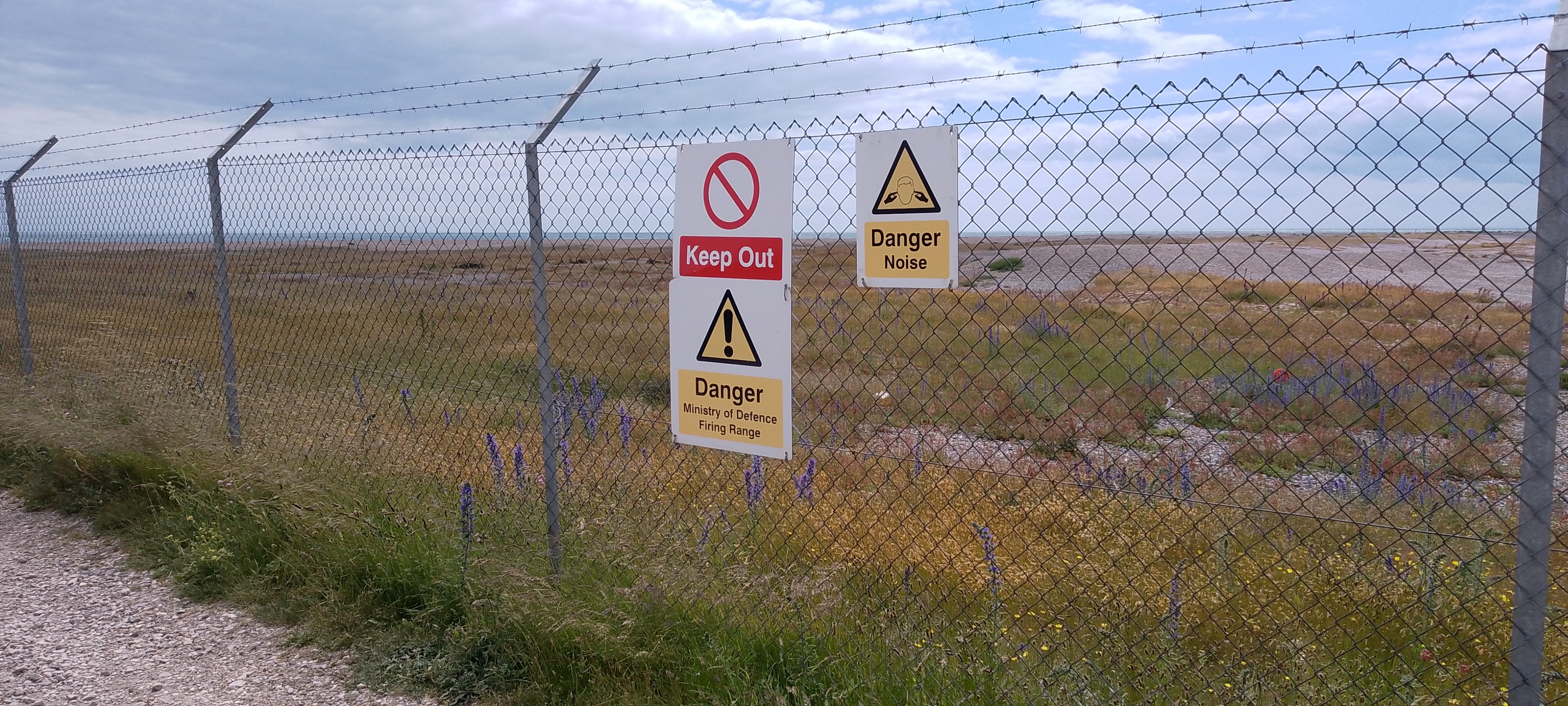
I was ready to collapse onto the first pebbles that I came to, but my heart sank when I realised that this part of the beach was full of anglers and so I was forced to plod along a little further until I could found myself a space. Never was a sit down and a packed lunch more welcome!
Still exhausted, but slightly revitalised by food, I continued to walk along the beach – the largest expanse of shingle beach in Europe – with the power station getting closer. It was hard going on the pebbles, but such a relief to be back by the sea, listening to the waves crashing and enjoying the bleakness of this remarkable headland, that I really didn’t mind
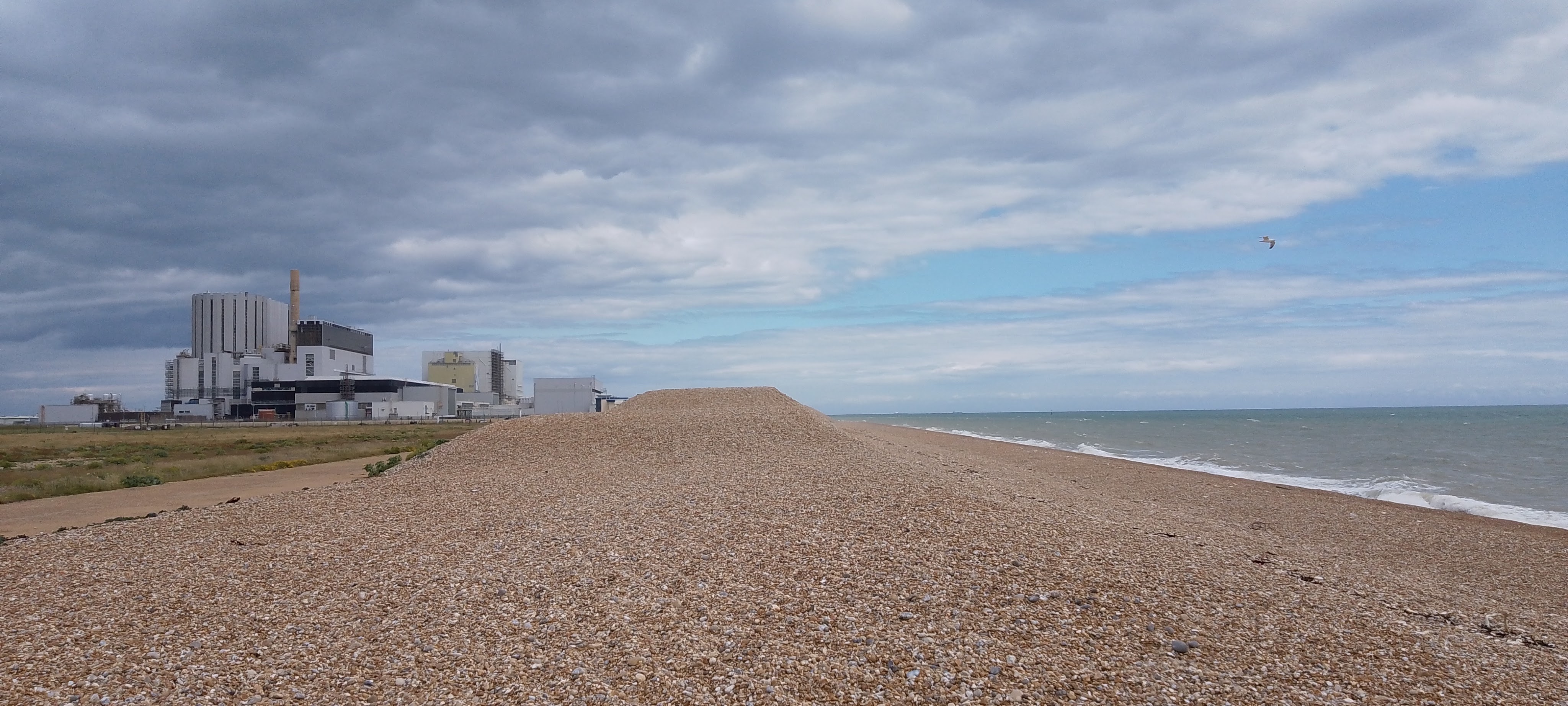
This was my favourite part of the whole walk. I climbed a shingle bank and, once level with the power station could see both the old and new lighthouses coming into view.
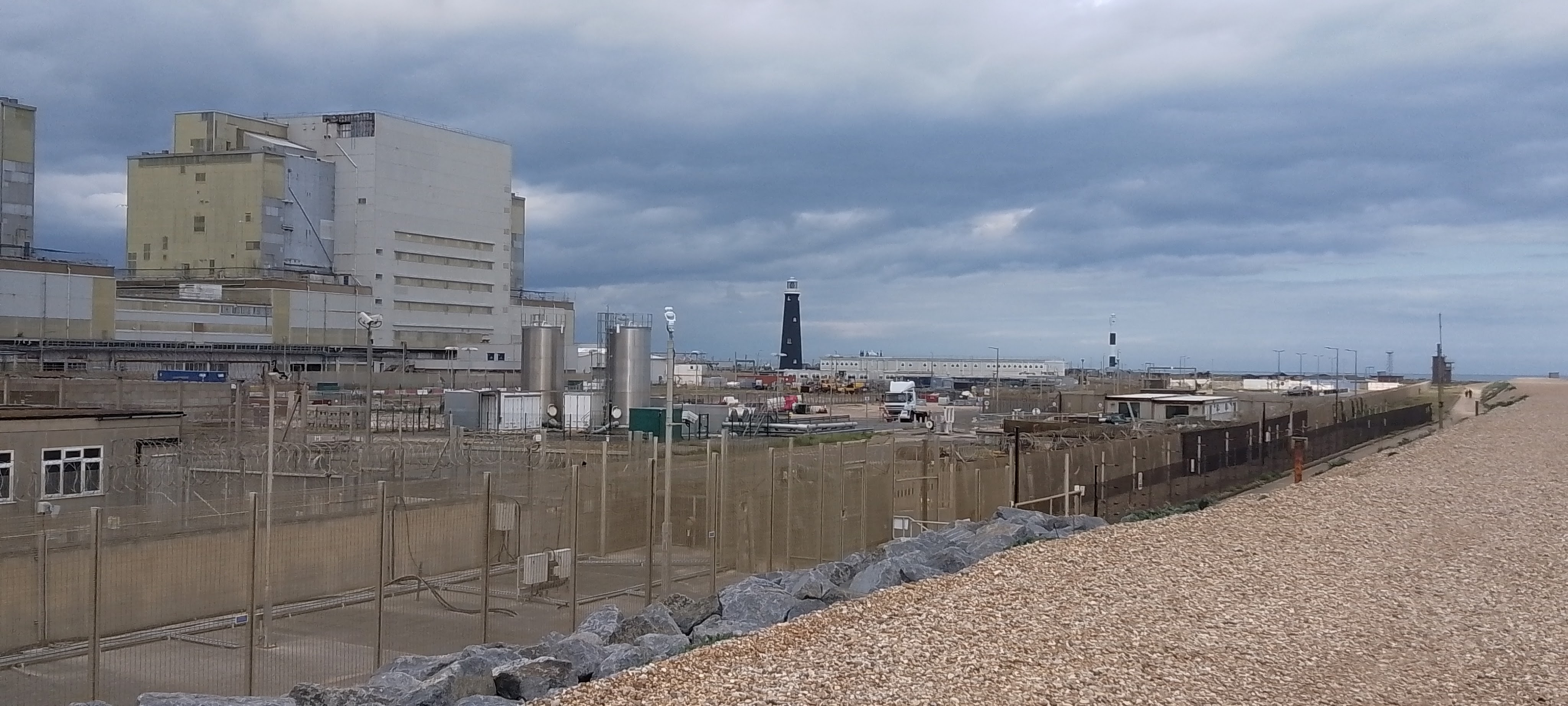
I hadn’t been to Dungeness since my children were little and we used to take the Romney, Hythe and Dymchurch railway to the end of the line. The sound of the train whistle in the distance brought such happy memories flooding back.
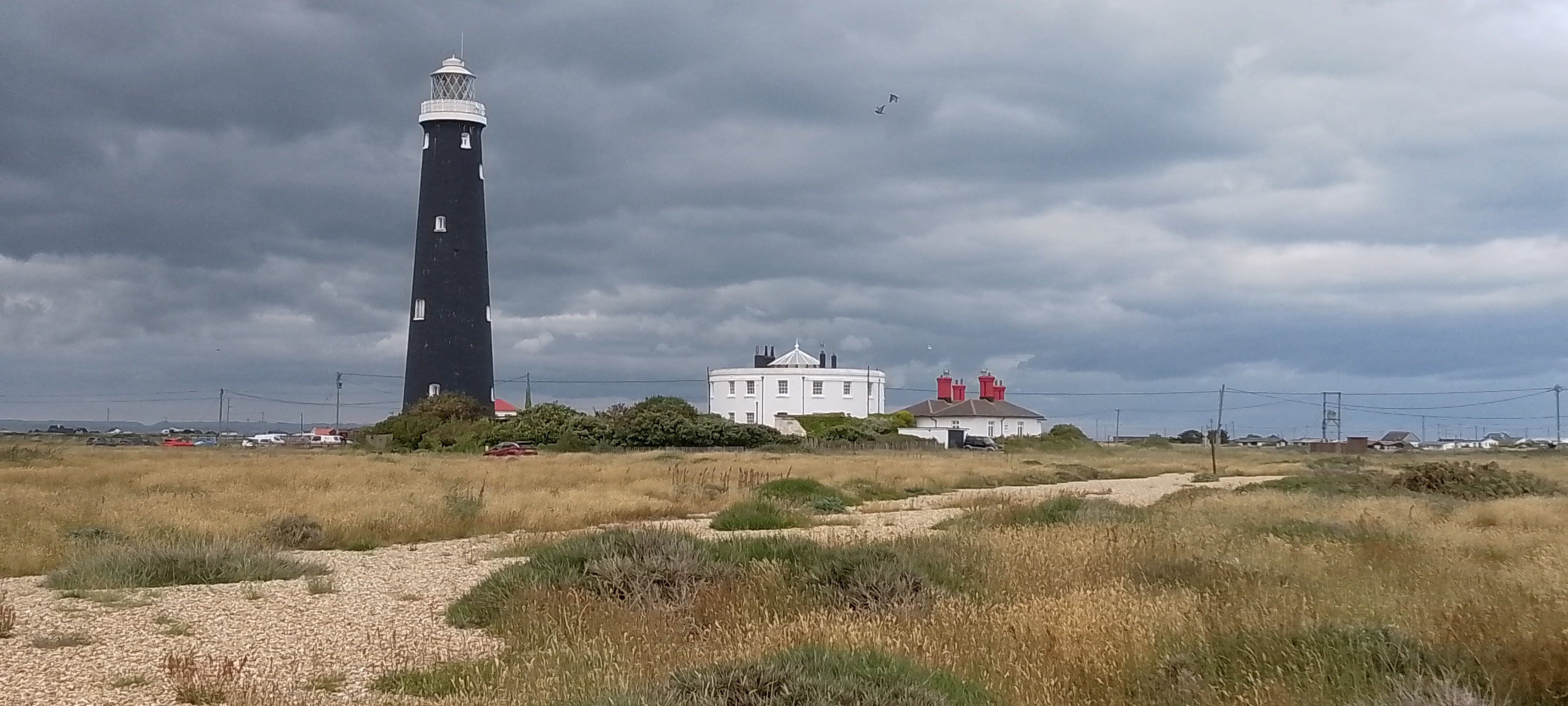
I was surprised by how upmarket it seemed to have become in the intervening years. Back then it was a quirky but fairly ramshackle affair of converted railway carriage homes. Now, it seemed that many of these carriages had been boarded over and extended. The properties had big picture windows and expensive cars parked outside. Many were holiday lets and I suspect that lots are now second homes. I checked out the price of one tiny two bedroom cottage that was for sale and it was £595,00!
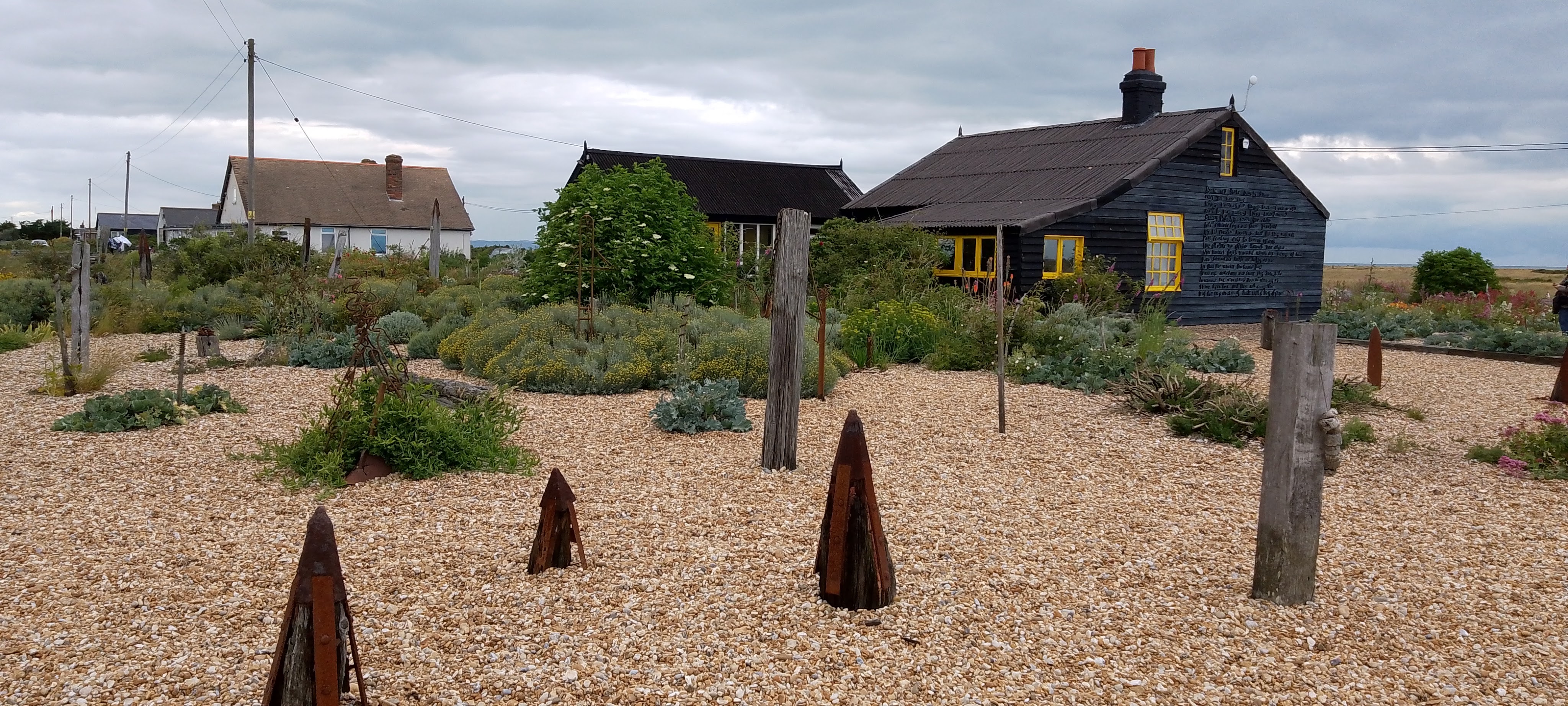
On my way to the bus stop ready for my journey home, I spent some time admiring Prospect Cottage, the former home of Derek Jarman.
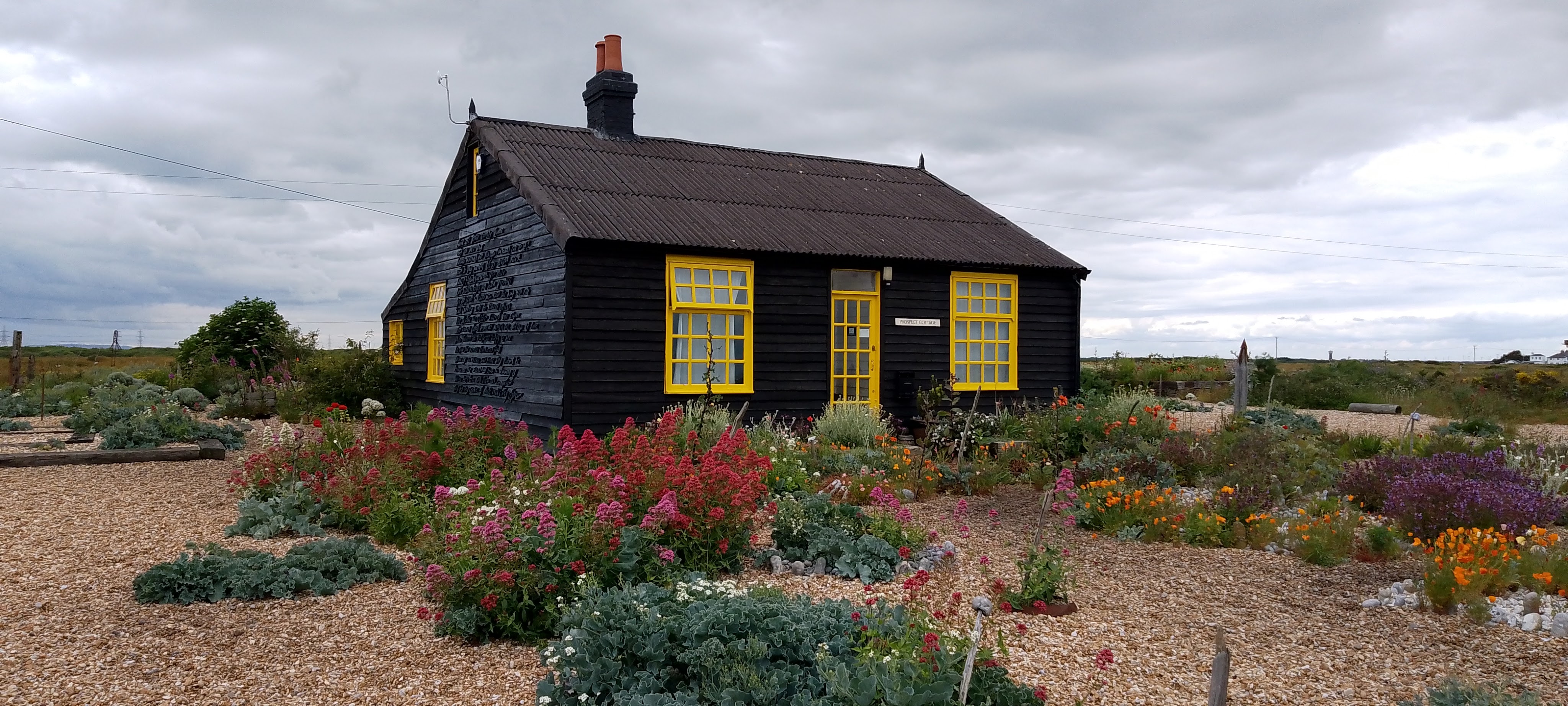
Lines from the John Donne poem, The Sun Rising are carved onto the side wall, and the back garden contains a mixture of sculptures made from driftwood and flotsam collected from the beach. It is a beautiful spot.
Only two bus journeys were needed for my homeward journey, and as the first of these travelled the route that I would be undertaking for the next three stages of my Kent coast walk, I contemplated the one that I had completed today. It was definitely not the best walk I have ever done, and it’s not one that I intend to repeat in a hurry. Maybe it would have been better if I hadn’t needed to divert around the firing range and spend so much time away from the sea and walking along roads. Maybe it would have been better if I hadn’t been so tired and hungry, and, given that this was the longest walk I’ve done since my last CFS relapse, if I’d been able to sit and have a rest half way through. As it was, Dungeness was the highlight and I could just go straight to Dungeness and walk and explore! But was I glad I’d done it? Yes I was! I felt a huge sense of achievement and am excited for Part 2.
See my Kent Coast Walk Part 2: Dungeness to Littlestone-on-Sea here
 A Little Kentish Magic
Leave a comment